Robbie Thain
Founder, CEO

Learn how unifying event transportation with on-site crew management reduces setup risk and improves ROI for large-scale brand activations and trade shows.
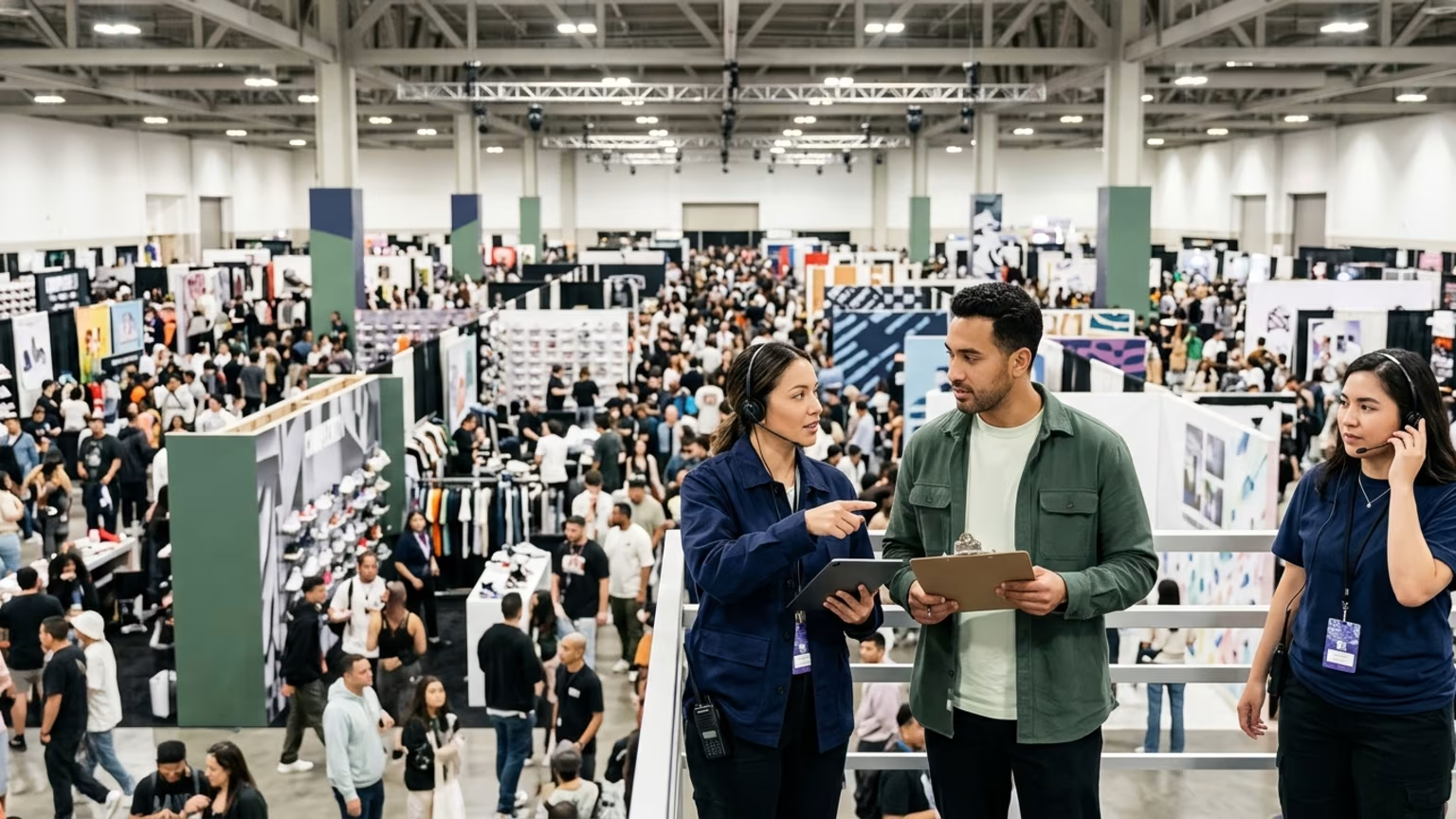
Sarah stood at Booth 412 staring at an empty floor space. Her brand ambassadors were scheduled to arrive in ten minutes. The expo doors would open in less than an hour. She had no product and no backup plan.
Recent industry moves by companies like Andretti Group signal a major shift toward unifying event transportation with on-site crew management. Brands that integrate their supply chain with field operations reduce setup risk and directly improve their Return on Investment.
Live marketing environments expose every flaw in a fragmented planning system. Marketing operators often hire one vendor for freight and a completely different agency for talent. These two sides rarely communicate before the event date. The freight driver drops crates at a loading dock, leaving promotional staff to manage an unfinished booth.
The gap between equipment delivery and human execution creates a dangerous friction point. Product samples sit in a staging area. Brand ambassadors waste valuable time trying to locate missing assets instead of engaging attendees. This disconnect leads to delayed starts and missed revenue opportunities.
A lack of centralized control turns expensive floor space into a stressful liability. Field managers burn hours calling dispatchers to track missing pallets. Inconsistent setups confuse consumers and dilute the brand message. The financial impact becomes obvious when lead capture goals fall short.
This logistical fragmentation destroys consumer trust right at the point of interaction. When attendees see scattered boxes and stressed personnel, they subconsciously associate that chaos with your actual product. Premium food and beverage companies rely heavily on flawless presentation to justify their price points. Marketing budgets bleed out when expensive trade show moments turn into disorganized setup zones.
The stress of a disjointed setup process directly impacts ambassador performance. Your talent pool consists of people who perform best when they feel confident and prepared. Throwing them into a chaotic search for product samples completely drains their energy before the event even starts. Consumers can instantly spot an exhausted and frustrated field team.
The consequences extend far beyond a single bad event day. When a local activation fails to impress a retail buyer, you lose future distribution opportunities. Big-box retailers expect flawless execution when you run a demo inside their physical space. A missing pallet of product can permanently damage your relationship with a key store manager.
Many companies accept this chaos as a normal part of field operations. They assume late deliveries and confused staff are permanent fixtures of live events. This mindset guarantees recurring on-site event failures. A better approach requires rethinking the fundamental relationship between assets and people.
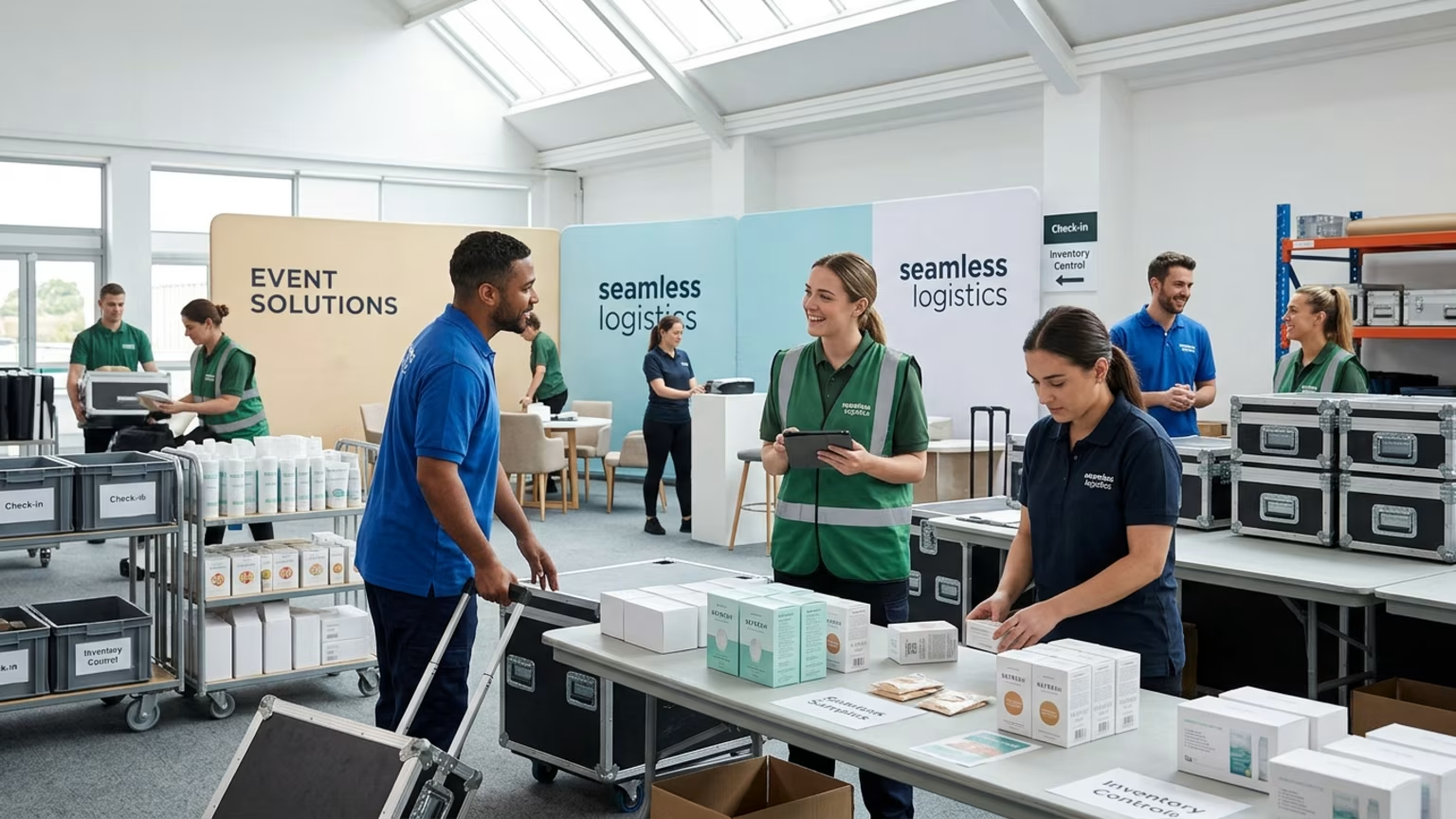
The solution involves treating freight transportation and talent management as one continuous workflow. This structural shift removes the traditional wall between moving heavy boxes and managing human beings. Event transportation provider Andretti Group recently announced a new integrated logistics and staffing offering to address this exact operational gap. Their model centralizes crew management and equipment transport for large-scale brand activations.
The primary goal is to reduce setup times and eliminate execution risk for marketers. We have been connecting brands with people through live experiences, retail programs, and national activations since 1995. Over three decades, we have built a track record of creating meaningful brand moments across the country. Our experience proves that unified operations protect marketing budgets and drive measurable outcomes.
A unified strategy requires a single point of accountability for both physical assets and personnel. The project manager oversees the timeline from warehouse departure to the final consumer interaction. They track the delivery truck and schedule the setup crew in perfect synchronization. If a traffic delay pushes back the freight arrival, the staffing schedule adjusts immediately.
This approach eliminates the frantic phone calls between uncoordinated vendors. Field managers no longer waste hours trying to bridge the gap between a warehouse manager and a staffing recruiter. The single vendor takes full ownership of the entire execution process. They handle the permitting paperwork alongside the vehicle routing and the talent acquisition.
Many legacy agencies resist this integration. They prefer to stay in their specific lane of either moving freight or hiring talent. This resistance forces the brand marketing director to act as the middleman. You end up managing the complex supply chain instead of focusing on consumer engagement.
The logistical integration extends deep into post-event workflows. A unified vendor manages the complex process of packing up booth components and routing them to the next city. This prevents expensive displays from getting lost in massive convention center storage bays. The same team that built the activation handles the teardown with identical precision.
Centralized planning completely changes the way brand ambassadors prepare for an event. The talent agency receives exact details about the booth layout and inventory status. Staff members arrive knowing exactly where every product sample belongs. This operational clarity allows field teams to focus entirely on consumer engagement and lead generation.
Implementing an integrated approach demands strict discipline long before the event begins. Field marketing directors must establish clear communication channels between logistics coordinators and talent managers. A fragmented approach leaves too much room for costly errors. The following playbook outlines the exact steps to fuse supply chain execution with on-site staffing.
A highly organized operation must translate into hard data and clear business value. Marketing leaders need exact metrics to justify field investments to their executive teams. Fluffy engagement numbers no longer satisfy the demand for genuine business growth. You must track both lead indicators and lag indicators to form a complete picture.
Lead metrics measure the efficiency of your setup and the readiness of your team. The first core metric is exact setup duration. Compare the scheduled build time against the actual completion time. A shrinking setup window proves your integrated approach is working.
The second core metric is the inventory accuracy rate. Track the exact number of lost or damaged product samples during transit. Integrated vendors should maintain a perfect chain of custody from the warehouse to the consumer. Missing stock represents a direct failure of the logistics operation.
Lag metrics reveal the true financial impact of your physical presence. The most important lag metric is the volume of highly qualified leads captured on the floor. An organized booth naturally processes more consumer interactions than a chaotic one. Next, measure your direct cost per engagement.
Divide your total logistics and staffing budget by the number of meaningful brand conversations. You must track the conversion rate of those on-site interactions into actual closed business. A disjointed setup often results in distracted staff members who rush through product demonstrations. A well-coordinated team takes the time to properly qualify prospects and gather accurate contact data.
Clean data translates into higher post-event sales. Calculate your overall ROI. Track the exact sales pipeline generated by the event against your total operational spend. A unified logistics and staffing strategy lowers your baseline costs and boosts your lead generation capacity.
A premium beverage brand struggled with extreme inconsistency across a fifty-city sampling tour. They relied on a traditional model with separate freight carriers and local staffing agencies. Trucks regularly arrived late to key retail locations. Promotional teams often spent their first two hours searching for popup tents and cooler units.
The brand decided to overhaul its entire field strategy by integrating transport and staffing. They assigned a single operational partner to load the trucks and hire the brand ambassadors. The new vendor synchronized delivery schedules with staff call times. Drivers communicated directly with field managers to coordinate exact drop-off locations.
The operational shift produced immediate and measurable improvements. Setup times dropped by forty percent across all remaining tour stops. The brand ambassadors spent significantly more time handing out product samples and talking to consumers. The campaign directly delivered a higher ROI and secured valuable retail shelf space.
Live brand experiences demand absolute precision to generate real pipeline value. You cannot afford to treat equipment transportation and human talent as isolated categories. The moment you unify these two major functions is the moment your field marketing becomes truly profitable. Stop hoping for perfect vendor alignment and start engineering it by choosing to Book a strategy call with our team today.

30 Years Experiential & Retail Activation Partner for CPG & Beverage Brands | Multi-Market Demos, Roadshows & Costco/Club Programs That Actually Sell