Robbie Thain
Founder, CEO

Record summer exhibition foot traffic requires brand leaders to redesign temporary staffing and on-site operations to turn crowded events into measurable ROI.

Recent industry reports indicate that large-scale summer exhibitions are experiencing record-breaking foot traffic nationwide. This massive influx of attendees is pushing traditional event operations to their absolute breaking point. Brand leaders must redesign their temporary staffing models to turn chaotic crowds into measurable sales pipelines.
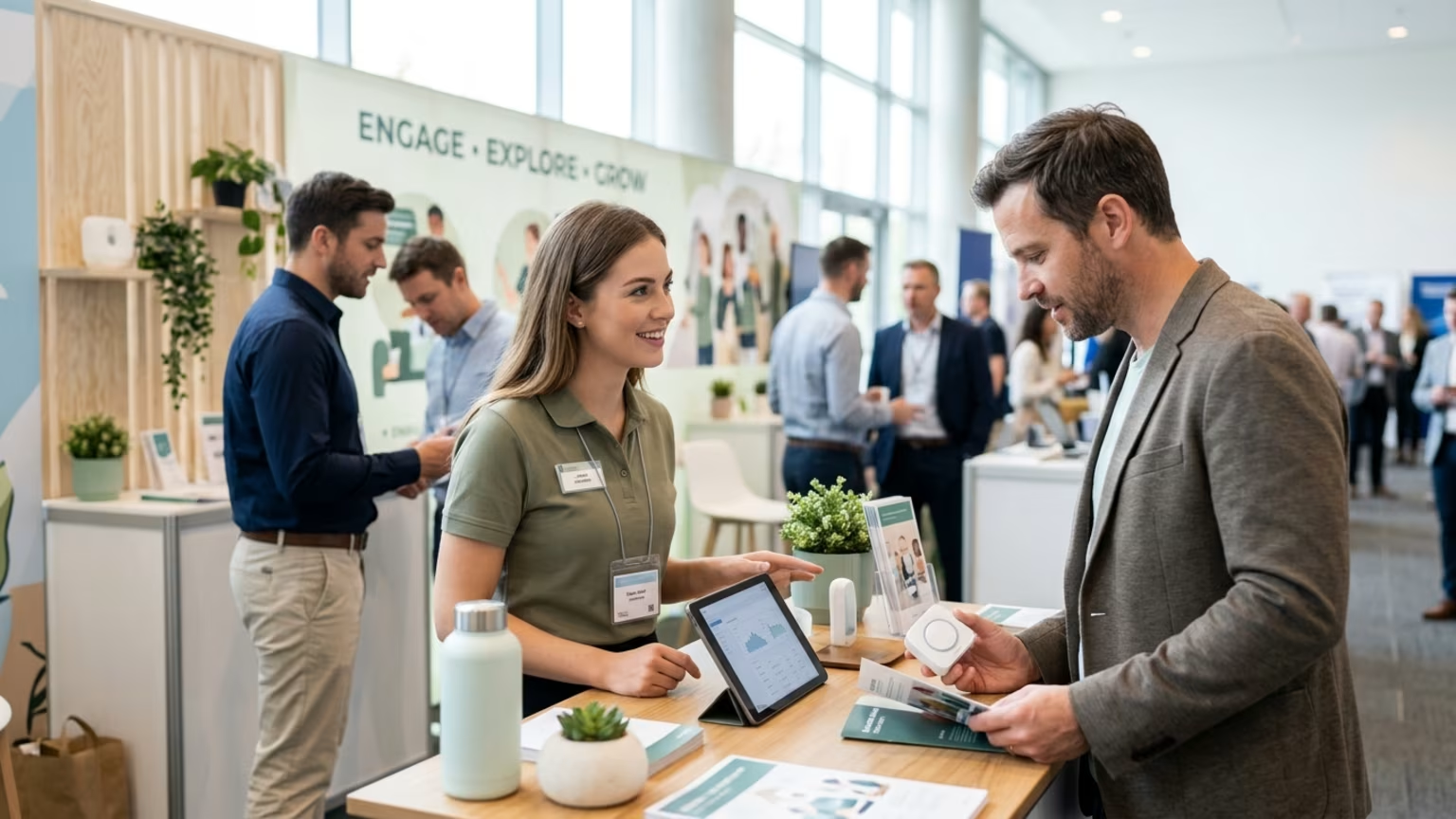
The trade show floor is packed shoulder to shoulder with eager consumers. A massive wave of attendees floods your carefully designed booth space within minutes. Your brand ambassadors are totally overwhelmed by the sudden surge in physical demand. Product samples run out quickly, leads slip away, and the entire activation feels frantic.
This scenario plays out constantly as physical events see a massive resurgence nationwide. Large crowds look fantastic on camera for your social media recap videos. Busy aisles often mask deep operational flaws that cost your company real money. A high volume of visitors means nothing if your team cannot process them systematically.
We have been connecting brands with people through live experiences, retail programs, and national activations since 1995. Over three decades, we have built a track record of creating meaningful brand moments across the country. We know firsthand that unprecedented foot traffic requires operator-grade discipline on the floor. Without a solid operational plan, your expensive trade show presence becomes an unmanageable mess.
Many marketing operators mistakenly believe that more foot traffic automatically equals higher sales. They staff their booths with temporary workers who lack deep product knowledge. The resulting interactions are shallow, rushed, and entirely forgettable for the consumer. Brands are quickly learning that disorganized chaos is the true enemy of measurable conversion.
Surviving a record-breaking crowd requires a fundamental shift in live activation planning. You can no longer rely on a few charismatic brand ambassadors alone. The physical environment itself must do heavy lifting to manage the flow of people. This requires strict venue mapping, deep contingency planning, and rigorous team training.
The core objective is moving visitors from passive observers to active participants smoothly. Every square foot of your activation space must serve a defined strategic purpose. Anticipating the physical pressure points helps you design natural pathways for product trials. This structured approach prevents bottlenecks and keeps the floor energy focused on conversion.
Temporary staffing structures must adapt to this new reality of high-volume attendance. Relying solely on untrained gig workers is a direct threat to your pipeline. You need a structured tier of leadership on the floor to maintain daily order. Implementing smart staffing models for experiential events keeps every team member perfectly aligned.
A systematic approach turns a reactive scramble into a highly proactive strategy. You gain the ability to predict logistical issues before they derail the consumer experience. It separates amateur setups from the professional operations that actually drive clear business results. This operational precision protects your budget and improves the overall perception of your product.
You need a clear action plan to handle massive exhibition attendance smoothly. This structured playbook will help your field marketing team execute flawlessly under immense pressure.
A massive crowd is merely vanity if you cannot prove its financial value. Marketing leaders face intense pressure to demonstrate real Return on Investment from live events. You must track both the immediate actions on the floor and long-term business results. Clear data collection separates a successful physical campaign from a massive financial mistake.
Lead metrics tell you exactly how well your activation is functioning in real time. You should monitor the average queue time for your primary product sampling station. Track the ratio of active staff members to engaged attendees during peak event hours. Count the number of qualified conversations logged per hour by your brand ambassadors.
Lag metrics reveal the actual financial impact of your physical presence over time. The most critical figure for any marketing operator is your cost per qualified lead. You must measure the subsequent retail sell-through in the regional markets surrounding the event location. These hard numbers prove to your executive team that live activations generate real revenue.
Retailer confidence is another major lag metric that often goes completely unmeasured by brands. Major buyers want to see that your product can draw a massive, enthusiastic crowd. A well-managed booth proves that your brand can drive serious consumer demand at retail. Documenting this organized enthusiasm gives your sales team powerful proof during future buyer meetings.
The ultimate goal is building a highly repeatable model for future brand roadshows. Once you establish baseline metrics for a record-breaking crowd, you can scale the operation. You will know exactly how many temporary staff members are needed per thousand expected attendees. This data-driven approach removes all the guesswork from your future experiential marketing budgets.
A national functional beverage brand recently faced an unprecedented crowd at a major expo. They anticipated high attendance but were met with double their projected foot traffic immediately. Their initial setup was quickly overwhelmed by thirsty attendees demanding free product samples. The physical line stretched into neighboring booths, causing immediate tension with frustrated event organizers.
The brand quickly pivoted to a highly structured crowd management strategy overnight. They deployed physical stanchions to create a fast-lane for simple, rapid product trials. A separate lounge area was designated strictly for retail buyers and regional distribution partners. They shifted their staffing model to include dedicated crowd control personnel managing the queue.
This rapid operational shift saved the entire weekend for the stressed marketing team. They successfully sampled over ten thousand units without a single logistical failure moving forward. The newly structured lead capture process generated a massive list of qualified retail buyers. The campaign drove a noticeable spike in regional supermarket sales the very next month.
The key takeaway is that the beverage brand did not panic under immense pressure. They relied on systematic crowd control and disciplined field operations to turn things around. They recognized that the temporary staff needed clear direction, physical barriers, and targeted goals. This level of execution is exactly what separates premium brands from amateur trade show participants.
Record summer attendance is pushing the limits of traditional exhibition and event planning. A swarming trade show floor can either be a logistical nightmare or a revenue engine. The deciding factor is the operational discipline you bring to the physical activation space. By mapping your venue, training your staff, and tracking metrics, you control the environment.
The packed aisles you see today are filled with your future brand champions. They are seeking out real connections, tangible experiences, and products they can truly trust. Do not let disorganized operations stand in the way of those highly valuable consumer interactions. It is time to treat your event logistics with absolute, operator-grade precision.
Turning fleeting consumer interactions into qualified leads requires more than just a smiling face. It requires a tested playbook, trained ambassadors, and a relentless focus on measurable outcomes. Your brand deserves an experiential marketing campaign that actually delivers on its financial promises. Book a strategy call to turn your next live activation into a massive, measurable success.

30 Years Experiential & Retail Activation Partner for CPG & Beverage Brands | Multi-Market Demos, Roadshows & Costco/Club Programs That Actually Sell