Robbie Thain
Founder, CEO

PromoWorks expands its field operations with integrated training, scheduling, and permit support to help brands improve consistency and reduce staff no-shows.
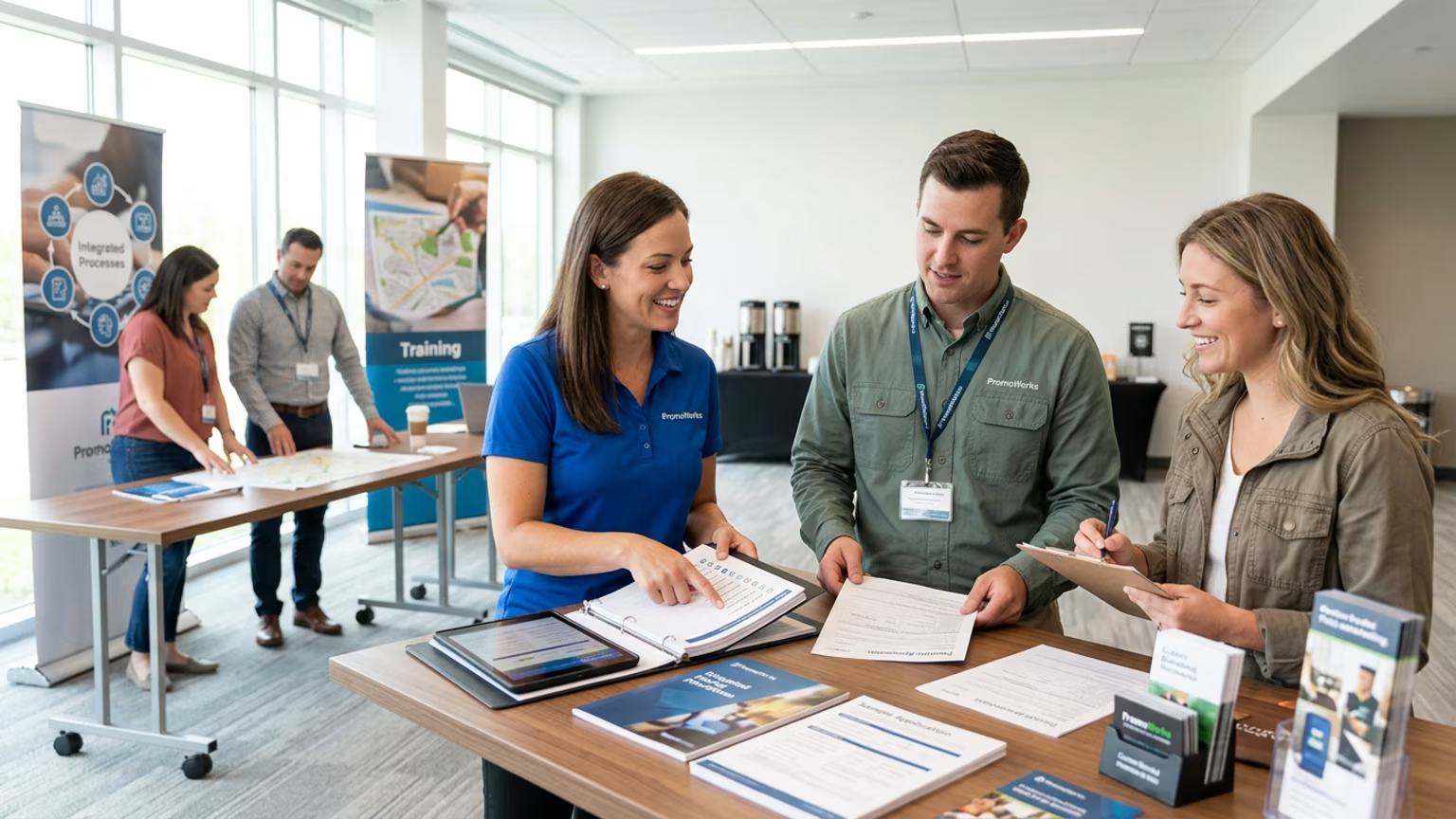
PromoWorks recently expanded its field operations services to integrate standardized training, digital scheduling, and centralized permit coordination for regional pop-ups. This operational shift gives marketing leaders a tighter framework to reduce staff no-shows and maintain strict municipal compliance.
Sarah stared at her phone in the parking lot of a major retailer. Her lead brand ambassador just texted that the demo kit was missing. The activation was set to start in fifteen minutes. This frantic moment perfectly captures the fragility of live event marketing.
When brands deploy in-store demos and regional pop-up events, the execution often fragments at the local level. Marketing teams spend months perfecting messaging and booth design inside pristine corporate offices. The physical deployment then falls apart through late arrivals, untrained staff, and missing permits. Missing a single municipal permit can shut down a pop-up before it even starts.
Field managers often spend their mornings putting out localized fires instead of analyzing consumer data. A missing table at a trade show or an incorrect health permit creates immediate panic. These small logistical failures compound across a national campaign to drain promotional budgets. The resulting friction destroys the momentum of carefully planned brand activations.
Many traditional agencies treat staffing as an afterthought to creative design. They hire temporary workers who lack deep brand knowledge or engagement skills. This disconnect leaves the physical product in the hands of uninvested individuals. The consumer experiences a disjointed interaction that rarely leads to a retail purchase.
Event staffing firms are recognizing this gap between strategy and physical execution. PromoWorks recently announced an expansion of its field operations services to combat these exact friction points. They are adding standardized training modules, digital scheduling tools, and centralized permit coordination to their core offering. This signals a broader industry shift toward strict operational rigor in physical marketing.
The recent expansion by PromoWorks mirrors the exact operational challenges our target brands face. Piecemeal solutions force marketing directors to act as stressed dispatchers. Unifying staffing, training, and permit management under one operational roof creates a predictable baseline. This framework reduces no-shows and builds consistency for Consumer Packaged Goods and beverage activations.
The first pillar of this approach is standardized field training. Brand ambassadors must understand product messaging and compliance protocols before they step foot on site. Standardized training modules replace outdated paper manuals with interactive digital formats. Field representatives learn the exact talking points and product benefits directly from their smartphones.
Testing staff on this knowledge builds a layer of accountability before the event begins. An educated brand ambassador drives much higher trial rates than an uninformed temporary worker. Digital scheduling tools form the second pillar of this integrated approach. These platforms give regional managers real-time visibility into staff arrivals and equipment status.
Digital scheduling tools bring a new level of predictability to experiential marketing. Geo-fenced applications track when and where an ambassador checks in for their shift. This technology alerts regional directors to potential no-shows well before the activation window opens. Teams can then activate backup personnel rapidly to save the regional retail event.
The final pillar focuses entirely on local regulatory compliance. Managing local ordinances requires centralized permit coordination to keep campaigns legal and active. Delegating this complex paperwork to a central operations desk protects the entire campaign from sudden shutdowns. Brands that integrate permit compliance into their multi-location field marketing see higher program completion rates.
Moving from fragmented tactics to a unified operational model requires strict discipline. You need a standard operating procedure for every retail demo and trade show activation. We run experiential and engagement programs coast to coast with local crews, smart logistics, and permit expertise that let us launch fast and maintain quality consistency in every region, from major metros to smaller markets. Our nationwide infrastructure enables us to activate brands wherever their audiences are located.
Building an integrated operational model requires a complete audit of your current processes. You must identify where your field execution breaks down most frequently. Most brands find their biggest vulnerabilities in staff retention and field inventory tracking. Addressing these weak points creates a durable foundation for highly scalable live events.
Implementing this level of control starts with a clear operational playbook. Follow these steps to build a resilient and measurable field program:
Skipping any of these steps leaves your physical brand vulnerable to costly disruptions. Marketing leaders must prioritize field logistics just as heavily as creative booth design. Consolidating these functions prevents field operations from becoming dumpster fires. These steps require an upfront investment in modern technology and operational planning.
The long-term savings from reduced event cancellations easily justify this initial effort. Brands that execute with precision quickly outpace competitors who rely on fragmented planning. Consistent physical execution builds deep trust with regional retail buyers and local store managers. This trust translates directly into better floor placements and extended promotional windows.
Live activations demand rigorous tracking to justify their large physical budgets. You must measure clear outcomes to prove your Return on Investment to senior leadership. Vanity metrics like total foot traffic offer very little insight into actual business impact. You need to separate your tracking into predictive lead metrics and outcome-based lag metrics.
Your lead metrics act as an early warning system for your entire live campaign. Track the staff arrival compliance rate to monitor daily punctuality. Measure the training module completion rate to gauge field brand readiness. Monitor your permit approval timeline to catch municipal regulatory delays early.
Tracking the speed of inventory deployment highlights potential supply chain bottlenecks before they escalate. Monitoring staff retention rates per market indicates the quality of your regional hiring pool. These data points let you adjust your physical strategy before a major retail event begins. A strong lead metric profile guarantees that your event will launch on schedule.
Lag metrics reveal the true financial reality of the experiential campaign. Track the sample-to-purchase conversion rate directly during in-store demos. Measure the exact cost per qualified lead at regional consumer trade shows. Tie these figures directly to retail sell-through data to prove field activations align with revenue goals. This hard data transforms experiential marketing from a discretionary expense into a proven revenue driver.
Consider a national beverage brand launching a new sparkling water across fifty regional grocers. Using fragmented local agencies led to inconsistent sampling sizes and frequent scheduling gaps. The brand realized their promotional spend was leaking through massive operational inefficiencies. They needed a structural overhaul to protect their retail buyer relationships.
The marketing team implemented a unified operations model matching the recent PromoWorks framework. They mandated digital check-ins and centralized all local health department permits. The brand then rolled out a standardized training video for all local field ambassadors. Every staff member had to pass a short quiz before receiving their final shift schedule.
The beverage brand deployed digital command centers to monitor fifty concurrent grocery demos. Regional managers watched real-time dashboard updates tracking staff arrivals and live inventory levels. If a location reported low sample stock, the system automatically flagged a local warehouse for resupply. This immediate visibility kept every booth operating at absolute peak capacity.
The results rapidly validated this intensive operational pivot. Staff no-shows dropped significantly within the first month of the new program. The brand saw a measurable lift in same-day retail sales during the live demo windows. To regain control of your next product launch, audit your current permit process and book a strategy call with our team today.

30 Years Experiential & Retail Activation Partner for CPG & Beverage Brands | Multi-Market Demos, Roadshows & Costco/Club Programs That Actually Sell