Robbie Thain
Founder, CEO

High-stakes experiential activations require specialized logistics partners. Learn how operational trust prevents setup failures and drives real event ROI.
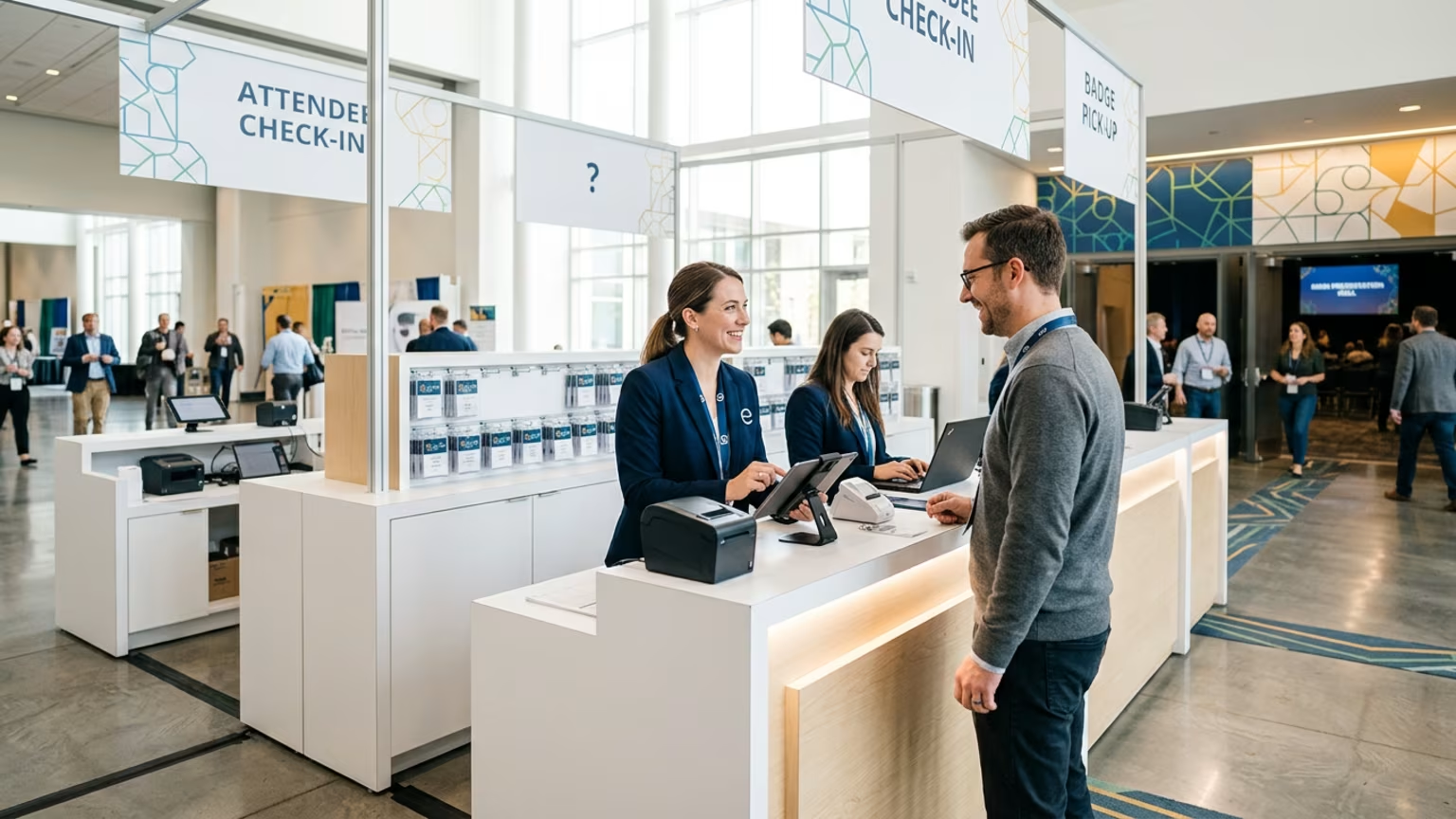
High-stakes experiential activations require logistics partners that operate as direct internal extensions of your brand team. True operational trust prevents chaotic setups and guarantees that critical event assets arrive exactly when your field staff needs them.
The trade show hall opens in four hours. Your activation space is marked with blue tape on the concrete. Ten trained brand ambassadors stand idle near the loading dock. Your custom sampling cart is nowhere to be found.
This common scenario destroys carefully planned event budgets. Many brand managers still rely on standard freight carriers to move highly sensitive experiential materials. These standard carriers view trade show crates as basic commodities rather than critical marketing assets. A single misplaced pallet turns an expensive activation into an embarrassing empty space.
Without your main attraction, the massive investment in premium floor space evaporates instantly. Your competitors happily absorb the foot traffic that was meant for your product debut. Industry commentary from logistics leaders like RXO’s CEO Drew Wilkerson highlights a critical shift in high-stakes freight work. Modern supply chains push logistics partners to function as a direct extension of client operations.
Your shipping provider must operate with the exact same urgency as your field marketing directors. A delay of just three hours completely alters your staffing plans and compromises your entire event readiness. Commodity carriers lack the operational trust required for precise experiential marketing setups. They frequently miss targeted delivery windows at convention centers.
This failure forces brand marketers to scramble for backup materials at local hardware stores. The resulting panic exhausts your field team long before the first attendee walks into the venue.
Creating a flawless live activation starts with a fundamental overhaul of vendor relationships. You need logistics operators who completely understand the rigid timing of trade show advanced receiving. Treating specialized freight as a mere commodity consistently leads to disastrous delays and wasted budget. Your logistics partner must integrate tightly with your internal planning team months before the event date.
We handle every step of activation execution with precision and purpose, from initial concept through final logistics. Our comprehensive approach guarantees that each program is designed to spark curiosity, drive action, and leave a lasting impression on consumers. This requires moving beyond basic freight quotes to establish proactive communication protocols. Brand leaders who integrate contingency frameworks into their planning often avoid these massive setup failures.
A strategic logistics approach perfectly aligns transport schedules with local labor availability and complex union rules. Your transportation team must study the specific drayage requirements of every venue on your tour schedule. Building true operational trust means giving your freight partner visibility into your actual marketing goals. They need to know exactly why that particular refrigerated truck matters to your final sales pipeline.
This level of strategic planning requires a dedicated budget line for specialized freight handling. Attempting to cut corners with discount carriers always results in higher hidden costs. You end up paying emergency drayage fees and premium overtime labor rates. This deep integration prevents the fragmented execution that plagues many modern brand roadshows.
A logistics partner acting as an operational extension will flag potential routing issues weeks in advance. They will verify dock access restrictions and secure the correct local permits before trucks dispatch. You regain total control over your physical marketing assets by establishing these rigorous supply chain standards. Companies that view logistics as a core event marketing competency consistently outperform their competitors on the trade show floor.
These brands build a unified process where shipping schedules dictate the pace of field operations. The result is a calm setup environment that allows brand ambassadors to focus entirely on consumer engagement.
Transforming your event supply chain into a competitive advantage requires strict operational discipline. You must build a repeatable process that eliminates guesswork for your local field teams. This execution playbook outlines exactly how to align your transportation strategy with live event realities. Following these steps secures your investment and maximizes your floor presence.
Proving the true value of operational trust means tracking data far beyond standard shipping costs. You need to measure exactly how logistics performance impacts your final Return on Investment. We look closely at both lead and lag metrics to completely validate execution quality. Identifying these data points helps you refine and scale future event strategies.
Consider a major beverage brand launching a new premium sparkling water across three regional trade shows. The marketing team planned extensive floor sampling and needed multiple refrigerated pallets delivered sequentially. Their previous freight provider treated the specialized shipments as standard commodity deliveries. The main delivery trucks arrived two hours late at the very first venue.
This unexpected delay forced the local brand ambassadors to scramble. They had to piece together the custom booth during peak attendee networking hours. The resulting chaos created poor optics and severely limited daily product trials.
Retail buyers want to see a brand that executes with total professionalism. A sloppy booth setup signals operational weakness and makes buyers doubt your retail fulfillment capabilities. Securing their trust starts with presenting a flawless live experience. For the second major show, the brand shifted to a specialized experiential logistics partner.
The new operations team treated the complex freight schedule as a core mandate. They synchronized the exact delivery windows with strict union labor schedules. The assets arrived perfectly intact and ready for immediate deployment on the concrete floor. This seamless setup allowed the brand team to focus entirely on deep retailer conversations.
The refined activation generated record pipeline value for the beverage company. It proved that precision logistics acts as the absolute foundation of event success. Treating your supply chain partners as operational extensions transforms chaotic setups into highly measurable revenue engines.
Flawless field marketing demands a supply chain that operates with the same relentless urgency as your sales team. Stop letting minor shipping delays dictate your professional brand reputation. Book a strategy call with Makai Inc. to build an experiential program that delivers on time and drives measurable results.

30 Years Experiential & Retail Activation Partner for CPG & Beverage Brands | Multi-Market Demos, Roadshows & Costco/Club Programs That Actually Sell