Robbie Thain
Founder, CEO

Master pre-event logistics with this practical toolkit. Learn how to manage routing, freight, permits, and inventory to protect field marketing ROI.
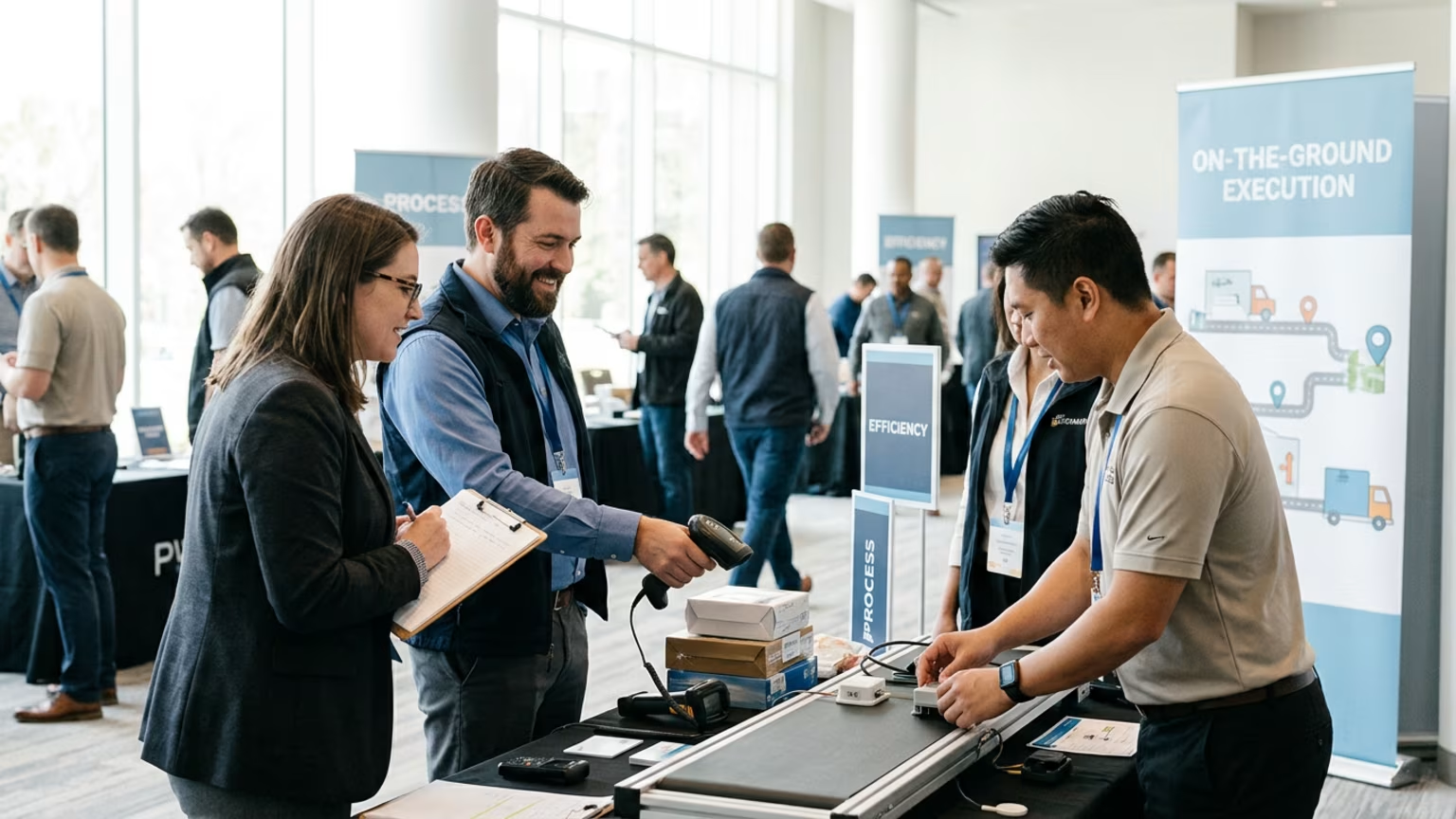
Sarah stood in the convention hall while her field team stared at a melting pallet of frozen snacks. The refrigerated truck arrived two hours late. A crowd of prime buyers walked right past their empty booth. Millions in potential pipeline vanished over a single missing dock permit.
Flawless on the ground execution turns event logistics from a backstage headache into a powerful engine for revenue growth. By standardizing your approach to routing, freight, and inventory management, you protect profit margins and keep your field team focused entirely on consumer engagement.
The reality of experiential marketing is that brilliant creative concepts often crash against the harsh rocks of field execution. Brand managers spend months designing beautiful trade show booths and scripting perfect product pitches. Then the reality of the show floor sets in. Field teams find themselves scrambling for basic necessities like ice, power cables, and sampling cups.
This operational friction instantly drains the energy from your brand ambassadors. When your staff acts as emergency delivery drivers, consumer engagement plummets. Your carefully recruited talent spends their shifts tracking lost shipments. Every minute spent solving a logistical crisis is a minute stolen from qualifying a lead or closing a retail buyer.
Recent career data highlights just how demanding this environment has become for marketing teams. According to Indeed, the modern field marketing manager role relies heavily on complex project management rather than just promotional enthusiasm. Companies expect marketing leaders to handle difficult supply chain variables on the fly. Without a rock solid operational foundation, even the most expensive brand activations will fail to produce a positive Return on Investment.
Job listings reflect this massive shift in industry expectations. A recent posting for a field marketing coordinator at Barry's emphasizes the need to manage local partnerships and fast paced regional events simultaneously. The operational load on these professionals is higher than ever before. You must build systems to support them.
Smart consumer packaged goods brands treat logistics as a core marketing competency rather than an administrative afterthought. A structured operational framework prevents onsite disasters. It actively drives higher conversion rates by keeping your staff focused on the consumer. By controlling the physical variables of your event, you create a seamless environment for your brand message.
This strategic approach requires a complete mindset shift across your marketing department. You must align your creative vision with the literal constraints of the physical world. This means planning the exact path your product takes from the warehouse to the buyer. Every touchpoint requires a defined process, a clear owner, and a validated backup plan.
Leading global brands now hire specialized talent to build these exact frameworks. Job postings for field marketing roles at companies like Schneider Electric explicitly demand candidates who can organize complex regional event logistics. These organizations understand that tight logistics directly reduce activation downtime. They know that operational discipline protects valuable profit margins.
For marketing leaders seeking to scale their physical footprint, mastering these elements is non negotiable. You can accelerate this transition by implementing solid contingency plans for live activations. This preparation shields your brand from unpredictable weather, transit delays, and facility restrictions. Your field team can then operate with total confidence.
Turning this strategy into reality requires a highly disciplined approach to pre event planning. Your field teams need a comprehensive toolkit that removes all guesswork from the equation. Implement the following steps to build a foolproof execution plan for your next major activation. These protocols will keep your field staff focused on revenue generating activities.
Marketing teams that follow this checklist avoid common execution mistakes during multi stop campaigns. They arrive at the venue calm, organized, and ready to sell. Their brand ambassadors never have to worry about finding an extension cord. Instead, they spend their entire shift turning curious shoppers into loyal customers.
Operational excellence only matters if you can attach it to clear financial outcomes. You need to track specific performance indicators to prove that your logistical investments are working. This requires a mix of lead metrics for operational efficiency and lag metrics for revenue impact. Proper tracking transforms logistics from a cost center into a measurable growth driver.
Lead metrics tell you if your supply chain is functioning correctly before the event begins. Track your on time delivery rate for all physical assets. Measure your inventory accuracy to confirm that what shipped actually arrived. Record your average setup completion time to see if your field teams are working efficiently.
Lag metrics reveal the true business value of your logistical discipline. Calculate your exact cost per sample distributed to gauge activation efficiency. Monitor the total number of qualified leads generated during the event hours. Track the localized retailer sell through rate in the weeks following your market visit.
When you have clean data on these metrics, you can easily justify future experiential budgets to your executive team. By implementing modern tracking tools to secure field marketing returns, you transform abstract event costs into concrete business investments. Data driven logistics provide the ultimate proof of concept for your field marketing strategy.
Theory is helpful, but physical execution is what puts points on the board. We see the direct impact of rigorous logistical planning every day in the field. When the operational burden is lifted off the shoulders of brand ambassadors, magic happens. The consumer experience becomes the singular focus of the entire team.
Heavy liquid logistics and cold chain requirements often break underprepared field teams. A VP of Marketing in the CPG beverage category told us: 'Robbie, your leadership and vision turned our campaign into something truly special. The Makai team brought our new drink to life with energy, creativity, and flawless execution. Thanks to you, our brand isn't just tasted, it's remembered.' Our team's approach transformed their product launch into a memorable brand experience.
This success was not an accident of good timing or lucky weather. It was the direct result of mapping every freight route, securing every local permit, and training the staff to sell. The logistics were entirely invisible to the audience. That is exactly how a premium brand experience should feel.
Your brand can achieve this exact same level of operational mastery. You simply need the right frameworks, the right partners, and a commitment to meticulous planning. If you are ready to stop scrambling and start scaling your field marketing efforts, it is time to take action. Book a strategy call with our team to map out your next high impact activation.
Before your next trade show, audit your pre event checklist to confirm that every permit, freight route, and inventory count has a dedicated backup plan.

30 Years Experiential & Retail Activation Partner for CPG & Beverage Brands | Multi-Market Demos, Roadshows & Costco/Club Programs That Actually Sell