Robbie Thain
Founder, CEO

Learn how CPG brands turn physical activations into a privacy-first consumer insight engine. Capture verifiable first-party data without surveillance.

Digital-only marketing efficiency is dead because you cannot rely on rented algorithms to build genuine consumer belief. Marketing teams spend millions chasing digital impressions that ultimately fail to generate actual product trust. Brands can no longer survive on third-party behavioral profiles or shallow screen-based engagement metrics. First-party insight is now the most valuable asset a consumer brand can own.
The modern physical activation must become a privacy-first engine that captures verifiable consumer truth. Brands must build direct relationships through channels they actually control. Every physical interaction must pull double duty as a marketing event and an active research environment. Operators who master this dual mandate will build stronger product pipelines than competitors relying on passive analytics.
NielsenIQ advises brands to build direct relationships with audiences through channels they own. The urgency increases as consumer discovery rapidly shifts toward mediated automated systems. NielsenIQ reports that approximately 34% of consumers use AI to research products. They also note 23% use it to summarize reviews and 8% to complete purchases.
This automated discovery ecosystem makes physical trial and real-world feedback incredibly important. A Freeman-related report cited by ContentGrip found that 74% of attendees viewed in-person events as the best place to discover products. The same report noted 96% said touching or testing products increased their confidence in advocating for them. Marketers recognize this disconnect between digital scale and real consumer trust.
In a Freeman-related survey of 506 U.S. marketing professionals, 72% reported a perceived awareness-to-belief gap. Furthermore, 45% cited missing in-person touchpoints as one possible driver. A pilot/Norstat online-panel study reported higher stated trial-or-purchase motivation among respondents under 40 than among respondents over 40. Specifically, 54% of respondents under 40 reported this motivation compared with 42% of older respondents.
The measurement of these physical experiences goes far beyond basic foot traffic. AnyRoad describes brand-lift studies as comparisons between exposed and control groups across measures such as awareness, favorability, recall, and purchase intent. AnyRoad reports purchase-intent results as high as 85% in selected experiential case examples like a mezcal activation. These figures indicate that physical touchpoints drive powerful intent when executed correctly.
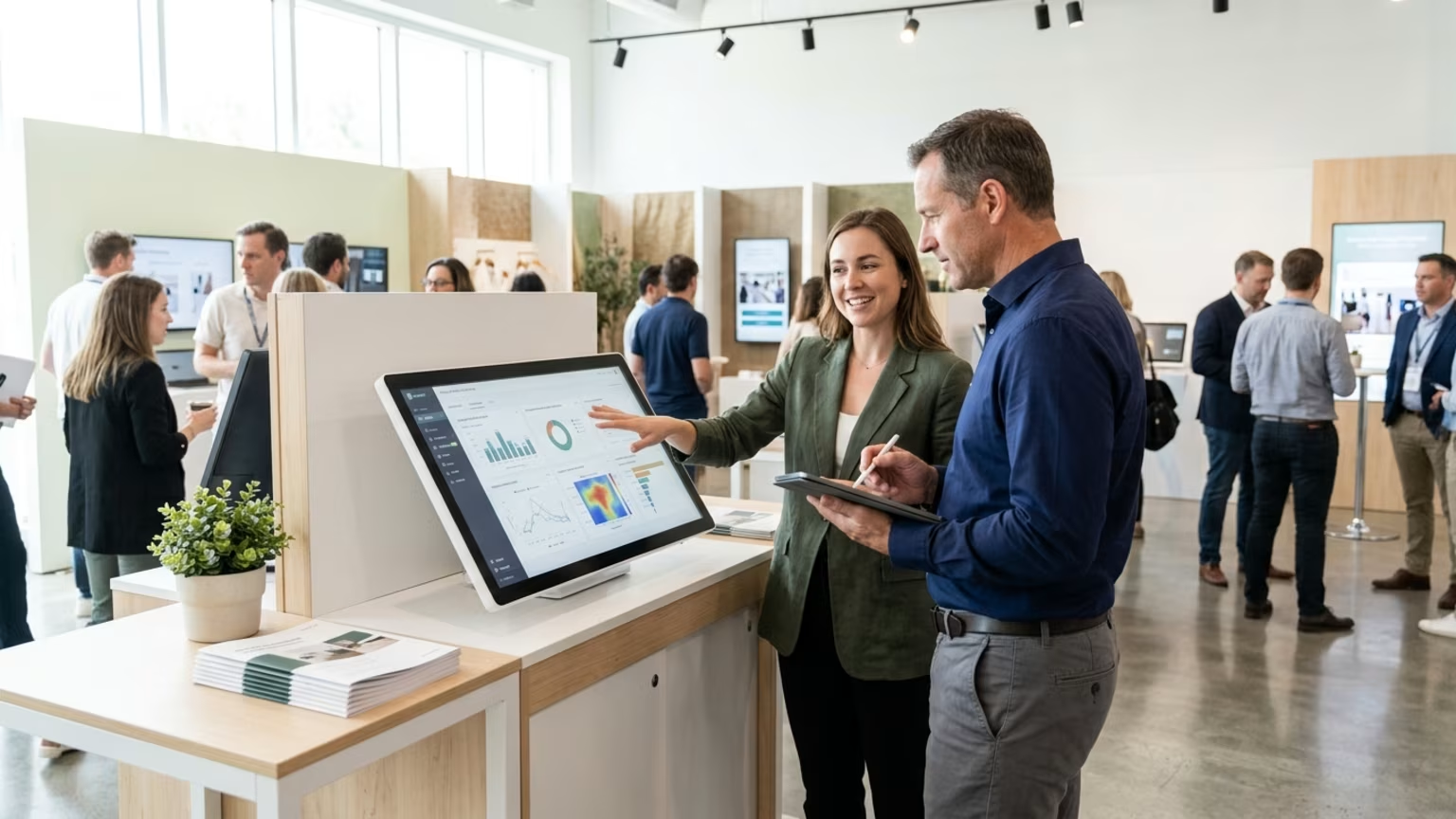
A VP of Marketing cannot afford to waste fragmented trade budgets on unmeasured brand theater. You must prove Return on Investment by converting physical foot traffic into structured first-party data. Relying on basic attendance figures leaves massive operational blind spots for your field teams. Your event floor must function as an active research environment that justifies every dollar spent.
These data points indicate that consumers want to experience products before committing financially. When discovery algorithms favor brands with rich product attributes, your field team must capture those specific insights. NielsenIQ argues that product content is becoming infrastructure for recommendation and discovery systems. You need to know exactly how real people describe your product after trying it.
Field teams must document specific product claims, sensory reactions, and consumer objections. This raw field language informs the exact content that appears in search and retail environments. If your activation only produces photos of smiling crowds, you are squandering a critical operational asset. Brands must capture this intelligence systematically without ruining the consumer experience.
This level of execution requires true field discipline and seamless coordination. A Director of Brand Strategy in the CPG snack division shared: "The Makai team turned our product launch into a sensory event that shoppers still talk about. From creative storytelling to flawless in-store execution, they made snack time unforgettable. We couldn't have asked for a stronger partner."
Our team created an in-store experience that left a lasting impression on consumers and became a memorable brand moment. Operators must plan their experiential marketing in 2026 around smart data capture as much as aesthetics. Every consumer interaction must inform your commercial strategy moving forward.
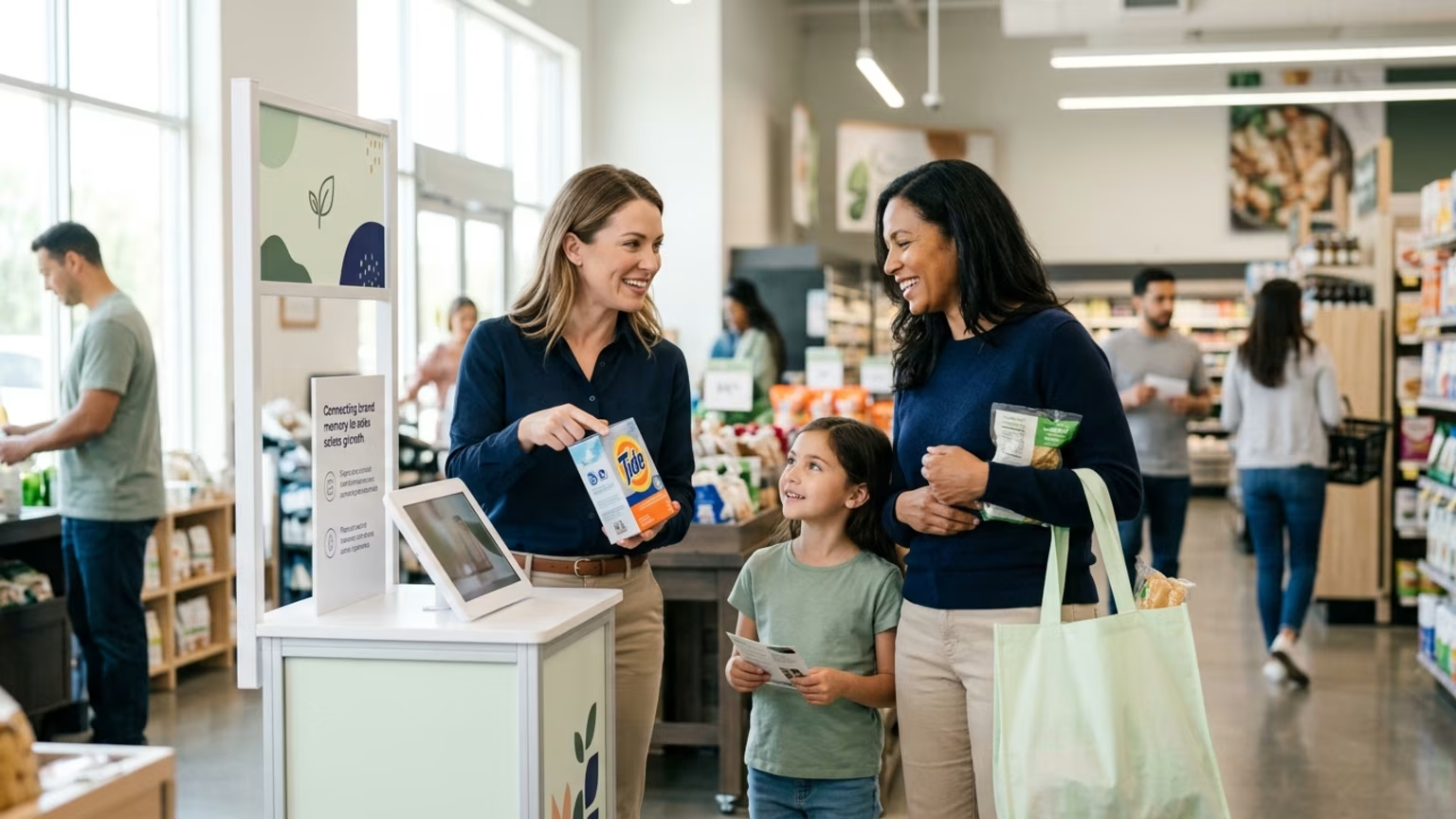
This macro shift fundamentally changes how you design mobile sampling tours and retail demonstrations today. You cannot bombard visitors with intrusive forms while they try to taste a sample. A data-minimization approach limits collection and retention to information reasonably needed for the stated purpose. The primary goal is gathering highly useful feedback without making the interaction feel surveilled.
Consent materials should explain what participation involves, how data will be used, and how participants can withdraw. CASRAI’s qualitative-research guidance recommends revisiting consent when a study’s focus or data use changes. It also advises separating participation consent from permissions for quotations or other uses. Brands collecting covered personal information from children under 13 online must account for COPPA’s parental-consent requirements.
The most effective method is turning brand reps into data reps who ask single focused questions. Useful prompts include asking what would stop someone from buying or what they would compare the product with. A participant can explain what they liked about a beverage without handing over their email address. Short structured surveys work perfectly if they capture prior familiarity, first reactions, and intended usage occasions.
Qualitative observation provides massive value when your staff operates systematically. Trained researchers can note where people hesitate, which package panel they read, and what they touch first. Observation should use a simple coding sheet rather than relying on loose anecdotal memory. Compare different product variants and carefully record the observed results across your audience.
Capture recurring objections during short staff debriefs at the end of each shift. Tie every piece of gathered evidence directly to a business decision about packaging or formulation. If your team cannot explain what action an answer will trigger, drop the question. This systematic approach ensures your live events generate actionable intelligence instead of meaningless spreadsheets.
The activation should be designed backward from commercial decisions rather than forward from data collection. Establish a clear operating model that moves from decision to observation, evidence, action, and finally testing. For example, a brand might need to decide whether to lead with a taste claim or a nutrition claim. The field team observes that participants repeatedly ask about texture before asking about protein content.
This evidence proves that sensory factors dominate spontaneous conversation while nutrition matters only after physical trial. The resulting action requires leading the activation script with taste before substantiating the health claim. Your team can then test the revised messaging in the next market or retail setting. Categorizing your data prevents the common mistake of treating every operational problem as a creative problem.
Product friction covers direct issues with taste, texture, scent, and ingredient formulation. Communication friction involves unclear claims, unfamiliar terminology, or weak proof on your packaging. Context friction reveals whether you chose the wrong venue or an unsuitable use occasion for the trial. Conversion friction highlights problems like stockouts, unclear offers, or weak retail execution nearby.
NielsenIQ notes that organizing product attributes like dietary indicators helps brands identify what shoppers actually search for. Live activation research complements this scaled data by explaining exactly why a claim matters in real life. You discover how people interpret your messaging and what natural language they use to describe your item. The final output must be a decisive action memo rather than a glossy photo gallery.
A proper evidence hierarchy prevents overreacting to single loud opinions. High confidence findings require repeated behavior across locations supported by a measurable business outcome. Medium confidence relies on repeated qualitative themes from multiple staff members across several sessions. Low confidence items might just be one vivid quote or a conclusion drawn from a small convenience sample.
Operators must adjust their KPI dashboards this quarter to track actionable feedback alongside raw sampling numbers. Count the specific product objections, usage occasions, and flavor preferences your team systematically observes. Stop measuring success purely by the volume of cups poured or lanyards scanned. True field performance means collecting the precise insights needed to win retail distribution and consumer loyalty.
Experiential investments must prove their worth by feeding your product innovation and marketing strategies directly. When you prioritize structured first-party data, every physical touchpoint becomes a lasting competitive advantage.
Transforming live product sampling into a privacy-first consumer insight engine requires flawless execution on the event floor, which is exactly why Makai creates high impact experiential marketing campaigns that turn fleeting consumer interactions into qualified leads for premium CPG brands. Navigating complex event logistics, permits, and staffing often distracts teams from gathering critical intelligence. Makai solves this tension through Brand Activations where we create high energy activations that turn awareness into participation and drive measurable consumer response.

30 Years Experiential & Retail Activation Partner for CPG & Beverage Brands | Multi-Market Demos, Roadshows & Costco/Club Programs That Actually Sell