Robbie Thain
Founder, CEO

Dove combined in-show media integrations and experiential marketing to successfully relaunch the Pink Beauty Bar and drive measurable retail sales.

More than eighty percent of product relaunches fail to gain significant market traction within their first year. By combining in-show media integrations with physical brand activations, experiential marketers can turn digital awareness into measurable trial and retail sell-through.
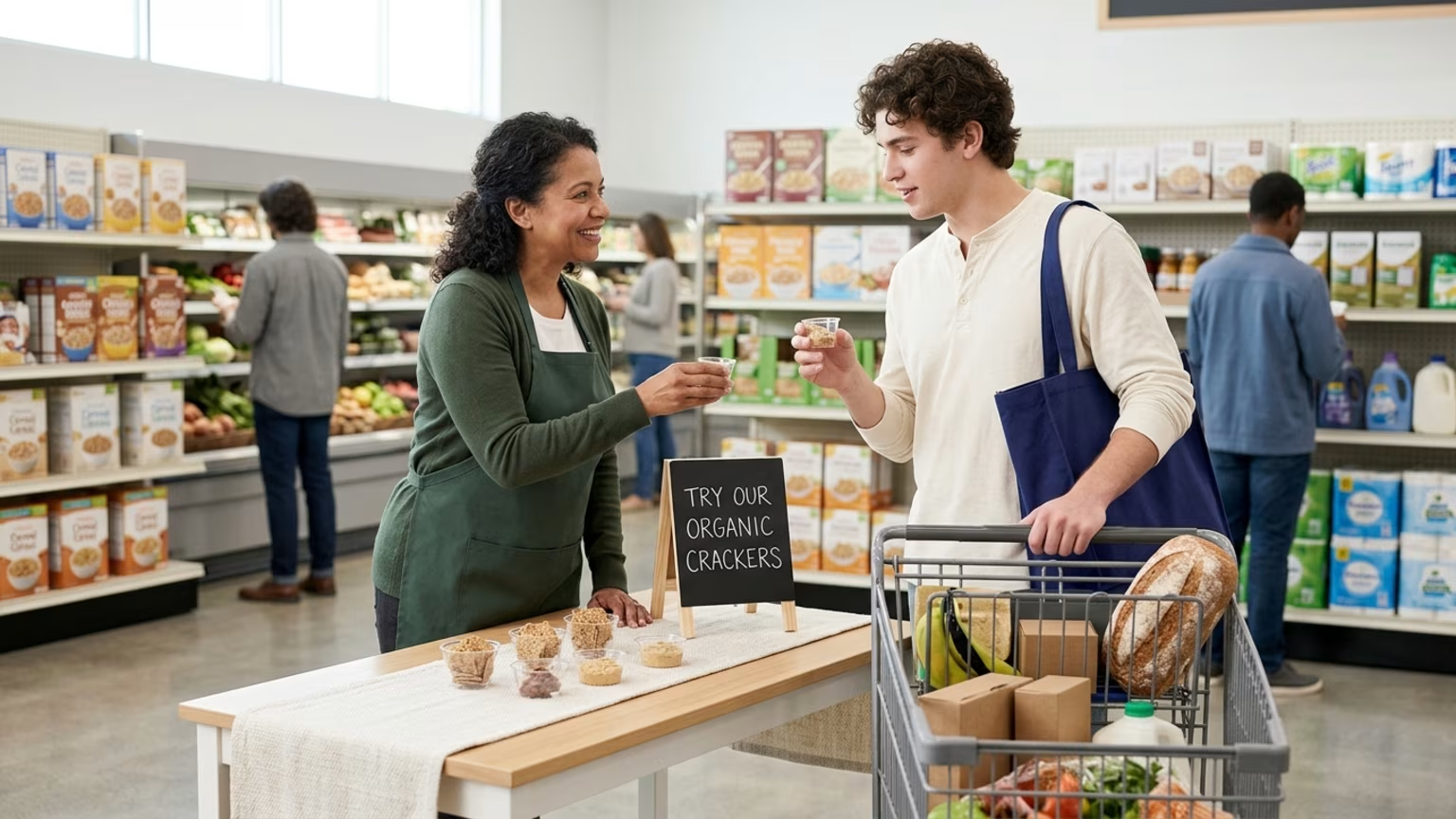
Field marketing teams know the brutal truth of the physical retail environment. You secure prime placement, build beautiful displays, and heavily train your store associates. Shoppers often walk right past the promotional aisle and stare straight at their mobile screens. The typical trade show floor or retail activation space is a chaotic environment filled with fleeting interactions.
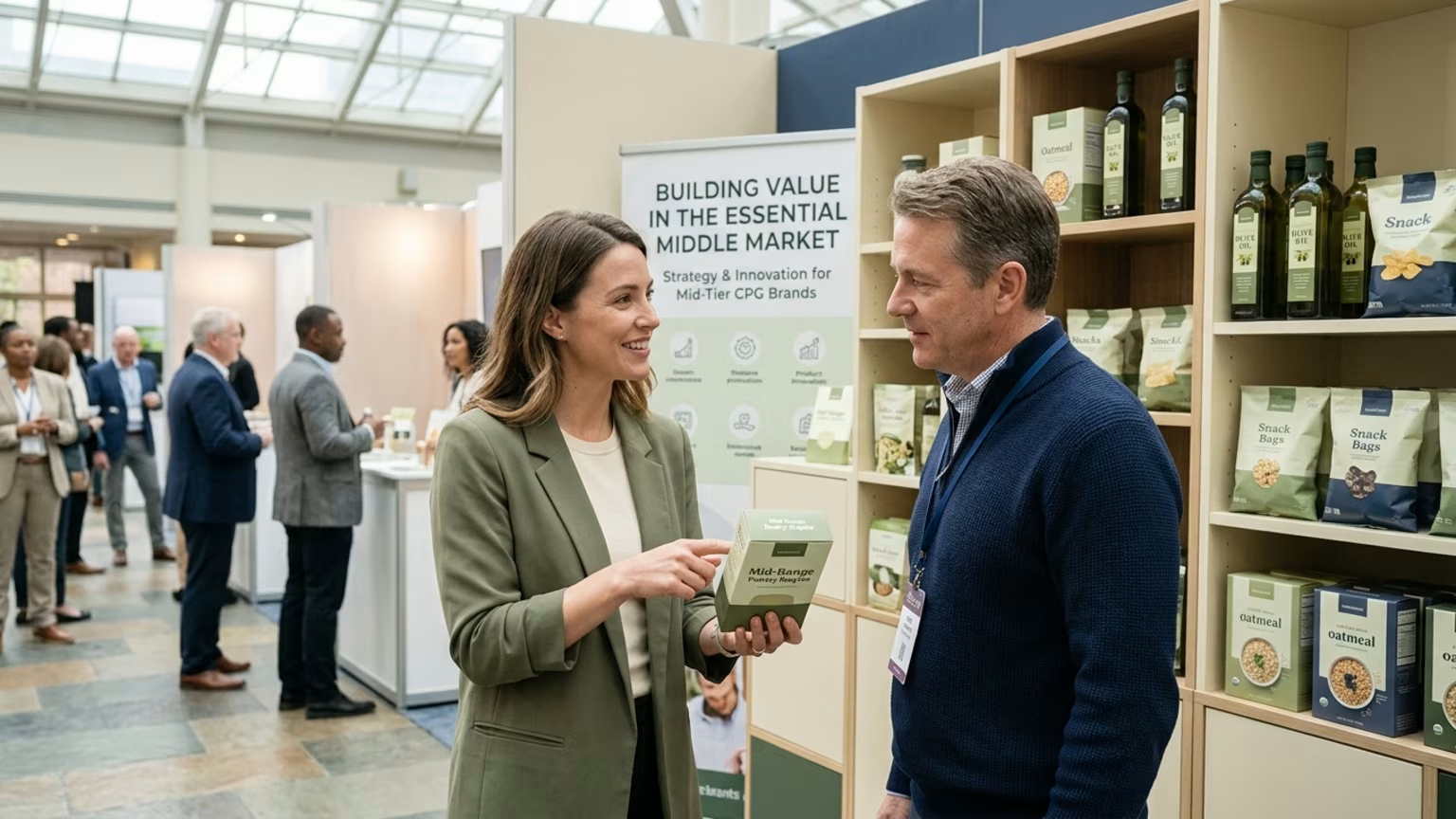
Trade shows present an entirely different but equally frustrating set of logistical hurdles. Brands spend heavily on premium booth space and massive custom fabrications. Attendees wander the aisles in a daze and clutch bags full of random promotional items. Securing a moment of genuine human connection requires immense effort and highly trained staff.
When your competitors are shouting for attention, standard product displays simply fade into the background noise. Brand managers feel immense pressure to prove that live events drive a solid Return on Investment. A static booth or a passive sampling table rarely moves the sales needle anymore. When consumers have endless entertainment options, traditional retail demonstrations fail to capture meaningful attention.
Marketing directors frequently struggle to defend these budget allocations to their executive boards. It is incredibly difficult to justify physical event spending without clear attribution models. A lack of clean data creates friction between field teams and digital marketing departments. Everyone wants to see a direct correlation between live brand interactions and increased retail velocity.
The current retail environment heavily favors brands that can command physical attention. Competitors are constantly fighting for premium shelf space and promotional endcaps. If a brand cannot drive its own foot traffic, retail buyers will quickly allocate that space elsewhere. Experiential activations prove to retailers that you can actively generate demand outside of their standard foot traffic.
To solve this systematic failure, modern CPG brands must build a multi-touch experiential framework. The strategy requires connecting high-level digital content directly to physical brand moments. When a shopper sees a product on a screen, they must soon experience it in the real world. This approach bridges the gap between passive viewing and active participation.
Our team calls this the integrated conversion method. We create experiential marketing programs built to connect emotion with action. Our process blends creativity, strategy, and data so every brand interaction drives measurable results. We craft experiences that engage all five senses. This approach helps people feel the brand directly, which turns fleeting moments into meaningful business outcomes.
Every activation must have a clearly defined physical footprint and a digital counterpart. A successful campaign integrates influencer partnerships, targeted media placements, and live sampling events into a single unified timeline. This keeps the messaging consistent from the television screen to the event floor. Consumers transition smoothly from initial curiosity to hands-on product trial.
This framework requires rigorous logistical planning and operator-grade discipline. It is not enough to simply hand out free soap or snacks at a festival. Field teams must capture consumer data and measure the direct impact of the interaction. Brands that establish proper systems for experiential marketing reporting gain clear visibility into their true campaign performance.
Scaling this framework across multiple regions demands precise coordination and intense logistical support. You need centralized systems for permitting, asset routing, and staff deployment. A minor shipping delay can completely derail a highly anticipated local sampling event. Top brands often rely on national event operations and logistics to maintain consistency across every single activation.
Consistency between digital and physical channels is the ultimate key to consumer recall. If the online messaging promotes a relaxing self-care routine, the physical activation must project absolute calm. A chaotic or poorly managed event will completely destroy the carefully crafted digital illusion. Top marketing operators understand that brand equity is built through flawless execution at every single touchpoint.
Executing a hybrid campaign requires a strict operational playbook. Brands must align their digital media buys with their physical street teams perfectly. A successful product relaunch does not happen by accident or through blind luck. It requires a documented process that field teams can execute repeatedly under high-pressure conditions.
Your internal teams and external agency partners must operate from the exact same blueprint. This alignment guarantees that every consumer receives the same high-quality brand interaction. Follow these exact steps to implement this strategy during a live event or product relaunch.
Executing this playbook eliminates the guesswork that often plagues marketing efforts. Your field staff will feel confident and empowered to drive real conversations with shoppers. The marketing leadership team gains total visibility into the daily operations of the campaign. This level of control is what turns physical activations into a predictable revenue channel.
Measuring the success of an integrated campaign requires strict attention to precise data points. Marketing leaders cannot rely on vanity metrics like impressions or total foot traffic alone. You must define both lead and lag metrics to prove actual pipeline growth. This discipline separates successful field operations from wasteful brand theater.
Many campaigns fail simply when the measurement framework is established too late in the process. You must define your tracking mechanisms before the first piece of event equipment ships. Establishing baseline metrics allows you to compare the campaign performance against historical marketing benchmarks. This proactive approach guarantees that every dollar spent can be tracked back to a specific outcome.
Lead metrics provide real-time feedback during the physical activation. Track the total number of qualified interactions, which means a consumer actively engaged with the ambassador. Monitor the sample distribution rate against your daily inventory targets. You must measure the immediate conversion rate of digital lead capture forms at the event space.
If these numbers fall behind pace, operators can adjust their tactics on the floor immediately. Lag metrics determine the overall financial success of the campaign after it concludes. Measure the direct sales lift at participating retailers within a ten-mile radius of the activation. Calculate the final customer acquisition cost by dividing total campaign spend by new buyers.
Routing qualified leads into a structured follow-up sequence is the mandatory post-event step. Field interactions generate highly intent-driven data that digital ads rarely capture. By sending a targeted offer within twenty-four hours, brands can dramatically increase retail sell-through. The physical handshake starts the relationship, and the digital follow-up closes the sale.
Brands that track these precise indicators never have to guess about their performance. They can present clear evidence of success to their executive teams. If you need help building this measurement framework, you can easily book a strategy call with our operations team. Tracking these metrics is mandatory for high-volume programs like Costco roadshows and retail demonstrations, where immediate sales impact is the primary goal.
The recent relaunch of the Dove Pink Beauty Bar provides a perfect example of this integrated strategy. Dove announced the return of this beloved legacy product by coordinating multiple consumer touchpoints simultaneously. According to industry reports from MediaPost, the brand utilized strategic media partnerships to build immediate cultural relevance. They blended entertainment with physical availability to capture attention effectively.
The campaign featured an in-show integration tied directly to co-branded content and creator collaborations. Instead of relying solely on traditional advertising, Dove placed the product within engaging entertainment formats. Viewers saw the iconic pink bar being used and discussed by trusted personalities. This generated significant digital momentum right before the physical rollout.
Creator collaborations played a massive role in generating organic excitement for the product return. Influencers shared their personal memories of the Pink Beauty Bar to build deep emotional connections. This authentic storytelling resonated heavily with older consumers while introducing the product to a younger demographic. The digital conversations primed the market for the eventual physical product drop.
The experiential components brought the entire campaign full circle for the consumer. Experiential marketing trend data shows that targeted physical touchpoints heavily reinforce digital brand messaging. Dove allowed their most passionate fans to interact with the brand in a highly tangible way. These live interactions generated secondary user-generated content, further extending the reach of the campaign.
Remember that chaotic retail floor where shoppers walk past beautifully designed cardboard displays. By blending strategic media integrations with disciplined experiential marketing, brands can finally stop the shoppers in their tracks. The return of a legacy product becomes less of a gamble and more of a guaranteed pipeline generator. Experiential marketing truly turns passive observers into active participants.

30 Years Experiential & Retail Activation Partner for CPG & Beverage Brands | Multi-Market Demos, Roadshows & Costco/Club Programs That Actually Sell