Robbie Thain
Founder, CEO

Turn chaotic trade shows into data-driven testing grounds. Fuse consumer insights with rigorous field execution to drive measurable retail sales growth.
Industry analysts report that nearly 80 percent of marketing executives demand clear sales attribution from their live consumer events. The days of justifying a massive booth budget with subjective feelings and rough headcount estimates are over. Brands must now prove that every physical activation directly influences retail purchasing behavior.
The Insights Association recently outlined its "2026 Ignite: CPG" program to help brands fuse advanced consumer research directly with retail experimentation. For experiential marketers and brand operators, this signals an urgent mandate to transform traditional sampling activations into highly measurable engines for in-store growth.
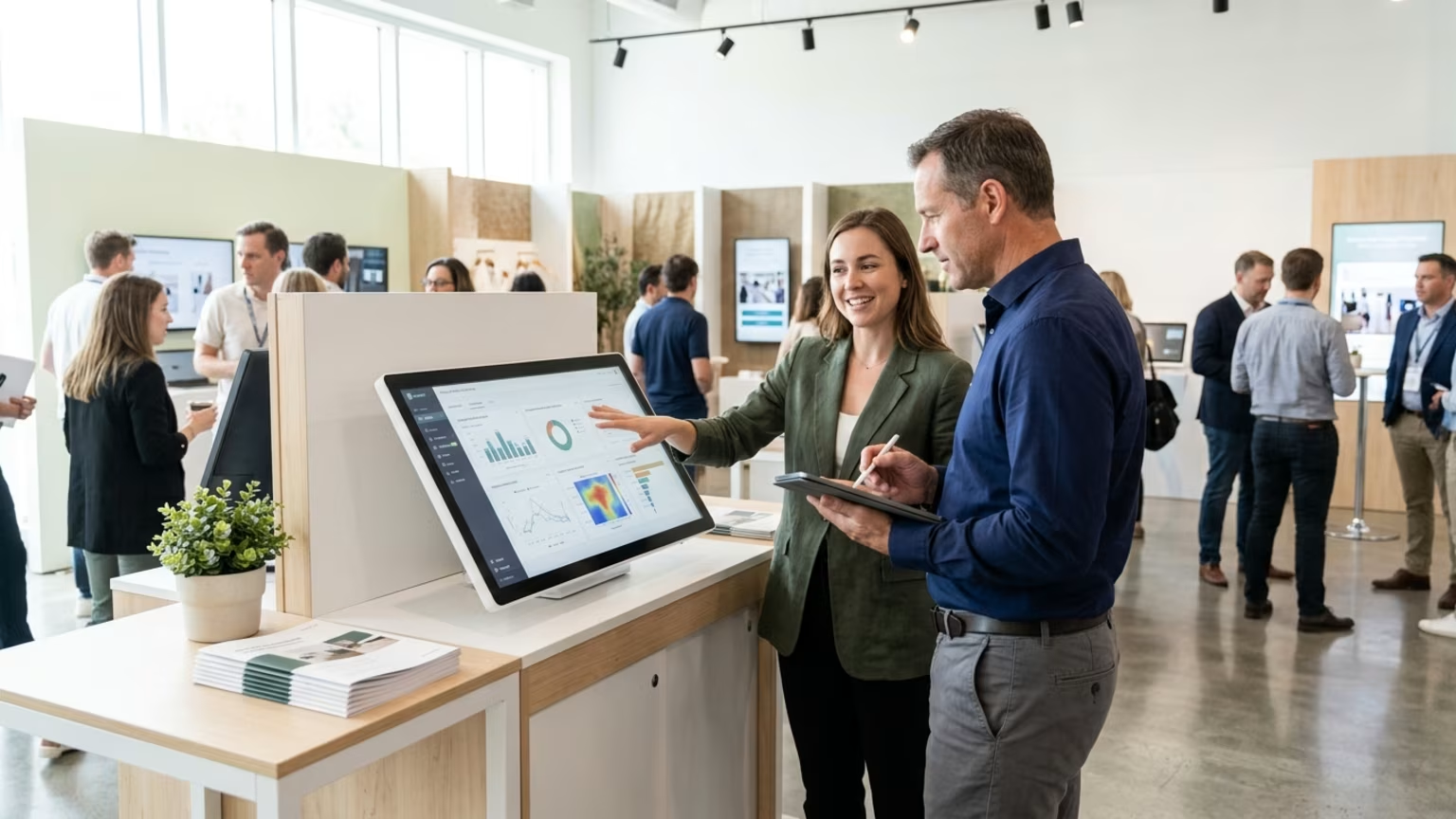
The doors open at a major industry expo and a massive wave of retail buyers floods the main aisle. Your team stands ready behind a beautifully designed booth filled with premium product samples. By noon, the main sampling bins are completely empty and the booth staff is exhausted. You collected hundreds of business cards and scanned countless generic attendee badges across three long days.
A month later, executive leadership asks for the exact Return on Investment (ROI) from that expensive weekend. The marketing team stares at a spreadsheet full of basic contact info with zero connection to actual retail sales. This familiar scene happens at countless shows where brands confuse a busy footprint with actual business growth. The chaotic environment of live events often strips away any rigorous data collection plan.
Operators in the field know this frustration intimately. You spend months planning the logistics, coordinating the freight shipments, and perfecting the booth design. The actual consumer interactions remain shallow and disconnected from broader commercial goals. The gap between field execution and boardroom expectations continues to widen.
The tension on the floor only compounds when the financial stakes are incredibly high. A national brand launch requires massive capital investment for the booth space, the custom fabrication, and the travel logistics. Field managers run around solving minor crises with shipping delays, electrical drops, and union labor disputes. Survival mode takes over quickly.
Connecting field marketing to actual retail outcomes requires a strict operational framework. The Insights Association highlighted this exact requirement in their "2026 Ignite: CPG" program agenda. Their upcoming one-day event focuses heavily on using advanced consumer insights and rigorous experimentation to drive product innovation. Brands must stop treating live activations as isolated branding exercises and integrate event data directly into commercial strategies.
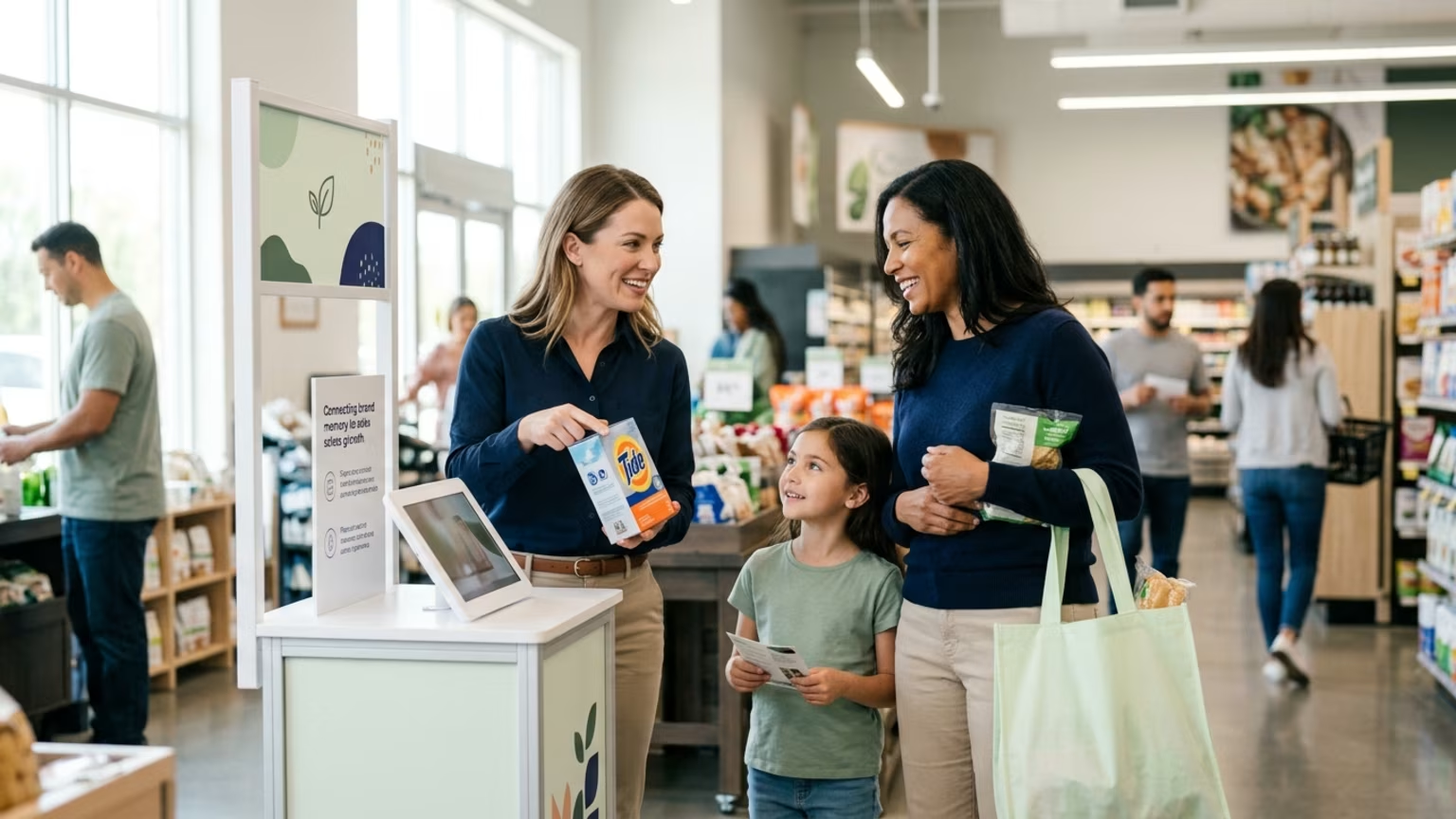
In our experience, random acts of sampling rarely move the needle at the cash register. We have executed over 1000 campaigns across all 50 states, bringing brands to life in every major U.S. market. This level of repetition reveals that success comes from treating the trade show floor like a live retail laboratory. You must define your exact consumer target before the first sample is ever poured.
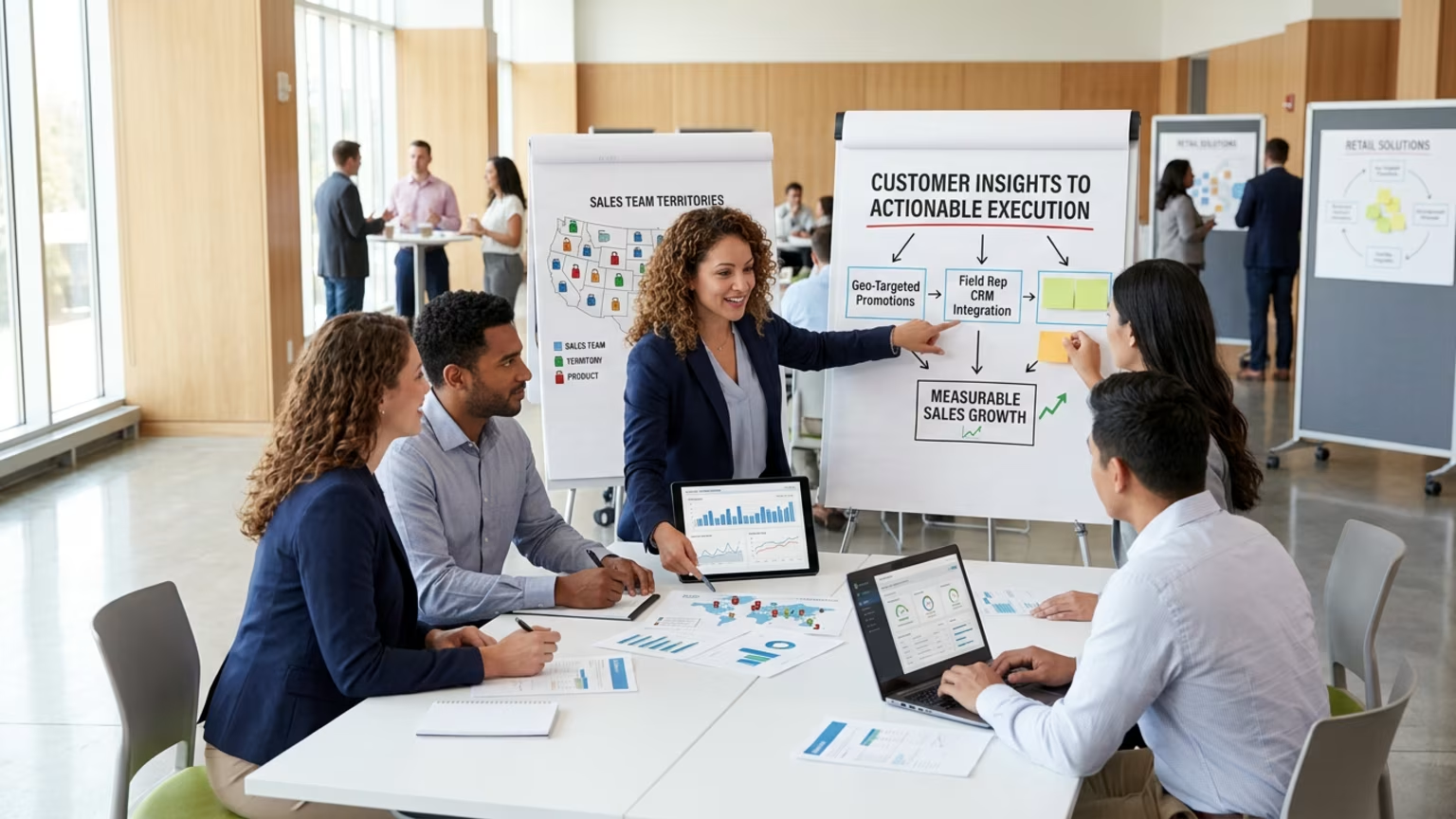
Leaders must bridge the divide between insights and action. The marketing department needs to understand the overarching data requirements of the entire organization. A targeted sampling campaign can provide real-time feedback on price elasticity, flavor preference, and packaging appeal. You just have to build a continuous feedback loop that captures real shopper insights consistently.
Many organizations struggle to share data across different departments effectively. The field marketing team gathers direct consumer feedback, and the retail sales team never sees it. Breaking down these internal silos is the only way to build a functional data pipeline. You must establish clear communication channels long before the activation begins.
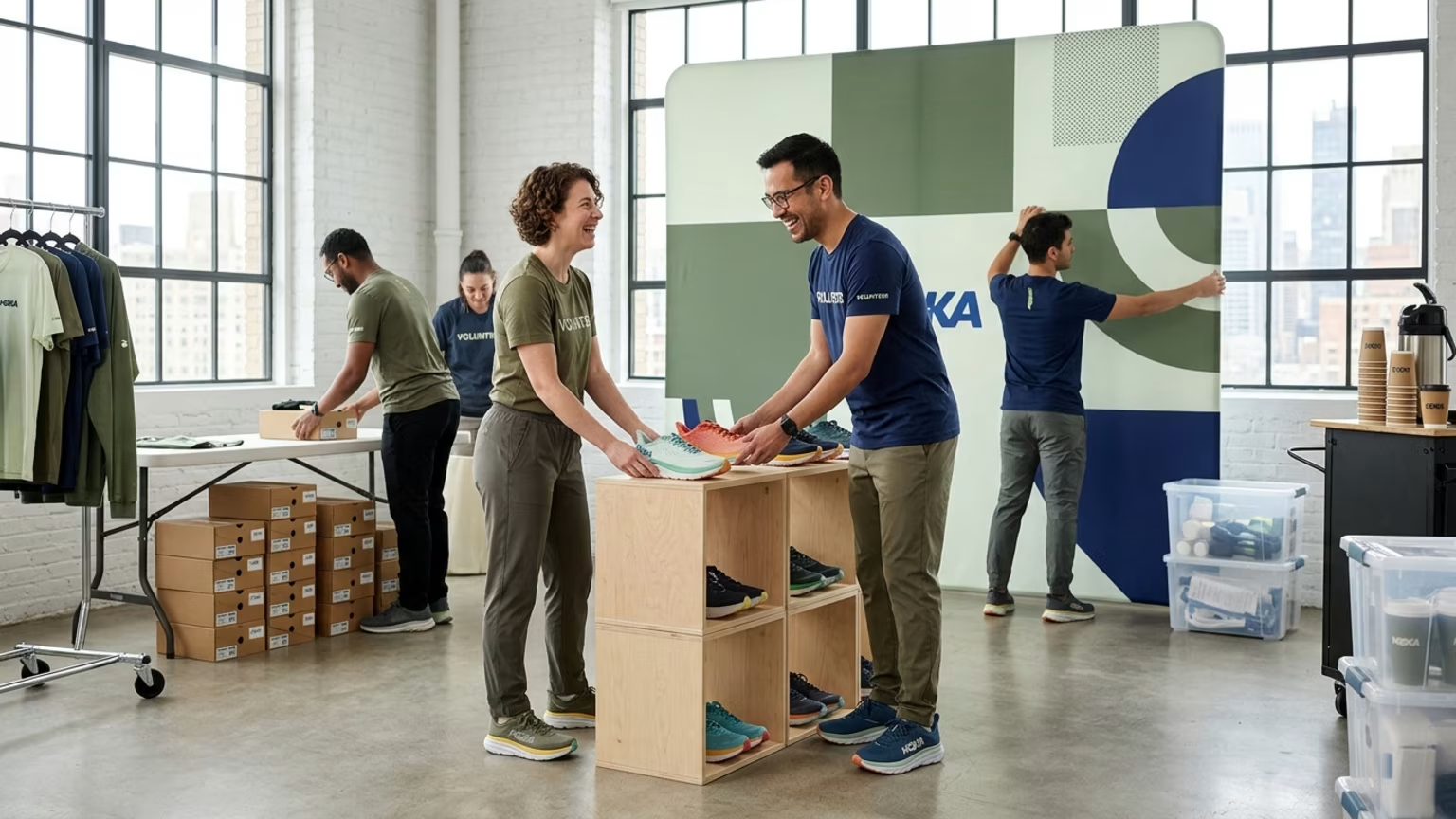
This shift toward data accountability forces marketing operators to rethink their entire staffing model. Brand ambassadors can no longer act as simple human billboards handing out free snacks. They must operate as trained data collectors who can guide consumers through a structured feedback process. You need intelligent operators who understand the basic principles of consumer research.
Building a reliable data engine at a live event requires absolute military precision. You cannot wait until the week of the show to plan your lead capture strategy. Use this exact sequence to turn your next retail demo into a predictable sales pipeline. It takes discipline to execute this process flawlessly.
A disciplined approach to data means tracking the right indicators at the exact right time. Vanity metrics like total samples distributed will never justify your operational budget next quarter. You need concrete numbers that prove your experiential marketing creates actual buyers. Leaders who master 5 metrics to prove retail demo ROI earn the right to expand their field budgets.
Tracking these data-driven metrics to prove roadshow success separates professional operators from amateur event planners. If your current agency hands you a generic wrap report with zero sales data, it is time for a change. You should book a strategy call with our team to build a measurement plan that actually works. We specialize in turning chaotic live events into predictable revenue generators.
Applying these principles fundamentally changes how brands operate in the physical world. A premium snack brand recently wanted to test a bold new flavor profile before funding a massive national rollout. They skipped the traditional, costly focus groups and used a series of regional trade shows to gather immediate feedback. They knew that real-world testing provides superior data compared to sterile conference rooms.
The activation team treated the busy booth like a high-speed testing facility. Brand ambassadors offered a blind taste test and used connected tablets to record real-time flavor rankings. This direct engagement captured thousands of unique data points from highly qualified snack buyers. The brand matched this data against their target demographic profiles to verify the results.
They used this exact data set to convince a major national retailer to authorize the new product line. The buyer saw the verified consumer excitement and immediately allocated premium shelf space. This data-driven approach transformed a standard sampling event into a powerful enterprise sales tool. It proved that first-party shopper data optimizes in-store engagement when collected correctly.
The absolute chaos of a busy expo aisle will never fully disappear. Distracted buyers will always rush past your booth, and event logistics will always present unexpected hurdles. The difference lies in how you capture and control the interactions happening within your controlled footprint.
By treating live events as strategic data engines, you can finally answer leadership when they ask about real sales impact. The empty sampling bins at the end of the day should represent measurable growth instead of just exhausted resources. When you fuse rigorous insights with flawless field execution, every trade show becomes an opportunity to dominate the retail shelf.

30 Years Experiential & Retail Activation Partner for CPG & Beverage Brands | Multi-Market Demos, Roadshows & Costco/Club Programs That Actually Sell