Robbie Thain
Founder, CEO

Learn how CPG brands are moving beyond basic product giveaways to build structured learning and conversion engines through disciplined experiential marketing.
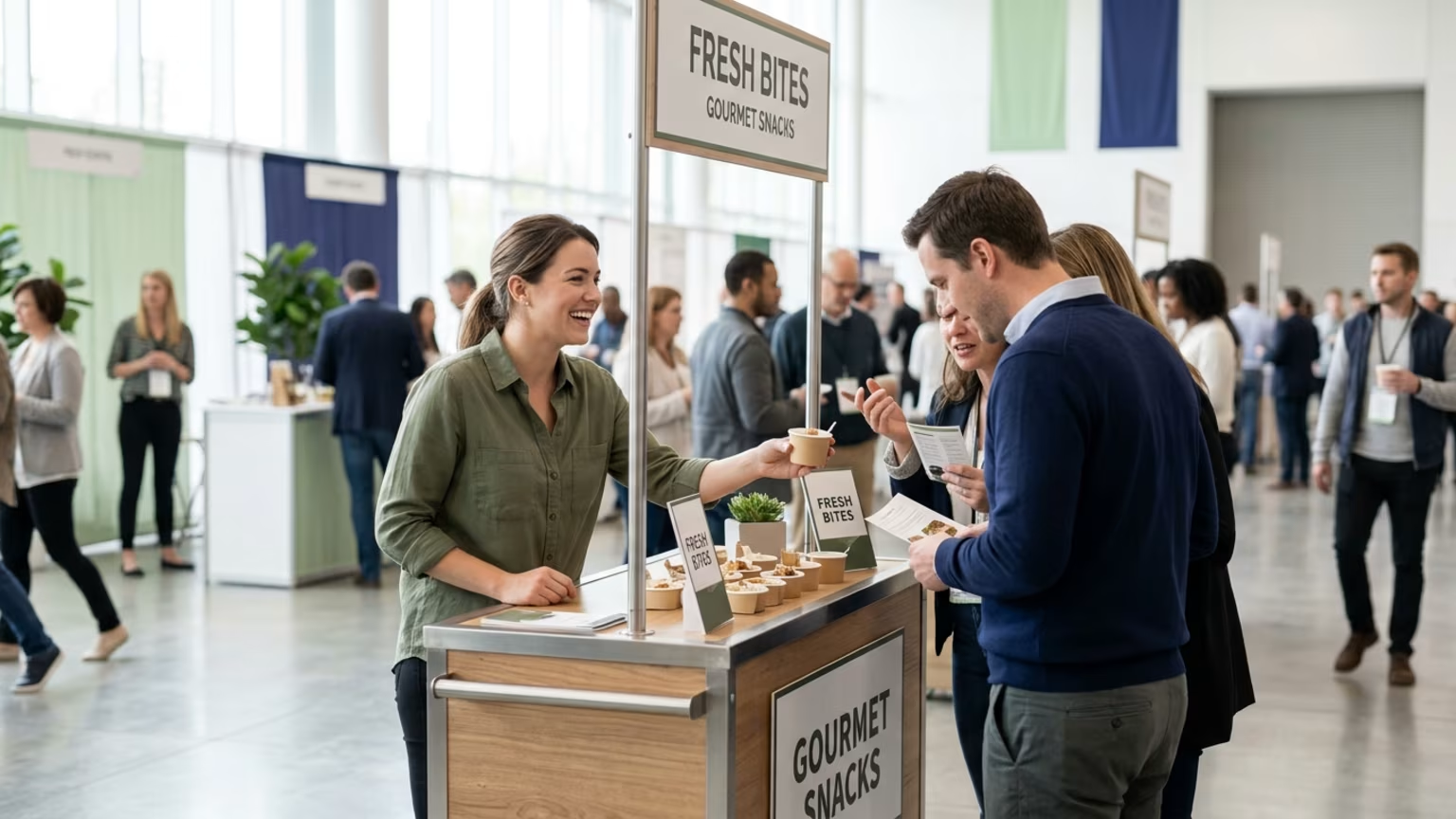
Retail demo programs get judged on cups poured instead of incremental pipeline. That mismatch is exactly why most product sampling campaigns function as expensive catering operations rather than strategic growth engines. Handing out thousands of free snacks might make a trade show booth look busy. It does not automatically create measurable retail demand.
When marketing leaders approve massive budgets for physical trial, they expect to see a clear path to revenue. They usually get a report showing massive foot traffic and empty sample trays instead. Judging a live activation by audience size creates a dangerous illusion of success. The brand assumes that pure exposure will somehow translate into future sales without a mechanism to capture data.
This mainstream approach fails because it assumes everyone who takes a free item is a potential buyer. Staff members often hand over the product passively without qualifying the consumer or gathering actionable feedback. This leaves marketing teams unable to separate genuine purchase consideration from people simply looking for a free bite. CMOs sweat over spending six figures to get zero qualified pipeline in return.
Without a defined mechanism to track post event behavior, the field operation devolves into a beautiful disaster. There is no visibility into whether the trial influenced a purchase or caused a brand switch. The resulting data shows high engagement but offers absolute silence on actual buyer behavior. Teams end up repeating the same expensive activations year after year with no proof of commercial impact.
We have executed over 1000 campaigns across all 50 states, bringing brands to life in every major U.S. market. From retail demos in Seattle to roadshows in Miami and events in Honolulu, our teams activate brands wherever our clients' audiences are located. Through that extensive work, we know that warm and human authenticity must be paired with brutal operational discipline. A successful field program cannot rely solely on friendly staff handing out flyers.
It requires rigorous logistics and a structured conversation architecture. American Guerilla Marketing describes sampling as a coordinated field operation involving inventory staging, strict permitting, staffed distribution and consumer data capture. When you combine approachability with strict execution guidelines, you turn a simple giveaway into a lightweight research instrument. Ambassadors should be trained to ask a qualifying question before serving the product to filter out irrelevant traffic.
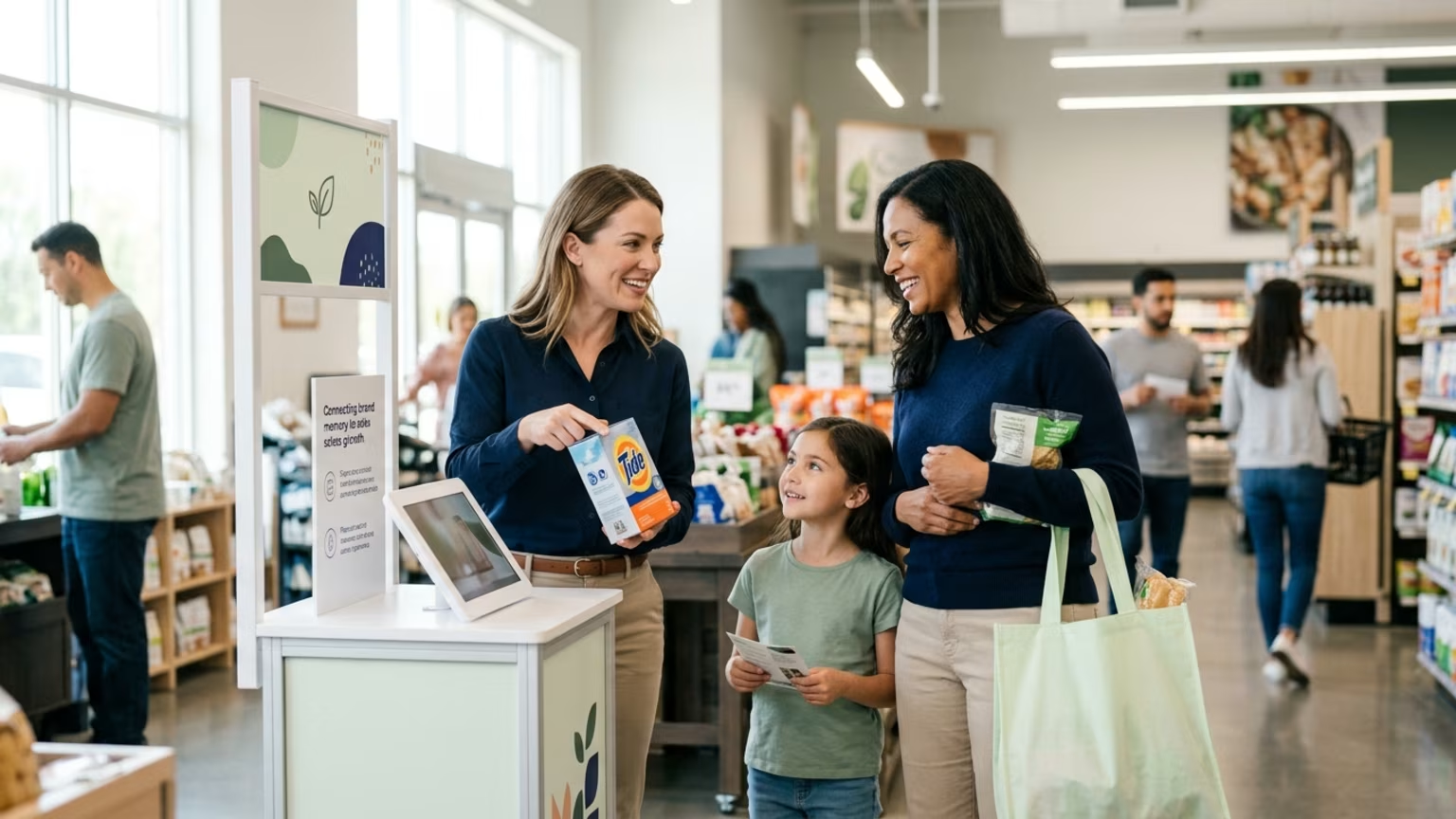
Context also dictates what the brand learns during the interaction. Recent experiential examples describe food and beverage brands using themed destinations, guided tastings, sourcing stories and educational touchpoints instead of relying on a basic sampling table. Garnier recently demonstrated this by using consultation style beauty stations that allowed attendees to test products with on site specialists. This format extends the interaction beyond a quick handover and creates opportunities for consumers to compare options directly.
By mapping the physical space carefully, brands can direct participants toward a clear purchase station. Practitioner guidance recommends creating a defined engagement zone and moving consumers seamlessly to the next step. When brands refine retail demo and sampling strategies, they shift the goal from raw attendance to verifiable commercial actions. This operator mentality guarantees that every physical touchpoint serves a strategic business purpose.
A major failure point in live campaigns happens when temporary staff act like human brochure stands. Brand ambassadors must be given a specific conversation architecture that qualifies the shopper within seconds. Teams should be trained on one qualifying question, one product benefit, one sensory cue and one clear next action. This prevents the interaction from stalling into an awkward silence after the sample is consumed.
Capturing data effectively requires using structured feedback fields rather than vague conversational notes. Staff can record objections, flavor preferences, use occasions and retailer friction using drop down menus on a tablet. Using specific categories makes the post event reporting actionable for product managers and sales directors. This precision turns thousands of brief chats into statistically significant market research.
Consumer spending pressure makes efficient trial more important than ever before. Circana reports that Retail Food & Beverage volume was down 0.6% and non food CPG units were down 2.6% in its latest four week period. In that tight environment, prioritizing shoppers with a realistic purchase opportunity is absolutely vital. Brands must stop optimizing for undifferentiated reach and start designing programs for qualified conversions.
Industry data highlights the potential value of physical trial when executed correctly. A Pro Mobile Marketing article citing EventTrack reports that 61% of consumers are more inclined to purchase after a live brand experience. Another source, IDEKO, cites EventTrack reporting that 85% of consumers are more likely to purchase after attending a live marketing event. While these figures represent general purchase likelihood rather than guaranteed sales, they highlight the value of direct brand engagement.
To capture this value, brands should build an offer that advances the purchase path immediately. Ulala's experiential Return on Investment guidance recommends pre tagging digital touchpoints, defining the attribution window in advance and matching CRM data after the campaign. This allows teams to turn product sampling into actual retail sales by tracking coupon redemptions directly back to the physical sample. Gradient Experience lists retail lift insight, lead capture, sampling conversion and social amplification among the outputs CPG brands increasingly expect.
Some operators are completely redesigning the relationship between trial and purchase. Field Agent Canada describes a Buy & Try model that links a full size retail purchase with feedback, merchandising intelligence and verified reviews. They cite Empowered Brand Marketing figures stating that 53% of consumers buy after sampling and 42% report switching their primary brand choice. This model is particularly useful when a brand needs both conversion evidence and reliable merchandising intelligence.
The post trial follow up sequence should be designed before the first sample is ever distributed. Any data capture workflow must be transparent about what information is being collected and how the brand will use it. U.S. commercial email programs should be designed around CAN-SPAM requirements for accurate sender details, truthful subject lines, a physical address and a working opt out mechanism. Brands must gather actionable leads without creating unnecessary friction for the consumer.
The broader research journey is fragmenting quickly across digital and physical spaces. Circana reports that 34% of consumers use AI to evaluate options and find new products. This increases the value of physical sampling as a source of firsthand experience that digital search simply cannot replicate. Connecting the physical trial to a digital follow up guarantees the brand stays top of mind when the consumer finally decides to purchase.
Every activation must be built around a measurable funnel that proves commercial viability. Teams should track eligible footfall, conversation rates, qualified trials and offer acceptance to validate their strategy. When executives demand accountability, this funnel data provides concrete evidence of market demand. It helps brands scale product sampling without sacrificing consistency across regional and national campaigns.
Measuring an experiential marketing campaign by how quickly the product disappears is a fundamental operational error. CPG brands must demand rigorous execution over mere aesthetic appeal or crowd size if they want to drive real growth. Real commercial impact requires treating the event floor as a structured data capture environment from start to finish. When marketing teams prioritize operational precision and measurable next steps, they turn fleeting physical interactions into reliable retail velocity.
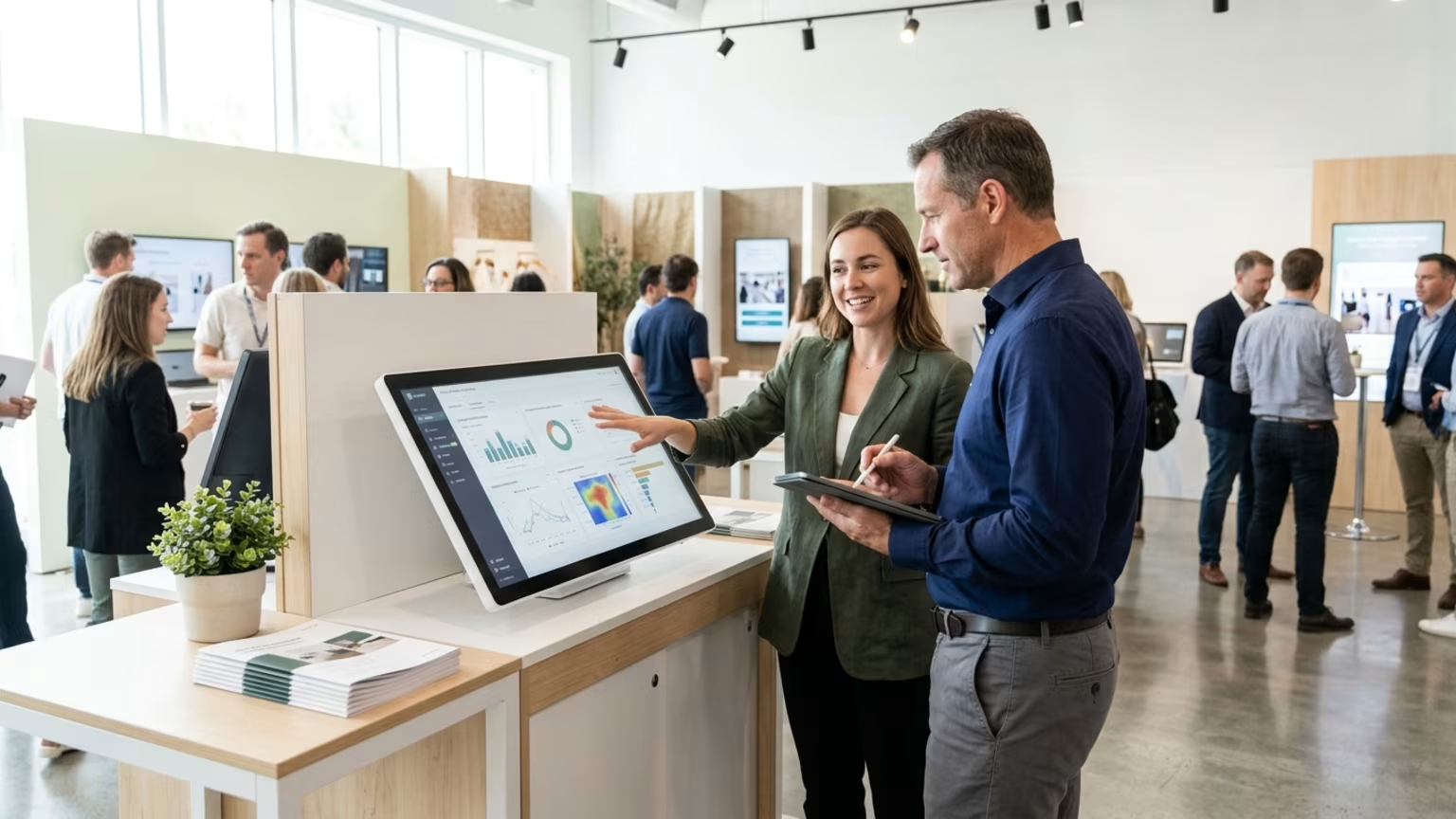
Upgrading a product giveaway into a structured learning and conversion engine demands intense logistical focus, which is exactly where Makai takes ownership of your physical activations. We solve the problem of scattered attention and poor booth flow by planning and managing trade show spaces that attract attention, start conversations, and convert visitors into customers.

30 Years Experiential & Retail Activation Partner for CPG & Beverage Brands | Multi-Market Demos, Roadshows & Costco/Club Programs That Actually Sell