Robbie Thain
Founder, CEO

Compare roadshow markets on audience fit, retail readiness, site logistics and consistent measurement before choosing high-traffic or retailer-adjacent stops.

Three core measures anchor EMMA’s public event-measurement guide: audience value, anticipated behavioral change and brand-perception shift, according to Event Marketer. For roadshow planning, that moves the discussion beyond how many people pass the vehicle. The market decision should connect a relevant audience encounter with a clear next action.
Choose roadshow markets by evaluating audience fit, commercial readiness and operational feasibility together. Then compare individual venues on relevant interactions and purchase or follow-up opportunities. Set the measurement approach before the route is committed. Treat high foot traffic as an opportunity to assess rather than proof of commercial value.
The AIM Agency’s planning guidance recommends checking customer fit and commercial readiness before setting a route. That includes stocked retailers and delivery coverage. Local sales support and distribution partners also belong in the market assessment.
For Makai, the planning question connects directly to our work: bringing products face to face with consumers through sampling programs and roadshows. Those programs are designed to build relationships and support retail velocity across multiple locations. A route therefore needs more than an attractive calendar of appearances.
A useful shortlist answers these questions:
A high-traffic venue may offer more passersby. A retailer-adjacent location may offer a clearer purchase path when the product is stocked. The available guidance does not establish which option produces greater sales, so this is a decision to test rather than a rule to declare.
That distinction is the starting point for connecting route choices with audience and retail priorities.
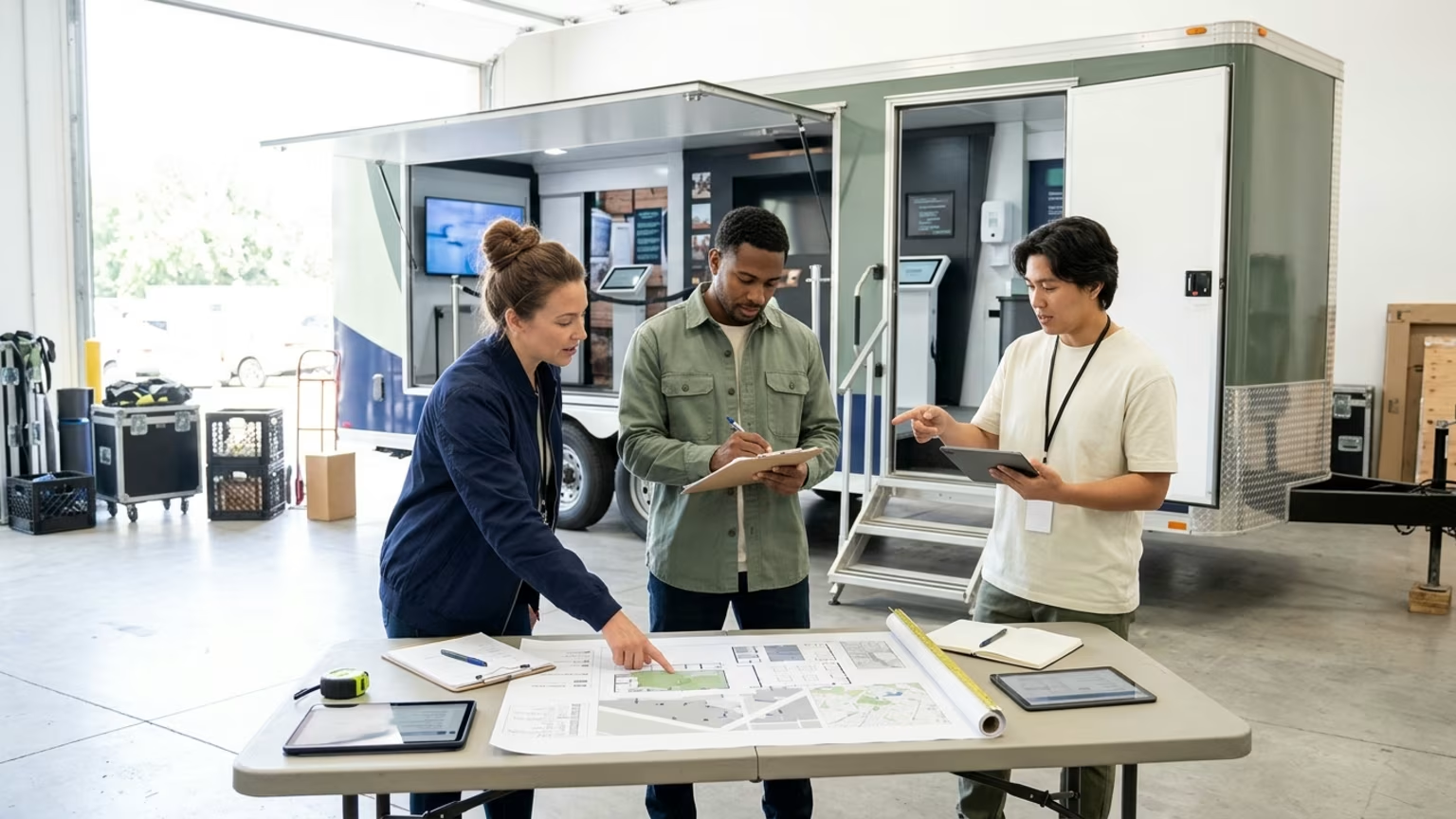
Permits and site access belong in the market assessment before routing. They are part of whether a proposed stop can operate as intended, not merely expenses to add after the location is chosen.
NVS Visuals identifies permits and venue fees among mobile-tour cost drivers. Its planning guide also includes vehicle rental or build, fabrication and route-related travel. Staffing and insurance affect the quote alongside lodging and product or samples.
The guidance provides cost categories rather than a universal permit checklist. Site-specific permissions and approval requirements therefore need their own confirmation.
A planning brief can organize the supported operational questions into three groups:
Event calendars also deserve attention. The research identifies event timing and venue access as planning inputs alongside transit time. A relevant event does not remove the need to assess whether the particular site is workable.
Makai’s logistics services cover sampling-product and event-gear storage. We also ship and track those materials while coordinating nationwide delivery. Our view is that a venue shortlist should account for that physical delivery work rather than treating the vehicle’s arrival as a separate problem.
Cost comparisons should use equivalent categories. The AIM Agency recommends comparing operating costs consistently while keeping delivery and measurement comparable. A venue fee alone is not the full route-related cost picture.
For a closer operational review, assess site readiness alongside market appeal.
Training should preserve a consistent program without replacing genuine conversation with a rigid performance. Makai’s retail demonstrations use trained brand ambassadors to support product trial and in-store sales through real conversations.
For us, aloha means an approachable human exchange backed by disciplined execution. The person in front of the product is not simply a traffic unit. The interaction should help that person understand the experience and decide whether a next step is relevant.
The AIM Agency recommends consistent training and counting rules when comparing stops. That matters to the planning brief: a market comparison needs a shared understanding of what the team is counting.
The preparation discussion should cover:
Consistency belongs in the definitions. Warmth belongs in the conversation.
A busy stop should not automatically win because its team reports more activity. The AIM Agency advises looking at intended-audience interactions and requested next steps. Our editorial view is that the ambassador’s role and the measurement brief should support each other rather than compete for attention.
The bridge from a handshake to a customer relationship management record starts with a defined next action. Trial and sign-up are different outcomes. A request for follow-up is different again.
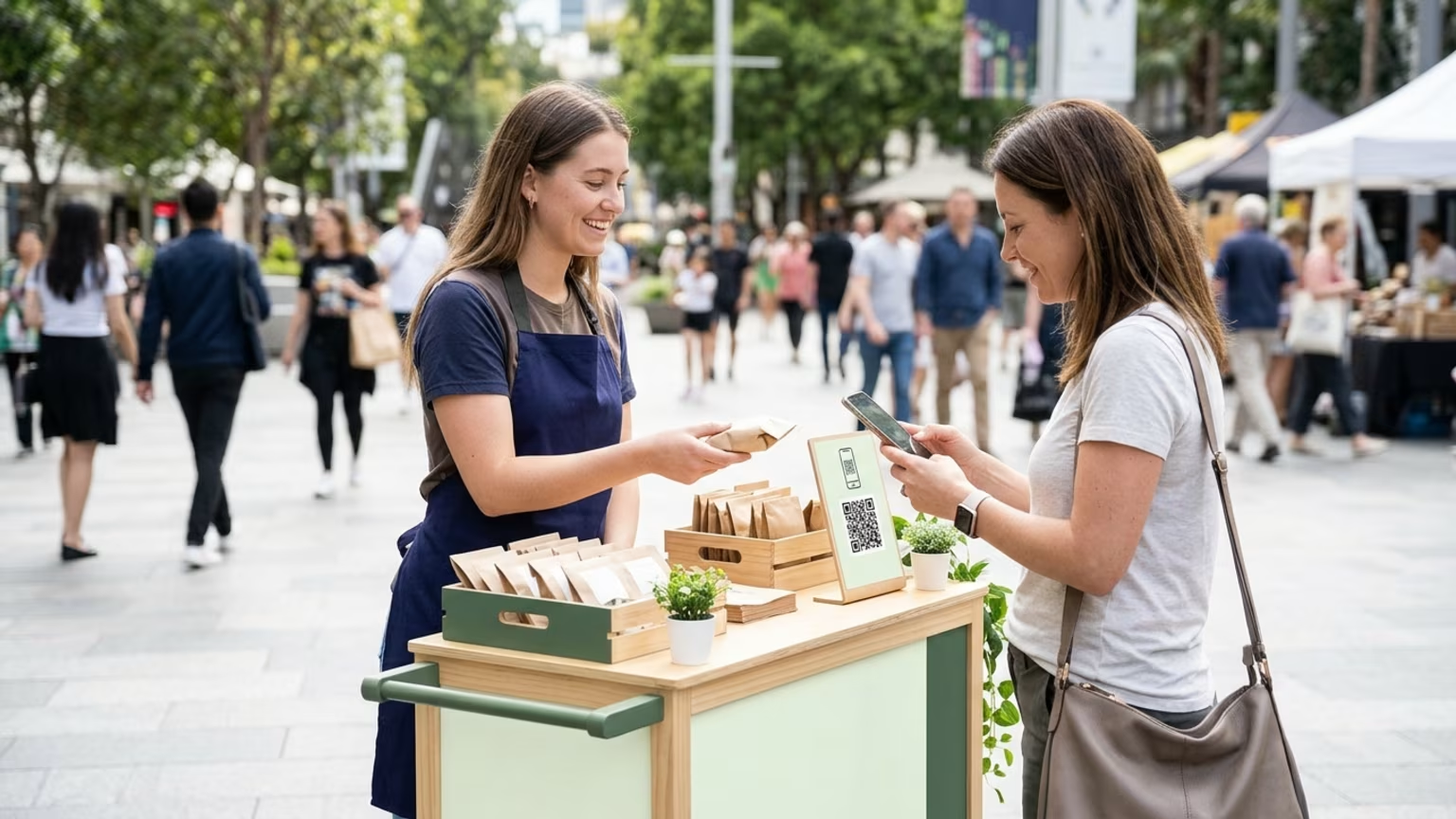
Makai integrates QR codes and mobile technology with real-world activations across retail and tour experiences. Our stated service scope also extends from permitting to CRM reporting. That supports connected planning without implying that every interaction becomes a qualified lead automatically.
A practical planning sequence follows the evidence:
This is where connecting physical experiences with digital response becomes a concrete planning task. The capture mechanism needs a purpose beyond producing scans.
Return on Investment (ROI) also requires separating activity from later outcomes. Tentcraft distinguishes leading indicators such as qualified visitors and opt-ins from later indicators such as purchases. It discusses retail-sales comparisons as another tracking approach.
Alongside those commercial signals, EMMA’s framework adds audience value and anticipated behavioral change. Brand-perception shift is its other core measure. Those dimensions provide a broader measurement vocabulary rather than proof that an activation caused a sale.
A disrupted stop needs an exception plan rather than a normal-looking report. The field leader’s immediate planning question is what can still be delivered and measured under the changed conditions.
Backup staffing and technical recovery require a separate operating plan. The cited guidance does not specify replacement coverage or a technology failover procedure. It does support a narrower contingency approach built around commercial readiness and consistent reporting.
Reassess the viable activity. The AIM Agency’s framework starts with the audience and the next step the business can support. When staffing or technology changes, the decision brief should return to those questions rather than assume the original experience remains intact.
Preserve counting definitions. NVS Visuals recommends tracking visitors and samples alongside demonstrations and sign-ups. A technology failure does not make those categories interchangeable. The report should distinguish recorded activity from the response that was intended but not captured.
Document the exception. The AIM Agency recommends keeping operating differences visible when comparing stops. Its examples include stock availability and trading hours as well as weather and nearby promotions. A staffing or capture failure should likewise remain visible as an operating exception.
Keep the comparison honest. A disrupted stop can inform the next operational decision without serving as a clean verdict on the market. Our recommendation is to separate what happened from what the team can reasonably conclude about venue choice.
The next planning step is a defined comparison rather than a longer city list. Select a high-traffic candidate and a retailer-adjacent candidate using the same audience and commercial-readiness questions.
Then agree on consistent interaction counts and next-step measures. Keep operating costs comparable and local conditions visible. The AIM Agency recommends testing before scaling; that makes the pilot a way to answer a specific question rather than validate a route already chosen.
The useful output is a reasoned market decision: who engaged, what action followed and what it took to deliver the stop.
Roadshow delivery is a daily responsibility for field marketing leads; Makai brings sampling-product storage and nationwide shipment coordination into the program. For CPG teams balancing permits and staffing with market commitments, Makai combines these logistics services with experiential campaigns designed to turn consumer contact into qualified leads.

30 Years Experiential & Retail Activation Partner for CPG & Beverage Brands | Multi-Market Demos, Roadshows & Costco/Club Programs That Actually Sell