Robbie Thain
Founder, CEO

Plan a measurable next step after mobile sampling, from logistics and ambassador conversations to CRM routing and accurate purchase reporting.
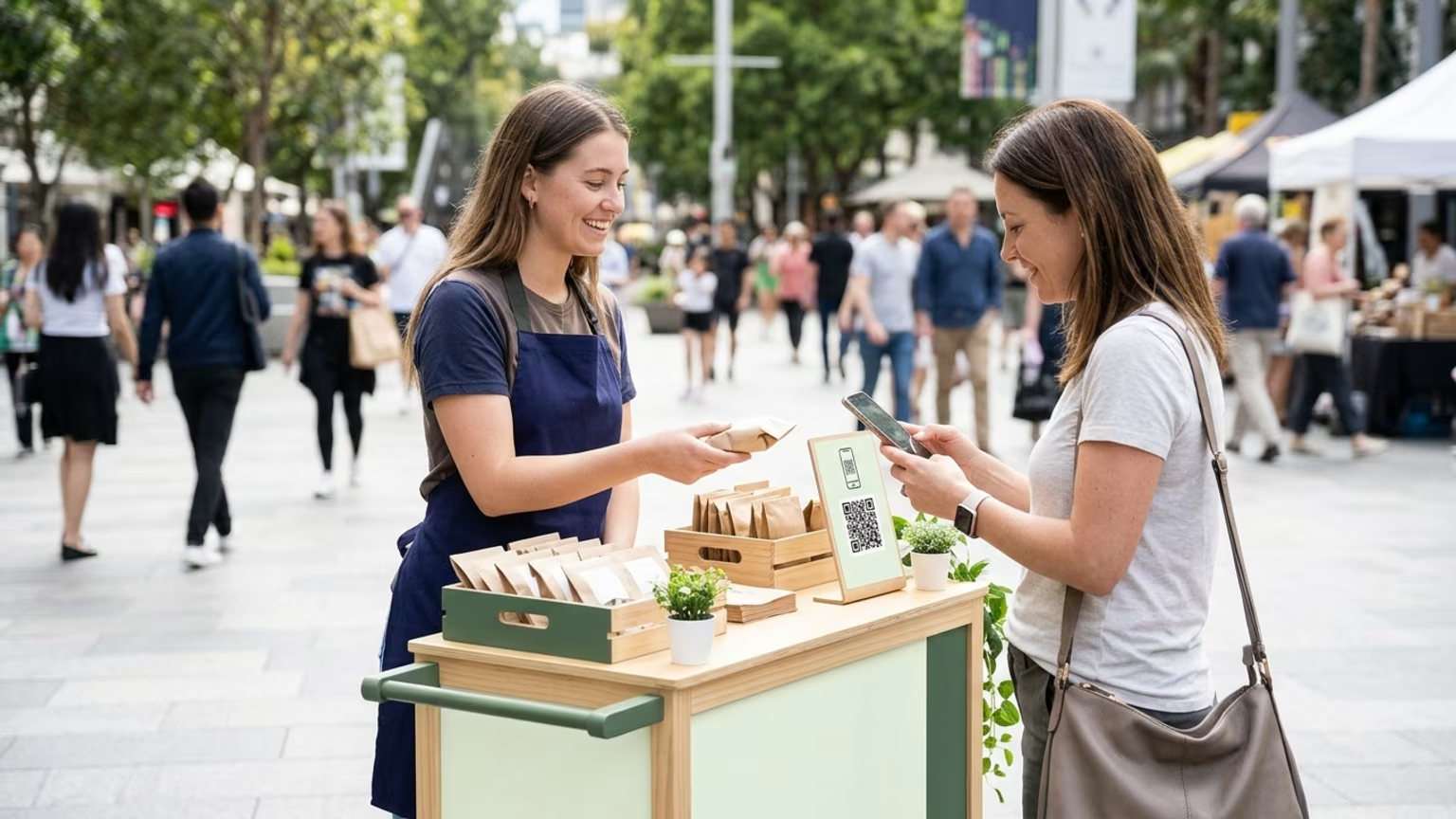
Connect product trial to a defined next action, then record what consumers actually do. That action might be a retailer visit, an offer redemption, or a purchase. Sample distribution measures delivery of the experience; the next action needs its own measurement.
In its Kérastase case study, GLOBE GROUPE describes a mobile hair diagnosis leading to a personalized sample. A scratch-card mechanic encouraged a Sephora visit. Some prizes required proof of purchase.
That case documents the journey rather than store-visit, redemption, or sales-conversion results. It also does not quantify participant drop-off or how convenience affected conversion. A scan, redemption, or verified receipt documents behavior but does not establish that sampling caused a purchase.
At Makai, we specialize in retail demonstrations, sampling programs, and roadshows that bring brands face to face with their audiences. We also store sampling products and event gear, then coordinate shipping and delivery nationwide. For us, the planning challenge is connecting that physical execution with a consumer action worth measuring.
The operating brief should answer three connected questions:
Keeping those answers separate gives the campaign a clearer path from trial to reporting.
Treat physical readiness and the consumer journey as connected planning workstreams. A clear offer does not answer where the activation can operate. A delivered shipment does not answer what the consumer should do after trying the product.
Permit types and filing deadlines are not established by the sampling mechanics described here. The operating brief needs to identify which permissions are confirmed and which remain unresolved for the intended location.
Makai's services extend from permitting to CRM reporting. Our storage and logistics work covers sampling products and event equipment, including shipment tracking and nationwide delivery coordination.
We ran the Little Debbie Share a Smile Tour as a 21-market mobile activation using a branded truck, trailer, and Cupcake Smart Cars. That experience is a concrete reminder to plan around the actual assets involved rather than treating every stop as an interchangeable sampling station.
A useful readiness review connects the physical and measurement plans:
For related planning context, review the connection between product logistics and purchase-focused reporting.
Start with the product conversation, not the capture form. Makai's retail demonstrations use trained brand ambassadors to support in-store sales through real conversations and product trials. Our experiential work is built around hands-on moments that connect emotionally.
Our aloha-style approachability provides the human standard. We believe a consumer should understand the invitation without feeling pushed through a data collection exercise. Warmth and commercial purpose can coexist when the next action is clear.
The training brief should therefore connect the product explanation with the action the campaign intends to measure. A retailer visit is a different invitation from offer redemption. Registration is another action again, and it should not be presented as if it were a purchase.
Keep the explanation aligned with the mechanic:
The Kérastase example is useful here because its diagnosis, sample, and retailer invitation form a sequence. The staffing lesson is to make that sequence understandable rather than reciting every campaign element at once.
Treat each added question or scan as a potential point of friction. The goal is a useful conversation with a clear continuation, not the longest possible interaction.
A handshake is an interaction. A CRM record needs a defined connection between that interaction and the response being recorded. The bridge might be a campaign-specific QR destination, a code, or a redemption mechanic.
Makai's positioning connects face-to-face experiences with qualified leads and CRM reporting. The practical planning task is to define what becomes a record, what that record means, and where it goes for follow-up. A sample recipient should not automatically become a qualified sales opportunity.
A useful sequence follows the actions supported by the campaign design:
This is a planning model rather than a specification for a particular software integration. The technology choice still needs to match the action and reporting requirements.
The distinction matters for Return on Investment (ROI). An interaction count answers a different question from a purchase record. Reporting should retain those differences instead of placing every response under a single conversion label.
Our measurement approach tracks awareness, engagement, and conversion. We provide reporting on reach, trials, leads, and sales to guide campaign optimization. Those categories give marketers different views of performance rather than one blended activity total.
For the CRM brief, describe the expected record in plain language before discussing software. Is it a consumer requesting follow-up? A recorded redemption? A purchase supported by a receipt? The answer should determine the routing discussion.
A deeper review of connecting physical engagement with pipeline data can help organize that handoff.
The contingency plan should protect two things: the product experience that can still be delivered and the accuracy of the resulting report. Keeping an activation visibly busy is not a substitute for either.
For a staffing no-show, separate the planned experience from the work that remains supportable. The field decision is whether the available team can still deliver the intended conversation and explain the next action. Replacement staffing arrangements need confirmation for the actual program rather than assumption.
For broken technology, separate product trial from data capture. A consumer may still receive a sample even when the planned digital continuation is unavailable. The report should preserve that distinction.
The field lead's decision framework can stay straightforward:
Makai's logistics capability addresses the physical movement of product and equipment. A broken capture journey is a separate issue that needs its own resolution. Treating those as distinct workstreams keeps a delivery problem from being confused with a measurement problem.
Write the next-action brief before expanding the tour plan. Name the desired consumer behavior, the bridge from trial, and the evidence expected at each stage. Then review that brief alongside permissions, product delivery, and staffing readiness.
The next research task is to test the proposed journey for clarity. Can the team explain the action without a long script? Does the reporting language match the behavior being captured? Are follow-up and CRM routing defined rather than deferred?
For a broader planning framework, review how to organize product trial around a purchase objective. Use that work to resolve the operating brief before adding more stops or more capture steps.
A measurable sampling plan still has a physical constraint: product and event equipment must reach the activation before the consumer can take the next step. Makai stores sampling products and event gear, then ships, tracks, and coordinates nationwide delivery for live programs.

30 Years Experiential & Retail Activation Partner for CPG & Beverage Brands | Multi-Market Demos, Roadshows & Costco/Club Programs That Actually Sell


