Robbie Thain
Founder, CEO

Eight distinct conversion stages define how experiential brand teams target audiences, stop foot traffic, and deliver structured demonstrations that drive.
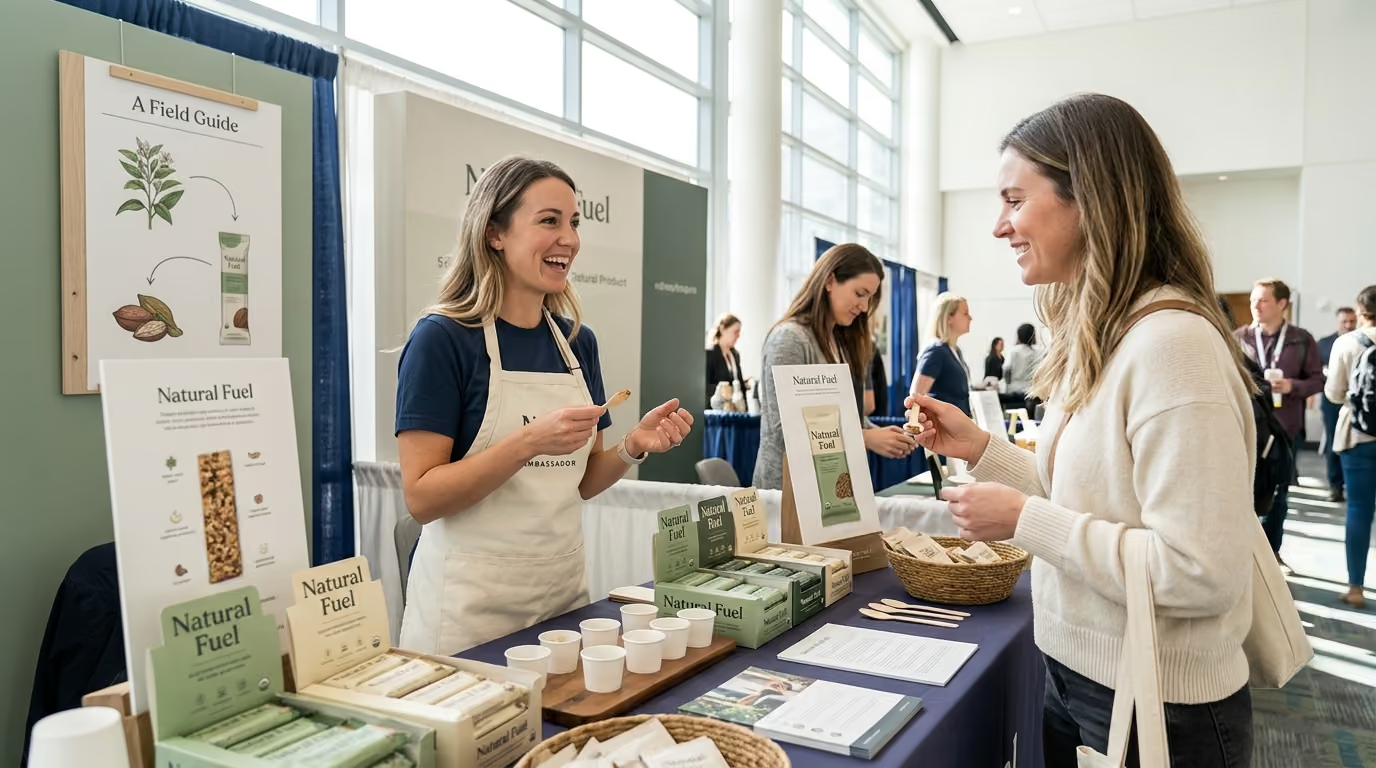
Product sampling is not a passive giveaway designed to inflate engagement numbers. It is a structured conversion sequence engineered to move qualified prospects from initial sensory contact to verified retail transactions. This operational guide provides brand leaders and field marketing directors with a systematic methodology for designing, executing, and measuring sampling campaigns that drive measurable sales velocity.
Sampling-to-purchase marketing is the deliberate use of a product experience, offer, message, retail connection, and follow-up mechanism to convert qualified product trial into measurable incremental purchase and repeat behavior. It is not brand theater, nor is it the indiscriminate distribution of free inventory. Moving a shopper from trial to transaction requires a disciplined progression across nine distinct milestones: notice, stop, understand, try, believe, locate, buy, rebuy, and recommend.
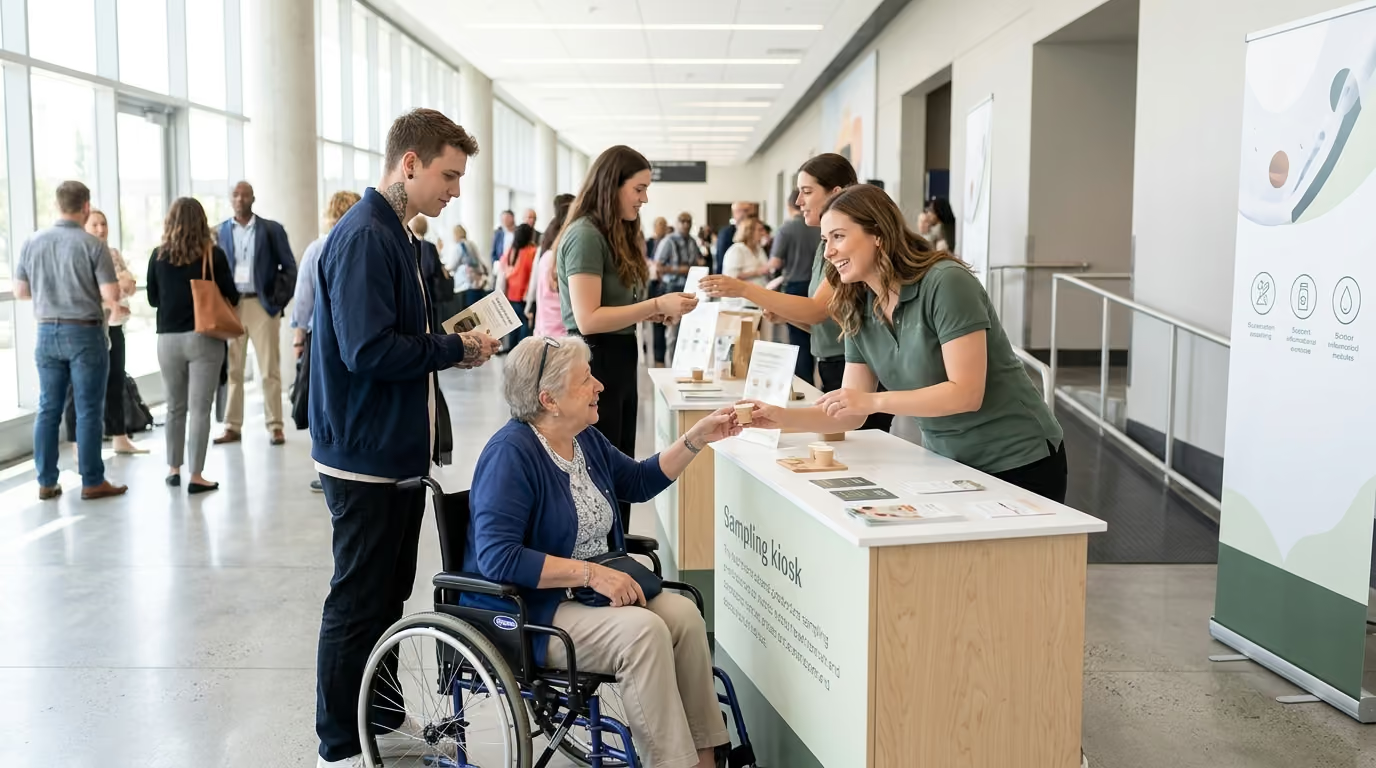
The live execution environment rarely resembles a clean marketing presentation. On a crowded trade show floor or busy street corner, ambient noise competes with short attention spans, distracted pedestrians, and competing vendor booths. Brand ambassadors frequently hand out full units to unqualified passersby who take the free item and immediately vanish into the crowd without understanding the product value proposition. Without structured stopping devices, disciplined messaging, and immediate retail handoffs, thousands of distributed units result in high logistical costs and zero measurable retail lift.
Handing a product to a consumer creates an opportunity for trial, but trial alone does not guarantee a commercial transaction. A landmark study of 433 grocery shoppers published in the Journal of Advertising Research examined product launches for household goods. The researchers found that while sampling generated substantial initial trial, it had limited influence on final conversion unless recipients actually used the samples or purchased specifically because of that trial experience.
To build an effective conversion engine, marketing leaders must separate vanity metrics from commercial progression. The customer journey consists of eight distinct performance stages:
Conflating stated purchase intent with verified purchase behavior is a primary reason field marketing budgets fail to show real business returns. Survey respondents routinely report positive intentions to be polite to field staff. True conversion planning designs a path that removes every physical and digital barrier between that initial positive reaction and the cash register. Understanding the deeper science of consumer trial and retention ensures your field footprint acts as a sales channel rather than a cost center.
Distributing product samples to unqualified audiences depletes budget without building retail velocity. The Journal of Advertising Research study noted that household-goods sampling campaigns routinely failed to reach the most likely high-value prospects. However, when distribution was selectively focused on qualified target groups, those consumers responded with significantly higher conversion and purchase rates.
Targeting in the field requires clear screening criteria before a sample is handed across the counter. Field marketing teams should evaluate six primary consumer variables:
Target audiences fall into distinct operational segments, each requiring a tailored communication objective and sampling format:
These consumers have never encountered or tasted the product. The primary objective is establishing basic brand awareness and securing an initial low-risk trial. The field interaction must focus on category problem identification and immediate sensory gratification.
These shoppers recognize the brand name through advertising or retail exposure but have never committed to a purchase. The objective is removing perceived risk, answering functional questions, and triggering an immediate first purchase through a high-value incentive.
These consumers currently purchase the brand occasionally. The field objective is reinforcing their existing habit, increasing purchase frequency, or introducing them to secondary flavors, sizes, and product line extensions.
These individuals previously bought the product but stopped due to price, distribution gaps, or competing alternatives. The field team must re-establish brand relevance by highlighting recipe improvements, new formats, or updated pricing.
These individuals shape the consumption patterns of family members, colleagues, or digital communities. The objective is providing deeper technical education and exclusive access so they can speak with credible authority.
Research conducted by Arbitron and Edison Media Research categorized sampling recipients across these distinct lifecycle segments. Their findings demonstrated that future purchase response rates varied dramatically based on prior brand familiarity. Field programs that apply a single generic message to all four segments miss the opportunity to convert high-probability buyers.
A mobile sampling tour or street footprint operates in environments saturated with competing visual, auditory, and psychological distractions. Pedestrians move with determined momentum, focused on commutes, shopping lists, or personal schedules. To earn an interaction, field teams must interrupt that momentum within the first three seconds of visual contact.
Every stopping mechanism must immediately resolve three subconscious consumer questions:
Field operations succeed by deploying specific sensory and physical stopping devices:
Static branded tents fail to capture passing eyes. A dynamic, moving demonstration, such as blending a fresh beverage, applying a product texture, or running an active performance test, creates an immediate visual anchor that prompts curiosity.
A research study published in the academic journal Sustainability demonstrated that congruent multisensory marketing cues significantly enhance consumer emotional response and willingness to buy. Using authentic aromas, clean auditory cues, and tactile surfaces draws consumers toward the activation zone naturally. Unrelated or jarring sensory gimmicks create confusion and drive qualified prospects away.
Field ambassadors should never open an interaction with generic corporate greetings or brand monologues. Opening lines must be concise questions linked directly to a consumer frustration or daily need.
Ambassadors can ask: "Are you looking for a clean morning energy boost without the midday crash?"
They can ask: "Have you found a sparkling beverage that contains zero artificial sweeteners?"
They can ask: "Would you like to see how this plant-based formula lifts tough fabric stains in ten seconds?"
These question-based hooks position the interaction around the consumer rather than the brand. The objective of the stop is not to recite the full company background. The sole purpose is securing permission to begin a focused, thirty-second product demonstration.
Once a consumer pauses, the interaction must deliver a structured message before attention wanes. Street and event environments do not accommodate complicated marketing narratives. Brand teams must implement a disciplined communication framework built on five consecutive steps:
Field marketing teams should organize demonstrations into four operational modes depending on the product category:
Sensory demonstrations apply to food, beverage, personal fragrance, and beauty products where taste, texture, and aroma drive the purchase decision. Staff must maintain rigorous temperature control and portion consistency. A warm beverage or melted snack destroys product perception instantly. For liquid brands, mastering an agile beverage sampling strategy is necessary to keep serving temperatures crisp and lines moving fast.
Performance demonstrations apply to household cleaning, consumer technology, water filtration, and personal care items with functional claims. The activation must provide visible, undeniable evidence of efficacy. Staff show side-by-side comparative tests, rapid absorption displays, or timed durability trials that make the product benefit self-evident.
Usage demonstrations show how a new format integrates into a busy lifestyle. Examples include preparing a portable meal replacement during a simulated commute, applying a skincare stick on the move, or mixing an electrolyte pack in a standard water bottle. The demonstration eliminates consumer uncertainty regarding product complexity.
Social demonstrations leverage group dynamics at large-scale festivals, sporting events, or lifestyle gatherings. Ambassadors facilitate rapid two-person challenges, group tastings, or interactive leaderboard competitions. The shared group experience lowers individual hesitation and encourages collective participation.
Brand ambassadors must deliver this message architecture using a strict narrative hierarchy. Staff should focus entirely on one primary functional benefit, one reason to believe, one daily usage occasion, and one clear purchase call to action. Overloading the conversation with technical specifications dilutes memory retention and lowers conversion efficiency.
A successful product trial creates emotional goodwill, but the commercial offer converts that goodwill into a financial transaction. Without an immediate, compelling reason to purchase, consumers leave the activation space and default to their established shopping habits. The offer serves as the bridge between product approval and retail checkout.
Field leaders should deploy four distinct offer architectures based on retail proximity and distribution channels:
These incentives include paper coupons, scannable register barcodes, buy-one-get-one vouchers, and instant digital cash-back rebates. They perform best when the activation footprint sits within walking distance of a stocked retail partner. The incentive must provide meaningful savings while protecting the premium positioning of the brand.
Basket-building offers encourage the consumer to purchase higher volume or explore complementary portfolio products. Mechanics include discounts on multi-packs following a single-serve trial, bundled pricing when purchasing two distinct flavors, or co-promotional discounts with complementary items in the grocery aisle.
For direct-to-consumer and consumable wellness brands, the field offer should direct consumers into an automated replenishment program. Ambassadors guide the consumer to scan a custom code that loads a discounted starter kit into their digital wallet. The offer includes free initial delivery and an introductory recurring discount, converting a physical encounter into predictable recurring revenue.
Retailer-aligned offers direct traffic toward a specific commercial partner supporting the brand launch. These mechanics utilize the retailer loyalty app, digital wallet coupons valid only at that chain, or receipt-upload incentives. This strategy demonstrates brand-driven foot traffic to retail category buyers, securing long-term shelf placement.
Research examining consumer psychology in free-product sampling published in the Journal of Electronic Commerce Research shows that perceived reciprocity significantly influences consumer product ratings and brand commitment. When consumers perceive a free sample as an authentic gift rather than an aggressive sales pitch, their psychological desire to reciprocate through purchase increases.
To protect conversion velocity, brand teams must eliminate operational friction from the redemption process:
A mobile tour or street activation can distribute tens of thousands of samples, yet fail commercially if consumers cannot locate the product on retail shelves. Demand generated in the field dissipates rapidly if physical distribution and directional wayfinding are not established before the footprint opens. Connecting the live event to the retail shelf requires operational synchronization across logistics, field marketing, and merchant partnerships.
Field teams must execute a comprehensive retail integration checklist before launching any local sampling campaign:
Physical handoff tactics turn field enthusiasm into immediate store visits. When operating a mobile tour outside a grocery store or club location, place directional signage featuring high-resolution images of the product on the shelf. Equip brand ambassadors with precise verbal directions, such as telling the shopper: "You can find this exact flavor in Aisle 4, right next to the organic teas on the middle shelf."
Digital handoff tactics support consumers who cannot visit a store on the day of the event. Field units should display dynamic QR codes configured with geolocation routing. When scanned, the code opens a dedicated mobile landing page showing the nearest stocked retail stores, an interactive map, and instant click-to-cart options for regional delivery services. These codes should bypass generic homepages entirely, leading consumers directly to transaction-ready cart pages.
Coordinating high-volume executions, such as executing large-scale roadshows, requires constant communication between the floor team and the store inventory manager to ensure product moves seamlessly from the pallet to the shopping cart.
Proving the commercial impact of experiential sampling requires moving beyond superficial output numbers. Calculating verified Return on Investment demands a multi-tiered measurement framework that tracks operational efficiency, consumer engagement quality, direct behavioral conversion, and financial incrementality. In our experience, we provide clear reporting on reach, trials, leads, and sales to guide next steps in campaign optimization. Our measurement approach tracks awareness, engagement, and conversion, turning brand moments into actionable data that demonstrates business impact.
Field marketing leaders should evaluate performance across four distinct measurement layers:
Delivery metrics quantify operational output and labor efficiency:
Experience metrics measure the quality and depth of consumer interactions:
Data published by Arbitron and Edison Media Research indicated that 64% of consumers accepted a sample when approached by field teams. Furthermore, 58% of respondents indicated an intention to buy the product again. While self-reported surveys reflect positive sentiment, marketing operators must validate these numbers against hard financial metrics.
Behavioral conversion metrics track concrete purchasing actions taken by consumers:
The historical Arbitron and Edison Media Research study highlighted that 35% of consumers surveyed reported purchasing the sampled product on the same day they received the sample. Marketing teams must treat survey-based claims as directional indicators, pairing them with scanned retail data to establish verified conversion velocity.
Incrementality metrics establish the exact revenue generated strictly due to the sampling activation, isolating field marketing from baseline sales trends:
Brand teams looking to translate field data into actionable retail growth should follow a structured framework for turning field sampling data into retail velocity, ensuring that every dollar spent in the field justifies its allocation to retail buyers.
Examining verified case studies provides valuable benchmarks for designing high-conversion sampling campaigns. These real-world examples illustrate how structured trial, retailer integration, and multisensory execution drive commercial sales lift.
A comprehensive retail sampling study published by Walmart Connect Canada demonstrated the substantial commercial impact of aligning in-store product trial with direct retail distribution. The campaign measured sales lift for both a newly launched confectionery stock-keeping unit and an established product line.
Across the campaign measurement periods, the new product launch achieved a 228% new-to-brand sales lift during the active campaign window, expanding to a 1,088% new-to-brand sales lift across extended reporting periods. The established confectionery product achieved a 602% sales lift during the campaign period and maintained a 601% lift in post-campaign tracking. These figures illustrate the power of sampling conducted within feet of the purchase point, proving that immediate access converts trial into volume.
A published case study by Bazaarvoice evaluated a targeted sampling initiative executed for the beauty brand Rimmel. The program combined targeted sample distribution with structured post-trial digital engagement, encouraging recipients to submit verified reviews and purchase through retail partner sites.
The campaign delivered a 44% higher sales lift for the featured products compared to the Information Resources Incorporated benchmark for average digital beauty campaigns. Furthermore, the sampling program generated a 69% higher sales lift across the broader competitive product categories in which the sampled products competed. This result highlights the brand halo effect, where a positive trial for a single product elevates consideration across a brand's wider portfolio.
Data from the Nielsen Global New Product Innovation Report underscores the strategic necessity of physical product sampling during new item launches. According to their survey covering consumer habits across global markets, 31% of respondents ranked receiving a free sample among their top five sources of information regarding new products. Physical trial outranked several traditional advertising formats in driving product discovery, demonstrating that hands-on experience remains a powerful driver of brand consideration.
The EventTrack study published by the Event Marketing Institute evaluated consumer attitudes toward physical brand experiences. The research reported that 61% of surveyed consumers felt more inclined to purchase a product or service after participating in a live brand experience.
Complementary research from the Freeman Trust Report, conducted alongside Edelman Data and Intelligence, revealed that 77% of respondents reported higher trust in brands after engaging in face-to-face interactions at live events. Crucially, 64% of those consumers stated that this elevated trust persisted a full month after the interaction. While trust and purchase inclination represent perceptual metrics rather than direct transactional proof, they establish the psychological foundation necessary for long-term customer retention.
A well-designed sampling strategy fails if the field team lacks the discipline, operational training, and logistical support required to execute consistently on the ground. Operational excellence requires standardizing staff briefings, enforcing quality control standards, and managing complex inventory logistics.
Field ambassadors serve as the physical embodiment of the brand. Brand teams must replace vague promotional briefings with structured training modules that cover:
Ambassadors should master a tiered script model: a five-second stopping hook, a fifteen-second benefit explanation, and a thirty-second technical response. Staff must adapt their conversational depth based on observed consumer engagement rather than reciting a rigid script to every passerby.
Before opening an activation footprint, the field supervisor must lead an operational briefing covering:
Supervisors must conduct periodic operational audits throughout the activation day to maintain brand standards:
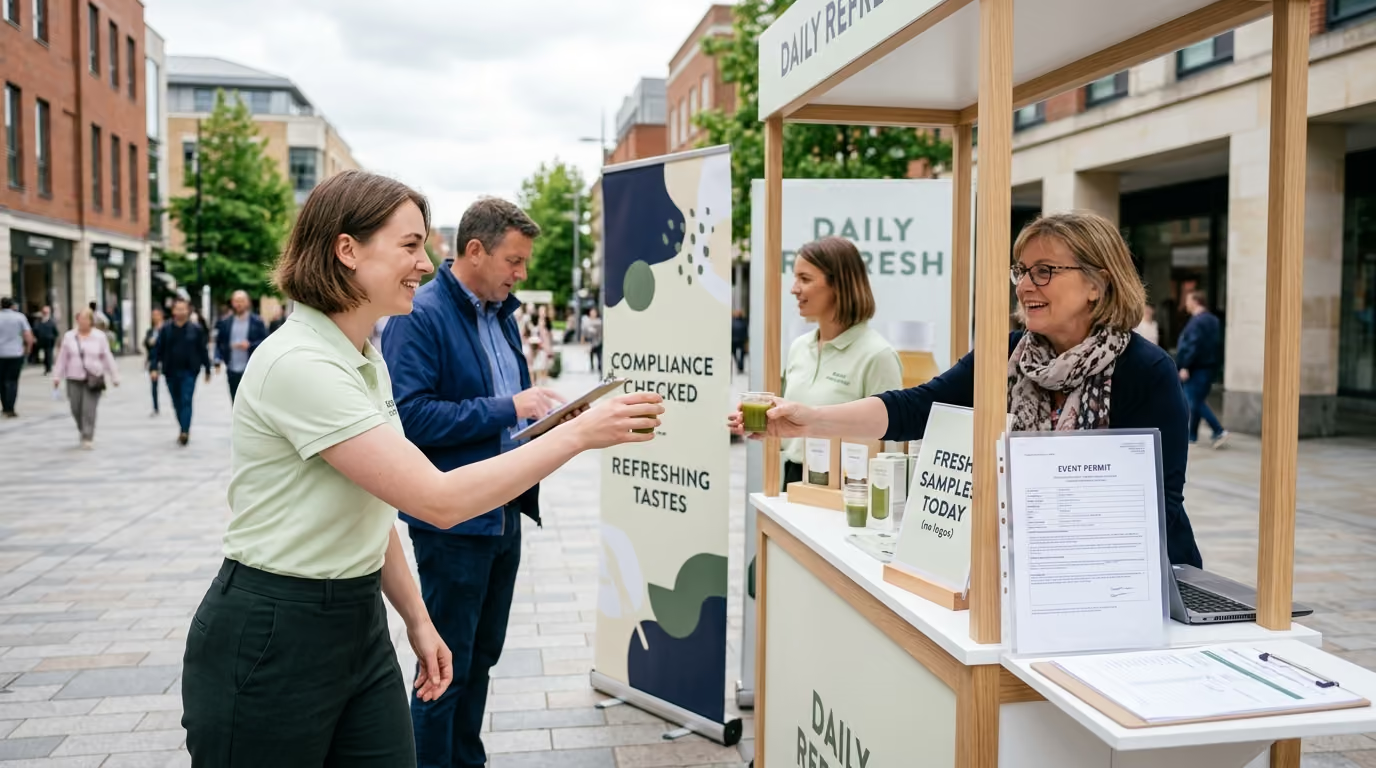
Executing a multi-city mobile tour or metropolitan street campaign involves complex logistical planning. Field operators must secure municipal street permits, park authorizations, health department clearances, and commercial property access agreements well in advance.
Establishing dedicated power supplies, refrigeration units, greywater disposal, and secure overnight vehicle parking prevents costly operational delays. Managing complex supply chains requires a disciplined framework for managing sampling tour inventory and logistics across every stop on the national activation route.
Products such as dietary supplements, anti-aging skincare, and specialty household cleaners do not produce instant sensory gratification. For these categories, field teams should distribute multi-day trial packs containing three to seven daily servings rather than single-use samples.
Ambassadors must focus the conversation on establishing realistic expectations, educating the consumer on daily usage routines, and providing clear instructions on what physical changes to look for over time. The physical sample should feature a scannable code linking to a digital onboarding sequence that sends automated daily usage reminders, video demonstrations, and a time-sensitive conversion discount valid once the trial period concludes.
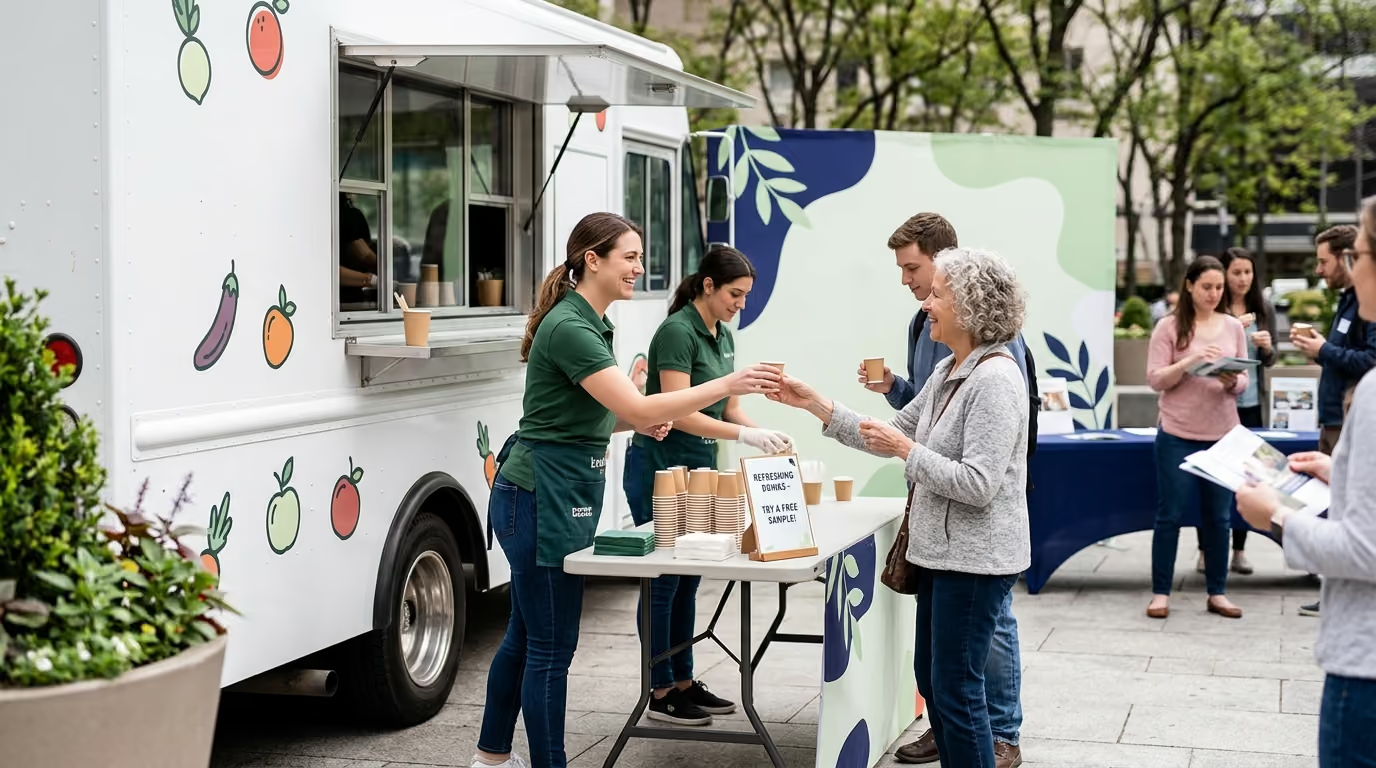
Outdoor mobile sampling campaigns face extreme heat, heavy rain, high winds, and freezing temperatures that alter consumer foot traffic and threaten product integrity. Field logistics plans must include weather-contingent site selections, such as pre-permitted covered pavilions, transit concourses, indoor retail corridors, or partner venue spaces.
All display assets and outdoor tents must carry appropriate ballast weights certified for high-wind conditions. Mobile vehicles must feature climate-controlled storage areas to protect product formulations from temperature damage. When severe weather reduces ambient foot traffic, shift staffing from broad distribution to deeper, high-touch interactions with indoor retail shoppers.
When conducting sampling activations in public spaces where children are present, brand ambassadors must adhere to strict age-verification and parental consent policies. Staff must never distribute food, beverage, personal care, or functional product samples directly to a minor without explicit verbal permission from an accompanying parent or guardian.
All sampling stations must display clear, prominent signage disclosing potential allergens, including nuts, dairy, soy, gluten, and artificial additives. Under no circumstances should field teams collect digital contact information, phone numbers, or survey responses from minors, ensuring total compliance with privacy regulations.
Not every consumer will enjoy every product formulation, particularly when sampling bold flavors, functional ingredients, or alternative proteins. When a consumer expresses dislike, staff should respond with empathy rather than defensiveness, acknowledging that personal sensory preferences vary.
Ambassadors can ask: "We appreciate that honest feedback. Do you typically prefer sweeter flavor profiles or milder options?"
Staff should record negative feedback categories within their shift reports, as authentic consumer objections provide valuable product development and merchandising data for brand marketing teams.

30 Years Experiential & Retail Activation Partner for CPG & Beverage Brands | Multi-Market Demos, Roadshows & Costco/Club Programs That Actually Sell