Robbie Thain
Founder, CEO

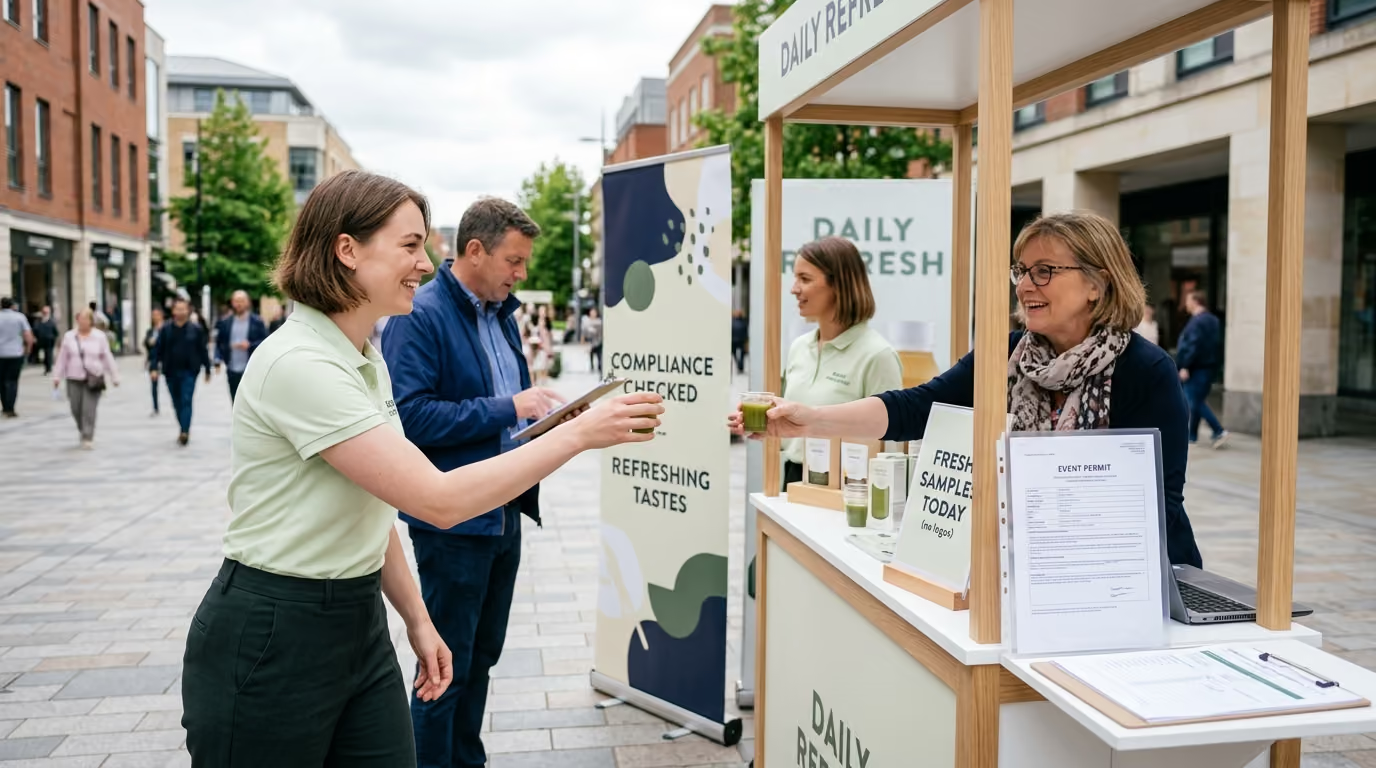
Outdoor event footprints often create hidden barriers for consumers, making universal physical access and sensory design essential for successful mobile product sampling.
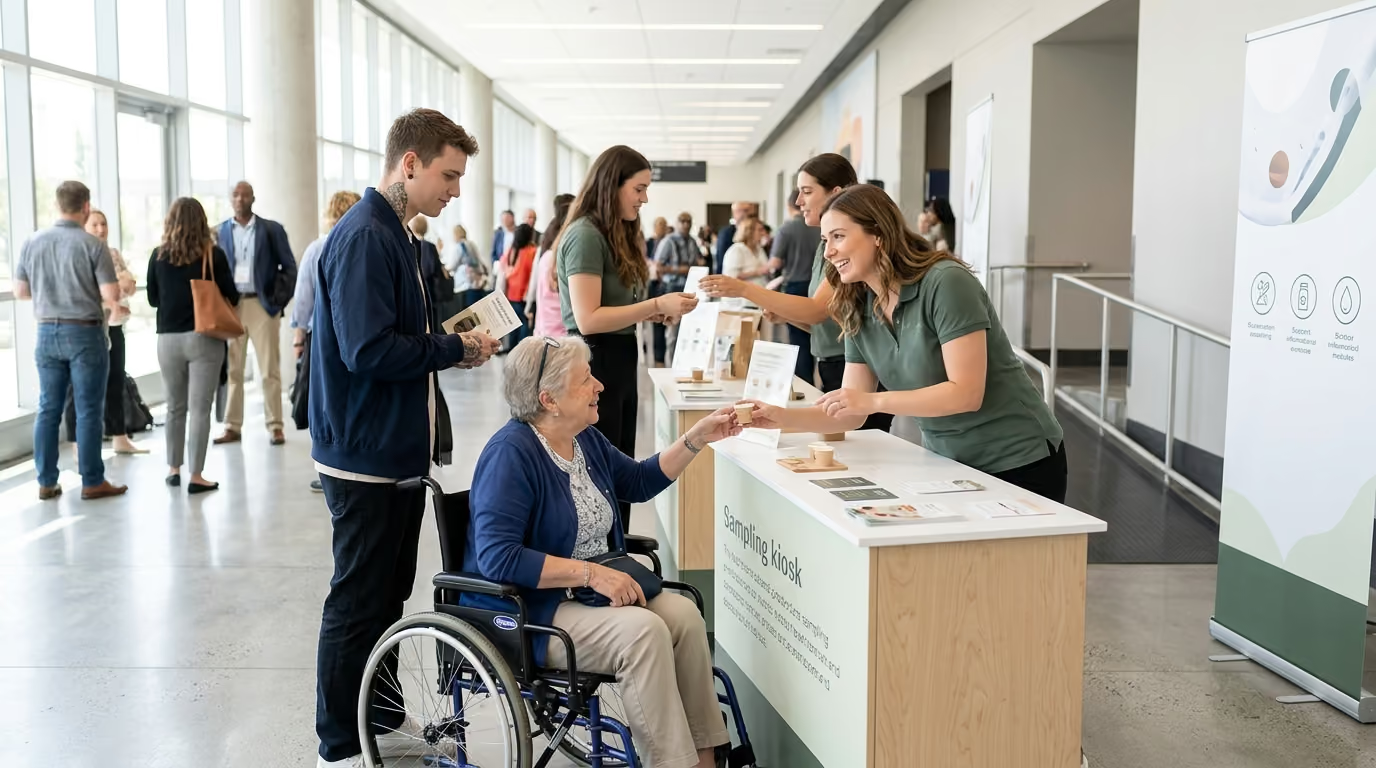
Accessible mobile sampling is the deliberate engineering of live brand experiences so every consumer can discover, navigate, engage with, and evaluate a product with equal dignity. It is not an ad-hoc wheelchair ramp added to a customized trailer, nor is it a disclaimer hidden at the bottom of a marketing survey. Designing an inclusive tour requires treating accessibility as a core operational discipline across site selection, physical footprints, sensory environments, digital touchpoints, and field staffing.
This resource provides field marketing directors and brand leaders with an operational framework for executing accessible sampling campaigns. By integrating universal design principles across every consumer touchpoint, brands eliminate participation barriers, safeguard consumer safety, and convert broader live audiences into loyal retail buyers.
According to the World Health Organization, approximately 1.3 billion people worldwide experience significant disability. This represents roughly 16 percent of the global population, or one in every six individuals. Disabilities encompass physical, sensory, cognitive, communication, and psychosocial impairments. Many of these access requirements remain invisible during casual observation.
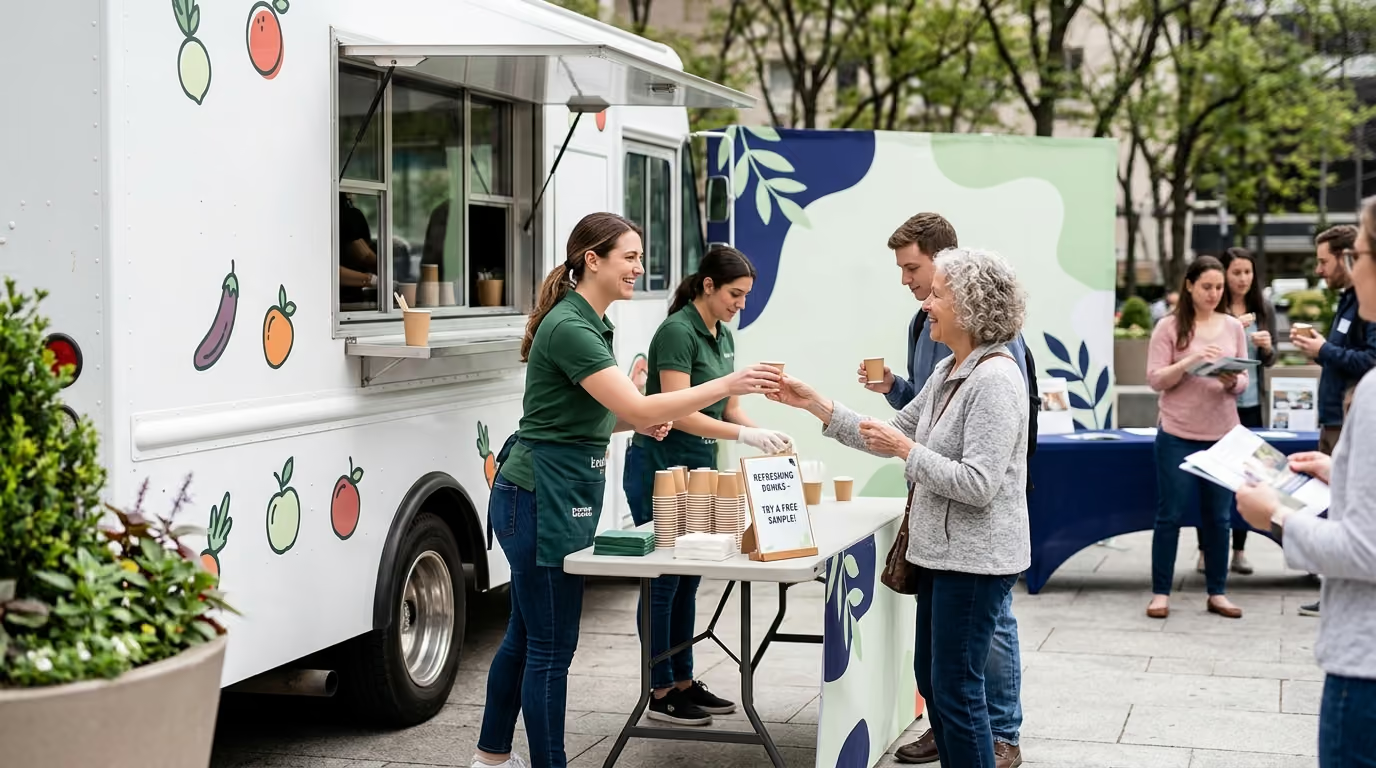
When a mobile tour arrives at a high-traffic urban plaza, community festival, or retail parking lot, the environment is inherently unpredictable. Pavement surfaces vary, crowd density surges unexpectedly, loud music competes with background noise, and queues spill into transit paths. In this high-stress setting, an activation with narrow ramps, high service windows, confusing printed text, or blaring speakers immediately isolates large segments of consumers.
The United Nations Convention on the Rights of Persons with Disabilities defines universal design as creating environments, products, and services usable by all people without requiring specialized adaptation. In experiential campaigns, universal design ensures the default experience accommodates diverse human capabilities. Reasonable accommodations then serve as an adaptive secondary layer for specific individual needs.
Designing for accessibility directly protects campaign performance and Return on Investment (ROI). When mobile activations exclude consumers through physical or sensory friction, brands lose qualified trial opportunities, restrict retail pipeline growth, and risk brand reputation damage. In our experience managing national campaigns, programs built on inclusive service design consistently generate higher engagement times, better lead quality, and stronger consumer trust.
To plan physical footprints that withstand real-world operational challenges, teams should evaluate designing mobile activations for real people and conditions before finalizing vehicle schematics.
Physical accessibility extends far beyond deploying a standard metal ramp at the back of a sampling truck. A vehicle with mechanical ramp access remains unusable if parked next to broken curbs, set on steep gravel, or choked by surrounding crowd control stanchions. Operators must evaluate the entire transit path from public access points through the activation footprint.
The ADA National Network provides clear standards for temporary event layouts. These standards recommend that public service counters measure no higher than 36 inches from the ground to accommodate seated guests. When custom sampling trucks feature built-in counters set at standard commercial heights of 42 to 48 inches, brands must engineer an integrated lower service point at ground level.
Vehicle deployment sites require rigorous ground surface inspections before setting up equipment. Grass fields softened by rain, broken cobblestones, and steep asphalt grades create severe traction hazards for mobility devices and pedestrians. Ramps must feature firm, slip-resistant decking, safety curbs, and stable transition plates where the metal meets the pavement.
Ramp geometry must maintain manageable slopes to prevent tipping and physical strain. Handrails and continuous edge protection should secure platforms elevated above standard curb heights. Staff must keep all ingress and egress paths completely free of power cables, generator hoses, product staging pallets, and personal gear.
Counters and display shelving must support easy interaction from both seated and standing positions. Placing product samples deep on wide tables forces consumers to lean forward uncomfortably, which compromises balance. Displays must keep product samples, educational collateral, digital tablets, and collection bins within a reach zone of 15 to 48 inches from the ground.
Packaging design demands equal operational attention during live sampling. Rigid blister packs, tiny plastic pull-tabs, and vacuum-sealed pouches create immense frustration for consumers with limited hand strength or fine motor difficulties. Staff should always stage pre-opened sample cups or maintain easy-peel packaging to facilitate independent handling.
Standard switchback queue lines built with tight retractable stanchions often trap wheelchair users, mobility scooter operators, and service animals. Queues require a minimum clear passing width of 36 inches, with 60-inch turning clearings at directional changes. Prolonged standing causes severe pain and fatigue for individuals managing invisible illnesses, chronic pain, or balance disorders.
Campaign footprints should integrate sturdy bench seating adjacent to the primary queue. Operators should offer secondary participation options, including paging systems, numbered tickets, or direct ground-level service for consumers unable to stand in prolonged lines. When managing complex schedules across multiple markets, teams can review how to build a high-performance route plan for a mobile sampling tour to allocate adequate site setup time for physical modifications.
Trade show floors, street corners, and festival grounds bombard consumers with intense sensory stimuli. Flashing LED walls, amplified music, rumbling diesel generators, and dense crowds overwhelm people with sensory processing differences, autism, migraine conditions, or post-traumatic stress. Integrating sensory controls allows brands to engage consumers who would otherwise bypass a chaotic activation footprint.
The Autistic Self Advocacy Network emphasizes that sensory-inclusive event production requires thoughtful acoustic planning, low-glare visual environments, and quiet retreat zones. Mobile tours can easily incorporate these elements by standardizing sound limits and creating predictable consumer engagement pathways.
Audio levels at the activation perimeter should never overpower natural spoken conversation. Sound systems must direct audio inward toward the footprint rather than blasting outward across pedestrian walkways. Loud mechanical equipment, including power generators and commercial refrigeration units, must sit behind sound-dampening baffles or at a safe physical distance from public counters.
Brand ambassadors must never rely on shouting to convey product instructions or contest rules. Amplified demonstrations must use clear directional microphones paired with visible text transcriptions. Lowering ambient noise allows consumers who use hearing aids or cochlear implants to isolate human speech without distortion.
Visual communication requires high color contrast and stable lighting. Signs set with thin white fonts on pale backgrounds become completely illegible under bright outdoor sunlight or dim convention hall lighting. Visual designs should use strong contrasting tones, matte non-reflective finishes, and clean sans-serif typography.
Activations must avoid rapid strobing lights, sweeping laser effects, and erratic motion graphics that can trigger neurological reactions or disorientation. Display monitors should maintain consistent brightness levels. Physical pathways must feature even illumination to prevent trip hazards created by deep shadows.
Structuring predictable engagement tracks helps sensory-sensitive consumers navigate brand activations with confidence. Tours should establish published sensory-friendly hours during quiet event periods, lowering music volume, dimming bright displays, and reducing staff crowding. Staff can also provide noise-reducing earplugs, visual scheduling cards, and low-stimulation demonstration areas.
Information delivery must never rely on a single sensory channel. If an activation delivers key messages through spoken words alone, deaf consumers lose access. If crucial details appear only as small printed text, low-vision consumers cannot participate. Every critical message must travel through multiple independent communication formats.
Multi-channel communication applies to allergen warnings, product flavor profiles, sweepstakes rules, and digital lead-capture forms. Clear icons, plain language, and accessible software allow all participants to understand the brand offer independently.
Marketing copy often relies on abstract slogans, industry jargon, or complex mechanics that create unnecessary cognitive friction. Instructions should feature simple words, active verbs, and single-step directives. Clear language helps individuals with learning differences, cognitive disabilities, or limited language proficiency understand the activation immediately.
Signage should combine direct text with intuitive visual icons. Visual icons must accompany text rather than replace it entirely, ensuring that both visual and text-reliant consumers comprehend the message.
Modern field sampling relies heavily on QR codes, microsites, mobile games, and digital surveys to qualify leads. If a digital landing page fails basic accessibility standards, the activation footprint becomes a digital barrier. Digital assets must follow the Web Content Accessibility Guidelines (WCAG) 2.2 Level AA requirements.
Under WCAG 2.2 guidelines, interactive elements must offer sufficient touch target sizes of at least 24 by 24 CSS pixels to support users with limited fine motor dexterity. Online forms must include clear field labels, visible focus states, and simple error recovery prompts. Digital registration forms should never impose aggressive countdown timers that lock out consumers who need additional time to complete entries.
For comprehensive operational compliance, teams should consult the complete guide to permits compliance and risk management for mobile sampling when structuring field data gathering protocols.
Food and beverage sampling requires absolute transparency regarding ingredients and cross-contact risks. A single operational oversight regarding food allergens can result in life-threatening medical emergencies. In the United States, the Food and Drug Administration (FDA) recognizes nine major food allergens: milk, eggs, fish, crustacean shellfish, tree nuts, peanuts, wheat, soybeans, and sesame. Sesame became the ninth major food allergen under federal law on January 1, 2023.
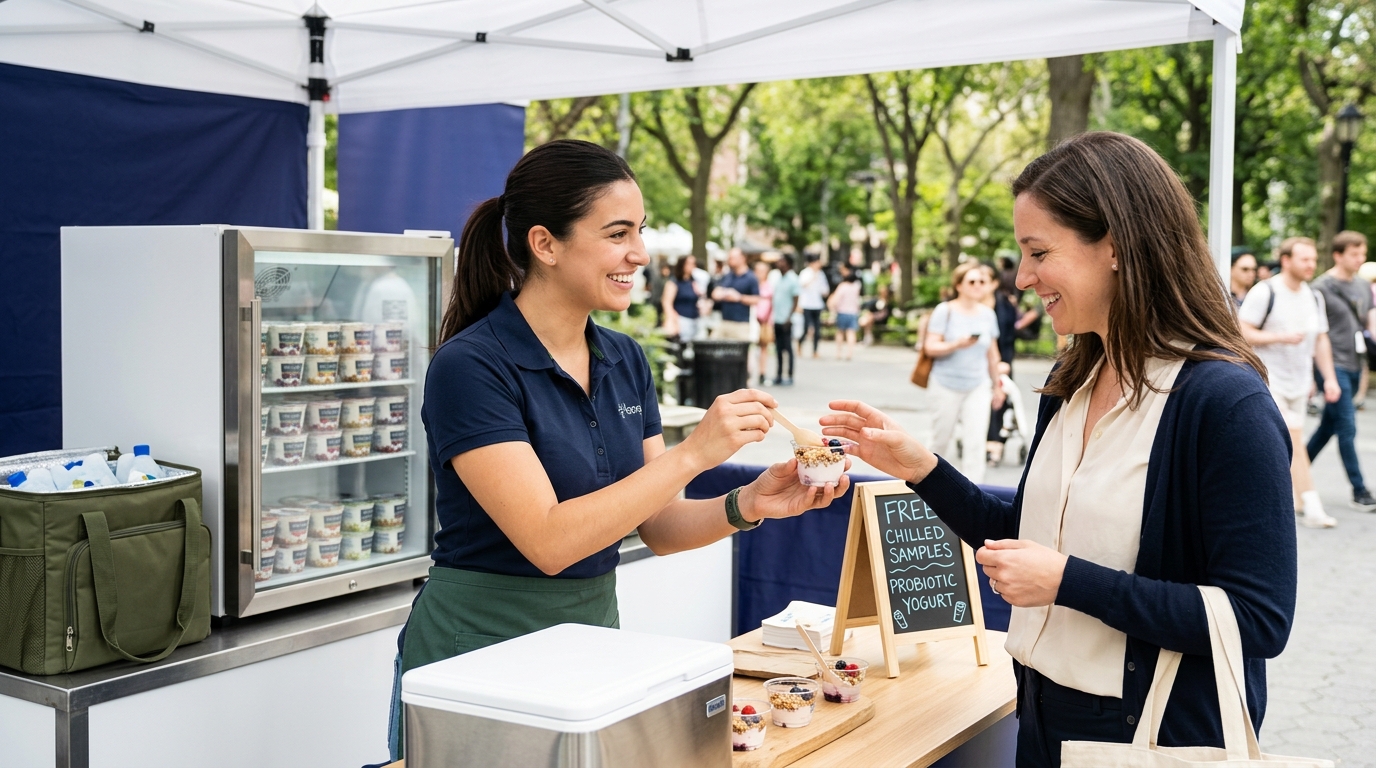
Mobile sampling units operate within temporary environments with limited sanitation plumbing, making strict allergen management vital. Brand teams must establish formal food safety protocols to prevent cross-contact and deliver accurate ingredient data to every participant.
Allergen data must be visible to consumers before they accept a sample. Teams should display large, clear ingredient cards on the serving counter and host digital ingredient lists accessible through a quick link. Statements must match commercial product packaging formulas precisely.
Field staff must never guess about ingredients or use informal assurances such as claiming a product is probably fine. If a customer inquires about trace ingredients or production line cross-contact, staff must reference a verified product matrix. When data is uncertain, brand ambassadors must follow a firm safety rule: state that the information is unconfirmed and advise against consumption.
Preventing cross-contact requires strict equipment segregation and sanitary handling:
When planning multi-market product trial tours, brand operators should review the complete guide to planning and executing a mobile sampling tour to establish rigorous commissary workflows.
A mobile activation footprint can meet every physical standard yet still fail if the field team lacks disability awareness and service etiquette. Brand ambassadors are the frontline face of the brand. When staff ignore seated guests, handle mobility aids without permission, or treat accessibility requests with annoyance, consumer trust collapses immediately.
Our team specializes in creating retail demos, product sampling programs, and roadshows that bring brands face to face with their audiences. Each program is designed to drive trial, build consumer relationships, and accelerate retail velocity across multiple locations. Achieving these goals requires training every brand ambassador to execute inclusive service with operational discipline.
Staff training must instill respectful, professional consumer engagement standards:
Every operational shift should appoint a designated Accessibility Lead. This lead holds the authority to adjust on-site operations when unexpected access issues arise.
The Accessibility Lead conducts morning site audits before public opening. If a temporary vendor blocks a curb cut or rain turns a grass path into mud, the lead alters queue layouts, deploys non-slip rubber matting, or repositions check-in podiums before gates open.
To explore specialized footprint executions that convert diverse crowds, review our capabilities with mobile sampling tours that deliver your brand straight to your audience.
Traditional event reporting often relies on surface-level vanity metrics: gross foot traffic, total samples handed out, and raw lead form numbers. These broad figures frequently hide significant access failures. If an activation distributes 5,000 samples but turns away consumers who use mobility aids or cannot hear loud pitches, the campaign falls short of its true market potential.
Brands require a disciplined reporting structure that tracks both lead and lag performance indicators. Measuring operational readiness and real-world participation rates enables marketing leaders to verify program ROI and continuously refine tour execution.
Brands should evaluate field operations using concrete quantitative metrics:
To understand how high-precision field data collection connects to retail velocity, review our detailed guide on how to measure the business impact of mobile sampling and guerilla marketing.
When surveying consumers about accessibility, activations must protect personal privacy. Never require consumers to disclose diagnostic labels or medical histories to provide feedback. Surveys should focus on functional experiences and physical barriers encountered during the event.
The Washington Group on Disability Statistics provides an established international framework that measures functional access without requiring medical labels. Short intercept surveys can adapt these concepts to ask simple, barrier-focused questions:
Field teams must log every physical or sensory barrier in daily recap reports. Analyzing these logs across multi-city tours helps operations managers identify recurring vehicle design flaws, refine routing choices, and improve future activation layouts.
To understand how universal design functions in live environments, consider a national natural beverage brand activating a multi-city mobile tour. The brand aims to drive retail trial for a new line of organic functional teas across community festivals, urban plazas, and grocery parking lots.
The original tour concept called for a custom vintage trailer featuring an elevated serving window four feet off the ground. The planned consumer journey required guests to walk up steep aluminum steps, grab a paper sample cup, play a high-speed motion-sensor game on a wall display, and scan a QR code to join a retail sweepstakes.
Recognizing the severe access barriers in this initial setup, the brand team redesigned the footprint into an accessible dual-hub layout:
The redesigned inclusive footprint generated substantial business gains across a 45-city national tour:
Outdoor weather creates immediate safety and access risks. Heavy rain turns dirt and grass into impassable mud, high winds destabilize shade canopies, and direct summer sun creates burning surface temperatures on metal ramps and railings.
Operators must prepare for these conditions by stocking commercial-grade modular rubber trackway systems that deploy over soft mud or loose gravel. Footprints should include covered waiting areas with shade canopies, misting fans, or commercial patio heaters. Staff must regularly inspect ramp surfaces for standing water and maintain clean, dry walkways throughout operating hours.
Under the Americans with Disabilities Act, service animals must be permitted to accompany their handlers in all areas open to public service. A service animal is defined as a dog or miniature horse trained to perform specific tasks directly related to an individual's disability.
Staff members must never exclude a service animal from public ordering areas because open food samples are present. Brand ambassadors may ask only two specific questions if the animal's function is not immediately obvious:
Staff should never ask about the handler's specific diagnosis, require medical documentation, demand training certificates, or ask the animal to demonstrate its task.
Experiential street sampling relies heavily on spontaneous consumer discovery. If an activation requires visitors to pre-register online days in advance to secure accessible seating, sign language support, or dietary accommodations, the campaign effectively excludes spontaneous foot traffic.
Universal design solves this problem by embedding baseline access into the primary activation footprint. Setting up low-height counters, offering visible plain-language ingredient menus, providing quiet rest seating, and stocking accessible digital forms allows any passing consumer to participate immediately without submitting prior accommodation requests.
Festival sponsorships often require high-energy music and visual displays to attract foot traffic from across the event grounds. However, brand teams can project high energy outward while maintaining comfortable sensory conditions within the core interaction area.
Point main audio speakers outward toward broad perimeter walkways, leaving the interior counter and queue footprint acoustically manageable. Cap sound levels below 75 decibels at the counter so consumers and staff can converse comfortably. Finally, establish and publish dedicated low-sensory time blocks during festival morning hours to welcome sensory-sensitive guests before heavy crowds arrive.

30 Years Experiential & Retail Activation Partner for CPG & Beverage Brands | Multi-Market Demos, Roadshows & Costco/Club Programs That Actually Sell