Robbie Thain
Founder, CEO

A brand activation can get shut down instantly when field teams fail to secure the proper municipal permits and health department approvals.
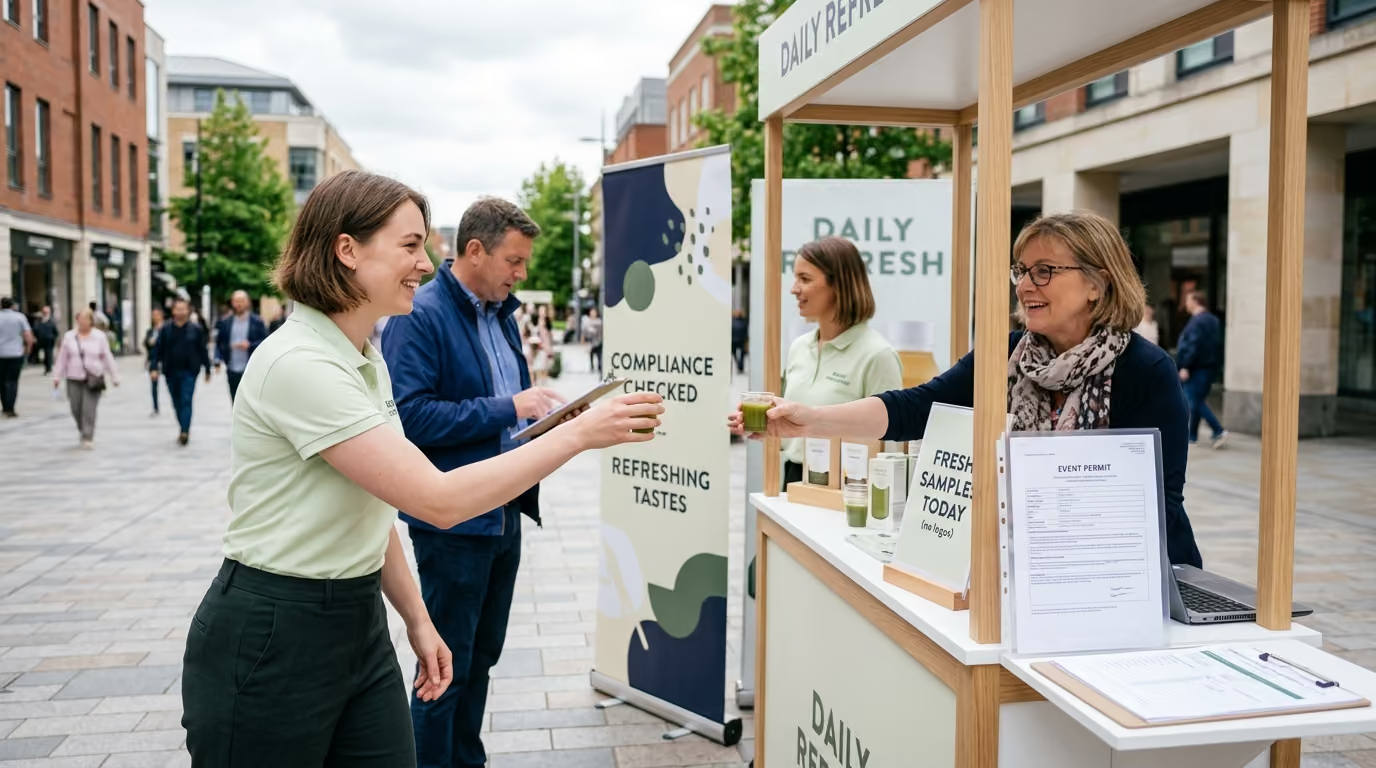
Executing a legally compliant mobile sampling campaign requires balancing municipal permitting, food safety protocols, data privacy mandates, and consumer protection laws across every target market. This comprehensive guide provides brand leaders and experiential marketing operators with a systematic framework to identify regulatory requirements, mitigate live-event liabilities, and execute field activations that protect brand reputation while driving measurable business results.
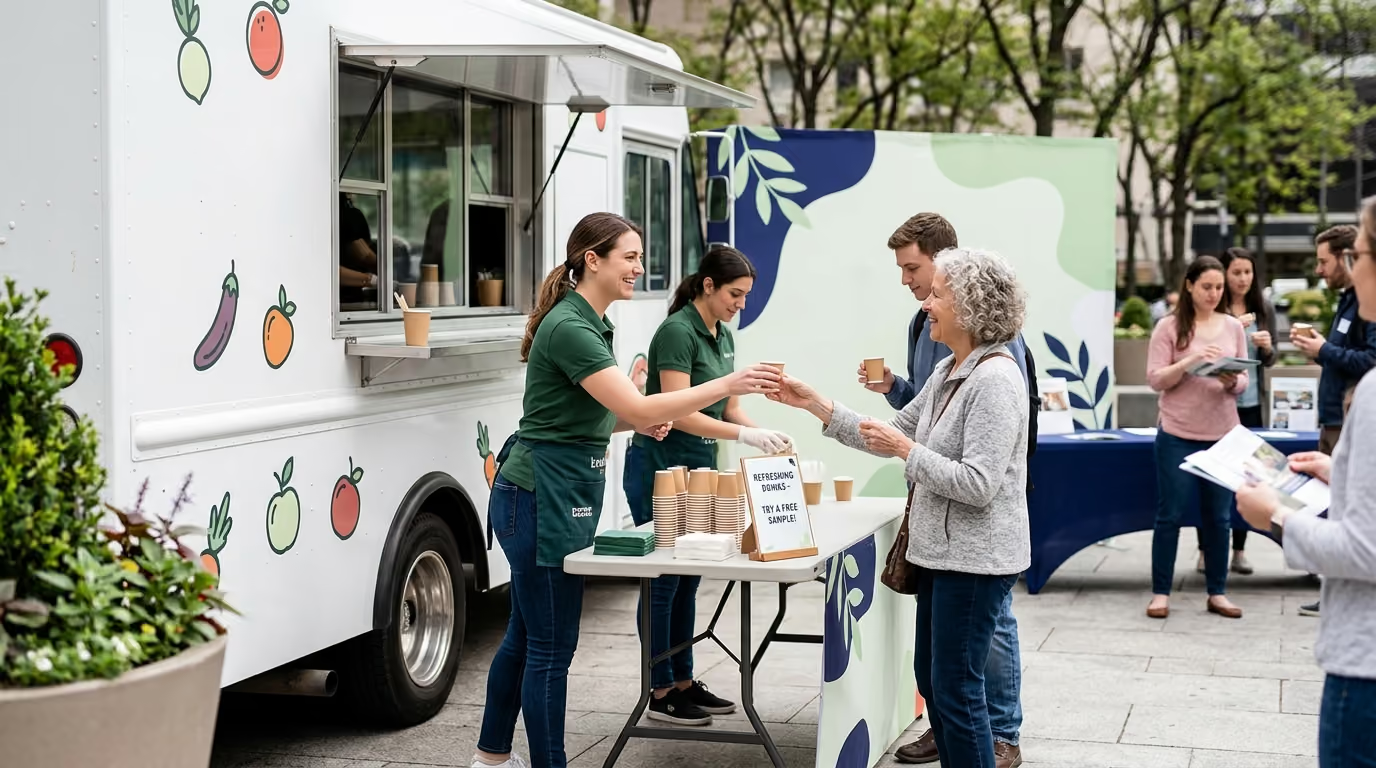
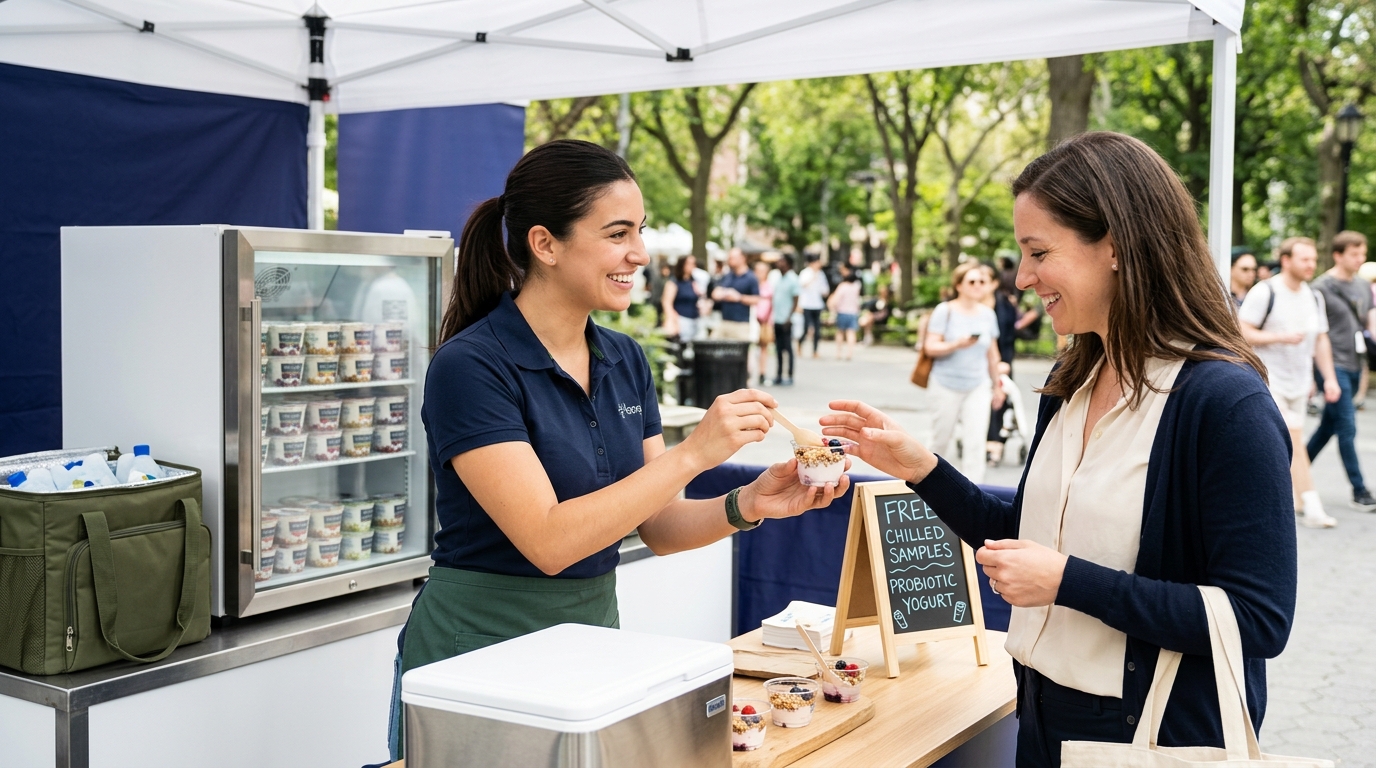
Imagine a custom-wrapped sampling truck pulling up to a crowded downtown plaza on a hot Saturday afternoon. The field team sets up tables, drops queue stanchions, fires up the generator, and starts handing out chilled yogurt parfaits to an eager line of pedestrians. Forty minutes into the activation, a municipal health inspector and a local code enforcement officer walk onto the footprint. The inspector asks to see the temporary food establishment permit, the certified food manager credentials, the potable water handwashing station, and the mechanical refrigeration temperature logs.
When the field lead cannot produce a valid city-issued health permit or a temperature record showing the dairy was held below 41 degrees Fahrenheit, the inspector issues an immediate cease-and-desist order. The music cuts out, the staff packs up the vehicle in front of hundreds of onlookers, and the brand loses thousands of dollars in wasted inventory, staffing hours, and lost customer impressions.
This scenario plays out across the country when experiential campaigns treat product distribution as an informal public relations stunt rather than a regulated commercial operation. We handle every step of activation execution with precision and purpose, from initial concept through final logistics. Our comprehensive approach ensures that each program is designed to spark curiosity, drive action, and leave a lasting impression on consumers. Navigating compliance requirements across dozens of unique jurisdictions is the foundation of operational excellence.
A fundamental misconception in experiential marketing is that handing out free products exempts a brand from retail, health, and commercial operating regulations. Regulators and municipal authorities do not evaluate an activity based on whether money changes hands. They classify the activation based on physical operations, public space utilization, and public health risk.
A standard mobile sampling tour involves multiple legally distinct activities occurring simultaneously. The team transports consumable goods across state lines, stores inventory in temporary environments, prepares or portions food in public settings, and gives products away to public crowds. The campaign also operates motorized equipment, displays commercial signage, collects consumer personal information, captures photography for commercial use, and directs pedestrian foot traffic. Each of these individual components falls under distinct federal, state, and municipal regulatory frameworks.
Federal agencies establish baseline standards that public health authorities enforce locally. For example, National Park Service guidelines state that a temporary food event permit is required for any individual or organization intending to sell, give away, or sample food on park property. The model Food Code from the Food and Drug Administration establishes sanitation and temperature thresholds that local health departments adopt into municipal ordinances. Giving a product away for free does not remove the legal duty to protect the public from foodborne illness, physical trip hazards, or deceptive trade practices.
Brand teams must treat every sampling activation as a temporary retail food operation, an advertising campaign, and a consumer data processing activity until local authorities confirm otherwise. Classifying an activation as a brand experience or pop-up does not override local health codes. Building a scalable tour requires reviewing your master plan against our complete guide to planning mobile sampling tours to ensure every operational layer is accounted for well before launching vehicles on the road.
Securing permission for a multi-city mobile tour requires building a localized compliance matrix months before the tour vehicle leaves the warehouse. Permitting terminology, application windows, review fees, and operational restrictions differ substantially between neighboring cities and counties. A single nationwide permit does not exist.
In Pennsylvania, state health regulations draw a sharp distinction between a mobile food facility and a temporary food facility. A temporary facility is defined as an operation running for no more than 14 consecutive days in conjunction with a single event or celebration. In Texas, the City of Fort Worth municipal code similarly defines a temporary establishment by reference to operating for 14 consecutive days or fewer in connection with a special event, while applying entirely separate standards and equipment rules to mobile food units. A program that qualifies as a temporary booth in one city may be classified as a fully regulated commercial vehicle in another.
To prevent operational delays, field marketing directors should develop a comprehensive regulatory profile for every proposed footprint. This profile must answer critical operational questions and document specific approvals:
Field operations teams must obtain written determinations from local authorities before finalizing route schedules. Submitting permit applications after finalizing travel itineraries, booking talent, and shipping product creates severe financial risks. Integrating route planning and municipal permitting into the early stages of campaign strategy prevents costly route cancellations and preserves working relationships with municipal authorities.
Food and beverage sampling campaigns carry significant public health responsibilities. When handing consumables to thousands of consumers daily, a single point of contamination can trigger localized outbreaks, regulatory enforcement actions, and devastating media coverage. Managing food safety requires strict adherence to standardized sanitation practices and verified temperature monitoring.
Product risk escalates significantly as the preparation process moves from sealed, commercially packaged items to open food assembly. Distributing an unopened, shelf-stable snack bar carries minimal food safety liability. Pouring cold-brew coffee from a pressurized kegerator introduces line-cleaning and dispensing risks. Assembling ready-to-eat grain bowls with cooked protein, chopped produce, and dairy dressings on an outdoor table represents a high-risk commercial kitchen operation requiring extensive field infrastructure.
Perishable food items must remain strictly outside the temperature danger zone. Food and Drug Administration guidelines specify that cold perishable foods must be maintained at 41 degrees Fahrenheit or lower. Hot foods must be held at or above 140 degrees Fahrenheit.
When operating in outdoor environments, perishable items must never remain within the danger zone between 40 degrees Fahrenheit and 140 degrees Fahrenheit for more than two hours. If ambient outdoor temperatures exceed 90 degrees Fahrenheit, this critical window drops to exactly one hour. For products that require cooking and cooling before service, the model Food Code specifies a two-stage cooling process. The food must cool from 135 degrees Fahrenheit to 70 degrees Fahrenheit within two hours, and reach 41 degrees Fahrenheit or lower within the subsequent four hours.
Field teams must maintain daily physical temperature logs that document verification times, ambient temperatures, unit temperatures, product temperatures, and staff initials. Relying on casual visual inspections or assuming an unplugged ice chest is cold enough is unacceptable. Every tour footprint should deploy calibrated digital stem thermometers and infrared surface scanners to monitor holding units continuously. If a refrigeration unit fails and core product temperatures exceed 41 degrees Fahrenheit for more than two hours, the entire lot must be destroyed and logged.
A common compliance violation during field activations is relying on waterless hand sanitizer as a replacement for an active handwashing station. Under the Food and Drug Administration Food Code, hand sanitizer is not an acceptable legal substitute for handwashing when staff handle exposed, ready-to-eat food. Hand sanitizers do not remove physical dirt, grease, or protein residues, and they fail to eliminate specific viral pathogens.
Mobile footprints operating without permanent plumbing must provide a dedicated, self-contained handwashing setup. This station must feature a continuous-flow spigot supplying clean, running potable water, liquid antibacterial soap, single-use paper towels, and an enclosed collection bucket for wastewater. The wastewater container must have a larger holding volume than the potable water supply tank to prevent accidental overflows. Staff members must wash their hands thoroughly before donning single-use gloves, after taking breaks, after handling trash, and whenever switching tasks.
Federal law under the Food Allergen Labeling and Consumer Protection Act, expanded by the Food Allergy Safety, Treatment, Education, and Research Act, recognizes nine major food allergens. These major allergens are milk, eggs, peanuts, tree nuts, wheat, soybeans, fish, crustacean shellfish, and sesame. Sesame became the ninth major federal allergen on January 1, 2023.
Field teams must maintain clear allergen matrix binders and high-visibility display cards at every distribution point. Brand ambassadors should be trained never to guess or make casual assumptions about ingredient compositions. If a consumer asks whether a sample contains tree nuts, soy derivatives, or gluten, staff must refer directly to the certified product packaging. A standard operating response should be: "I can check our official ingredient and allergen documentation for you immediately to make sure you have the exact facts."
Every sampling program must also maintain comprehensive supply chain traceability records. Tour managers should record incoming batch numbers, lot codes, production dates, manufacturing facilities, and distribution destinations for every case of product loaded onto tour vehicles. If a manufacturer issues a product recall, the tour operations team must be able to identify within minutes which vehicles carried the affected lot, which event dates distributed the inventory, and how much stock remains in storage.
The messages displayed on sampling vehicles, promotional banners, branded tents, and social media channels are regulated under federal advertising and labeling laws. Product claims made during a live field activation carry the same legal weight as claims printed on retail packaging or broadcast on national television.
The Food and Drug Administration categorizes product statements into health claims, nutrient content claims, and structure or function claims. A health claim explicitly describes a relationship between a substance and a reduced risk of a specific disease or health-related condition. Authorized health claims require significant scientific agreement and formal regulatory authorization before public use. Qualified health claims must include precise qualifying language to prevent consumers from being misled regarding the strength of the supporting scientific evidence.
Marketing teams often make dangerous errors by improvising wellness claims in live event environments. Statements claiming a beverage prevents chronic inflammation, cures anxiety, detoxifies internal organs, or shields the body from seasonal infections represent unlawful drug and disease treatment claims for conventional foods. Even nutrient content claims, such as labeling a sample low sugar, keto friendly, clean, or high protein, must comply with strict statutory definitions based on standard reference serving sizes.
Promotional staff and brand ambassadors must operate from strict, version-controlled talking points. Brand ambassadors should communicate approved product attributes, such as natural flavors, crisp taste profiles, or specific vitamin contents, while avoiding unauthorized health or disease mitigation statements. The Federal Trade Commission works alongside food labeling regulators to prosecute deceptive advertising, unsubstantiated wellness claims, and misleading influencer endorsements in physical and digital channels.
When brand ambassadors, hired talent, or visiting content creators post about the activation on social media platforms, they must clearly disclose their material connection to the brand. Under Federal Trade Commission Endorsement Guides, disclosures must be clear, conspicuous, and placed within the primary body of the post where consumers will readily notice them. Simply wearing a branded shirt at a public event does not relieve a paid promoter from the obligation to include explicit sponsorship disclosures when posting promotional content to their personal accounts.
Adding beer, wine, spirits, or ready-to-drink canned cocktails to a mobile sampling program introduces an entirely separate layer of regulatory oversight. Alcohol sampling is not treated as standard beverage sampling. It is governed by a strict division of federal, state, and local authority.
The Alcohol and Tobacco Tax and Trade Bureau regulates federal industry member conduct, basic permits, labeling standards, and trade practices under the Federal Alcohol Administration Act. State alcohol control agencies hold primary jurisdiction over retail service, tasting permissions, permitted pour volumes, server licensing, and operating hours. An experiential marketing activation that is fully legal in one state may constitute a major criminal or administrative misdemeanor across state lines.
In Texas, the Alcoholic Beverage Code permits specific wine and malt beverage sampling activities by employees of an off-premise retailer's permit holder, but explicitly prohibits those tastings from turning into on-premise retail consumption sales. Texas also establishes distinct rules for on-site winery samplings and restricts how those promotional tastings can be advertised to the public. In Idaho, state liquor guidance establishes that complimentary liquor tastings must strictly adhere to broker promotion rules, retail purchase requirements, and strict quantity limits.
Executing an alcohol sampling activation requires rigorous on-site operational controls:
Modern sampling activations frequently integrate digital touchpoints to capture consumer data, generate qualified sales leads, and distribute promotional coupons. Field teams deploy QR codes on vehicle wraps, run interactive tablet surveys, and offer sweepstakes entries to incentivize consumer engagement. While digital data collection enhances marketing insights, it exposes the brand to comprehensive state and federal privacy regulations.
The California Consumer Privacy Act, along with privacy statutes across numerous other states, grants consumers extensive rights regarding how businesses collect, process, share, and retain their personal information. When an experiential activation collects names, email addresses, phone numbers, location data, or demographic details, the brand must provide a compliant privacy notice at or before the point of collection. This notice must explain the specific categories of data gathered, the commercial purposes for processing, data retention periods, and instructions for exercising consumer privacy rights.
Experiential marketing campaigns must adopt a data minimization strategy. Rather than requiring consumers to complete exhaustive digital profiles, programs should only request the minimum information necessary to execute the immediate interaction. If the goal is sending a digital retail coupon, capturing an email address or mobile phone number is sufficient. Demanding birth dates, physical street addresses, household income ranges, and social media handles increases compliance liabilities without adding immediate field value.
Consent structures must remain unbundled and transparent. A consumer should not be forced to agree to ongoing promotional text messages or third-party data sharing merely to receive a free food sample or enter a sweepstakes drawing. Checkboxes on digital survey tablets must remain unchecked by default. The activation must provide separate, clear consent mechanisms for distinct activities:
Capturing media content at public activations also requires clear legal boundaries. High-visibility crowd notices should be posted around the footprint perimeter informing visitors that commercial filming is taking place. When recording identifiable individuals for commercial broadcasts, paid advertisements, or digital campaigns, field teams must secure signed digital talent and likeness releases. When engaging families or child-oriented audiences, brand ambassadors must obtain signed parental consent before collecting personal data, capturing images, or distributing promotional materials.
Operating heavy vehicles, mechanical equipment, and interactive consumer spaces in public environments involves substantial commercial risks. A comprehensive risk management plan combines specialized insurance policies with clearly structured commercial contracts that allocate liabilities among all participating organizations.
The Small Business Administration outlines commercial general liability insurance as foundational protection against third-party bodily injury, property damage, medical payments, and legal defense costs. For product sampling campaigns, general liability must be paired with robust product liability coverage. Product liability insurance protects the business against claims alleging illness, allergic reactions, food contamination, or physical injury caused by consumed goods.
A standard commercial insurance portfolio for a multi-city mobile tour should include:
Possessing an insurance certificate does not guarantee that operational risks are covered. Brand leaders and operations managers must review policy endorsements, territorial limits, and exclusions. Critical endorsements include naming property owners, municipal agencies, and host venues as additional insureds on a primary and non-contributory basis, alongside explicit waivers of subrogation.
Master services agreements between brand owners, experiential agencies, staffing partners, and logistics providers must define operational responsibilities clearly. Contracts should establish explicit indemnification clauses, compliance warranties, mandatory incident notification windows, and product recall protocols. Standardizing operational procedures across the entire field team is vital; using structured field marketing standard operating procedures ensures every staff member follows the exact contractual and regulatory protocols established for the tour.
Physical safety on the activation footprint protects consumers, field staff, and brand reputation. Live events expose field teams to weather hazards, vehicular traffic, heavy electrical machinery, and dense crowds. Maintaining a safe operating environment requires constant vigilance and disciplined site setup standards.
Outdoor sampling tours operating in summer months must manage heat stress aggressively. The Occupational Safety and Health Administration emphasizes that environmental heat poses severe risks to outdoor workers. Occupational safety guidelines recommend utilizing wet-bulb globe temperature measurements to evaluate heat stress accurately, as this method accounts for ambient temperature, humidity, wind velocity, and radiant sun exposure.
Field managers must establish mandatory work-rest cycles, construct shaded rest areas, and provide continuous supplies of cold potable drinking water. Staff rotations should increase in frequency as ambient temperatures climb. If local temperatures exceed 90 degrees Fahrenheit, field supervisors must enforce active hydration breaks and monitor brand ambassadors for early symptoms of heat exhaustion or heat stroke.
Power systems and structural builds introduce distinct physical safety hazards. When utilizing portable combustion generators, units must remain positioned outdoors in well-ventilated areas, completely away from enclosed tents, consumer queues, and vehicle air intake vents. The Occupational Safety and Health Administration regularly warns against the severe dangers of carbon monoxide poisoning caused by improper portable generator placement. Electrical distribution lines running across pedestrian pathways must be secured inside heavy-duty rubber cable ramps to eliminate trip hazards.
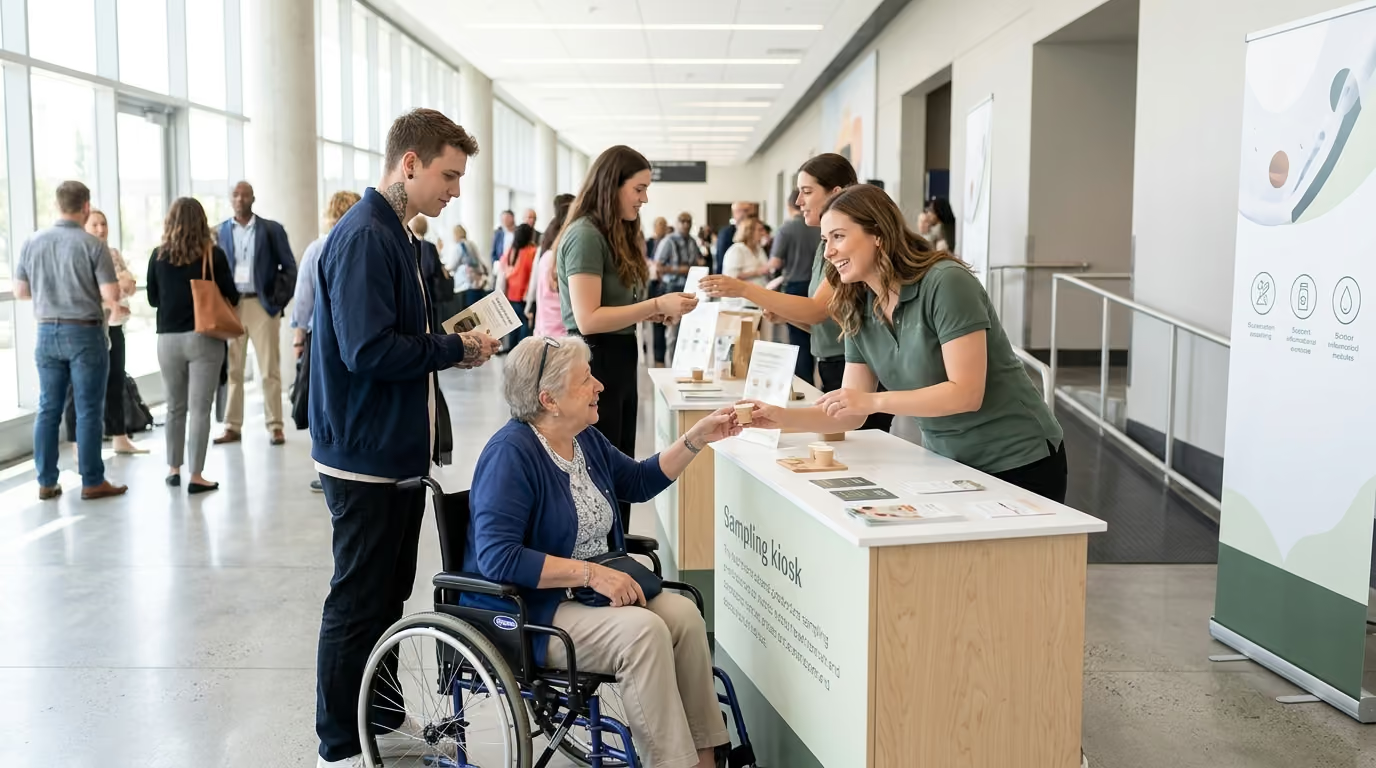
Temporary event footprints must also comply with the accessibility standards established by the Americans with Disabilities Act. The Americans with Disabilities Act National Network emphasizes that temporary events must provide accessible routes, compliant service counters, and unobstructed pathways for individuals with disabilities.
If sampling counters, custom bars, or vehicle display windows exceed 36 inches in height, the footprint must incorporate a lowered, accessible service section or deploy brand ambassadors to deliver samples directly to consumers at ground level. Pathway corridors within the activation space must maintain at least 36 inches of clear width, free from loose cables, protruding signs, or uneven ground transitions.
Executing a flawless, fully compliant mobile sampling tour requires operational discipline across every phase of production. The following phased checklist outlines the systematic steps field marketing operators must execute from initial program design to post-event reporting.
Evaluating the success of a mobile sampling tour requires tracking both operational compliance metrics and marketing performance indicators. Tracking operational metrics ensures the program manages risks effectively, while tracking performance metrics proves commercial Return on Investment (spelled out on first use to establish business value). Brand directors must evaluate field performance using clear lead and lag indicators.
Lead metrics monitor operational readiness and process execution, helping field managers identify and resolve risks before they turn into costly violations or safety incidents:
Lag metrics evaluate the operational outcomes, brand impact, and pipeline conversion generated by the campaign:
Tracking these metrics systematically allows brands to measure financial Return on Investment while proving that rigorous compliance protocols protect brand equity. For deeper frameworks on establishing field reporting structures, review our field marketing measurement frameworks to align field metrics with executive commercial goals.
Examining how premium consumer brands navigate complex compliance environments highlights the value of disciplined field execution.
A fast-growing refrigerated plant-based beverage brand launched an eight-week mobile sampling tour across twelve major metropolitan markets. The operational challenge centered on transporting, storing, and pouring over one hundred thousand fluid ounces of temperature-sensitive, perishable beverage samples across varying municipal climates.
The execution team established a strict cold-chain infrastructure. Custom tour vans were fitted with commercial-grade refrigeration units powered by dual battery banks and auxiliary generators. To satisfy municipal health departments across different states, the program secured temporary food establishment permits in every city, established partnerships with licensed commercial commissaries for daily sanitization, and deployed self-contained mobile handwashing stations at every footprint.
Brand ambassadors were trained using standardized digital modules covering food safety, allergen disclosure, and strict product talking points that focused on flavor profiles while avoiding unapproved wellness claims. Over sixty activation days, the tour distributed more than 85,000 compliant samples, completed daily temperature logs without a single safety failure, passed all unannounced municipal health inspections, and drove a 28 percent retail sales lift in target grocery accounts.
A premium organic snack brand executed an extensive summer festival activation campaign across major music, culinary, and athletic events nationwide. While the product was shelf-stable and commercially packaged, the activation included interactive digital engagement, consumer surveys, and instant-win sweepstakes prize drawings.
The campaign addressed significant regulatory layers involving municipal commercial solicitation permits, public event vendor approvals, Americans with Disabilities Act accessibility standards, and state data privacy regulations. The team designed the footprint with accessible ramps, lowered interactive survey kiosks, and wide, unobstructed queue corridors.
The digital intake platform featured an unbundled consent architecture that separated sweepstakes entries from ongoing email marketing subscriptions, complete with explicit privacy notices. By deploying turnkey specialized mobile sampling tour services, the brand engaged over 120,000 consumers, captured 35,000 compliant marketing leads, and maintained complete regulatory alignment across every municipal stop.
Review this guide whenever your brand prepares to launch a new mobile tour, expands into new geographic markets, introduces a refrigerated or alcohol-based product SKU, or updates consumer data capture workflows.
Maintaining meticulous operational discipline turns regulatory compliance into a competitive advantage that protects your brand and drives reliable commercial growth.

30 Years Experiential & Retail Activation Partner for CPG & Beverage Brands | Multi-Market Demos, Roadshows & Costco/Club Programs That Actually Sell