Robbie Thain
Founder, CEO

Something & Nothing raised $6.4M to expand its U.S. retail presence through hyperlocal sampling. Learn why neighborhood events drive measurable shelf velocity.
On September 29, 2026, BeverageDaily reported that UK-founded premium soda brand Something & Nothing raised $6.4 million to support U.S. growth. The funding round was led by Venrex. It included participation from existing investors Rianta Capital, ACF Investors, and The Source Ventures. This brings the company’s total funding since its 2020 launch to $15.7 million.
The capital injection directly fuels physical marketing logistics and team expansion across new markets. The company stated the funding will support consumer marketing, team growth, and working capital for retail expansion and production. The brand reports that the U.S. accounts for more than 65 percent of its total revenue. This makes their domestic strategy a critical indicator for how premium beverage brands handle scale.
Their physical U.S. retail presence currently includes Whole Foods Markets, H-E-B, Dumbo Market in Brooklyn, and Tiny Grocer in Austin. The brand is actively focusing on a neighborhood-led field strategy. Instead of relying purely on broad national campaigns, they build local marketing around key retail accounts. This places their messaging directly where target consumers already live and shop.
In Chicago, the company ran its "Not Pop" campaign with neighborhood and bus-stop advertising near Whole Foods locations. This specifically used the Midwestern word "pop" as a local reference. Aligning regional language with tight geographic borders creates a highly specific consumer engagement loop. It requires operators to look past broad demographics and focus on literal street corners.
We view this neighborhood-level alignment as the most pragmatic way to support actual retail velocity. When beverage brands treat distribution and product trial as two separate silos, they risk burning capital. Anchoring street-level action directly to the doors that carry the product creates a measurable sales cycle. This requires looking past vanity metrics to measure true Return on Investment based on verified shopper behavior.
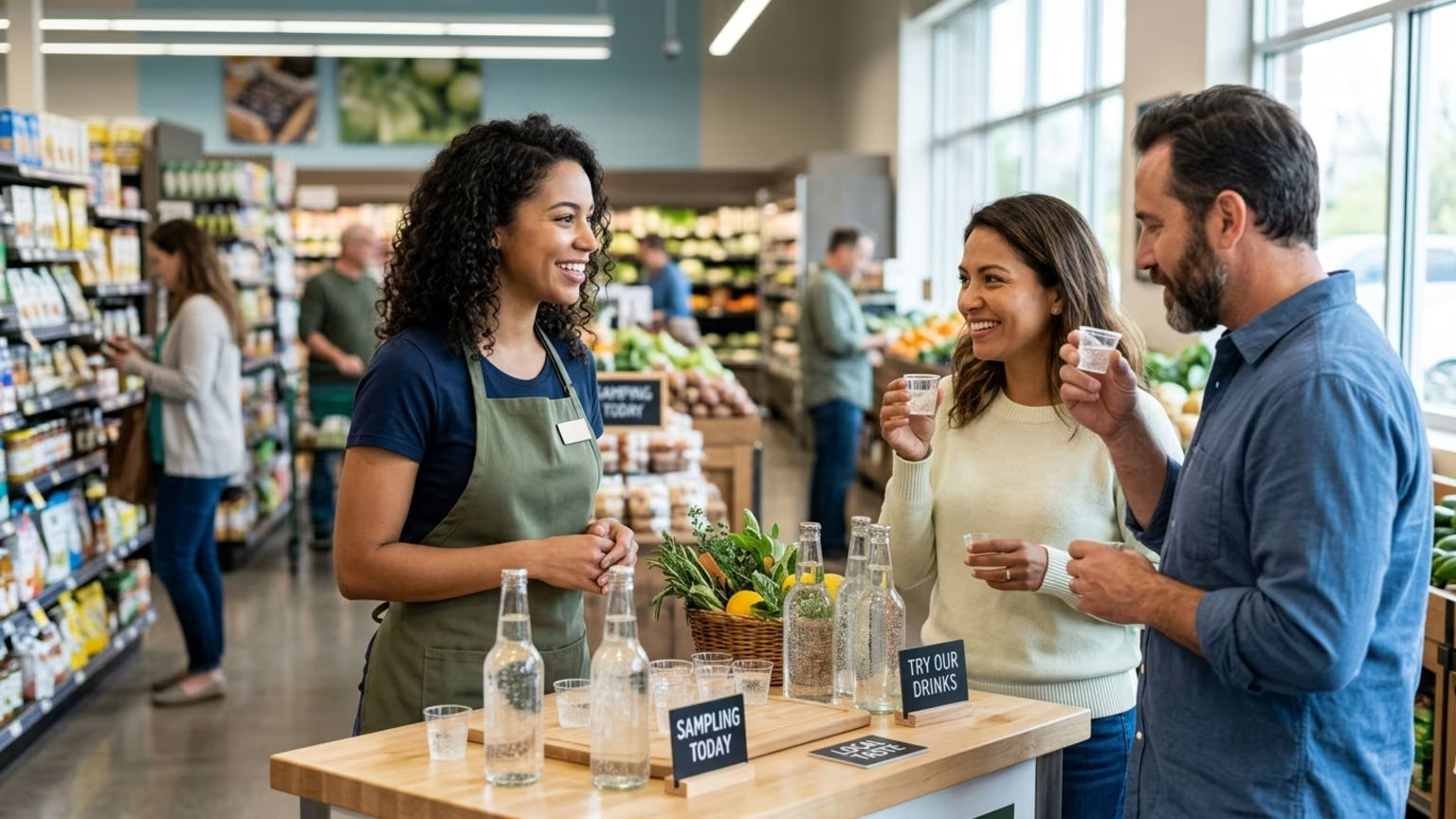
We specialize in creating retail demos, product sampling programs, and roadshows that bring brands face to face with their audiences. Each program is designed to drive trial, build consumer relationships, and accelerate retail velocity across multiple locations. Seeing a brand tie localized advertising near Whole Foods locations mirrors this highly practical philosophy. It proves that targeted local relevance builds stronger retail sell-through than scattered national awareness.
Our team recently ran a four-week Dole Whip summer sampling program across San Francisco, Boston, Tampa, and Orlando. The activations distributed more than 64,000 servings, and we built the creative assets so the concept could be reused in future campaigns. That kind of targeted field action ensures marketing dollars produce measurable product adoption.
We design mobile activations and roadshows that accelerate consumer trial, build trust, and boost retail velocity during 90-day product launch windows. Our structured approach transforms initial product trial into sustained consumer confidence and retail performance. Brands must commit to physical experiences that pull shoppers directly toward local retail doors.
Brands facing softer digital performance are actively looking for alternative ways to build market share. Consumer brands increase retail activations because physical encounters cut through the noise. A well planned neighborhood strategy removes friction between the sample cup and the grocery aisle.
Executing a hyperlocal sampling strategy forces a complete shift in field staffing and physical logistics. You cannot run multiple neighborhood campaigns effectively from a distance. The Miami market activation combined neighborhood-level activity around Whole Foods locations with product sampling, influencer outreach, and expanded distribution. This complex local web also included touchpoints at run clubs, yoga studios, independent retailers, and creator partnerships.
Operating across scattered community venues requires rigorous scheduling and inventory control. Field teams must manage product storage, local permit requirements, and transport logistics flawlessly. This ensures that cold beverages reach targeted local athletes at the exact right moment. Brands executing high conversion street activations need a disciplined operational backbone to support their creative concepts.
Every distinct venue adds a layer of operational friction. A yoga studio activation requires different staging and staffing protocols than a high-traffic grocery store demo. Field managers have to route materials, train local ambassadors, and gather verified consumer feedback simultaneously. Without a structured logistics plan, a multi-venue community sampling push quickly turns into a fragmented execution nightmare.
We designed and managed a 40 by 20 foot trade show environment for Glanbia at Natural Products Expo West 2025. This footprint brought think!, Isopure, Optimum Nutrition, and Amazing Grass into one coordinated space. We handled concept, operations, and breakdown. Our team distributed more than 14,000 recorded product samples across the activation stations. Managing multiple brands in a single footprint requires the same precise operational discipline as managing multiple neighborhood activations across a city.
Managing varied shift times across evening run clubs and morning yoga studios creates significant roster challenges. You have to place the right ambassadors at the right venues without burning out your core team. Using AI powered retail demo scheduling can help field managers anticipate heavy traffic windows and allocate personnel efficiently. Accurate scheduling prevents missed opportunities when community turnout exceeds initial projections.
This precise logistical coordination allows brands to uncover highly specific consumer preferences in the field. Co-founder Olly Dixon told BeverageDaily that run clubs had become an unexpectedly effective channel. He suggested the brand’s refreshing, non-functional positioning suited some runners perfectly. This was especially true for runners meeting in the evening who did not want the energy or hydration products commonly aimed at them.
Dixon noted the company’s drinks have no added sugar or sweeteners and use natural ingredients. He stressed that these claims are not the brand’s main pitch, keeping the primary focus squarely on flavor. Catching an evening runner with a flavor-forward premium soda requires exact timing and geographic placement. It highlights why community partnerships demand flawless on-the-ground execution.
Finding these unexpected usage occasions is exactly why connecting roadshows to retail sell-through matters so much. A digital ad cannot hand a cold drink to a tired runner at dusk. Only a trained brand ambassador standing at the end of a neighborhood route can create that physical memory.
It takes a trained ear to listen to what consumers actually want after a workout. Brands often assume they know their target demographic perfectly. Putting physical product into a runner's hand in Miami provides immediate feedback that no survey can replicate. When field teams capture that sentiment accurately, it informs the next quarter of marketing strategy.
If your brand relies on physical trial to generate sales, how exactly are you tracking the connection between your neighborhood sampling events and your nearby retail cash registers?
In physical marketing, proximity alone is only the starting line. True longevity belongs to operators who treat the street and the shelf as a single, continuous consumer journey.
When beverage operators align localized community touchpoints directly with key grocery accounts, managing the physical execution flawlessly becomes the next operational step. To eliminate low quality leads from crowded trade shows and disjointed street activations, Makai builds highly controlled field systems. Using our Consumer Events capability, we design memorable live experiences that bring brands and people together through interaction, emotion, and engagement. Request a proposal

30 Years Experiential & Retail Activation Partner for CPG & Beverage Brands | Multi-Market Demos, Roadshows & Costco/Club Programs That Actually Sell