Robbie Thain
Founder, CEO

Plan retail demo measurement before launch, separate samples from meaningful trials, and connect conversion tracking with sales comparisons and CRM reporting.

Retail demo measurement should connect samples distributed with meaningful trials, qualified interactions and purchases. Track sales lift against a historical baseline and comparison where feasible. Calculate cost per trial using a defined cost scope and trial denominator. Establish those definitions before the first store visit, record execution during the activation and assess purchases over a stated follow-up window.
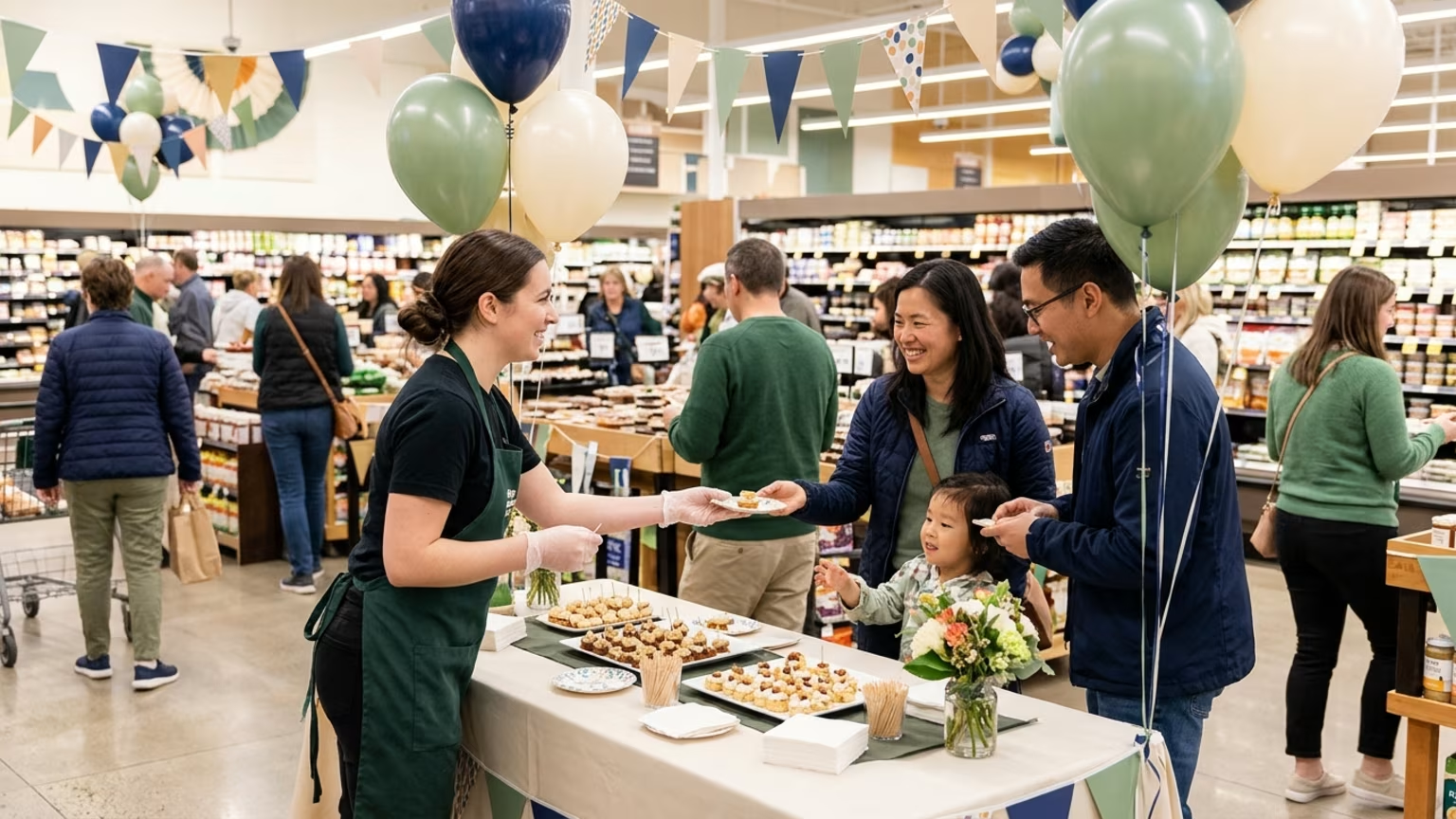
At Makai, we design retail demonstrations and sampling programs to drive trial and build consumer relationships. Our reporting covers reach, trials, leads and sales. The useful question is not whether the sampling table looked busy. It is which business outcome the evidence supports.
Samples distributed show how many product units were handed out. They do not establish how many shoppers meaningfully tried the product or purchased afterward.
Keep distribution separate from completed trials. Otherwise, the scorecard treats handing someone a sample as equivalent to observing the intended product experience.
Practitioner guidance on experiential measurement recommends separating sample distribution from meaningful trials, customer conversations and conversion. Define a qualified interaction against the campaign objective before launch.
An interaction might qualify because it includes a product trial or meets agreed conversation criteria. The count distinguishes substantive engagement from distribution volume; it does not establish purchase intent.
One sampling-program guide defines conversion as units sold divided by shoppers engaged. That is a stated convention rather than a denominator every campaign must adopt.
Name both the numerator and denominator in the report. Also state the purchase window and tracking method. A conversion percentage without those definitions leaves the reader guessing what actually happened.
Sales lift asks whether sales increased relative to a baseline or comparison. Units sold during the demo are not automatically incremental units.
The research recommends reviewing pre-activation sales patterns and comparing activated locations with comparable unactivated locations where feasible. A before-and-after increase alone can coincide with other influences. Planning historical baselines and comparisons belongs before execution rather than after an encouraging sales report arrives.
Retail-execution guidance lists cost per sample as shift cost divided by samples distributed. For a trial-focused campaign, distinguish that measure from cost per completed meaningful trial.
State which costs enter the calculation and keep the denominator consistent. Cost per trial describes efficiency against that definition. It does not independently establish profitability or Return on Investment (ROI).
We managed a four-week, multi-market Costco sampling program for Pulmuone's PlantSpired line. The program delivered more than 65,000 samples and recorded an 18 percent sold-to-sale rate. Those results illustrate why labels matter: distribution volume and the reported sales measure answer different questions. Retain the original metric name rather than silently relabeling it as shopper conversion.
Start with the business outcome and work backward to the evidence needed. A trial program needs a clear trial definition. A purchase-focused program needs a conversion event and purchase window. A lead-focused program needs agreed qualification criteria and a route into reporting.
A practical measurement plan should establish:
These choices should connect rather than create separate reporting projects. Samples distributed describe execution. Meaningful trials describe engagement. Tracked purchases and sales comparisons address commercial outcomes.
Physical preparation belongs alongside the measurement plan. Makai stores sampling product and event gear and coordinates nationwide shipping, tracking and delivery. Product and equipment logistics are part of our activation scope; they are not substitutes for defining success.
Use the pre-event planning checklist alongside the scorecard. The planning question is whether the intended experience and its measurement are both accounted for before the store visit.
Give ambassadors a clear distinction between distributing a sample and completing the intended interaction. The training brief should translate campaign definitions into observable actions. It should not ask staff to infer purchase intent from a pleasant conversation.
Makai's retail demonstrations use trained brand ambassadors for real conversations and product trials. For us, an aloha approach means respecting the person rather than treating every shopper as a scan opportunity. Measurement should document the interaction without becoming its purpose.
The campaign brief should answer practical questions:
Our experience also shows the operational scope behind coordinated engagement. At Natural Products Expo West 2025, we designed and managed a 40 by 20 foot trade show environment for Glanbia. The space brought think! and Isopure together with Optimum Nutrition and Amazing Grass. We handled concept, operations, staffing and breakdown.
That activation recorded more than 14,000 product samples across its stations. For measurement planning, the lesson is to keep the distribution count clearly named even when the experience includes several brands and engagement points.
Separate the physical interaction from the action that creates a reportable lead. A sample recipient is not automatically a qualified contact. Define the qualifying action first, then choose tracking that fits it.
The experiential-measurement guidance lists campaign-specific URLs and QR codes among possible methods. It also identifies promotional codes, CRM tags and post-event surveys. These are tracking options rather than interchangeable proof of a sale.
A supported planning sequence is:
Makai's integrated service scope extends from permitting to CRM reporting. We believe that makes the handoff a planning decision rather than an administrative detail left until breakdown.
A tagged conversion records attributable activity under the chosen tracking method. Without a comparison group, it does not establish that the demo caused the purchase. Keep that distinction visible in the broader field measurement framework.
A no-show and a broken capture tool call for different operational responses. Our recommendation for measurement is consistent: preserve observed activity and identify gaps without inventing continuity.
The reporting contingency plan should follow the distinctions already built into the scorecard:
Staff replacement and equipment recovery belong in the operating plan. The measurement plan addresses a narrower responsibility: preserving the distinction between recorded evidence and missing observations.
A floor problem should remain visible in the final assessment. A complete-looking dashboard is not the same thing as a complete record.
The next planning task is a scorecard review, not a search for a universal conversion target. The available guidance establishes no universal benchmark for demo conversion, sales lift or cost per trial.
Read each metric definition aloud and identify its evidence source. Confirm the baseline and comparison approach. Check that the reporting window matches the business outcome. Resolve ambiguous definitions before launch so the final review can focus on what happened rather than what the numbers mean.
Building a measurement-ready demo starts with deciding what will happen in the store, while Makai manages the product and equipment logistics behind the activation. Makai stores products and equipment for sampling programs and coordinates their shipment, tracking and delivery nationwide.

30 Years Experiential & Retail Activation Partner for CPG & Beverage Brands | Multi-Market Demos, Roadshows & Costco/Club Programs That Actually Sell