Robbie Thain
Founder, CEO

Learn how stacking street-level product sampling with in-venue concert activations drives measurable retail trial and conversion for CPG brands.

Most event marketing budgets are wasted on entertaining people who will never buy your product. The traditional approach treats sponsorships and concert activations as mere brand theater. Smart operators know that treating these events as performance channels is the only way to drive actual retail sell through.
By linking street level product distribution directly to in venue surprises, consumer packaged goods brands can create a seamless path to purchase. This strategy turns cold event traffic into qualified retail buyers with measurable precision.
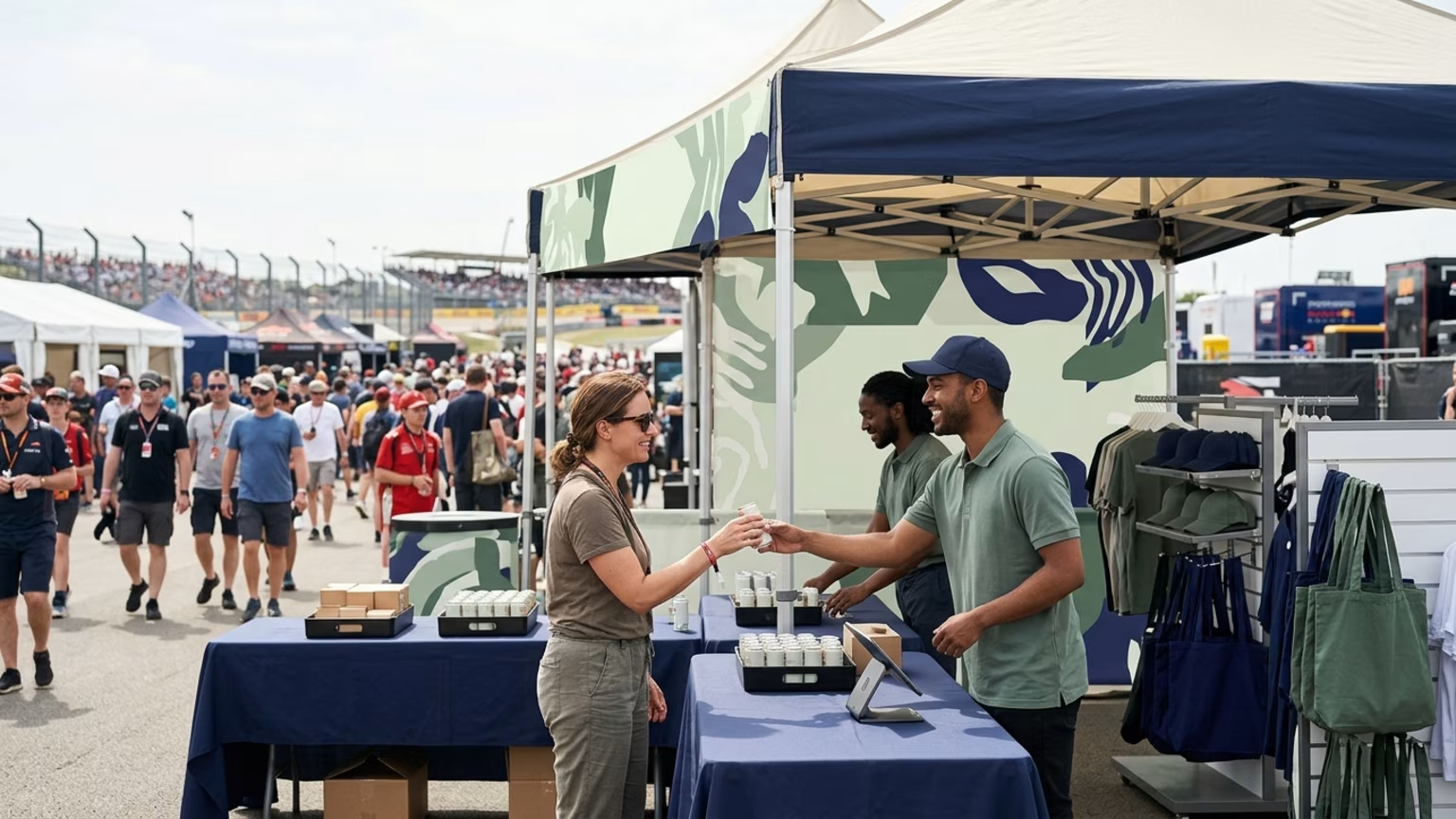
Marketing teams spend months planning massive concert sponsorships. The venue perimeter is often a mess of loud music, rushing crowds, and stressed staff. Brand ambassadors resort to tossing product samples at distracted attendees. There is no conversation, no data capture, and no clear reason for the consumer to care.
The result is a pile of discarded wrappers and a complete lack of measurable Return on Investment. It becomes a beautiful disaster that leaves executives questioning the value of experiential spending. Staff turnover on the ground compounds the issue. Untrained temporary workers fail to communicate the core product benefits.
Inside the gates, the situation rarely improves. A generic branded tent sits in the corner of a noisy concourse. Fans walk past the booth without a second glance. The brand spent millions on the sponsorship rights but completely neglected the actual consumer interaction.
When Monday morning arrives, the marketing director has no hard numbers to show leadership. They report vanity metrics like total foot traffic and social media impressions. The sales team sees zero lift in local grocery channels.
Roaming demonstrations combined with venue based activations fix this fragmentation. The goal involves moving consumers from cold awareness to emotional connection in a single unified flow. You stack the interactions instead of treating the street team and the concert booth as separate silos. The street interaction serves as the initial hook.
The inside experience deepens the memory and builds brand affinity. The post event follow up drives the actual retail conversion. Industry analysts report that product sampling can lift purchase intent by twenty to sixty percent. This methodology builds a predictable pipeline.
Neuroscience and recall studies show higher brand favorability for brands encountered in live experiences compared to digital ad impressions. Fans perceive brands that facilitate the concert experience as more relevant and modern. This integrated approach builds deep equity in emotional categories like personal care and food.
Sponsorship experts stress that unactivated sponsorships consistently underperform. Brands should invest heavily in activation rather than relying solely on rights fees. You can master connecting physical interactions to digital flows by treating the physical environment as an interactive medium.
A VP of Marketing in the CPG beverage category told us: 'Robbie, your leadership and vision turned our campaign into something truly special. The Makai team brought our new drink to life with energy, creativity, and flawless execution. Thanks to you, our brand isn't just tasted, it's remembered.' Our team's approach transformed their product launch into a memorable brand experience.
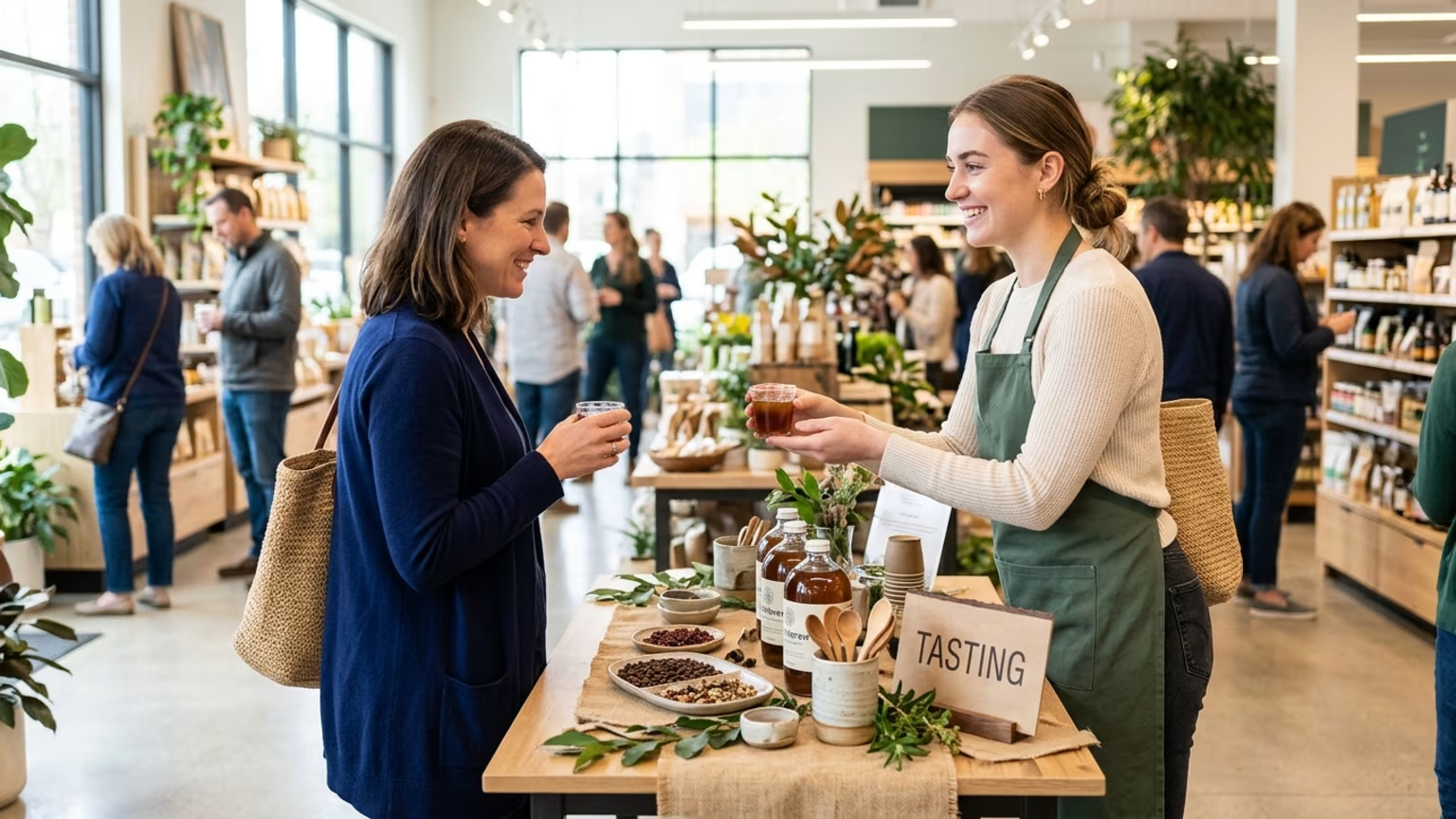
Shoppers demand physical proof before they commit to a new daily habit. Physical product trials remain the most reliable predictor of purchase in categories where taste, scent, or texture matter. We see this reality play out across every major national campaign. When consumers try a product and enjoy the experience, repeat rates outperform coupon only campaigns.
To execute this seamlessly, your team must follow a strict operational format. A disciplined framework replaces chaos with predictable consumer engagement.
Your stakeholders need more than photos and social media tallies. A rigorous measurement framework justifies the required budget. Clear tracking separates true performance marketing from pure entertainment.
Lead metrics show the immediate health of the live activation. You must track the total samples distributed by show, date, and specific location. Monitor the scan rates on your digital codes and the dwell time inside your branded zones. These numbers indicate whether the field team is successfully engaging the crowd.
Lag metrics prove the financial return of the entire campaign. Track coupon redemption rates at local retailers and measure the control versus exposed sales lift. You should see immediate sales uplifts of one hundred to six hundred percent on demo days. Post demo baseline sales often remain ten to thirty percent higher for several weeks.
You can estimate the true incremental impact by using localized test and control markets. Compare sales lift in the activation market against similar nearby markets with no experiential presence. Mastering the art of measuring activation returns accurately gives you the data to defend your budget. Book a strategy call to map out a measurement plan for your next major event.
Many brands worry that live sampling programs are too expensive to scale. Labor, training, logistics, and product costs add up quickly. You mitigate these costs by focusing your distribution in high value contexts. A concert audience is highly aligned and incredibly receptive to physical comforts.
Another common concern is the noisy environment outside a major stadium. People are focused on finding their seats, buying drinks, and meeting their friends. You must design completely frictionless offers to cut through the distractions. Provide a simple prompt like 'open now, use later' to minimize the required attention span.
Untrained temporary staff represent the biggest risk to any field marketing campaign. Many sampling programs fail silently via simple product dumping. Reps hand out items without sharing a story, capturing data, or creating a memorable moment. You must train your field staff as dedicated brand educators rather than simple sample dispensers.
A focused approach relies on mastering selecting the right sampling format for the specific environment. Give your staff a sticky story that combines a clear product benefit with a reason to care. A fifteen second conversation paired with a great sample outperforms a silent handoff every single time.
Different product categories require distinct adjustments to the unified event model. Beverage and snack brands thrive on immediate cold sampling outside the gates. Field teams distribute chilled cans or single serve snack packs to hungry fans. Inside the venue, the brand builds hydration stations or exclusive tasting lounges.
Health and wellness companies take a slightly different approach. These brands distribute vitamin packs, hydration powders, or wellness wipes on the street. The inside experience focuses on recovery stations, stretching zones, or quiet spaces. Retail integration happens at local pharmacies situated near the concert grounds.
Automotive brands bypass product distribution for high value service interactions. Street teams offer priority shuttle services or targeted ride and drive sign ups. Inside the stadium, the company sponsors premium parking zones or exclusive drop off areas. Local dealers follow up with attendees to schedule full test drives after the event concludes.
Technology companies focus on trial offers and instant digital utility. Sidewalk teams encourage immediate application installs or augmented reality interactions. The venue booth features device charging lounges and exclusive content previews. The entire flow extends the concert experience directly onto the user's mobile device.
Recent industry activity in Toronto highlights the power of this integrated strategy. A major personal care brand launched a comprehensive program at a local amphitheater. The campaign combined sidewalk product drops with a targeted in venue seat upgrade system.
The street team distributed travel sized deodorant samples to fans walking toward the gates. This interaction primed the audience with immediate usage intent. The product offered a highly relevant benefit for people about to spend hours in a crowded outdoor venue. The simple act of receiving a useful item built instant goodwill.
Inside the gates, the brand executed a surprise seating upgrade promotion. Fans who interacted with the brand could win premium spots for the concert. This hero moment transformed a basic sponsorship into a memorable, night making experience. The brand shifted its perception from a passive sponsor to an active participant in the event.
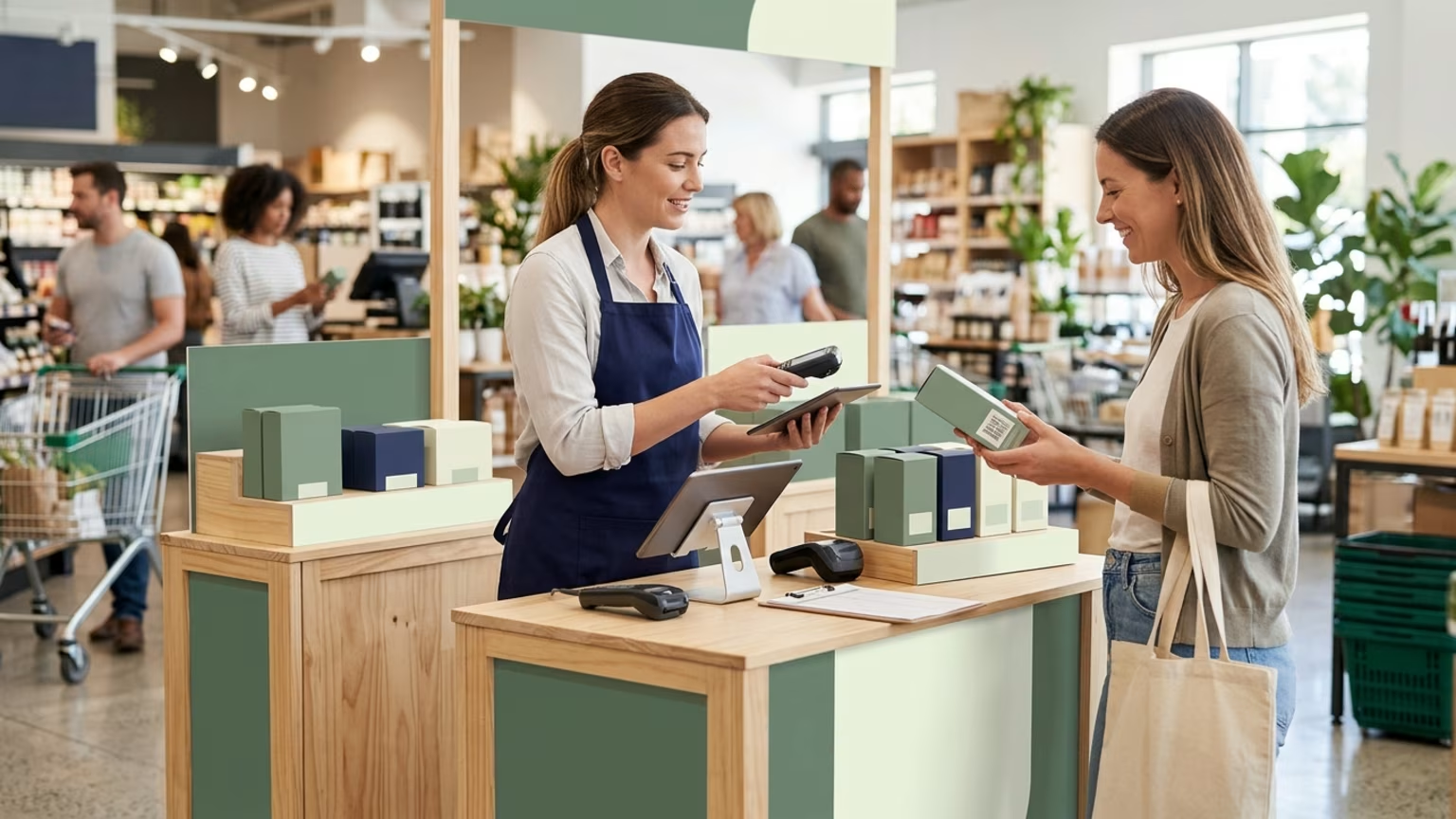
The final step involved pushing these engaged fans toward local retail channels. The physical trial on the street merged perfectly with the emotional high of the concert. This approach demonstrates how physical environments can drive massive awareness and immediate retail conversion. The consumer moves from the sidewalk, to the stadium, and finally to the store shelf.
The most memorable brand interactions happen when a product arrives exactly when someone needs it. A well timed physical sample combined with a great live experience changes how a person feels about a company. The noise of a crowded stadium fades away, leaving behind a quiet sense of trust that carries all the way to the checkout aisle.

30 Years Experiential & Retail Activation Partner for CPG & Beverage Brands | Multi-Market Demos, Roadshows & Costco/Club Programs That Actually Sell