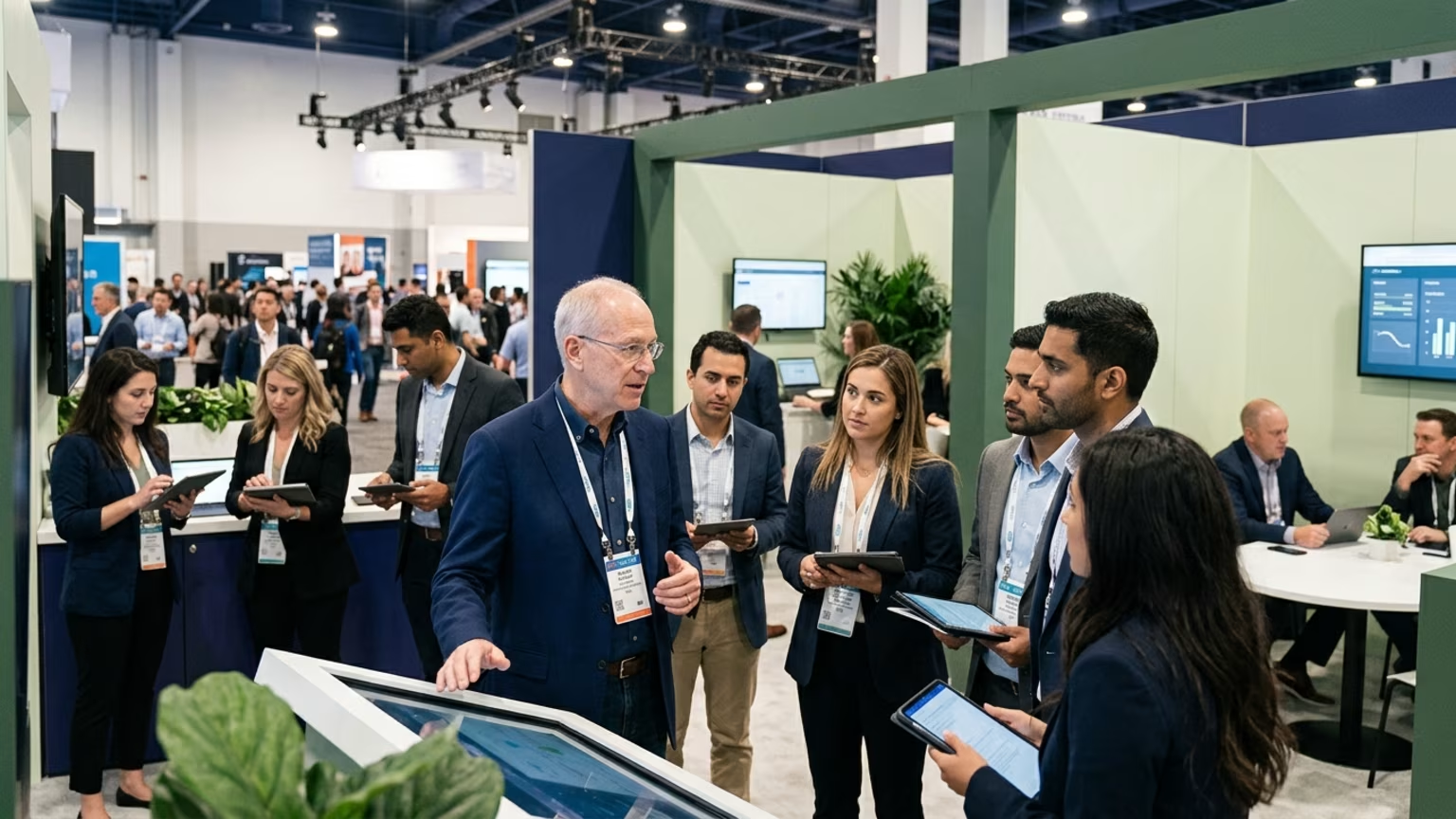
Robbie Thain
Founder, CEO

Updated exhibitor guidelines prioritize structured attendee pathways and strict lead quality measurement. Learn how to maximize your trade show ROI today.
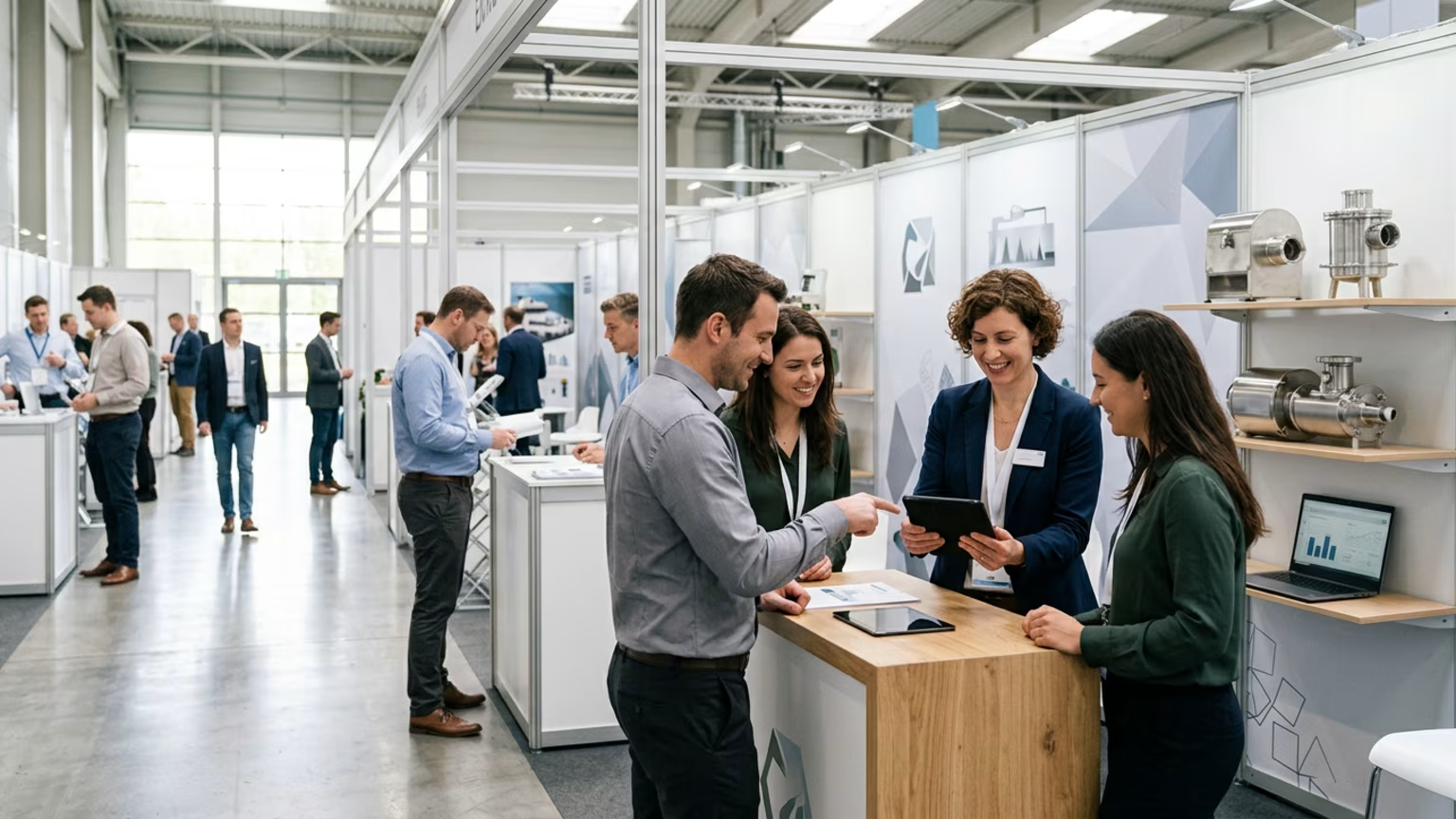
The expo hall doors open at nine in the morning. A wall of noise instantly hits your booth staff. Three different salespeople try to qualify the exact same confused attendee. Your top promotional display sits untouched in the corner.
Convention organizers recently released new exhibitor guidelines that prioritize structured attendee pathways and precise lead quality measurement. By adopting these updated frameworks, marketing leaders can definitively link their live event spend directly to their sales pipeline.
Trade shows represent massive line items on any marketing budget. Brand leaders spend months coordinating complex logistics. They ship heavy product displays and fly sales teams across the country. Yet the actual execution often devolves into unorganized badge scanning.
Booth representatives grab anyone who makes eye contact. High-value prospects get lost in the sea of casual browsers. Swag hunters drain valuable promotional resources without offering any buying intent. We see this exact breakdown repeatedly when evaluating legacy event strategies.
Brands treat the physical booth like a static billboard instead of an active conversion engine. Without a clear map of how attendees should move through the space, interactions feel random. The physical environment becomes a trap instead of a tool. Marketing teams leave the event with hundreds of weak contacts.
They hand these loose contacts to the sales team for follow up. The sales team calls these leads and hears nothing back. The supposed prospects have no memory of the actual brand interaction. This disconnect creates massive internal friction between marketing and sales departments.
The marketing team claims the event was a huge success based on total foot traffic. The sales leaders push back and point to an empty revenue pipeline. Both sides end up frustrated and unable to justify future event investments. The cycle repeats itself year after year with massive capital waste.
The Trade Show News Network recently highlighted new exhibitor guidance from major convention organizers. These updated playbooks demand a complete shift in how brands plan their physical footprint. Instead of focusing solely on flashy architecture, the new standard prioritizes purposeful attendee pathway mapping. Organizers now recommend integrating hybrid content capture and real-time performance dashboards into the core booth strategy.
This approach treats the physical space as a structured and measurable sales funnel. Every square foot must serve a very specific phase of the buyer progression. When a prospect steps onto the carpet, their path should naturally guide them forward. The progression must move from initial curiosity to deep qualification seamlessly.
By combining trained staff with digital touchpoints, brands can intercept buyers at the exact right moment. The focus shifts entirely from counting total badge scans to generating high-quality conversations. When brands deploy modern event lead capture methods, the initial data quality improves immediately. This level of control stops the chaos and introduces a scalable process.
A VP of Marketing in the CPG beverage category told us: 'Robbie, your leadership and vision turned our campaign into something truly special. The Makai team brought our new drink to life with energy, creativity, and flawless execution. Thanks to you, our brand isn't just tasted, it's remembered.' Our team's approach transformed their product launch into a highly measurable brand experience.
We applied this exact pathway mapping framework to make sure every single tasting led to a recorded retail preference. The data collected gave their distribution team exactly what they needed to close deals. By applying these new convention guidelines, we turned fleeting interactions into permanent pipeline assets.
Theory provides zero value without disciplined field execution. Moving from an empty expo hall to a fully optimized activation requires a precise operational playbook. Marketing teams must actively align their booth operations with these new industry standards. Here is how to execute this strategic framework during your next major event.
Break your floor plan into three very distinct functional areas. Create a low-friction entry point for quick product sampling. Build a mid-tier engagement zone for deeper product education and interactive demonstrations. Reserve a private area strictly for high-level sales conversations.
Stop letting your best sales representatives hand out branded merchandise. Assign high-energy brand ambassadors to the perimeter to draw people inside. Position your technical experts deep inside the booth where qualified buyers naturally migrate. This staging allows your top closers to focus entirely on selling.
Replace passive paper brochures with interactive digital screens. Require attendees to input basic qualification data to access premium industry reports. This simple barrier filters out the tourists from the serious retail buyers. The captured data flows directly into your central management system.
Use modern event software to track staff performance and booth traffic by the hour. If engagement drops during the afternoon slump, adjust your positioning immediately. Deploy active intercept tactics to pull attendees back into the main pathway. Real-time data allows you to fix problems before the day ends.
Train every team member to ask three precise qualifying questions before scanning a badge. This rigid protocol prevents database bloat. It guarantees the sales team only receives highly actionable prospect contacts. Any attendee who refuses to answer the qualification questions gets politely directed toward the exit.
Marketing operators can no longer justify six-figure event budgets using vague brand awareness metrics. The updated convention guidelines stress the intense need to track immediate actions. You need clear numerical data to prove your strategy actually works. The old method of estimating success simply fails under financial scrutiny.
First, direct your focus toward your immediate lead metrics. These are the live signals of floor execution quality and staff performance. Track the conversion rate of passing foot traffic into active booth engagements. Measure the exact average time spent in the qualification zone.
Monitor the daily volume of meetings booked directly from the booth floor. When you train event staff to focus on target metrics, these daily numbers will improve dramatically. Strong lead metrics prove that your floor operations are highly efficient. Weak lead metrics warn you that your staff needs immediate retraining.
Next, transition to tracking your lag metrics for comprehensive executive reporting. These numbers tell the true story of your marketing spend and pipeline impact. Calculate the strict cost per qualified lead generated at the specific event. Track the percentage of those leads that progress to a formal sales proposal.
Finally, measure the closed-won revenue directly sourced from the trade show activation. This strict financial discipline guarantees your live event marketing spend generates measurable returns. Executives will always approve budget requests backed by clear pipeline numbers. Connecting floor operations to closed deals validates the entire experiential strategy.
Applying these updated industry guidelines changes the entire dynamic of a trade show presence. We recently partnered with a rapidly growing snack food brand. They were preparing for a massive national grocery expo. Their previous trade show efforts resulted in exhausted staff and zero actionable retail leads.
They treated their previous booth like a basic and unorganized sampling station. Attendees would grab a free bag of chips and immediately walk away. We rebuilt their entire floor strategy using strict pathway mapping principles. Brand ambassadors managed the outer aisles effectively.
They handed out small product samples and verbally filtered the passing attendees. Only verified retail buyers and distribution partners were guided into the secondary engagement area. Digital tablets captured their regional distribution data immediately. A senior sales director then initiated a deep and highly qualified conversation.
This process completely removed friction from the data collection phase. The sales team finally had the correct information to formulate a pitch. The final results fundamentally shifted how their executive team views trade shows. The brand captured fifty percent fewer total leads than the previous operating year.
Yet the core quality of those leads skyrocketed exponentially. Their sales team secured highly lucrative meetings with three major national retail chains. They closed two massive distribution deals within sixty days of the event.
Winning on the trade show floor requires intense operational discipline. It demands structured attendee pathways and a relentless focus on qualification. Stop leaving your highly expensive event success to random chance. Book a strategy call with our team to turn your next convention appearance into a predictable revenue engine.

30 Years Experiential & Retail Activation Partner for CPG & Beverage Brands | Multi-Market Demos, Roadshows & Costco/Club Programs That Actually Sell