Robbie Thain
Founder, CEO

Stop wasting trade show budgets on random foot traffic. Learn how pre-scheduled meetings and rapid 48-hour follow-up drive real ROI and sales pipeline.

Showing up to a trade show and hoping foot traffic turns into sales is a guaranteed way to waste your marketing budget. Industry data confirms that proactive outreach and disciplined follow-up dictate Return on Investment far more than flashy booth design.
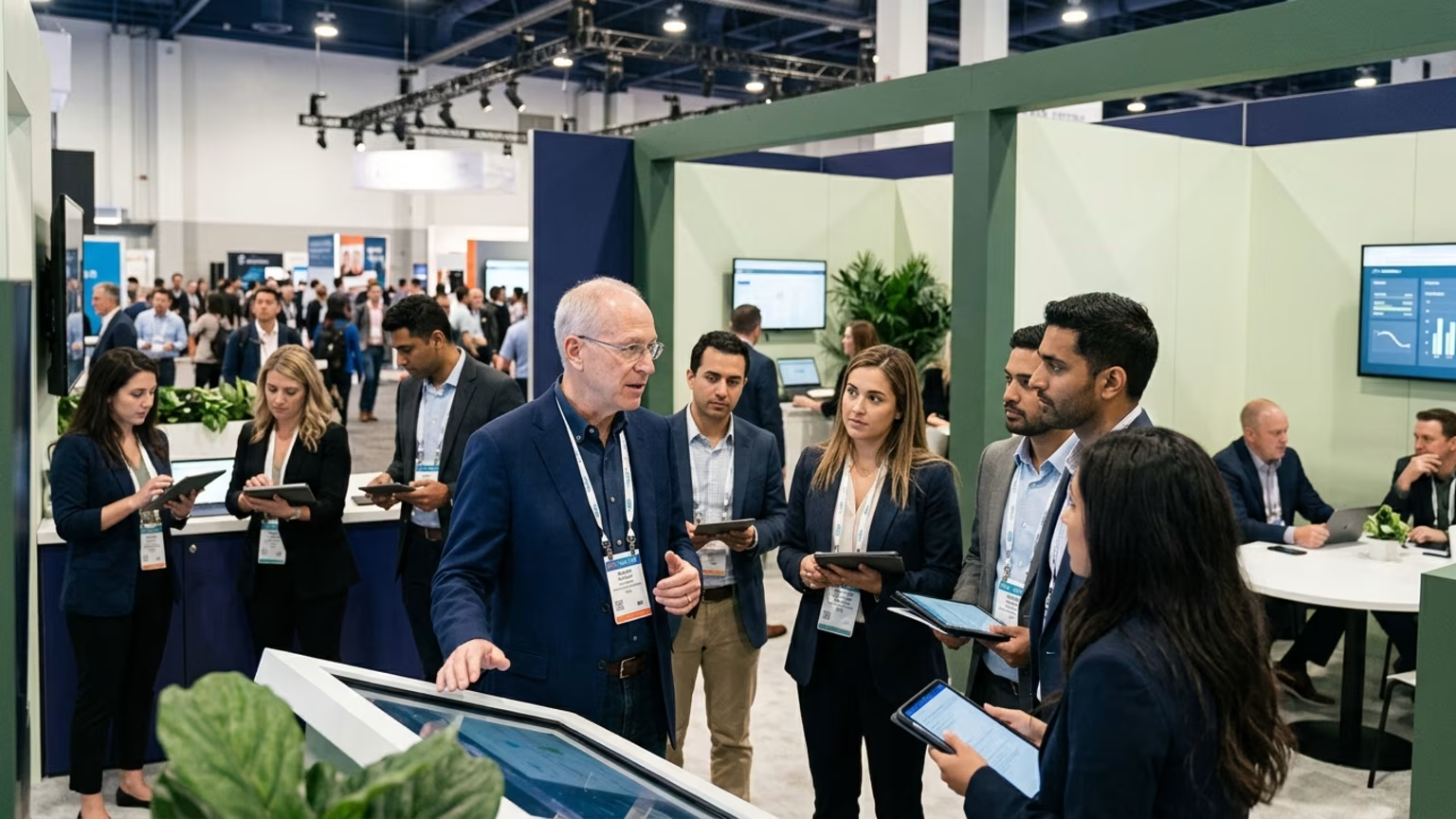
The standard expo floor is a masterclass in wasted potential. Thousands of attendees wander the aisles with no clear agenda. Your field team is scanning badges as fast as possible. The booth looks incredibly busy to the untrained eye.
Yet this visual success masks operational failure. Your staff spends precious minutes talking to college students, competitors, and swag hunters. Real target buyers walk right past the crowded space. They see a booth full of unqualified people and decide to keep moving.
This scenario is painfully familiar to any marketing director managing field activations. You spend months organizing logistics, shipping materials, and coordinating travel. You build an expensive space to showcase your newest product. Then you return to the office with a spreadsheet full of unqualified names.
The sales team calls these leads, gets no response, and blames the event quality. You are left defending a massive expense with zero tangible pipeline to show for it. This cycle happens repeatedly when brands mistake raw activity for actual achievement. It creates a deep rift between field marketing and sales leadership.
Recent findings from Exhibitor Group research paint a clear picture of what actually works. Top-performing brands generate a significantly higher share of qualified leads by locking in meetings before the doors ever open. These winners dedicate their final weeks of event prep to targeted outreach. They refuse to rely on the random luck of passing foot traffic.
They stop obsessing over minor booth design tweaks. Instead, they run coordinated email sequences to secure guaranteed face time with retail buyers. This approach transforms the physical booth into a dedicated meeting space rather than a generic billboard. The architecture of the space serves a functional purpose to facilitate private discussions.
This strategic shift requires a fundamental change in how you train your staff. Your ambassadors cannot just memorize a list of product features. They must know how to lead deep discovery conversations. They need the skills to ask qualifying questions and identify true pain points quickly.
When your team understands how to grade a lead in real time, the entire dynamic changes. You stop collecting business cards from every single passerby. You focus entirely on prospects who have the budget and authority to buy your product. The quality of your data improves instantly. Prioritizing strong pre-event meeting schedules is the foundation of this new model.
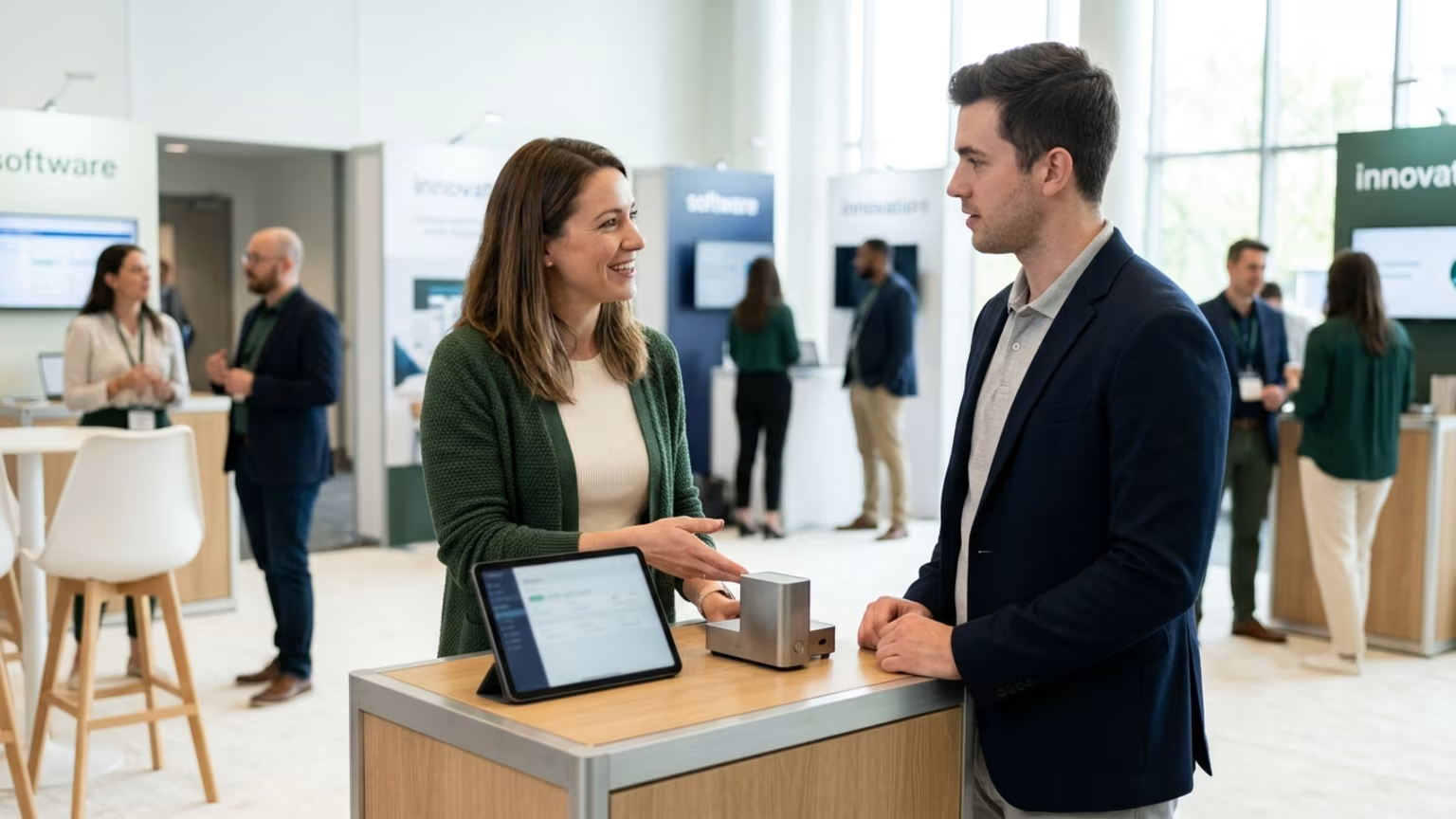
The psychology of a pre-booked meeting is entirely different from a random walk-up. A scheduled buyer arrives with intent, ready to discuss specific business needs. They are prepared to give you their undivided attention for a set block of time. This focused engagement is exactly where complex sales are won on the show floor.
Brands that fail to adopt this strategy are operating at a severe disadvantage. They are spending premium dollars for real estate but ignoring the mechanics of conversion. The research makes it clear that preparation and outreach now trump square footage. Your budget must align with activities that directly generate pipeline.
Turning this philosophy into reality requires a strict operational playbook. You need a structured timeline to manage outreach, training, and follow-up. This process begins a full month before you arrive at the convention center. Follow these exact steps to turn your booth into a conversion engine:
You cannot manage what you do not measure. Moving away from vanity metrics means adopting a rigid set of lead and lag indicators. These data points give you a clear picture of your actual event performance. They strip away the emotion and focus entirely on business impact.
Lead metrics tell you if your execution is on track during the event itself. Track the exact number of pre-scheduled demos booked before the show starts. Monitor your show-up rate to see how many of those meetings actually happened. Count the number of A-tier leads captured each day to gauge booth quality.
You should track the ratio of casual conversations to deep discovery sessions. If your staff is talking to a hundred people but only capturing five qualified leads, your targeting is entirely off. This real-time feedback allows you to adjust your approach on day two of the event. Field leaders can pivot their staffing strategy immediately based on this data.
Lag metrics reveal the true financial impact of your activation weeks later. Measure the total pipeline generated from event contacts. Track the conversion rate of those specific leads as they move through your sales funnel. Calculate your true cost per qualified opportunity rather than your cost per badge scan.
When you bring these numbers to your executive team, the conversation changes. You no longer have to justify the event budget with vague stories about brand awareness. You can point directly to revenue generated. This makes it much easier to transition your broader marketing approach from brand theater to revenue generation.
Reporting on these metrics builds immense credibility with the rest of the organization. Sales leaders will fight for your event budget when they see a direct link to their quotas. The entire company begins to view field marketing as a critical growth engine. This alignment is the ultimate hallmark of a mature marketing operation.
Theory is helpful, but execution dictates success. Consider a premium beverage brand launching a new functional drink at a major natural foods expo. Instead of building a massive sampling bar for general attendees, they designed a targeted meeting space. They knew that retail buyers were the only audience that mattered for this launch.
They used their final month of prep to book direct appointments with regional grocery buyers. Their booth staff was trained to ask direct questions about shelf space and distribution challenges. They graded every single visitor on a strict three-tier scale. Any visitor without purchasing authority received a polite exit and a sample.
Within two days of the show closing, the sales team reached out to every A-tier buyer with personalized pricing sheets. They did not send a single generic email blast. The result was a massive spike in regional retail distribution within three months. The brand proved that disciplined targeting works better than mass sampling.
The post-show debrief for this beverage brand looked remarkably different from previous years. There were no arguments over lead quality or complaints about wasted time. The field staff felt victorious, and the sales team had immediate, actionable pipeline to attack. This unified front proved the immense value of a tightly controlled field strategy.
Operating with this level of discipline protects your brand reputation in the market. Buyers notice when a company values their time and runs a highly professional meeting. They contrast your organized approach with the chaotic booths next door. This professional execution builds immense trust before the product is even discussed.
We understand this level of detail through daily execution. We have executed over 1000 campaigns across all 50 states, bringing brands to life in every major U.S. market. From retail demos in Seattle to roadshows in Miami and events in Honolulu, our teams activate brands wherever our clients' audiences are located. We see firsthand that process beats luck every time.
Let us look back at that chaotic convention hall. The loud music and swirling crowds are still there. The competing booths are still handing out useless plastic trinkets. Your team is operating on a completely different level.
Your booth is calm, focused, and booked solid with actual buyers. Your field staff knows exactly who they are talking to and why. Your CRM is filling up with highly qualified data that your sales team will actually use.
You have transformed a logistical headache into a predictable pipeline engine. This level of clarity takes work, but it is entirely achievable. You just need the right framework and the discipline to follow it. The best brands stop hoping for success and start engineering it.
Stop letting random foot traffic dictate your marketing success. Take control of your execution and turn your next event into measurable revenue. Book a strategy call with our team to start building your customized activation playbook today.

30 Years Experiential & Retail Activation Partner for CPG & Beverage Brands | Multi-Market Demos, Roadshows & Costco/Club Programs That Actually Sell