Robbie Thain
Founder, CEO

Discover how recent NielsenIQ data proves in-store demos and sampling drive massive sales lift for emerging CPG brands when paired with strategic execution.

Most marketing budgets burn millions on digital ads and ignore the only channel that guarantees product trial. Physical retail environments remain the undisputed testing ground for emerging consumer goods. The smartest operators know that winning the shelf requires more than just decent packaging.
Recent analysis from NielsenIQ proves that physical product sampling remains a top driver of short-term retail sales lift. Consumer packaged goods brands that pair targeted in-store demos with strict data capture can confidently prove Return on Investment to their leadership.
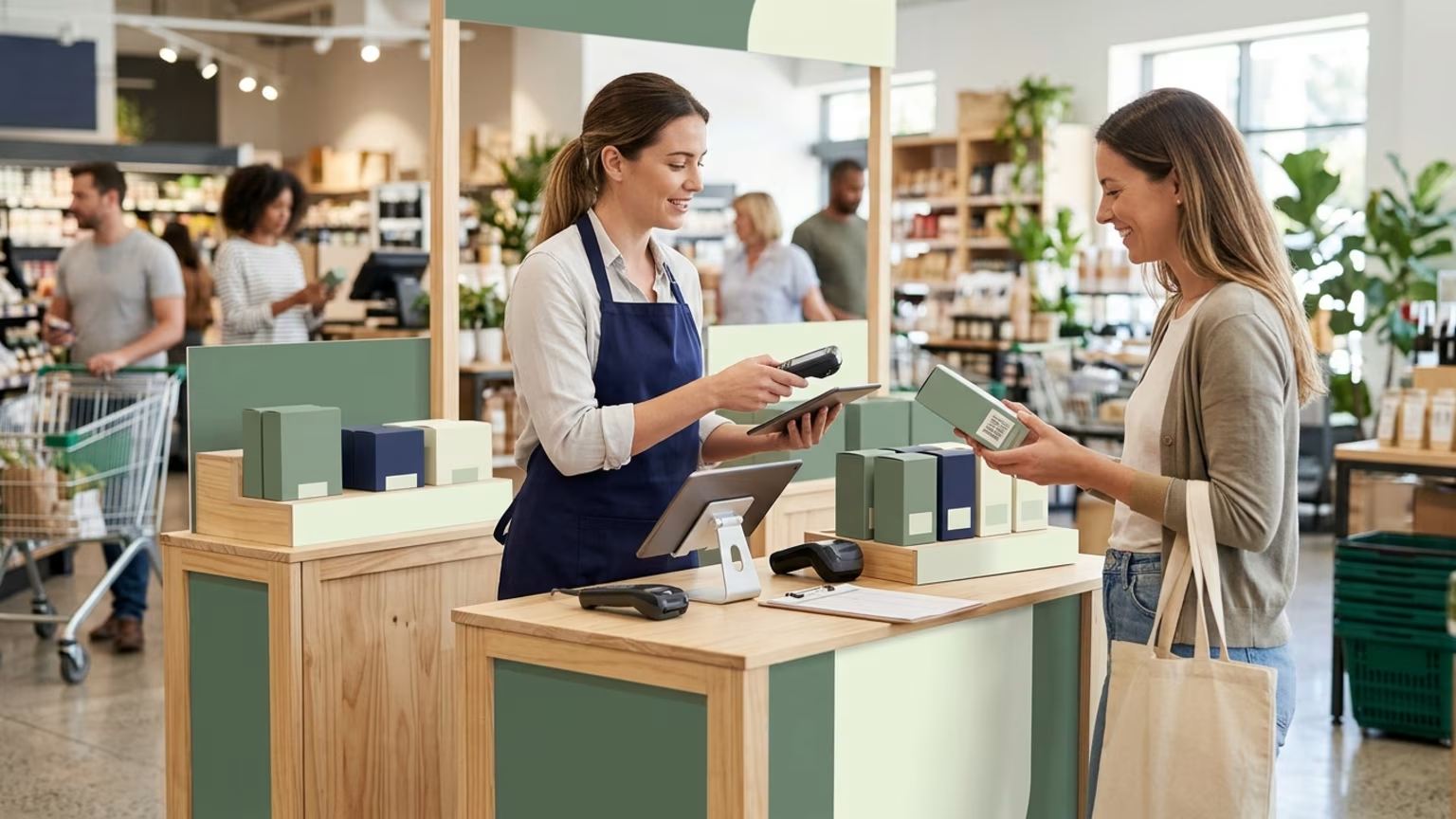
Selling a new food or beverage product is incredibly difficult in a crowded grocery aisle. Field marketing managers face massive pressure to justify their physical event spend to skeptical executives. The typical approach involves sending underprepared brand ambassadors to a local store with a cheap folding table. They hand out free snacks to distracted shoppers who never actually buy the product.
Retailers look at the aisle and see a messy promotion with minimal sales lift. Brand directors look at the balance sheet and see fragmented execution. This sloppy approach destroys trust with retail buyers who expect proven sell-through. Real retail velocity requires operational discipline instead of hopeful guessing.
Brands often struggle to find reliable staffing for their localized events. They hire random contractors who do not understand the core values of the product. These temporary workers fail to educate the consumer or ask for the sale. The resulting data is completely unreliable and useless for future planning.
Poor logistics ruin perfectly good product launches every single week. Field managers spend hours coordinating product shipments that never arrive at the right store. The brand ends up paying staff to stand around an empty table with nothing to sample. These logistical failures destroy morale and waste thousands of dollars in hidden costs.
Store managers despise chaotic vendor activations that disrupt their normal daily operations. They actively complain to corporate buyers when field teams leave trash behind or block main walkways. A single bad interaction with a local grocery manager can permanently damage your retail relationship. Brands must operate with extreme professionalism to maintain their hard earned shelf space.
Marketing leaders feel overwhelmed by this lack of control and visibility. They need a systematic way to turn fleeting interactions into concrete pipeline. Without a standard operating procedure, live events become a massive drain on corporate resources. Fixing this chaos is the only way to survive retail expansion.
NielsenIQ data released this week confirms a reality that seasoned field operators have always known. In-store demos are one of the top three drivers of trial for emerging brands. That sales lift only materializes when you apply a systematic framework to your field operations. You must stop treating retail sampling as a purely promotional afterthought.
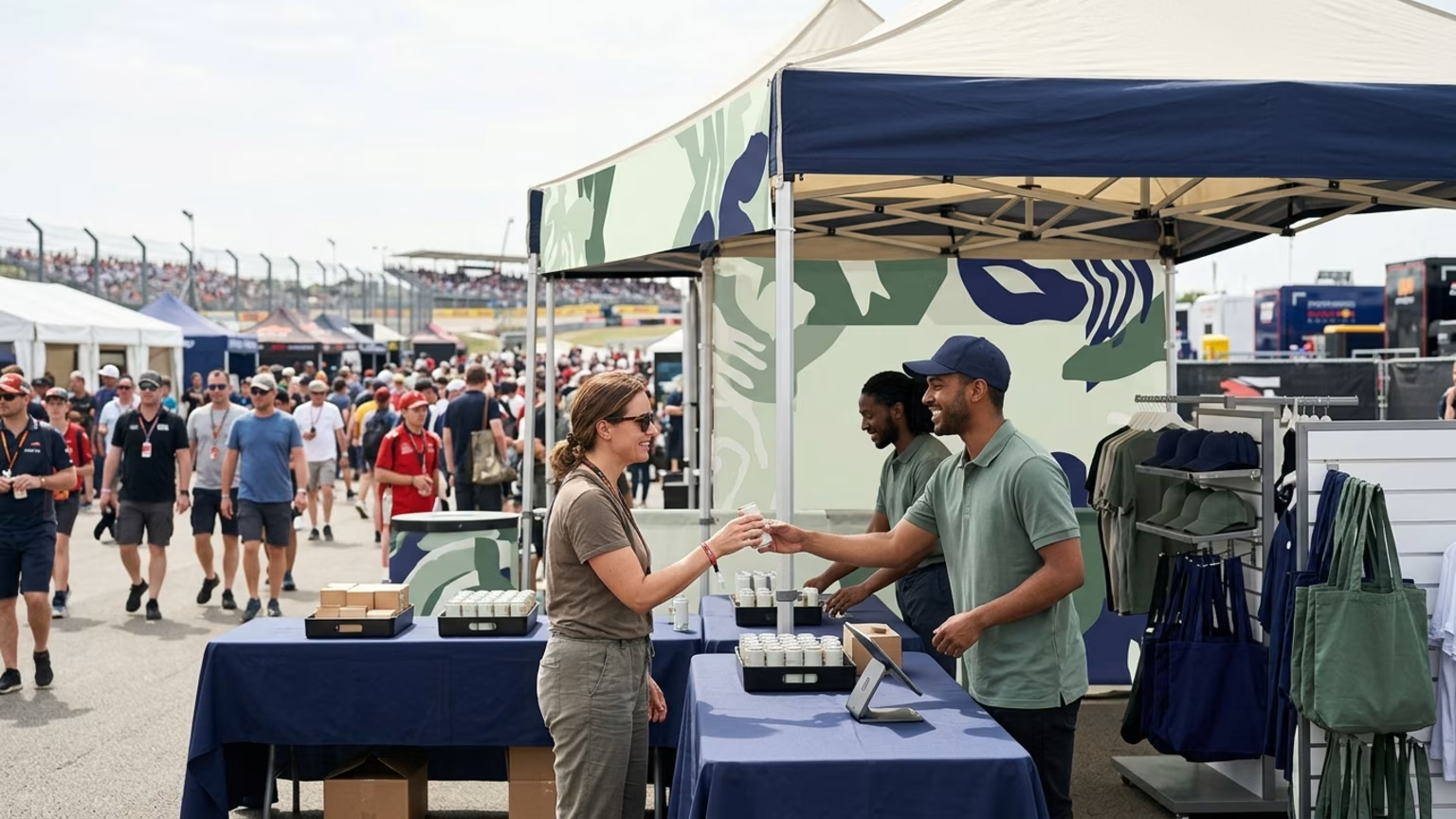
It is a highly measurable sales channel that requires precision and rigorous planning. We specialize in creating retail demos, product sampling programs, and roadshows that bring brands face to face with their audiences. Each program is designed to drive trial, build consumer relationships, and accelerate retail velocity across multiple locations. This specialized focus separates high performing campaigns from standard amateur attempts.
Many inexperienced marketers assume that simply showing up will generate immediate brand awareness. This dangerous assumption leads to wasted budgets and disappointing quarterly performance reviews. True experiential marketing requires a deep understanding of shopper psychology and retail environments. You must intercept the consumer at the exact moment they are making a purchasing decision.
Your physical activation must stand out against thousands of competing visual stimuli in the store. We design our sampling environments to immediately communicate the core value proposition of the product. The messaging must be clear, concise, and instantly recognizable from twenty feet away. A confused shopper will always walk past your table without breaking their stride.
You need an execution model that links retail store selection with aggressive post-event data capture. This means matching your physical footprint to your highest converting demographic regions. Choosing the right physical sampling format for your brand aligns your field presence with clear business objectives. You cannot afford to deploy assets blindly across an entire grocery chain.
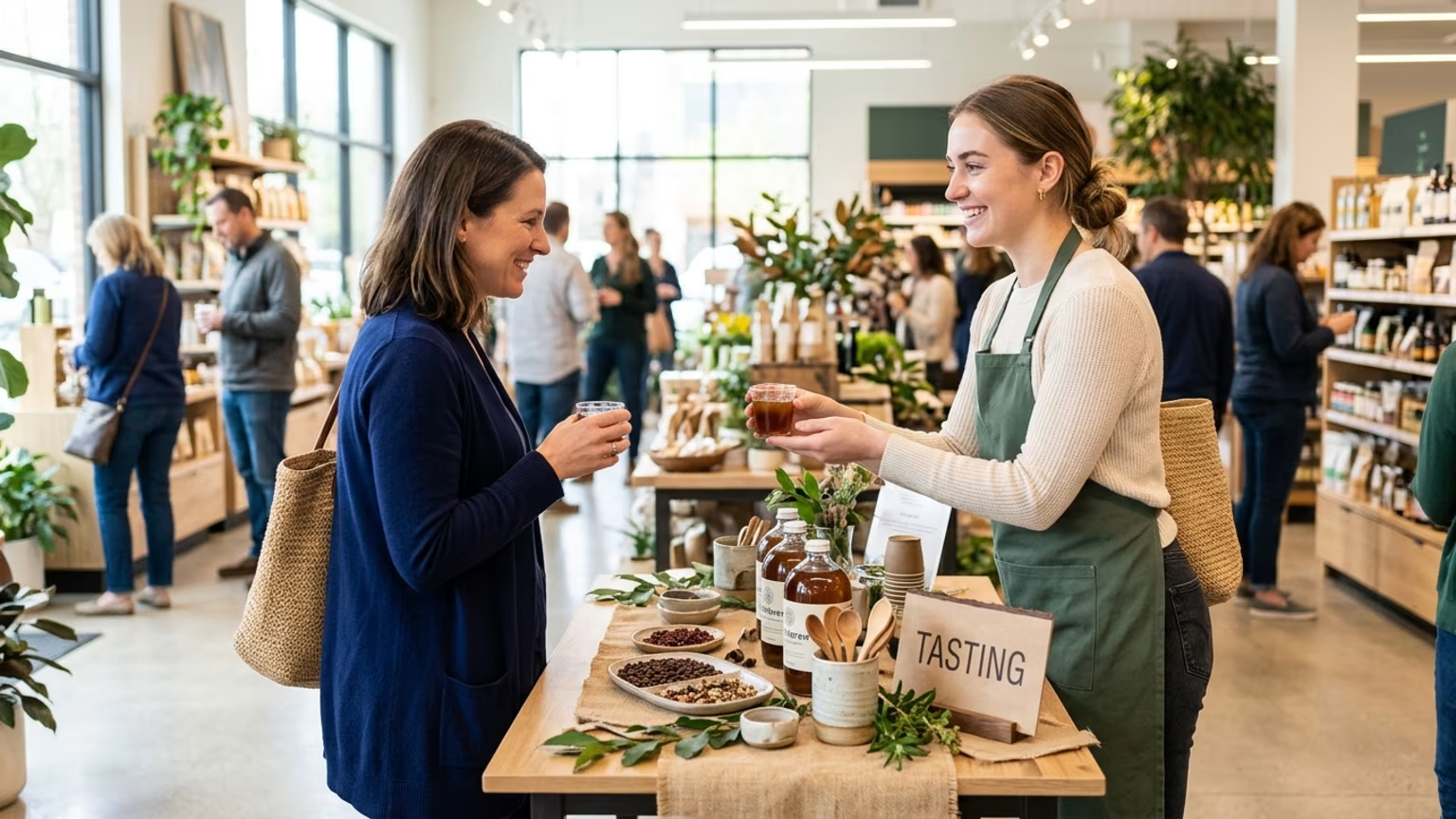
The strategic approach forces you to treat every single tasting as a micro-conversion event. Your ambassadors must transition from handing out free food to actively selling a premium product. This mental shift changes the entire dynamic of the retail floor. Shoppers start to see the value, trust the brand, and place the item in their carts.
Turning a folding table into a conversion engine requires a strict operating procedure. You cannot leave the details to chance when consumer impressions are on the line. Follow this exact sequence to deploy a profitable sampling program.
Senior marketing leaders only respect data that connects directly to revenue generation. The recent NielsenIQ analysis highlights the absolute necessity of capturing post-activation data to demonstrate actual value. You must track specific lead indicators during the activation to gauge immediate consumer interest. These exact numbers include total interactions, total samples distributed, and the conversation rate of passing shoppers.
Lag indicators tell the real story of your retail success after the event concludes. Track the exact same-day sales volume at the specific store where the demo occurred. Compare that figure against the historical baseline to calculate your precise percentage of sales lift. You must monitor the four-week repeat purchase rate to see if those new buyers stick around.
Many brands fail when they only measure the total number of samples given away. This is a vanity metric that hides poor sales performance and weak consumer engagement. A highly trained ambassador might distribute fewer samples but convert a much higher percentage into actual buyers. Quality conversations always generate more retail velocity than thoughtless mass distribution.
Consumer feedback acts as a secondary layer of valuable field intelligence. You should train your team to document specific flavor preferences and common product questions. This qualitative data helps your product development team refine future marketing messages. It gives your entire organization a direct line to the actual paying customer.
If your current field team cannot provide these detailed performance numbers, book a strategy call with our operators. We can help you build a more transparent reporting framework that satisfies senior leadership. Proper measurement turns marketing expenses into clear capital investments with predictable returns.
A premium snack brand recently struggled with flat sales across their natural foods retail accounts. They deployed an unstructured sampling program that yielded zero actionable data. Their retail buyer grew frustrated with the lack of progress and threatened to cut their shelf space. The brand needed an immediate intervention to save their regional distribution footprint.
Our team replaced that chaotic approach with a highly standardized retail demonstration model. We focused strictly on high-traffic weekend days and mandated daily inventory reporting from every single field ambassador. The staff received intensive training on how to overcome price objections and close the sale. We have seen similar results when major brands run highly structured in-store sampling initiatives to regain market share.
Within three weeks, the snack brand saw a massive measurable spike in baseline sales across the targeted region. The ambassadors successfully converted curious shoppers into paying customers at an unprecedented rate. The data proved that the sales lift was directly tied to the new operating procedure. The retailer noticed the immediate velocity change and rewarded the brand with premium endcap placement.
This case study proves that disciplined field execution directly influences buyer confidence and total shelf space. You cannot win the physical retail game with half-hearted promotional efforts. Brands that invest in operational excellence build sustainable momentum that lasts long after the tasting ends.
The physical aisle remains the ultimate test of consumer intent. A perfectly executed taste can still change a habit. Real world experiences leave a mark that algorithms simply cannot replicate.

30 Years Experiential & Retail Activation Partner for CPG & Beverage Brands | Multi-Market Demos, Roadshows & Costco/Club Programs That Actually Sell