Robbie Thain
Founder, CEO

Learn how brands drive measurable pipeline and engage target buyers directly through localized mobile roadshows, campus activations, and live product demos.

The Higher Education Technology Managers Alliance recently proved that bringing technology directly to users via localized roadshows outperforms standard webinars. By executing targeted campus activations, brands generate high value interactions and capture content that drives measurable pipeline.
The fluorescent lights buzz over a massive convention center hall. Hundreds of booths blur together into a wall of noise and flashing screens. Buyers walk by fast with their heads down. Brands face an agonizing problem in these environments.
You have five seconds to explain a complex product to a distracted prospect. Generic online webinars offer a different kind of pain for marketing operators. Attendees join these virtual sessions only to check their emails off camera. Both scenarios lack the quiet focus needed for real product trials.
Sales teams end up with massive lists of unengaged leads. A badge scan at a mega event rarely translates to actual intent. Marketing directors spend thousands on booth space and drayage fees. They often walk away with nothing but empty promises and exhausted field staff.
The sheer volume of competing messages drowns out genuine innovation. Buyers want to touch the product and understand its real world application. They cannot do this when a competitor is blasting loud music fifty feet away. You need a dedicated environment to build real trust.
The localized mobile activation flips this frustrating dynamic entirely. You stop waiting for target buyers to walk past a crowded booth. You pack up the core brand experience and bring it right to their doorstep. This focused approach shifts the interaction from a rushed pitch to a collaborative session.
Recent social coverage of the Higher Education Technology Managers Alliance roadshow illustrates this perfectly. They bypassed the crowded convention hall and stopped directly at Creighton University. End users and administrators tested classroom AV equipment in a true physical setting. The localized environment allowed for deep technical discussions without any outside distractions.
This is not just an equipment demonstration. It is a highly targeted problem solving session. University administrators often struggle with complex technology purchasing decisions. Bringing the exact hardware to their campus removes the friction of abstract product features. They can hear the audio quality and see the screen resolution in their own natural environment.
Executing this requires serious logistical discipline and operator grade precision. You trade broad superficial reach for deep engagement and captive audiences. The strategy is incredibly effective for bridging large scale trade show efforts with localized field marketing. Your team controls the entire narrative from start to finish.
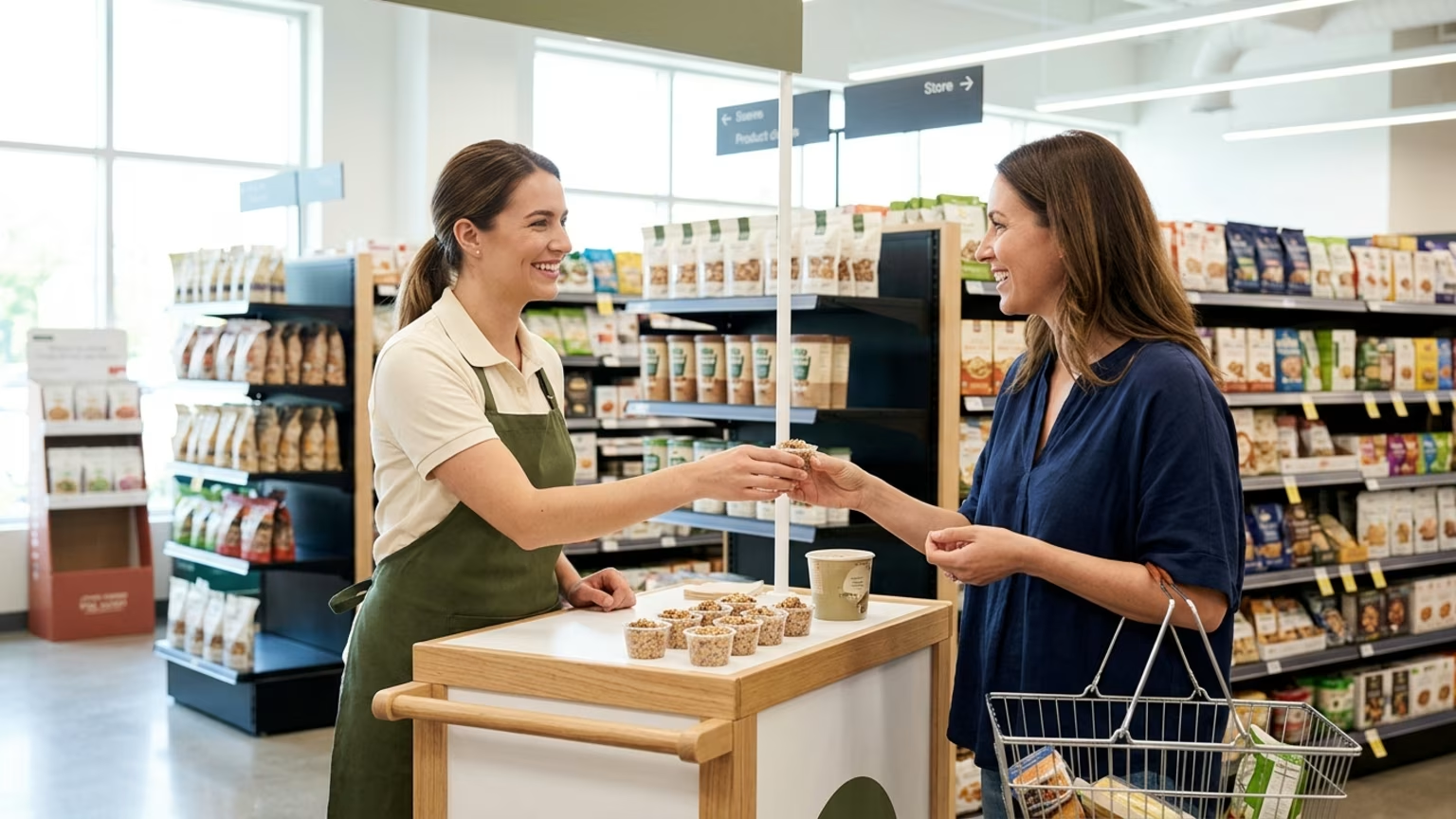
This model works beautifully for consumer goods and B2B technology alike. A buyer cannot taste a new snack bar through a webinar. They need to hold the packaging and experience the flavor profile. A mobile tour provides the perfect controlled setting for these sensory moments.
You dictate the lighting, the temperature, and the exact flow of the conversation. There are no competing brands trying to hand out cheap promotional items next door. The prospect gives you their undivided attention for an extended period. This level of focus is impossible to achieve on a busy trade show floor.
Transforming a static pitch into a traveling experience requires a rigid operational playbook. You cannot simply park a branded truck and hand out flyers. Every localized stop must function as a high converting environment. The logistics demand ruthless attention to detail.
Identify precise target locations like university campuses or corporate headquarters. Map out the driving distances to guarantee your staff has adequate rest between stops. You must secure the proper municipal permits well in advance. A missing permit will shut down your activation before the first prospect arrives.
You must coordinate with local campus security or property managers to confirm load in times. Heavy transport vehicles require specific clearance for tight city streets or university pathways. A delayed arrival creates a domino effect that ruins the entire daily schedule.
Build a scalable physical presence that allows for rapid setup and teardown. The equipment must withstand constant loading and unloading across multiple cities. Use modular displays that adapt to different footprint sizes. This flexibility lets you activate in a tight campus quad or a large stadium parking lot.
The visual branding must pop from a distance to attract organic foot traffic. Clear signage should immediately communicate the value proposition to a passerby. Your footprint should feel welcoming and easy to navigate. Cluttered layouts confuse visitors and drive them away before they even speak to a representative.
Train your field staff to conduct deep conversations instead of reading generic scripts. The brand ambassadors are the face of your company. They must understand the nuances of the product inside and out. A well trained operator can turn a casual visitor into a qualified lead.
Staffing consistency across different regions is a major challenge for national tours. You need a dedicated tour manager who travels with the main asset. Local brand ambassadors can fill the remaining roles to keep travel costs down. The tour manager enforces strict quality control and protects the brand identity.
Integrate content capture tools to document user interactions during the event. Hire a dedicated team member to record testimonials and authentic product reactions. This raw material fuels your ongoing digital campaigns long after the truck leaves. You turn a localized moment into a national asset.
You can stream parts of the activation live to engage a broader online audience. Short video clips of real prospects testing the product perform incredibly well on social media. This user generated content carries more weight than highly polished corporate advertisements.
Deploy localized routing rules to send fresh leads directly to regional sales reps. The follow up sequence must trigger the exact same day. A prospect will lose interest if they wait a week for an email. Speed to lead is the ultimate advantage of a digital CRM integration.
Use QR codes and quick digital surveys to qualify the prospect before they leave the footprint. You can categorize leads by their immediate purchasing timeline. Hot leads get an instant phone call from a local account executive. Cooler leads drop into a long term email nurturing sequence.
Outdoor activations demand rigorous weather planning. A sudden rainstorm will destroy expensive audiovisual equipment if you are not prepared. Operators must secure heavy duty commercial tents and sandbags for every outdoor footprint. You should map out alternate indoor locations on campus just in case the weather turns dangerous.
Managing risk requires more than just heavy duty tents. You must have strict safety protocols for handling heavy gear and managing large crowds. Field staff should undergo basic safety training before stepping onto the site. A secure footprint protects your brand reputation and guarantees a smooth experience for the prospect.
Proving the Return on Investment of a mobile tour requires tracking exact numbers. Vanity metrics will not satisfy a demanding chief marketing officer. You must establish a clear reporting framework before the trucks leave the warehouse. This means separating lead indicators from lag indicators.
Lead metrics give you an immediate pulse on the activation health. You should measure total qualified attendees and average demo engagement time. Tracking the number of follow up meetings booked on site is a fantastic way to gauge interest. Clean data collection at the point of interaction solves the reporting problem.
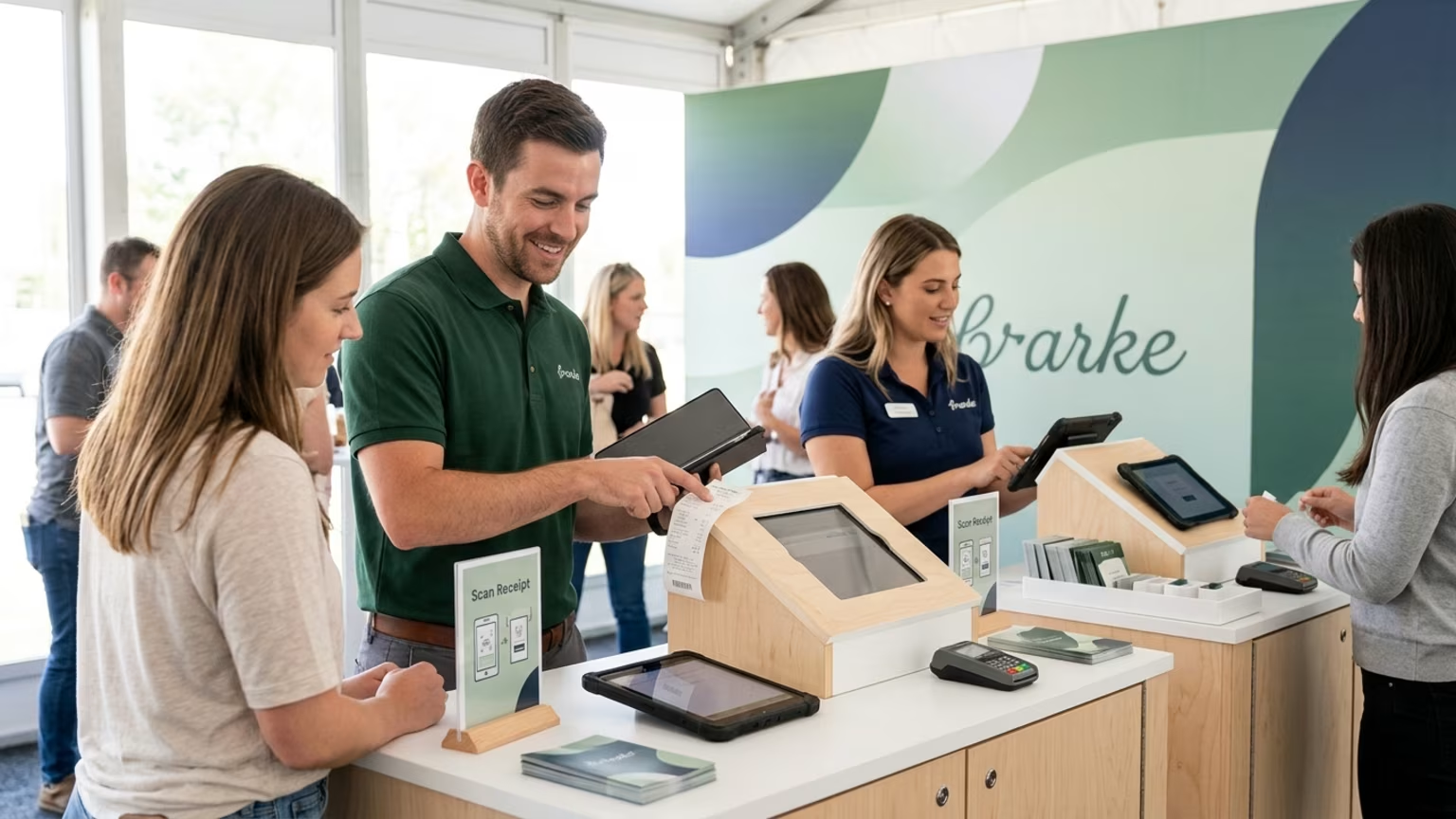
Every brand ambassador should carry a tablet loaded with a streamlined lead capture form. The form must ask only the most necessary questions to prevent drop off. You want the visitor to spend their time experiencing the product, not filling out paperwork. The data syncs to your central system the moment they hit submit.
Lag metrics prove the long term financial impact of the campaign. You need to monitor closed won revenue directly tied to the roadshow attendees. Many marketing operators struggle with measuring mobile tour performance without guesswork. Following the sales cycle velocity for engaged prospects provides hard evidence of success.
A precise feedback loop between the field team and the marketing department is non negotiable. Field managers must submit daily reports detailing inventory levels and consumer sentiment. This qualitative data adds valuable context to the raw numbers. It helps you refine the pitch for the next city on the route.
If a particular messaging angle fails to resonate in the Midwest, you can pivot before reaching the East Coast. This real time agility protects your budget and maximizes your conversion rates. The numbers guide every logistical decision on the tour.
Your lead capture tools must integrate flawlessly with your existing marketing software. Manual data entry introduces human error and slows down the follow up process. An API connection pushes contact details from the field tablet straight into your main database. This technical alignment saves countless hours of administrative work.
Sales teams need to see the exact product variant the prospect interacted with. If a university IT director tested a specific microphone, the sales rep needs that detail. Tailored follow up messages yield much higher conversion rates than generic blasts. The field data arms the sales team with precise talking points.
We specialize in creating retail demos, product sampling programs, and roadshows that bring brands face to face with their audiences. Each program is designed to drive trial, build consumer relationships, and accelerate retail velocity across multiple locations. We know exactly what it takes to execute these complex logistics.
Our team recently applied this mobile model for a national beverage brand targeting college students. We bypassed the standard digital ads and deployed a custom sampling trailer right in the campus quad. Brand ambassadors handed out cold product and engaged students in quick brand surveys. The real world trial created immediate product affinity and trust.
We paired this physical presence with localized digital retargeting to maximize the impact. The client saw a massive spike in regional sales velocity within three short weeks. It proves that driving pipeline with mobile showrooms works across multiple industries. The model scales beautifully when you have the right field generals running the logistics.
Campus activations create lifelong brand loyalists at a highly formative stage. When a student tries a product between classes, they associate that brand with a positive memory. This emotional connection drives repeat purchases at the local grocery store.
You do not have to settle for low quality leads from crowded events. A strategic mobile tour puts your product directly in the hands of the people who matter most. It is time to stop shouting into the void and start building real connections. Book a strategy call with our team to map out your next high converting localized activation.
No external authoritative URLs were utilized for statistical claims in this article.

30 Years Experiential & Retail Activation Partner for CPG & Beverage Brands | Multi-Market Demos, Roadshows & Costco/Club Programs That Actually Sell