Robbie Thain
Founder, CEO

Learn how industry leaders at the Retail Asia Summit are evaluating physical retail programs based on actual sales, checkout conversion, and commercial ROI.
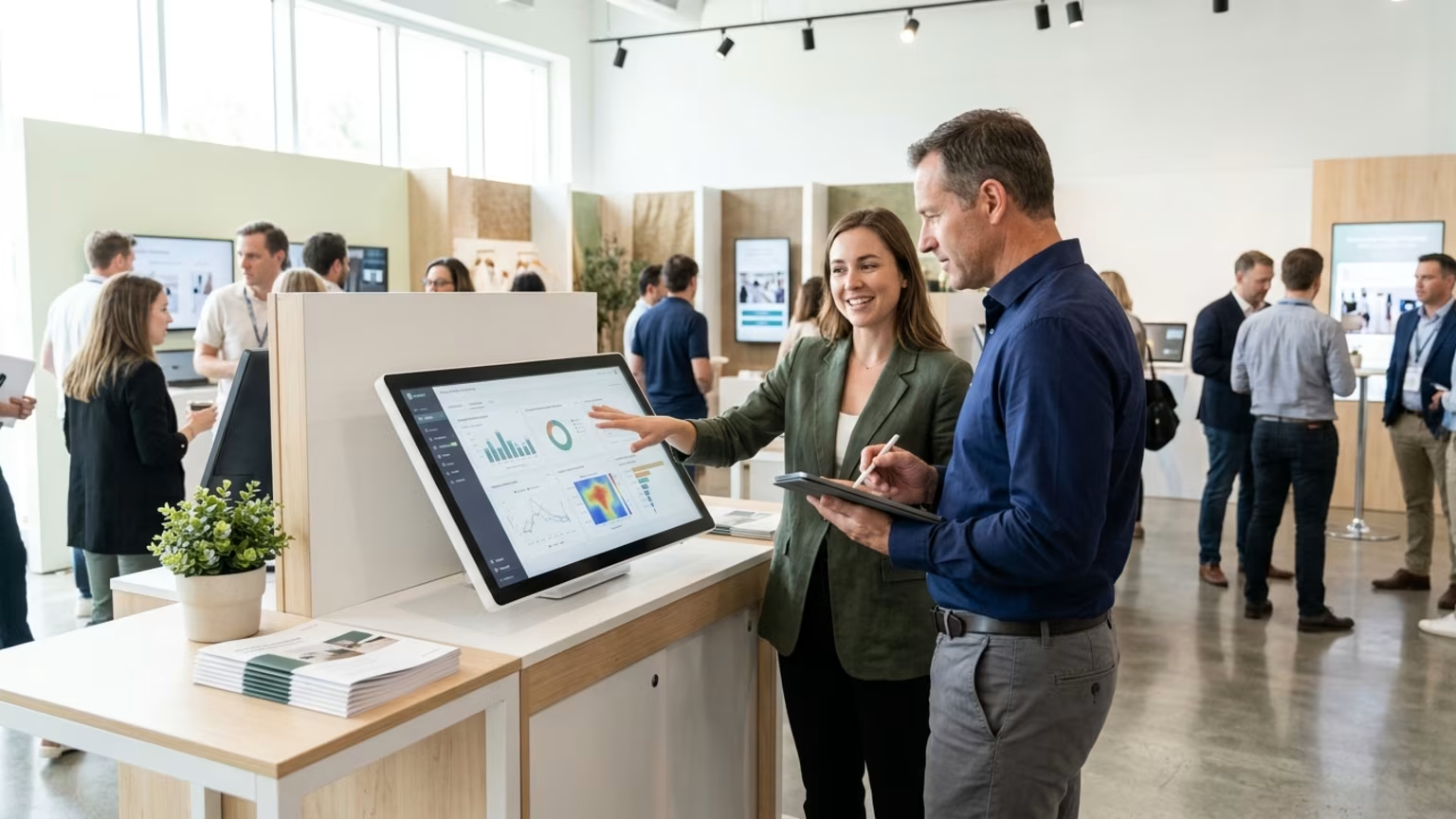
At the Retail Asia Summit 2026 in Singapore, industry leaders confirmed a distinct shift in how physical retail programs are evaluated. Retail Asia reported that executives are now looking far beyond basic engagement metrics to assess whether immersive experiences actually drive sales and change customer behavior. For brand managers and field directors operating high-stakes physical activations, the timeline of this operational shift is immediate. Throwing budget at a flashy installation and hoping for passive footfall is no longer a viable strategy for retail growth.
The standard for judging live activations has transitioned from brand awareness to rigorous logistical and commercial outcomes. Retail Asia noted that Euromonitor International's David Zhang urged retailers to assess experience-led investments through strict financial metrics. Zhang identified transaction volumes, customer spending, and revenue growth as the specific outcomes brands must track. He warned against treating physical experiences as standalone attractions that lack a clear connection to the final checkout process.
This shift means field teams must operationalize their measurement tactics before they ever set foot in a venue. Adyen general manager for Southeast Asia and Hong Kong Ben Wong recommended tracking specific operational markers to gauge success. Wong advised brands to measure checkout speed, checkout conversion, and cross-channel spending. Instead of judging a retail campaign by the sheer volume of samples distributed, operators must build systems to document the resulting purchase activity.
We have been connecting brands with people through live experiences, retail programs, and national activations since 1995. Over three decades, we have built a track record of creating meaningful brand moments across the country. In our experience, emotional resonance must always serve as a catalyst for a measurable business outcome. When consumer packaged goods brands deploy field marketing teams, those physical interactions must generate qualified pipeline rather than just momentary entertainment.
A live event without a structured path to purchase is simply a massive missed opportunity for conversion. We create experiential marketing programs built to connect emotion with action. Our process blends creativity, strategy, and data to ensure every brand interaction drives measurable results. If a physical retail demonstration fails to route a participant toward the cash register, the setup itself requires immediate retooling.
Retail demo programs are frequently judged on passive headcount rather than on incremental pipeline. That operational mismatch destroys potential revenue for growing brands. We manage end to end Costco roadshows that bring brands to shoppers through live demos, real conversations, and measurable sales impact. By focusing strictly on these logistical fundamentals, brands can successfully navigate complex event logistics, permits, and staffing requirements without sacrificing their measurement standards.
Brands must hold their experiential investments to the exact same Return on Investment standard as their digital media buying. We provide clear reporting on reach, trials, leads, and sales to guide next steps in campaign optimization. Our measurement approach tracks awareness, engagement, and conversion, turning brand moments into actionable data that demonstrates business impact. Incorporating this rigorous discipline helps prove retail demo ROI beyond mere headcount at consumer events.
This strict demand for commercial measurement triggers a massive operational domino effect on the logistics of field execution. Every single square foot of a trade show booth or retail floor must now serve a highly documented purpose. Shilla Duty Free head of consumer marketing and e-commerce Joanne Soh warned that an experience quickly becomes costly theatre without a clear conversion touchpoint. She cited a previous Christmas Zootopia character meet-and-greet at Changi Airport as a prime example of an activation requiring commercial grounding.
To prevent costly theatre, field operators must design traffic flows that naturally guide participants toward a firm buying decision. This means staffing choices must prioritize highly trained brand ambassadors who can navigate real conversations and drive in-store sales. Managers cannot simply hire passive staff to stand behind tables and hand out generic promotional flyers. The personnel on the floor must facilitate a seamless retail activation calendar that aligns perfectly with strict retailer expectations.
Technology integration at the physical site is another major logistical hurdle that field teams must safely clear. FairPrice Group deployed about 3,000 smart trolleys across selected outlets to support personalized shopper journeys. A wider rollout for these intelligent smart trolleys is specifically planned for 2027. FairPrice Group head of retail media network Rajiv Singh noted that a campaign with the Health Promotion Board successfully changed shopper habits. This specific campaign moved 12 percent of about half a million shoppers buying selected products to lower-sodium equivalents.
However, scaling technology in physical spaces requires impeccable foundational execution from the very beginning. Singh cautioned that artificial intelligence can provide speed and scale only when the underlying fundamentals are completely sound. He noted that without proper fundamentals, companies risk putting flawed systems into large scale operation. Field teams must secure permits and coordinate nationwide delivery to ensure these digital integrations function perfectly on site. Without pristine experiential marketing logistics, even the most advanced retail technology will fail to capture the required data.
The reporting systems behind these activations must also be flawless. Managers must capture data at the exact point of engagement without disrupting the consumer experience. If the technology fails, the entire commercial measurement structure instantly collapses. Consequently, brands must treat their physical footprint data with the same urgency as their digital e-commerce metrics.
The pivot toward rigorous accountability is already forcing major global brands to alter their activation strategies. Castlery general manager Leah Howatson said the company pulled back on curated events after finding they did not justify the investment. She explained that these events took a long time to organize and proved extremely difficult to fill. Furthermore, the curated events generated content that simply did not connect with their customers online.
Howatson detailed how Castlery's channel mix varies considerably depending on the specific geographic market. She noted that Singapore is more than 70 percent offline, while the UK operates fully online. Meanwhile, the US market is more than 90 percent online for the popular brand. To bridge these physical and digital divides, Castlery specifically links website and store carts so shoppers can seamlessly continue a purchase across multiple channels.
Other major retailers are building highly specific operational frameworks to isolate the exact value of their physical programs. Metro Singapore head of loyalty, marketing and partnerships Henry Christian described tracking input indicators alongside actual sales as an output metric. He tracks early signals such as whether people discuss a concept and whether brands actively want to participate. Metro Singapore also evaluates whether these physical retail concepts address what customers value, change long-term behavior, and deliver truly sustainable business benefits.
These strategic shifts align perfectly with what consumers are actually demanding in the modern physical retail environment. Retail Asia reported that a Euromonitor consumer survey found 56 percent of Singapore consumers choose stores offering engaging experiences. Retailers must convert that interest into verified transaction volume because simply attracting consumers is no longer sufficient.
A Brand Manager in the CPG space shared: "Makai transformed our test-drive activation into an emotional brand journey. They connected technology, lifestyle, and experience seamlessly, and turned casual visitors into loyal fans."
We successfully integrated multiple experience layers to convert casual participants into committed brand advocates. When companies demand measurable outcomes from their physical marketing efforts, they eliminate scattered attention and poor booth flow. We craft experiences that engage all five senses, helping people not just see brands, but feel them, turning moments into meaningful business outcomes.
Is your current field marketing strategy built to capture verifiable cross-channel sales, or are you still funding costly retail theater?
When retailers demand strict commercial measurement for physical footprints, converting casual engagement into documented transaction volume becomes the primary operational mandate. To overcome low quality leads from crowded trade shows, Makai builds data-driven field activations that capture real sales pipeline. Using our Guerilla Marketing services, we launch creative, street level ideas that surprise, delight, and generate authentic word of mouth. Request a proposal

30 Years Experiential & Retail Activation Partner for CPG & Beverage Brands | Multi-Market Demos, Roadshows & Costco/Club Programs That Actually Sell