Robbie Thain
Founder, CEO

Walmart’s fulfillment and AI shopping upgrades mean CPG brands must tightly connect live physical sampling events directly to digital cart conversions.
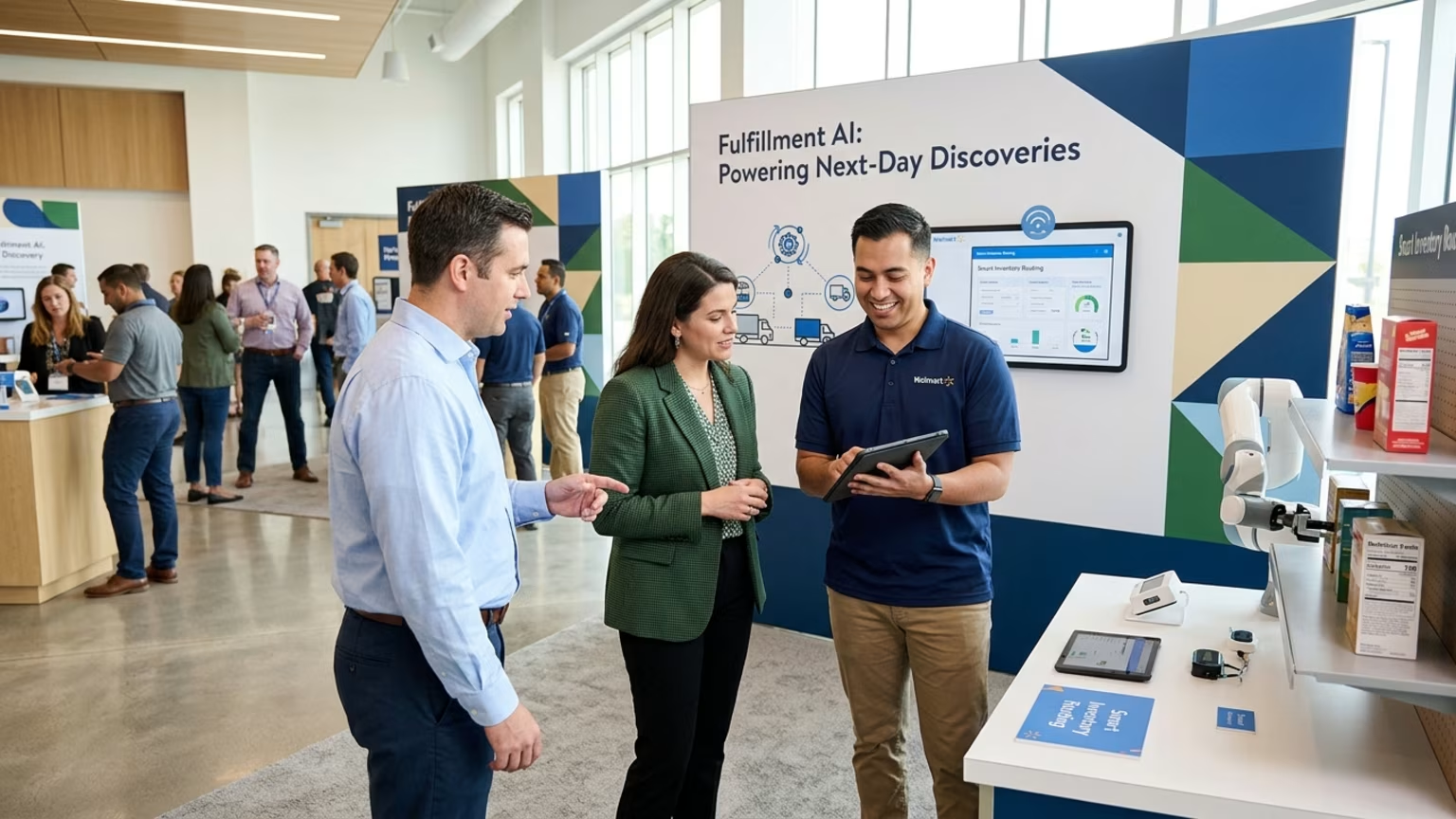
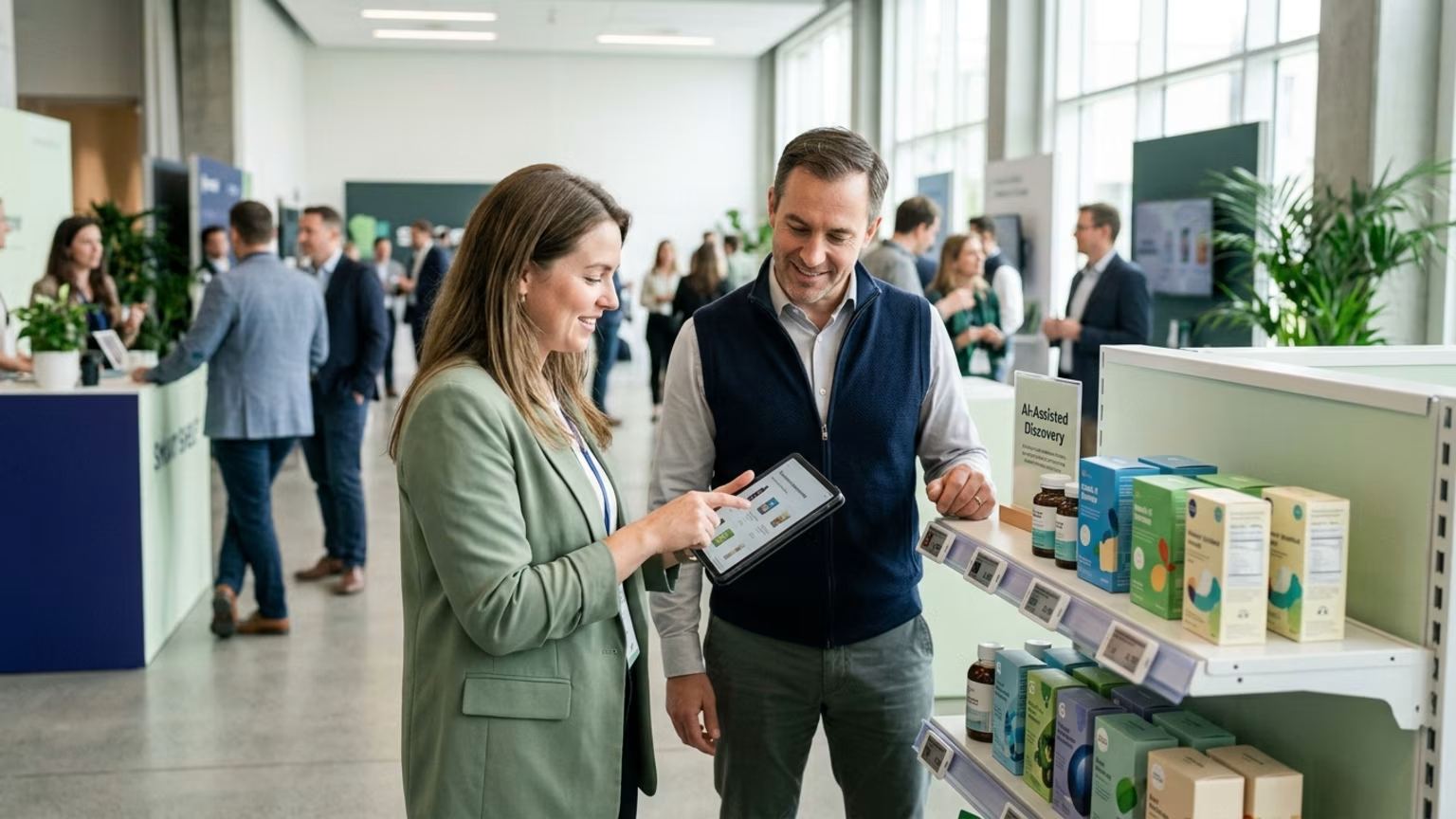
On September 21, 2026, FoodNavigator reported that Walmart is expanding its fulfillment network and artificial intelligence shopping tools. The retailer is broadening its Marketplace assortment while heavily investing in machine learning systems. Walmart U.S. President and CEO David Guggina outlined these sweeping upgrades at the Goldman Sachs Consumer and Retail Conference. This operational shift directly connects digital product visibility with faster physical delivery for consumer packaged goods brands.
The logistical metrics behind this operational shift are highly specific. FoodNavigator reported that Walmart's e-commerce business grew 24% in its latest quarter, marking its 10th consecutive quarter above 20% growth. During the period discussed by Guggina, approximately 70% of Walmart online orders were delivered the same day or faster.
Walmart Marketplace also grew 52% year over year in the most recent quarter cited by FoodNavigator. The integration of Sparky, the retailer's artificial intelligence shopping assistant, shifted how consumers locate products. Guggina said visual shopping through Sparky generated a 57% higher conversion rate than text-based shopping. Furthermore, Sparky engagement increased by more than 60% quarter over quarter in Walmart's most recent earnings report.
According to Guggina, customers who engaged with Sparky had average order values 40% higher than the average customer. The company is also working with outside platforms to drive external product visibility. Walmart partnered with OpenAI in October 2025 to support shopping through ChatGPT. The company announced a similar Google arrangement in January 2026 that allowed customers to shop through Gemini.
Beyond the retailer's own metrics, consumer behavior is shifting broadly across the market. Acosta Group reported that 34% of shoppers use artificial intelligence to find products and compare prices. The figure rises to 74% among Gen Z and Millennial shoppers, while 45% of Baby Boomers have used generative technology to assist with shopping. Acosta also noted that 40% of consumers had tried a new brand recommended by an artificial intelligence platform.
At Makai, our focus has always been on live experiences that drive measurable sales pipeline. We specialize in creating retail demos, product sampling programs, and roadshows that bring brands face to face with their audiences. When a retailer like Walmart accelerates delivery and links it to artificial intelligence, physical activations must adapt immediately. Experiential marketing can no longer operate in an isolated environment detached from digital cart behavior.
The experiential discipline is rapidly moving from passive brand theater to verified commercial outcomes. A live brand moment must serve as the physical entry point to a connected retail ecosystem. Consumers might taste a new beverage at a pop-up, but they will likely use their phone to verify reviews or check store availability before buying. According to Acosta Group, 55% of Gen Z shoppers use artificial intelligence tools while shopping in physical locations.
This data proves that in-person trial and algorithmic consideration are occurring concurrently during the exact same shopping mission. If an activation generates enthusiasm but fails to provide a clear path to a shoppable Walmart page, that consumer engagement is wasted. Marketers must map the physical event directly to the retailer's fulfillment system to justify the operational expense. Brands that manage precision field execution for retail expansion see better alignment between live interactions and verified repeat purchases.
We blend physical and digital experiences by integrating mobile technology and real-world activations into a cohesive layer across our retail and event programs. We successfully integrate multiple experience layers to convert casual participants into committed brand advocates. Over three decades, we have built a track record of creating meaningful brand moments across the country. When these physical touchpoints are designed accurately, they feed directly into the digital tools that modern shoppers rely on.
These system upgrades force a practical shift in how field marketing teams operate on the ground. Marketing directors must design their activations around specific consumer missions rather than abstract brand messaging. Acosta Group reported that consumers frequently use artificial intelligence to solve problems, find deals, or choose options for specific life occasions. Therefore, a street-level sampling event should frame the product around a clear use case like a morning routine.
The visual component of this technology requires immediate attention from field teams. Product information must be flawless at the exact point of physical engagement. Walmart uses the concept of agentic engine optimization to describe how product data must be structured for machine systems to read accurately. When field staff distribute samples, the connected digital assets must clearly state ingredients, pack sizes, and immediate Walmart availability.
This clarity ensures that when a shopper uses a visual search tool after trying a sample, the correct product appears instantly. Data transparency is also becoming a strict operational requirement for field teams. Acosta Group found that 48% of consumers worry about how artificial intelligence shopping tools collect their personal data. If a brand activation involves collecting photos, flavor preferences, or contact details, field ambassadors must clearly explain the privacy policies.
Building consumer trust at the live event is a mandatory step before asking them to engage with an algorithmic retail system. Trust remains highly conditional in this space. Acosta found that only 22% of shoppers trusted software agents to do the shopping for them, although that number rises to 35% among Millennials. The expansion of third-party seller tools also introduces new logistical routes for growing brands.
Guggina highlighted how Nespresso used Walmart Marketplace to reach a different customer segment effectively. Guggina said more than 35% of the customers in the Nespresso example were new to buying coffee with Walmart. Teams scaling their footprint can leverage scalable roadshow playbooks to test new demographics before committing to permanent retail distribution. A Brand Manager in the consumer packaged goods space shared how vital these connections are becoming for modern campaigns.
They noted: "Makai transformed our test-drive activation into an emotional brand journey. They connected technology, lifestyle, and experience seamlessly, and turned casual visitors into loyal fans." That seamless connection is exactly what is required when bridging real-world events with fast fulfillment networks. Field operations must treat physical experiences as the beginning of a measurable conversion path.
A live experience can create awareness and initial trial, but the retailer system must be capable of supporting the subsequent action. Marketing teams should align their event calls to action with a specific Walmart product page, a targeted Marketplace listing, or a local store pickup option. Once that link is established, teams must measure the resulting behavior using retailer approved reporting platforms rather than assuming that foot traffic equals sales. Additionally, event strategies must be built for repeat purchases rather than just the initial conversion.
For replenishable consumer packaged goods, experiential programs should incorporate follow up offers, usage education, and post event retail journeys. These extended touchpoints help consumers use the product successfully and encourage them to buy it repeatedly through Walmart's fast delivery network. Brands that track these long term metrics often require post event analytics mastery to prove their Return on Investment accurately. The current market shift simply means those real-world moments must now include immediate digital purchasing options.
The necessity of linking physical products to digital systems is becoming a consensus across the industry. John Carroll, president of Connected Commerce at Acosta Group, detailed this transition clearly. He stated that brands need to create pathways through which products can be "understood, recommended, compared and selected by any AI."
This alignment between real-world products and digital comprehension is critical for sustained retail success. Acosta recommends focusing on retailer readiness, shopper understanding, AI discoverability and experimentation to navigate this shift effectively. Brands that apply this framework to their live activations will guarantee that their physical sampling efforts translate into measurable online momentum.
The September announcements at the Goldman Sachs Consumer and Retail Conference proved that retail logistics and machine learning are now permanently intertwined. Walmart has successfully bridged the gap between a digital recommendation and a same day physical delivery. Live marketing events must now function as the strategic gateway into these advanced retail networks. Are your current field activations designed to drive immediate digital cart conversions, or are they still operating completely disconnected from your primary retail systems?
After consumer packaged goods teams align their digital product information with retailer search algorithms, generating immediate physical trial becomes the next operational requirement. To eliminate low quality leads from crowded trade shows, Makai utilizes our Brand Activations capability to create high energy activations that turn awareness into participation and drive measurable consumer response.

30 Years Experiential & Retail Activation Partner for CPG & Beverage Brands | Multi-Market Demos, Roadshows & Costco/Club Programs That Actually Sell