Robbie Thain
Founder, CEO

Discover actionable roadshow playbooks to standardize demo zones, track ROI, and maximize product sell-through during high-stakes Costco retail expansions.

Most retail expansions fail long before the product ever hits the shelf. Securing floor space is merely a minor victory compared to the brutal reality of driving sustained velocity. This guide provides tailored activation blueprints to align mobile roadshows with strict big-box demands. Trade marketing teams will gain actionable checklists to standardize demo zones and maximize measurable product sell-through.
Costco and similar big-box environments operate as unforgiving arenas for unprepared consumer brands. Global sales for warehouse giants continue climbing, with recent reports citing a five percent increase driven by rapid new location openings. Shoppers navigate these spaces rapidly with massive carts, aggressive buying lists, and zero patience for poorly staffed sample stations. Fragmented field execution causes a quarter of all activations to underperform on baseline metrics like sales lift.
When teams lack a strict compliance checklist, setup errors spike by thirty percent. This operational sloppiness instantly destroys the brand experience and irritates local store management. Retailers recognize these failures instantly, creating massive roadblocks for future campaigns. Industry analysts report that retailer confidence is the top barrier for seventy percent of trade managers attempting major warehouse pushes.
A chaotic demo zone hurts much more than your daily sales volume. It actively destroys your chances of securing future premium floor space or expanding into new regional markets. Brands face intense competition as private-label product growth outpaces national brands by twelve percent. You need specialized warehouse activation services to stand out against these dominant in-house items.
Success requires a fundamental shift from treating roadshows as ad-hoc events to operating them as precision-engineered sales engines. The primary objective is building absolute trust with both the passing consumer and the skeptical store manager. Brands chasing warehouse shelf space must deploy mobile tours aligned to strict retailer velocity demands. We design mobile activations and roadshows that accelerate consumer trial, build trust, and boost retail velocity during 90-day product launch windows.
Our structured approach transforms initial product trial into sustained consumer confidence and retail performance. You need a retailer-first blueprint that balances standardized execution with slight local flexibility. Experts suggest allowing twenty percent flexibility in demo scripts to accommodate varying warehouse shopper flow. A rigid foundation allows trained brand ambassadors to adapt their conversations safely.
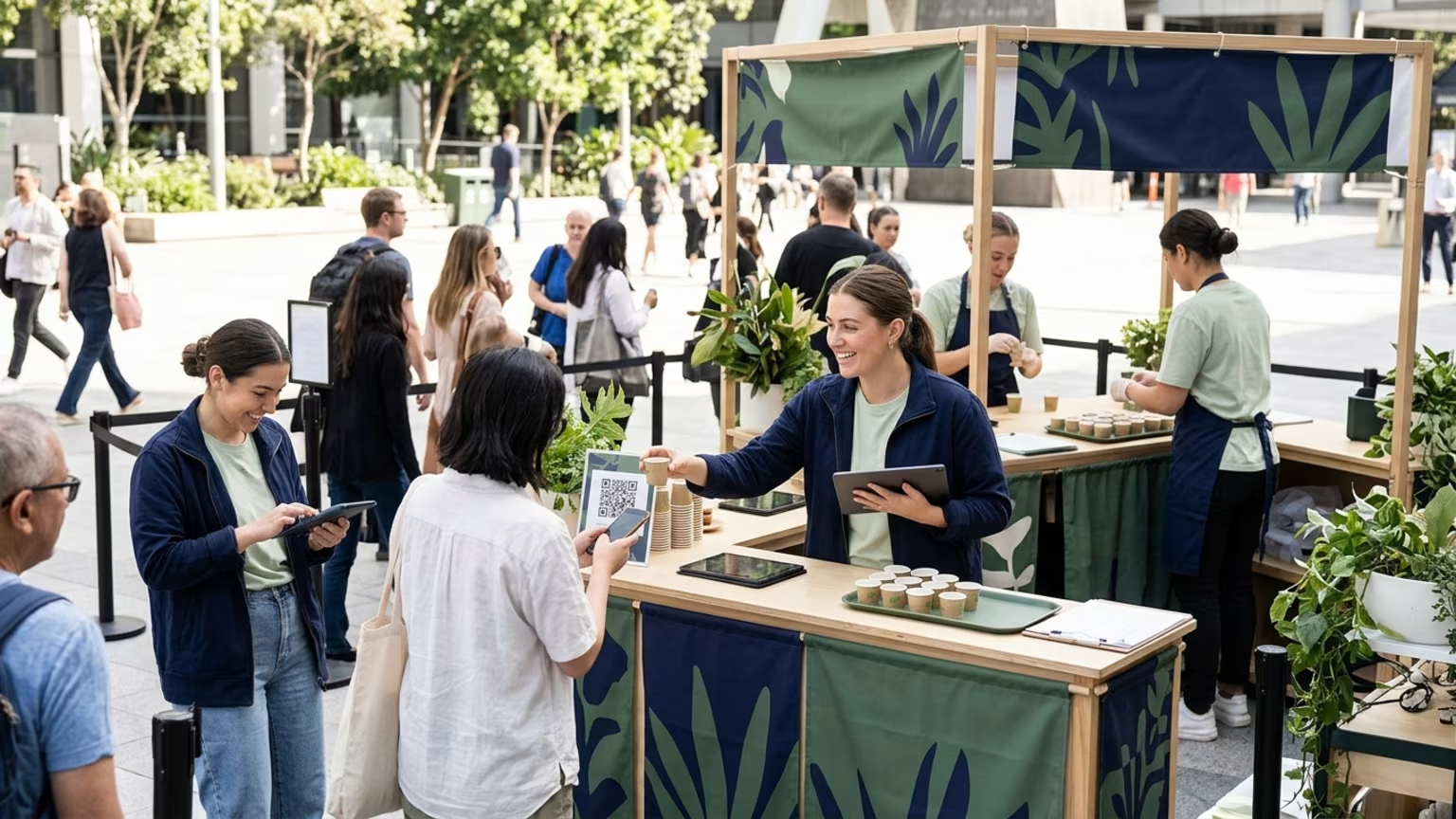
This strategic framework focuses heavily on the actual demonstration footprint. Event analysts note that demo zones must achieve an eighty percent engagement rate to justify the allocated floor space. By standardizing reporting, brands secure retailer approvals twice as fast. A documented playbook proves to stakeholders that you can scale trial safely and effectively by structuring your sampling programs for massive foot traffic.
Smaller brands face severe risks when they attempt these pushes without a proven methodology. Industry research shows a thirty-five percent failure rate for emerging brands that lack properly scaled staffing models. High setup costs yield positive returns only when activations generate a minimum ten percent sales lift. Operating with a rigid playbook bridges the gap between a costly gamble and a predictable revenue generator.
Rolling out a multi-city warehouse tour requires operator-grade discipline and relentless preparation. Successfully preventing common deployment disasters starts with controlling every controllable variable before the truck ever leaves the lot. Teams must map out logistics, staffing, and compliance mandates with absolute clarity. Follow this precise blueprint to execute flawless pop-ups across multiple high-stakes locations.
Building a true playbook takes more than just writing down ideas. You must document every potential failure point along the supply chain. Field staff need absolute clarity regarding their daily operational duties. Clear documentation reduces costly errors during rapid multi-city deployments.
Field teams must memorize this protocol completely. A solid playbook prevents the common floor disasters that ruin retailer relationships. Local store managers will notice your organized footprint immediately. This operational discipline separates amateur product pushers from professional retail partners.
Vanity metrics hold absolutely no value when negotiating shelf placement with major retail buyers. You must track hard data to calculate a true Return on Investment for every single activation hour. Experiential activations in big-box settings frequently boost trial rates by twenty to forty percent. You must capture this data accurately to prove the financial impact to your senior leadership team.
Lead metrics act as your early warning system during the live activation. Track units distributed per hour, shopper engagement dwell time, and immediate trial-to-buy conversion rates. A healthy activation should maintain a trial-to-buy conversion rate above twenty-five percent. Monitoring these numbers allows your field managers to adjust scripts or restock flow mid-shift.
Lag metrics determine your final success and fuel your post-event executive reporting. Measure total incremental sales lift, overall brand awareness scores, and post-tour retail reorder volume. Structured tours average twelve to eighteen percent sales uplifts when executed correctly. Packaging these results into clear dashboards gives your sales team the exact ammunition needed to expand distribution.
Tracking requires real discipline from your field staff. Your brand ambassadors must input their hourly numbers without fail. Accurate data collection eliminates the guesswork from your campaign review process. Consistent tracking builds a mathematical case for future retail expansion.
Economic headwinds and inflation pressure marketing budgets heavily. Research shows forty percent of trade managers mistakenly prioritize digital advertising over experiential formats. They often miss out on the eighteen percent higher trial rates generated by physical tours. A fully measured roadshow defends your field marketing budget by proving undeniable retail velocity.
A premium health beverage brand recently faced heavy pressure to justify its new big-box warehouse placement. The trade marketing team knew traditional passive sampling would fail to hit the required velocity thresholds. They deployed a highly structured mobile tour that targeted twenty high-performing regional locations. The team utilized rigorous compliance checklists to standardize every single footprint.
By focusing sixty percent of their budget directly on optimizing the demo zone, they transformed the shopper experience. The brand integrated physical sampling with app-linked tracking to capture immediate purchase data. This hybrid approach challenged the standard sampling model and generated a massive spike in impulse buys. Post-event data showed a twenty-eight percent increase in engagement compared to their previous unscripted events.
Store managers praised the organized setup, zero-waste compliance, and professional ambassador conduct. This operational excellence provided the exact proof needed to secure an extended ninety-day retail placement. The brand turned a risky launch phase into a documented, repeatable success story. Careful planning proved that physical activations generate massive retail advantage when executed properly.
The regional rollout required minimal oversight from the corporate office. Their localized brand ambassadors followed the strict playbook guidelines perfectly. This consistency allowed the marketing team to focus entirely on data analysis. The campaign delivered predictable revenue across every single activated territory.
Physical retail remains a deeply human environment governed by strict operational realities. The space between a passing glance and a confident purchase is measured in seconds. Building trust on that busy floor changes the trajectory of a product entirely. The most successful brands simply respect the space enough to arrive fully prepared.

30 Years Experiential & Retail Activation Partner for CPG & Beverage Brands | Multi-Market Demos, Roadshows & Costco/Club Programs That Actually Sell