Robbie Thain
Founder, CEO

Learn how Snickers and Twix use multisensory product attributes and experiential sweepstakes to drive retail trial and measurable consumer engagement.

The fluorescent lights hum over a crowded retail aisle filled with near-identical chocolate bars. A shopper glances at the shelves for less than five seconds before grabbing a familiar wrapper. Winning that split-second decision takes more than a clever digital ad. It requires a physical experience that demands attention and builds immediate trust.
Mars brands Snickers and Twix are using multisensory product attributes and experiential sweepstakes to break through a saturated candy market. This hybrid approach pairs digital engagement with physical product trial to turn passive viewers into active buyers.
Many food and beverage brands struggle to turn online impressions into actual retail sales. A new product launch often looks great on a presentation deck but falls flat when it hits the physical shelf. Shoppers are blind to standard promotions in highly commoditized categories like chocolate. They need a compelling reason to change their buying habits on the spot.
When a campaign relies entirely on digital entertainment to win hearts, it risks generating laughs without moving inventory. A funny video might get millions of views but fail to drive immediate foot traffic. The disconnect between a viral social media post and an actual retail transaction is a common trap. Marketing teams face intense pressure from retail partners to prove that their new formats will actually sell.
Without a strong physical trial mechanic tied to the product launch, even the best creative concepts become expensive theater. Category buyers want proof that a brand can empty pallets. They care about sell-through velocity far more than clever hashtags. Relying solely on television spots leaves the final purchase decision entirely to chance.
The pressure to perform in physical retail environments has never been higher for food brands. A brilliant social media stunt means nothing if the product sits untouched in a Costco aisle. The reality of the trade show floor or the grocery endcap is harsh and unforgiving. Brands have seconds to convince a distracted shopper to pick up a new item.
Shoppers rely on routine when navigating aisles. Breaking that routine demands an interruption that digital ads simply cannot provide. You cannot taste a pixel. You cannot feel the crunch of a new candy bar through a smartphone screen.
To cut through the clutter, Snickers and Twix introduced campaigns that highlight multisensory candy experiences. They explicitly combine creamy textures with crunchy elements to differentiate their offerings. This focus on physical sensation gives consumers a tangible reason to seek out the product in person. It bridges the gap between screen time and shelf time by promising a unique physical reward.
Multisensory marketing works precisely by engaging the physical senses that digital media ignores. When a brand talks about creamy and crunchy textures, it invites the consumer to test the claim. This creates a psychological open loop that can only be closed by eating the product. It is a highly effective way to drive initial trial.
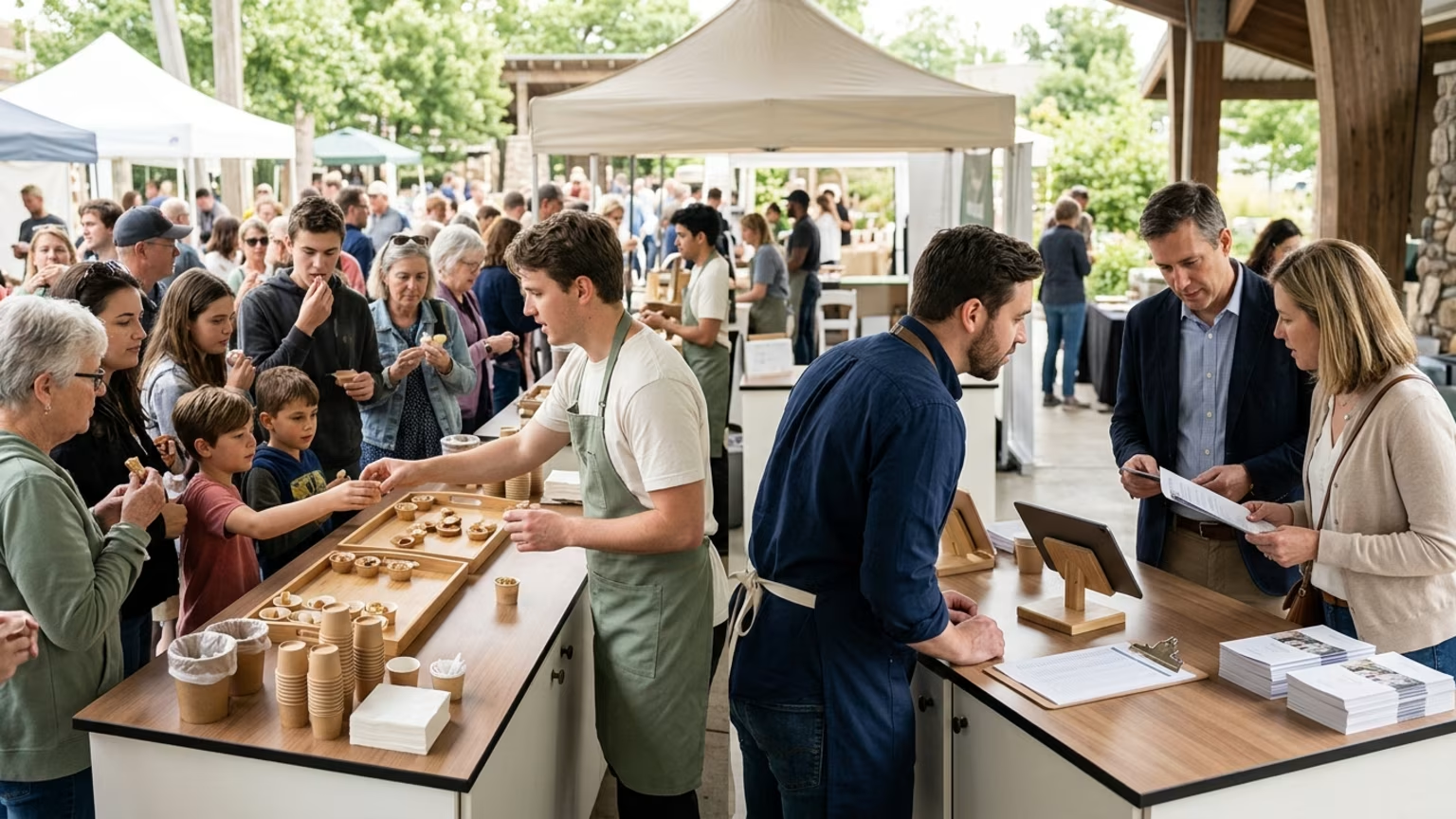
Experiential marketing takes this psychological trigger and amplifies it with live interaction. A sampling booth or a branded roadshow provides the perfect venue to close that sensory loop. By putting the product directly into the hands of the consumer, you bypass the crowded retail shelf entirely. The consumer experiences the brand on your terms.
Twix introduced Twix Bits as a smaller format that retains the classic chocolate and cookie crunch. This portable size aligns perfectly with modern preferences for shareable snacks. The strategy goes beyond product formulation by adding experiential incentives right into the mix. A sweepstakes offering cash prizes for fans with dual talents mirrors the dual texture of the candy.
In our experience, connecting a physical product attribute to an interactive consumer challenge drives higher intent. We run experiential and engagement programs coast to coast with local crews. Our smart logistics and permit expertise let us launch fast. This maintains quality consistency in every region from major metros to smaller markets.
Our nationwide infrastructure allows us to activate brands wherever their audiences are located. This operational capability turns a clever digital sweepstakes into a localized retail victory. When you marry a strong sensory hook with seamless field execution, you win the aisle. The strategy relies on moving the brand out of the phone and into the hands of the shopper.
Brands must translate digital buzz into hands-on product trial to secure retailer confidence. Merging multisensory messaging with live activations requires operator-grade discipline at every touchpoint. Here is how to execute this strategy effectively.
Identify the core sensory attribute of your product before planning any event. For Snickers, the message centers on the duality of peanut butter creaminess and classic crunch. Use this single trait as the absolute focal point for all field sampling efforts. A clear message prevents consumer confusion at the tasting booth.
Create an experiential sweepstakes that directly rewards physical participation. Require an action that validates purchase intent at the retail level. Scanning a QR code on a physical receipt guarantees the promotion directly supports retail partners. This loop turns casual sweepstakes entrants into paying customers.
Take the product directly to high-traffic consumer environments to force trial. Distributing trial sizes like Twix Bits at live events removes the friction of that first purchase. Getting the product into hands is the fastest way to prove a multisensory claim. Mobile tours can hit multiple retail zones in a single week.
Brand ambassadors must do more than hand out free samples. They need to verbally reinforce the multisensory message during the handoff. Training staff to ask targeted questions about texture or flavor seals the memory in the consumer's mind.
Use the physical interaction to gather qualitative feedback. Ask consumers if the creamy and crunchy promise holds up to their expectations. Recording these immediate reactions provides invaluable data for future marketing iterations. Consistently capturing clean leads without friction fuels your ongoing customer relationship management.
Align with partners who reflect the campaign message instead of chasing random celebrity. Twix partnered with former basketball player and rapper LiAngelo Ball to highlight dual talents. Use localized brand ambassadors to echo this messaging during face-to-face interactions on the floor. Authenticity at the street level converts better than forced endorsements.
Target field activations around key retail partners to boost immediate sell-through. Brands that master product launch execution in physical channels prove to category buyers that their marketing drives traffic. Coordination between field teams and store managers is non-negotiable for success. Store-level alignment dictates whether a campaign succeeds or fails.
Proving the Return on Investment for a hybrid campaign requires looking past simple vanity metrics. Likes and views do not pay for endcap displays or secure prime shelf space in a grocery store. Marketing leaders need data that connects field activation spend directly to pipeline revenue. Tracking the right figures separates measurable success from scattered operational execution.
The first critical metric is the entries-to-sales conversion rate for any sweepstakes. If a campaign offers a cash prize, you must track how many entries stem from verified product purchases. Using unique promotional codes on packaging provides a clear line of sight into sales lift. Teams that track clean field data can easily defend their budgets to internal stakeholders.
The second metric is targeted foot traffic lift at key retail partners during the activation window. You need to measure whether your sampling events actually drive people into nearby stores. Correlating field marketing dates with regional sales spikes offers strong evidence of business impact. This localized data is exactly what regional managers want to see during quarterly reviews.
Finally, measure retailer confidence through reorder rates and expanded distribution requests. When category buyers see high-volume sell-through during a promotional period, they allocate more physical space. Securing secondary placements or permanent shelf expansions is the ultimate lag metric for a successful product launch. This tangible outcome justifies ongoing experiential investments far better than an engagement rate report.
Another key lag metric is post-activation sentiment analysis. Brands must measure how the experiential sweepstakes changes consumer perception in the long term. Tracking brand recall three months after the activation reveals the true staying power of the campaign. Real loyalty extends far beyond the immediate prize window.
A well-executed physical campaign should yield a lower cost per acquisition than digital channels over time. By turning a single sampling interaction into a recurring purchase, the lifetime value of that customer skyrockets. You stop paying for endless digital impressions and start investing in owned customer relationships.
The recent Mars campaigns demonstrate how large consumer packaged goods companies tackle commoditized markets. According to industry reports, Snickers launched the Stuck campaign to promote Snickers Peanut Butter alongside Snickers Peanut Butter Ice Cream. The nationwide effort used humor to highlight the duality of creamy and crunchy textures. This messaging ran across television and major social media platforms to cast a wide net.
Twix took a similar multisensory path with its new Twix Bits format. The brand challenged consumers to showcase dual talents. This aligned perfectly with the creamy and crunchy nature of the product. The brand offered two thousand dollar cash prizes to fans who could demonstrate multiple skills.
The choice to use a celebrity athlete like LiAngelo Ball for Twix adds an interesting layer to the strategy. In the experiential marketing space, using niche talent feels more authentic than hiring a massive star. It resonates deeply with a specific target audience who appreciates the overlapping talents. This targeted approach mirrors the hyper-local focus of a good retail roadshow.
A broad national message needs a localized anchor to succeed. A national sweepstakes creates the air cover for the campaign. The localized sampling teams act as the ground forces. Together, they create a comprehensive strategy that drives measurable retail velocity.
This sweepstakes created a direct interactive layer that pushed beyond traditional television spots. Humor and celebrity endorsements attract initial consumer attention. The physical product format does the heavy lifting to secure repeat purchases. Poppable formats like Twix Bits are naturally suited for aggressive field sampling programs.
Taking these smaller products to trade shows or community events guarantees that the target audience actually tastes the difference. You can replicate this model by identifying the strongest sensory attribute of your product. Build a clear physical activation around that single trait. Stop hoping that digital impressions will magically convert at the register.
Book a strategy call with our team to map out a concrete trial program. Attention is rented online. Brand loyalty is built in person.

30 Years Experiential & Retail Activation Partner for CPG & Beverage Brands | Multi-Market Demos, Roadshows & Costco/Club Programs That Actually Sell