Robbie Thain
Founder, CEO

Turn major event sponsorships and fleeting crowd excitement into measurable retail sales using the latest data framework from Circana.

A field marketing director stands under a massive branded tent at a major summer tournament. She watches thousands of fans walk by with their hands full of competitor merchandise. The activation cost half her quarterly budget, and the line is packed with people waiting for free swag. But as she checks the local retail sales dashboard on her phone, the numbers are completely flat.
Circana recently published an analysis revealing that major events create real but highly fleeting consumer spending surges. Brands must evaluate these sponsorships with strict operational rigor to turn temporary crowd excitement into measurable retail sales.
The pressure to show up at mega events is constant for consumer brands. Teams spend months planning logistics, securing permits, and building out massive footprints. The event kicks off, the crowds swell, and social media mentions spike dramatically. It feels like a massive win in the moment for everyone involved.
Then Monday morning arrives. The leadership team asks for the data. The brand generated thousands of impressions and gave away pallets of product. Yet, local store managers report no lift in category sales, and the CRM shows zero qualified retail routing. The entire activation operated in a vacuum. The field team worked tirelessly, but the business gained nothing tangible.
Circana recently published an analysis confirming this exact scenario. Their research notes that major sporting and cultural events drive spikes in consumer spending. The impact is real, yet often fleeting, uneven and highly contextual. The bump is typically short lived and concentrated around the event window. It is rarely the sustained miracle that marketing teams hope for.
For many brands, the post event reality is a painful gap between perceived buzz and actual business impact. They spent a fortune on presence but failed to define the actual purpose. You cannot rely on the sheer scale of a crowd to generate sustainable revenue. The strategy must go deeper than hoping for accidental purchases.
Major events amplify existing demand rather than creating it from scratch. According to industry research, bumps can reach up to a 10 percent lift in key categories closely tied to the event experience. But this effect is not universal across the retail sector. Brands that align naturally with how consumers watch, socialize, or travel see the biggest wins.
This requires a complete shift in strategy. Instead of asking if your brand should sponsor an event, ask what specific job that investment needs to do. Circana states that aligning with major events should be evaluated by weighing cost against opportunity. You need clear objectives like short term sales, building awareness, or driving targeted trial.
We create experiential marketing programs built to connect emotion with action. Our process blends creativity, strategy, and data to make certain every brand interaction drives measurable results. We craft experiences that engage all five senses, helping people not just see brands, but feel them, turning moments into meaningful business outcomes.
For example, data shows that 24 percent of surveyed consumers plan to watch upcoming global soccer matches with friends and family outside their household. That social viewing behavior heavily favors food and beverage brands. If your product fits that occasion, your activation must directly link the event moment to the local retail shelf.
Brands must consider where consumer attention actually lives during these massive moments. Major events generate massive viewing and social interaction spikes across streaming platforms. Marketers must assess how many consumers will truly engage with their specific activation. For the upcoming 2026 global soccer tournament, platforms like TikTok are launching dedicated hubs with curated content. Integrating your physical presence with these time bound digital hubs creates a powerful multiplier effect, and brands that invest in turning live event content into always on assets see better sustained engagement.
Treating major events as tight business investments means running a precise operational playbook. Every moving part must connect the live experience to consumer spending. You must bridge on the ground experiences with social amplification and retail calls to action.
Proving the value of live activations requires better data than vanity foot traffic. Brands face rising expectations for diagnostic precision from their marketing partners. Analytics solutions now aim to give a structured view of overall performance and operational effectiveness. This means separating baseline trends from event driven spikes. Without this separation, teams risk over claiming success and losing credibility.
Senior marketers are increasingly expected to prove which specific levers contributed to market share shifts. A massive game day display or an Olympic activation must be tied to in store or online sell through. Lead metrics tell you if the activation is working in real time.
Track the number of high quality trials completed and the volume of first party data captures. Monitor immediate coupon redemptions at local retail partners during the event window. These early indicators show if the physical footprint is translating into actual shopper behavior. Using real-time event engagement dashboards fixes tracking issues immediately.
Lag metrics define the ultimate success of the program. Look at incremental lift in local retail sell through compared to your pre event baseline. Track market share shifts and basket expansion in the specific region. Measure retailer confidence through distribution gains and improved display compliance in the weeks following the activation.
Do not over credit the event for growth that was already happening. Compare your activated regions against non activated control markets. This level of reporting turns your field marketing into a respected commercial engine. Linking marketing to retail sales provides longitudinal insights and improved return on ad spend.
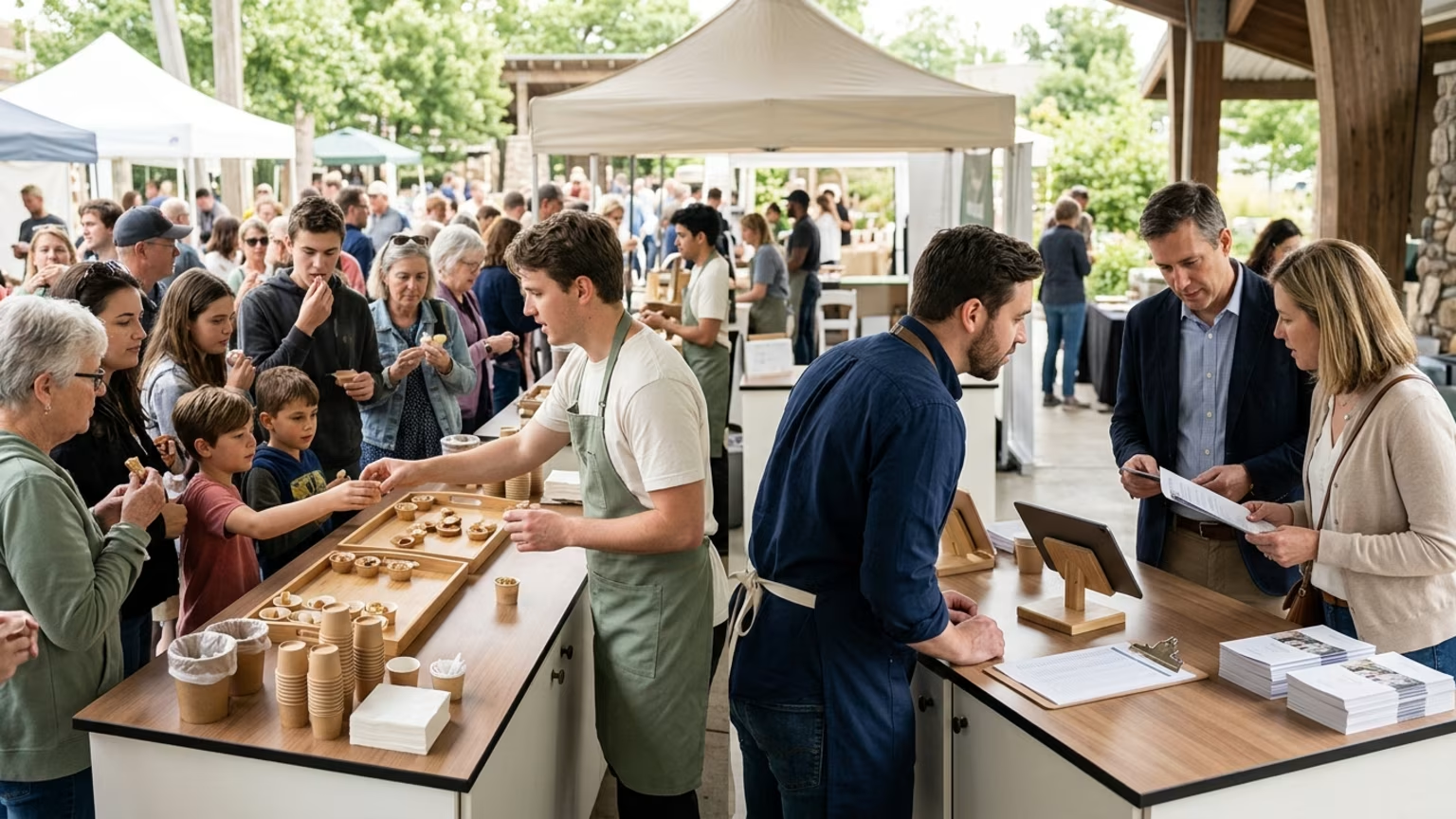
Consider a regional snack brand that sponsored a major summer sports tournament. In previous years, they simply set up a branded tent, handed out sample bags, and hoped attendees would remember them later. The Return on Investment was nearly impossible to measure. The field team was exhausted, and the sales team saw no lift. The executive team threatened to pull the budget entirely for the following year.
This year, they changed the model completely. The objective shifted from general awareness to driving immediate trial and specific retail conversion. They built their footprint outside the stadium, targeting fans heading to tailgates and local watch parties. The strategy was clear, highly targeted, and built around a specific consumption occasion.
Every sample included a time bound digital offer redeemable only at a specific grocery chain within a five mile radius. They coordinated with the retailer to secure endcap displays for the exact items they were sampling. By linking the on site experience to the retail shelf, they generated a measurable sales spike during the tournament weekend.
They used consumer panel data to track those buyers over the next sixty days. The data proved that a significant percentage of those event driven trials turned into repeat purchases. They proved the business case for future investments by treating the event as a disciplined performance driver.
If you want to turn your next live activation into a measurable pipeline, you need a disciplined strategy. Book a strategy call with our team to align your event investments with real business growth.
Start by picking one major event on your calendar and outlining the exact retail metric it needs to move today.

30 Years Experiential & Retail Activation Partner for CPG & Beverage Brands | Multi-Market Demos, Roadshows & Costco/Club Programs That Actually Sell