Robbie Thain
Founder, CEO

ESPN Fan House debuts in 2026, offering brands a way to turn passive sports sponsorships into measurable ROI using QR-led data capture and engagement pathways.
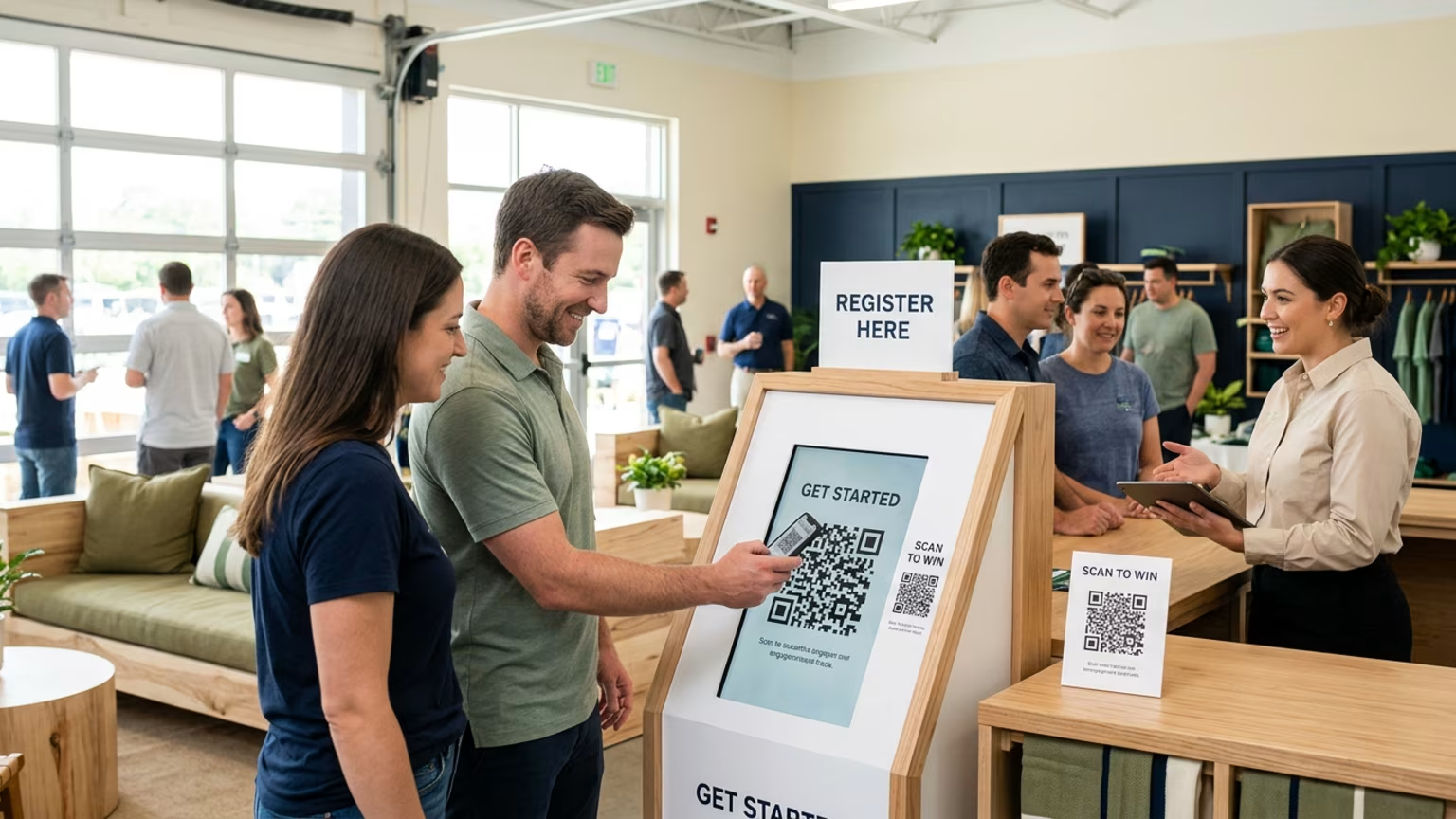
The marketing director watches thousands of fans bypass a costly concourse tent during a massive college football game. The physical interaction vanishes the second the crowd moves past the branded footprint. This article explains how the new ESPN Fan House interactive hub solves this exact tension. You will learn how to turn passive stadium sponsorships into measurable consumer data using scannable engagement pathways.
Sports sponsorships and live activations often look great on a broadcast camera but fail on the operational floor. Fans are distracted by the noise, the game clock, and the massive crowds. A brand might pay millions for venue signage, product sampling, and booth space. However, those brands frequently fail to capture any first-party data from the attendees.
College football game days present a unique operational challenge for brand marketers. Tailgate zones are sprawling, chaotic, and packed with competing sensory inputs. Attendees are focused on finding their friends, securing food, and making it to their seats before kickoff. Grabbing their attention requires more than just an attractive display or a loud megaphone.
If a brand relies solely on visual impressions, the investment is practically wasted. A passing glance at a logo does not translate into brand loyalty or a retail purchase. The execution becomes a beautiful disaster where success is judged by how many sample cups were handed out. Teams celebrate high foot traffic instead of calculating actual Return on Investment.
Without a direct way to capture consumer information, event marketing remains a guessing game. Staff members are forced to rely on manual clipboards or clunky tablet forms. These outdated methods slow down the booth flow and annoy impatient attendees. The result is a massive gap between brand awareness and retail sales.
The framework for modern experiential marketing relies heavily on closed-loop data capture. Instead of hoping a fan remembers a logo later, brands must build an immediate digital bridge at the point of contact. This approach forces a direct action while the consumer is highly engaged with the live experience. By integrating a scannable touchpoint into the physical footprint, marketers transform passive crowds into active participants.
The advertising industry is rapidly losing access to reliable third-party targeting data. Because of this shift, brands must find creative ways to build their own first-party databases. Live events offer a captive audience that is highly receptive to immediate, localized offers. A simple scan provides the exact consumer data that digital ad platforms are losing.
This approach requires a fundamental shift in how sponsorships are negotiated and built. Brands must demand inventory that allows for direct consumer interaction instead of simple logo placements. According to reporting from Barrett Media, ESPN Fan House is adopting this exact model. The platform is designed as an interactive fan engagement hub tied to college sports coverage.
The public reporting says Fan House uses customizable, real-time QR technology powered by Flowcode. This specific approach connects fans directly to polls, trivia, sweepstakes, and immediate rewards. By designing an activation around a single mobile action, field teams can link physical presence to digital tracking. The focus shifts from merely distributing product to capturing actionable consumer profiles.
To turn a chaotic venue into a data capture engine, marketing operators must follow a strict and disciplined process. We run experiential and engagement programs coast to coast with local crews, smart logistics, and permit expertise. This allows us to launch fast and maintain quality consistency in every region. Our nationwide infrastructure enables us to activate brands wherever their audiences are located.
Executing this system requires an operator-grade focus on the physical layout. Your field personnel must be trained to actively direct fans toward the digital touchpoints. Brand ambassadors should lead with the incentive rather than just handing out a product sample. When managing brand activation services, operators must execute this specific sequence:
Following these steps turns a standard tent into a high-functioning conversion engine. The field team can focus on face-to-face interactions while the technology handles the data capture. This playbook eliminates the friction that normally ruins live sports activations. It replaces guesswork with a predictable system for lead generation.
Marketing budgets are under intense scrutiny from finance departments and executive boards. Experiential leaders can no longer justify expensive event builds with pictures of smiling attendees. Executives demand proof that live brand experiences generate more than just fleeting goodwill. To prove Return on Investment, field marketers must track specific numbers before, during, and after the event.
Lead metrics show immediate interest, while lag metrics confirm bottom line business impact. Tracking these precise numbers is how brands successfully prove experiential sponsorship ROI.
Gathering these data points closes the loop on marketing spend. It provides the missing link for connecting live events to retail sell-through. Marketing leaders can finally compare experiential programs directly against their digital advertising campaigns. The conversation moves from soft brand metrics to hard revenue attribution.
When field marketing teams adopt this strict measurement approach, they stop begging for budget. They can clearly demonstrate how physical activations generate qualified leads efficiently. This data-driven confidence changes the entire internal perception of live events. Experiential marketing becomes a predictable revenue channel rather than a speculative brand expense.
The upcoming rollout of ESPN Fan House provides a clear template for the future of sports media sponsorships. Slated to launch in August 2026, the platform will integrate brand activations across on-site events. The reporting says the experience is also designed to reach fans at home, and across social and digital channels. Barrett Media notes that Publicis Sports has already signed on as a launch partner.
This initiative signals that major media owners are productizing live fan engagement. According to AdIndex's reporting of Rita Ferro's remarks, Disney wants to create closer connections between fans and sports events. The company aims to give brands new opportunities to engage audiences directly. ESPN's own launch language frames Fan House as a way to connect fans more deeply with college sports.
While the public coverage describes the product and its goals, it does not publish audited performance metrics yet. The true test will be how well brands integrate these digital bridges with their physical sampling footprints. Companies that master this integration will dominate their respective retail categories. Operators who want to build this exact type of accountable field execution should book a strategy call with our team.
Audit your next experiential footprint and replace one passive brand sign with a direct, incentivized digital action.

30 Years Experiential & Retail Activation Partner for CPG & Beverage Brands | Multi-Market Demos, Roadshows & Costco/Club Programs That Actually Sell