Robbie Thain
Founder, CEO

Learn how AI product demos on TikTok Shop impact brand authenticity and why physical sampling remains critical for real retail sales and shopper trust.
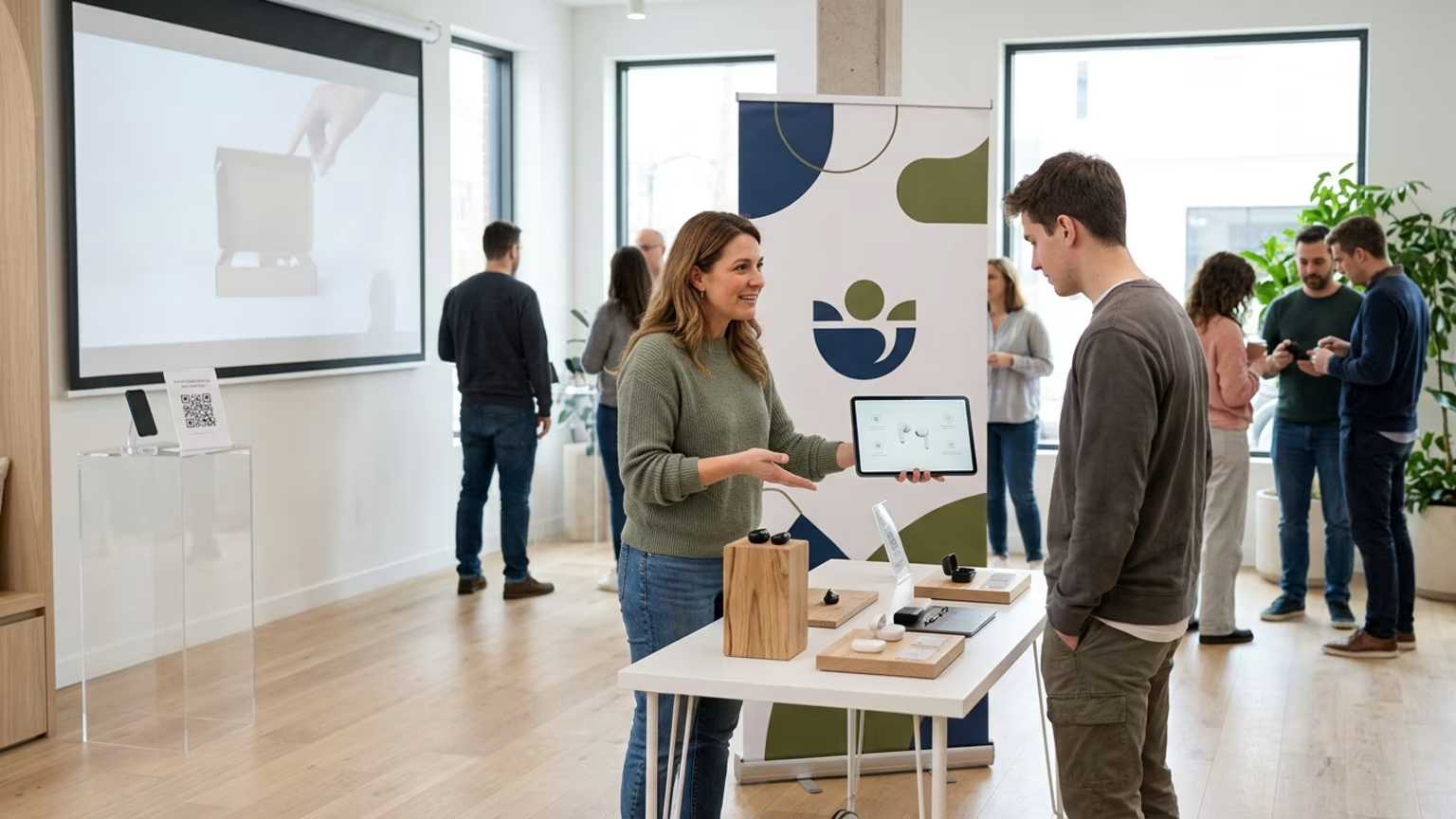
Shoppable video algorithms on TikTok Shop prioritize volume over physical truth. Synthetic product demos scale shoppable video rapidly but risk eroding the shopper trust required for repeat purchases. Experiential marketers must treat these tools as a fast testing layer. They must rely on real world physical sampling to drive authentic trial and retail sell through.
AI video vendors such as NovoAds and LensGo AI describe automated digital workflows. Sellers can create TikTok Shop style product demos from scripts and product URLs. They use synthetic actors and voices instead of filming real people or physical items. This allows a single seller to push massive amounts of content into the feed instantly.
These AI creative platforms promote high volume batch workflows. They generate multiple hooks and actor variations for a single product quickly. This happens in roughly the time a traditional team might set up one filmed clip. According to reporting in The Independent, AI generated shopping videos are spreading rapidly across the platform.
Some brands have started asking creators to ditch AI fakes entirely. They worry these synthetic videos could misrepresent products and confuse shoppers. When these digital claims hit the physical retail floor, the illusion often breaks. A consumer watches a flawlessly rendered beverage pour online but expects that exact sensory experience in the store.
If the real product falls short of the digital promise, brands face high refund rates. They also risk permanently damaging their credibility with that buyer. The physical retail aisle exposes any gap between synthetic marketing and actual product quality. The operational challenge is keeping the digital testing environment from ruining the real world pipeline.
The solution requires enforcing strict claims guardrails across all marketing channels. TikTok’s official AI content policy states that AI generated content is allowed on TikTok Shop. The content must be truthful, accurate, and not misleading. Marketers need a strategy that uses synthetic video for message testing while reserving live activations for actual proof.
LensGo AI’s documentation suggests a fast testing methodology for digital marketers. A seller creates a short AI hook and demo video for one SKU. They then run it as a TikTok Shop ad at roughly $10 per day. The production costs are minimal, often just a few dollars in credits for a 480p rendering.
Brands can rapidly find which messages generate product card clicks online. Once a winning digital hook is identified, marketers can adapt that messaging for the physical world. This winning language should inform in store signage and physical brand ambassador scripts. Testing a message digitally before funding a nationwide campaign saves significant marketing budget.
We have executed over 1000 campaigns across all 50 states, bringing brands to life in every major U.S. market. From retail demos in Seattle to roadshows in Miami and events in Honolulu, our teams activate brands wherever our clients' audiences are located. Brands can confidently focus on scaling pop up activations across multiple cities when their core messaging has already been validated.
Translating synthetic testing into real world execution requires rigorous operational discipline. Field teams must operate from the exact same playbook as the digital agencies. This ensures complete message consistency from the screen to the grocery aisle.
Return on Investment requires tracking both digital leading indicators and physical lagging outcomes. Digital metrics show initial consumer intent. Physical metrics confirm actual market acceptance and sustained brand loyalty. Marketers must evaluate both sides to ensure synthetic demos are driving real retail action.
On the digital front, brands should monitor product card clicks, total conversions, and specific refund reasons. If a high volume of refunds cites product misrepresentation, the synthetic content is likely overpromising. This metric serves as an early warning system for your field marketing teams. High digital refunds mean the physical product needs a stronger live demonstration to reset expectations.
For live activations, success hinges on trial to purchase conversion and sustained in store sales lift. Brands must measure how many consumers who taste the product physically actually put it in their cart. When you are using campus programs to drive retail action, you can track coupon redemptions directly tied to specific live interactions. The ultimate proof of success is strong retailer sell through weeks after the event ends.
Digital tools struggle to replicate the messy reality of the trade show floor or the chaotic retail aisle. A synthetic avatar cannot handle a buyer objection about ingredient sourcing. Real brand ambassadors are trained to read body language and physically hand a product to a skeptical shopper. This authentic human element is what builds lasting brand loyalty.
Consider how the beverage category handles major product launches today. Marketing teams can use AI tools to quickly test ten different flavor taglines online. The digital tool identifies the specific words that earn cheap clicks. However, aligning specific consumer occasions with retail purchasing depends entirely on physical execution.
Beverage companies build branded bars at music festivals and pour real samples for thirsty attendees. They create authentic moments that a synthetic video simply cannot simulate. The digital tool finds the initial words, but the physical event secures the actual customer relationship.
Marketers must recognize that AI demos are a starting line rather than a finish line. Synthetic content can capture attention, but physical sampling captures market share. Audit your current digital video claims today and ensure every single promise can be flawlessly proven at your next physical sampling event.

30 Years Experiential & Retail Activation Partner for CPG & Beverage Brands | Multi-Market Demos, Roadshows & Costco/Club Programs That Actually Sell