Robbie Thain
Founder, CEO

Read how beverage brands turn specific occasions into retail sales. Get the exact playbook for creating measurable live brand experiences that drive pipeline.

Broad demographic marketing in the beverage category is dead, and category growth now relies entirely on owning highly targeted drinking occasions. Experiential marketers must abandon generic brand campaigns and build precision activations that convert in real world moments.
Many marketing teams still operate on outdated playbooks that treat live events like a billboard. A brand sets up an expensive footprint with a generic message like premium quality. Field staff hand out hundreds of warm samples to distracted people walking down a crowded aisle. Consumers take a sip, nod politely, and immediately forget the brand name.
This is the painful reality on the trade show floor and in retail aisles across the country. Store managers will relegate a brand to a dark corner if they bring a weak concept. The logistics of shipping product, securing permits, and training temporary staff overwhelm internal teams. The Chief Marketing Officer looks at a massive line item with zero evidence of sales lift when the quarter ends.
Growth no longer comes from broad category dynamics. According to a recent publication by BCG, winning alcohol companies are redesigning their portfolios around distinct consumption contexts. Volume is actually stagnating in traditional high frequency settings like late night bars. Pockets of demand are emerging in defined, lower intensity moments.
These new moments include at-home socializing, food pairings, and daytime outdoor gatherings. BCG research shows that winning brands adapt products to changing consumer preferences around how, where, and why people drink. People are moderating their intake and curating their choices. They want purposeful drinking experiences that align with social connection and trying new flavors.
This requires a complete shift in field execution. Brands must map the market demand by occasion. You need propositions that solve for these moments end to end. This means tailoring the liquid, the merchandising, and the live engagement.
According to BCG, shopper baskets show higher cross sell potential when beverages are presented as part of an occasion solution. People shop the occasion rather than the aisle. They look for solutions labeled for a Friday game night or a barbecue with neighbors. Winning brands capitalize on this by matching their price points to the specific moment.
Willingness to pay naturally rises in special moments like date nights or celebrations. In bars and restaurants, menu architecture and staff prompts drive trial much faster than traditional advertising. Experiential nights featuring guided tastings or live music become battlegrounds for premium labels. You must require field staff to log occasion tags in their reporting to track success.
Translating this strategy into a live event setting requires strict operational discipline. You cannot simply drop a tasting table into a grocery store and expect magic. The activation must match the occasion perfectly. Here is the exact step by step guide to implement this approach in the field.
The best occasion strategy will fail if the physical components do not arrive on time. Field marketing leaders constantly battle supply chain delays and damaged event assets. You must treat your logistics pipeline with the same respect as your creative strategy.
Secure storage and reliable tracking form the backbone of any successful experiential campaign. When a brand scales a targeted occasion campaign across multiple cities, the logistical complexity multiplies rapidly. Teams must coordinate product delivery, booth elements, and promotional materials weeks in advance.
We solve this friction by handling the entire backend process for our clients. We store your sampling product and event gear securely. Our team ships, tracks, and coordinates delivery nationwide so every activation stays on schedule. This operational control keeps the brand message sharp and prevents wasted investments.
We know exactly what it takes to scale these targeted systems. We have executed over 1000 campaigns across all 50 states, bringing brands to life in every major U.S. market. From retail demos in Seattle to roadshows in Miami and events in Honolulu, our teams activate brands wherever our clients' audiences are located. This level of repetition reveals a hard truth.
Operational excellence is the only difference between a smart strategy and a failed event. To scale these activations, you must blend physical trials with digital prompts effectively. Retailers expect brands to drive their own foot traffic. You can use geo-targeted social media alerts to notify shoppers about an exclusive tasting nearby.
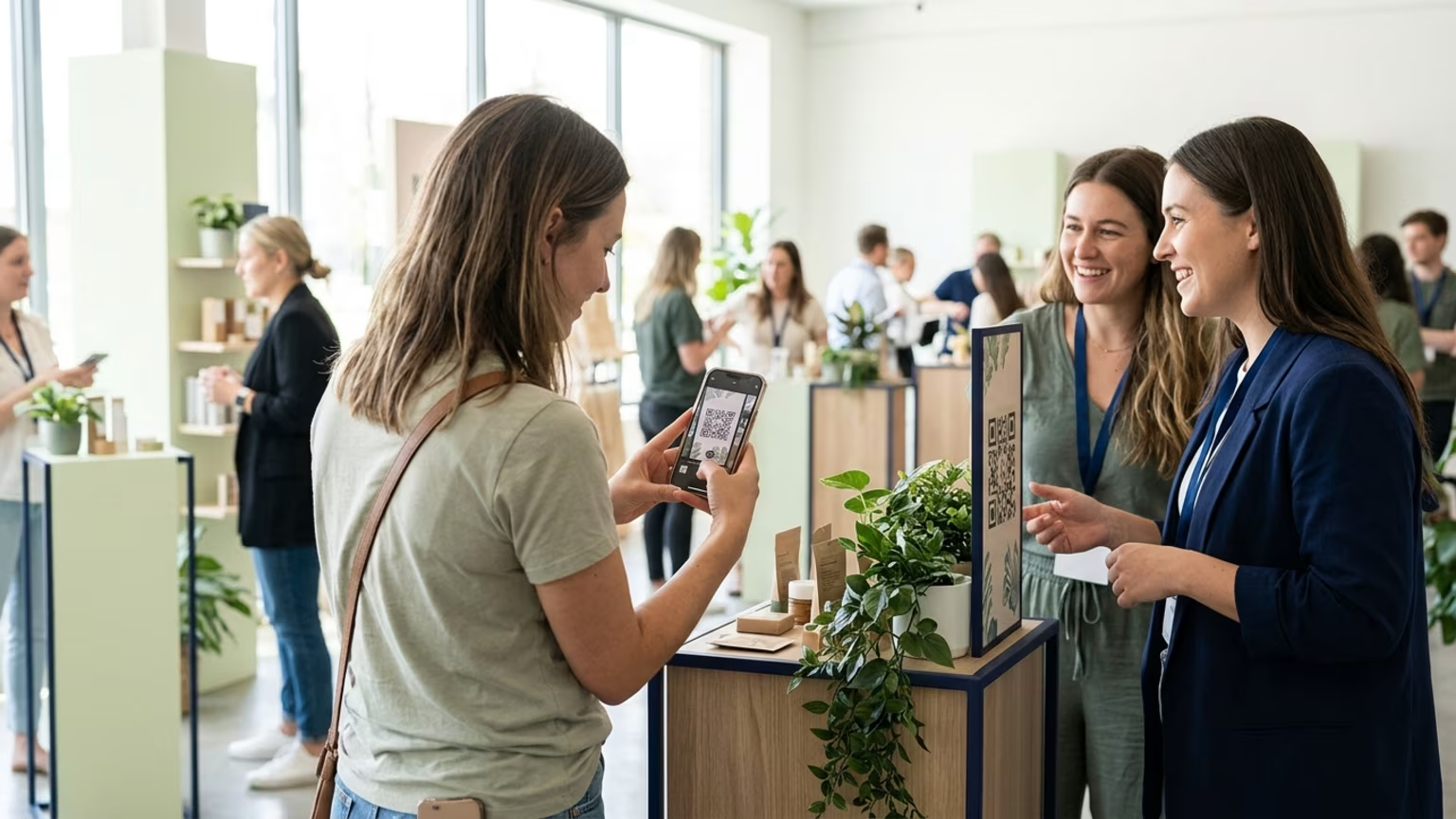
When a consumer arrives, the physical setup must immediately validate the digital promise. The display should mirror the digital content perfectly. If you design trade show spaces that mirror these digital occasion categories, the consumer journey becomes seamless. This creates a closed loop system that reduces friction and drives immediate purchase.
A unified approach forces the digital and physical environments to work together. When you are blending physical trials with digital amplification, you invite people to interact with the brand long after they leave the booth. You retarget consumers who engaged at an event with follow up offers that sustain the habit. This process turns a single sip into an ongoing relationship.
All of this targeted effort means nothing if you cannot prove the financial outcome. Return on Investment must be clear, measurable, and defendable. Leaders face increased Return on Investment tracking demands from brands across every channel. You must build KPIs that mirror your priority occasions.
Your primary lead metrics should track immediate engagement and transaction volume during the event. This includes the trial and conversion rate. This measures the ratio of samples given to purchases made during the same visit. You must track basket and attach metrics.
BCG research reveals this data shows if occasion themed displays increased cross category purchases, like alcohol bought alongside mixers and snacks. Lag metrics provide the final proof of long term business impact. You need to measure pre and post activation sales lift in targeted venues against control locations. Track regional repurchase rates in the weeks following a major experiential campaign.
Industry analysts report that forward thinking commercial leaders are using data and analytics to make their roles measurably more productive. The metrics on premise must track the rate of ordered drinks and the volume of repeat orders during the shift. This proves your field marketing is working.
Consider the rapid rise of moderation and functional beverages as a clear example. The U.S. non-alcoholic beer market is projected to reach $6.4 billion in 2025 according to consumer brand investor analyses. These consumers are not abandoning social rituals. As these same investment analyses show, drinking a beer is primarily about the moment experience rather than the alcohol content.
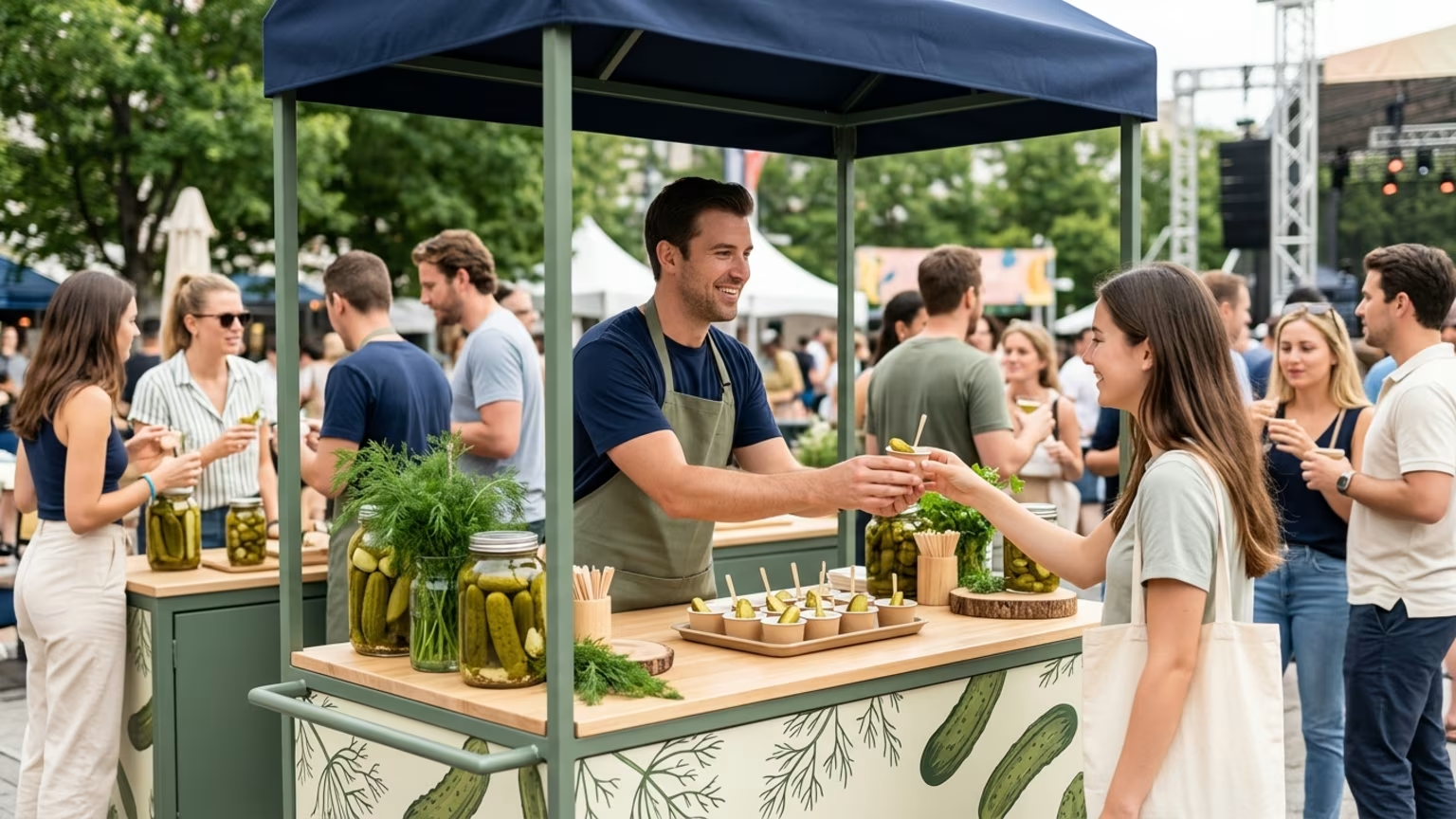
A brand competing in this space cannot win by marketing an absence of alcohol. They win by owning the weeknight unwind occasion or the post workout social hour. The field team sets up a precise activation at a wellness festival or a targeted grocery endcap. The entire experience validates the consumer choice to moderate at the same time they participate in the social ritual.
Ready to drink alcoholic beverages follow this exact logic. They target convenience for outdoor travel and replicate cocktail experiences without bartenders. A premium tequila brand might shift focus from generic nightclub bottle service to targeted at-home dinner pairings. They provide consumers with small discovery formats and recipe cards for pairing with specific foods.
Brands often make the mistake of trying to own every possible moment simultaneously. This dilutes the budget and strains field operations. Focusing on just a few high value occasions allows for deeper, more surgical execution. You can train your brand ambassadors to handle every objection perfectly.
If you are struggling to prove the value of your live events, it might be time to narrow your focus. Stop trying to appeal to everyone in the room. Pick your moment, build an airtight execution system around it, and measure the results relentlessly. If you need help turning this strategy into measurable pipeline, book a strategy call with our team.
The best physical brand experiences do not feel like marketing. They feel like a natural extension of the occasion itself.

30 Years Experiential & Retail Activation Partner for CPG & Beverage Brands | Multi-Market Demos, Roadshows & Costco/Club Programs That Actually Sell