Robbie Thain
Founder, CEO

Learn how to turn demos, roadshows, and brand activations into a steady stream of content for sales, social, and retail partners, without turning your events into a photo shoot that annoys shoppers.
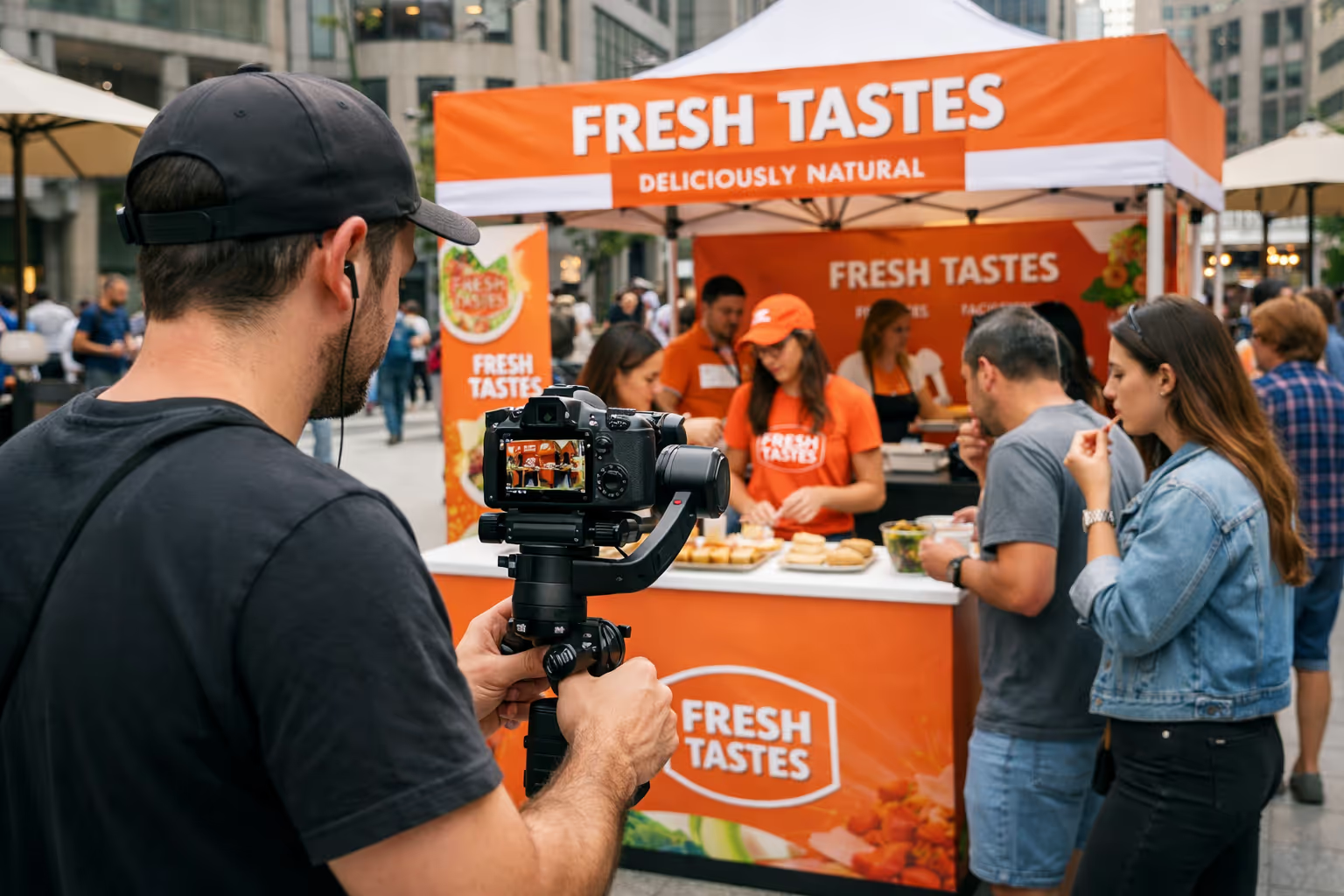
Quick answer: Every demo, roadshow, and brand activation already creates stories. The goal is not to force content on top of those moments, it is to capture what is naturally happening and package it for social, retail, sales, and future briefs. When you treat content as part of the plan, not an afterthought, you can use one weekend of activity for months of marketing.
Most teams agree that they should capture more content from experiential work. The trouble starts when no one owns it. Sales cares about lift, field cares about staffing, brand cares about how things look, and social teams often hear about events only after they happen. By the time someone asks for footage, the tent is already packed up and on the road.
Experiential programs already take a lot of coordination. Retail demos, club roadshows, mobile sampling tours, and festival activations all share the same pattern. If content is not built into the brief and checklist, it simply does not happen. This post shows how to add content to the plan in a way that feels natural, not forced.
Before thinking about formats or channels, decide which stories you want to tell. A simple question helps.
Your answer will shape everything you capture. For a beverage brand, the story may be cold refreshment in real life. For a snack brand, it may be the sound of the crunch and the face people make when they taste it. For a health or nutrition brand, the story may be trust and real ingredients rather than hype.
Past posts like What is engagement marketing. Clear examples and formats that work and Beverage sampling strategy. Turn first taste into repeat buys can help shape that story before you roll a single camera.
Different formats lend themselves to different content. Instead of a generic wish list, connect content types to the programs you already run.
These assets work well for retailer presentations and sales decks. They support the advice in Retail demonstrations. How to turn tasting into sales lift.
These assets help prove that your team can handle volume at scale. They pair nicely with learnings from Costco roadshows. Guide to planning sampling at scale and the service page for Costco roadshows.
These programs already feel like stories. Posts like Mobile sampling tours. Route planning and permits made simple and Brand activations. How to plan pop ups people actually visit can guide the plan while you think about what to capture.
Someone has to be responsible for content on site. That person does not have to be a full time videographer. It can be a field lead, a local creator, or a trusted brand ambassador with good eyes. What matters is that everyone knows who the owner is before the event starts.
In your brief or run sheet, include a short note.
You can combine this with the checklists from Brand ambassadors. How to hire, train, and manage field teams and Event permits and logistics. City by city checklist for smooth activations so it becomes part of the normal rhythm, not a separate project.
Shoppers come first. The point of experiential work is to give people a good live experience, not to film them from every angle. A respectful shot list focuses on the moments that tell the story without getting in anyone's way.
You can collect plenty of material with this list in ten to fifteen minutes during a quiet moment. The rest of the time, staff can focus fully on sampling and conversations.
In many locations, especially at large events, filming is normal. Even so, it is good practice to make it clear when content is being captured. Work with your legal team to agree on simple rules for consent and signage.
Clear habits in this area protect the brand and build trust with the people you meet. They also make life easier when you want to reuse clips in future campaigns.
Content is more valuable when each asset has a job. In your planning notes, match types of content to future uses.
This simple map means your content lead knows which shots matter most. It keeps the focus on assets that will actually be used instead of hours of random footage.
Experiential programs often move fast. Large file transfers and complex editing schedules can slow everything down. A light workflow keeps the program focused on live quality and simple reporting, as described in Experiential marketing reporting. How to measure ROI with clean data.
With this setup, one editor or small team can support a large footprint without feeling buried.
Content from different cities and retailers can also support your coverage story. When combined with simple maps and store lists, it proves that the brand is active across the country, not just in a few local pockets.
If your brand works with Makai on programs across multiple markets, content can feed into tools similar to the information on the Where we work page. Buyers and leaders respond well to seeing their region represented with real images and clips, not just slide markers.
Content is more than a nice to have. It adds context to numbers and can even influence performance. For example:
In your recap decks or dashboards, try pairing key charts with one or two images from the same days. This makes it easier for non field teams to imagine what actually happened in each market.
After many programs, a few patterns show up again and again.
You can avoid most of these with a simple owner, a short shot list, a light workflow, and a clear plan for where each asset will live.
If you already have demos, roadshows, or activations on the calendar, take ten minutes to add a content section to your next brief. Decide which story you want to tell, choose the formats that fit, and pick a content lead for each market. Fold these steps into your field and event checklists so they become second nature.
When you are ready to connect content planning with larger programs, you can review the service pages for engagement marketing, retail demonstrations, Costco roadshows, and mobile sampling tours. To talk through coverage and content for a full season, request a proposal or contact us. One well planned weekend of content can support many months of selling and storytelling.

30 Years Experiential & Retail Activation Partner for CPG & Beverage Brands | Multi-Market Demos, Roadshows & Costco/Club Programs That Actually Sell