Robbie Thain
Founder, CEO

Learn what a Costco roadshow is, how long it runs, what to prep, and what to track so your pop up drives sales and earns more stores with clean reporting.
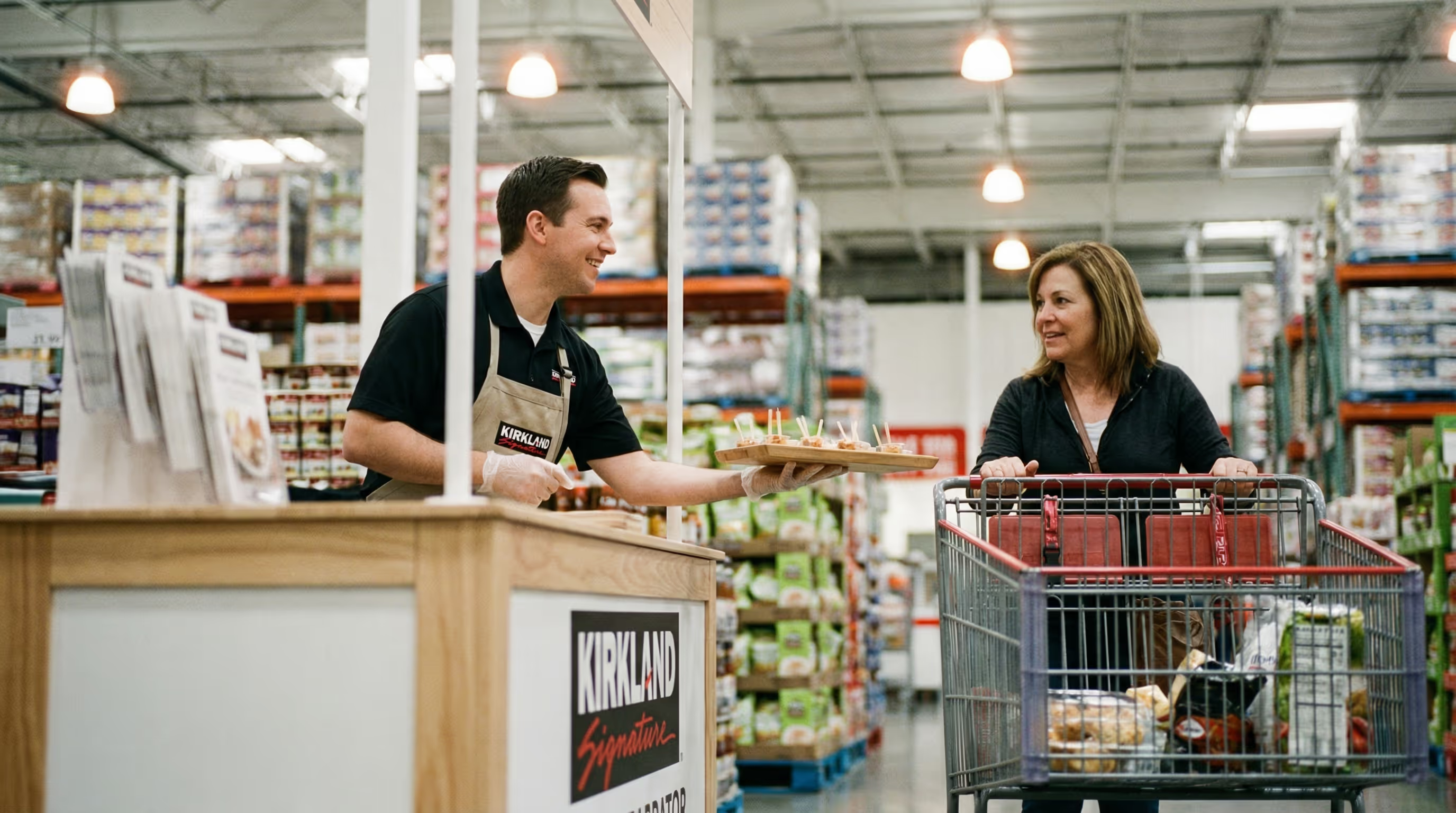
A Costco roadshow is a temporary in store pop up where your team demos, answers questions, and sells product in a short window. It is part retail, part live experience, part stress test.
Brands use roadshows to drive fast sales, learn what members say in real time, and show the buyer that the item can win at scale. When the booth is strong and the numbers are clean, it can support deeper distribution.
This guide gives you a practical plan. You will learn how to set the goal, build the booth flow, staff the event, protect inventory, and report results in a way leaders can trust.
If you want a partner to run staffing, logistics, and day to day execution, start with Costco roadshows.
A Costco roadshow is a limited time special event inside select warehouses. A vendor sets up a larger booth than a standard demo cart and sells product on site while giving members a reason to stop, try, and buy.
Many roadshows run for a few days. Some partners describe a common run as about four days, then the booth moves to the next location. In practice, schedules can run longer in some warehouses, so plan for a range.
A normal demo supports items already in the aisle. A roadshow is closer to a mini storefront with more space for story, display, and deeper product education.
Three things win the stop. A clear product cue from a distance, a quick try or proof moment, and a simple value story that fits Costco.
Units sold by hour, sample count by hour, stock health, top questions, and your close rate. If you only track one thing, track units per hour by shift.
One owner should run the full program. That person aligns the buyer goal, inventory plan, staffing plan, and reporting plan before day one.
Costco is high traffic and high intent. Members arrive with a mission, but they will still stop when something feels like a smart find. That is why roadshows work. They create urgency and they let you explain the value fast.
Roadshows sit in a live retail environment. The aisle is shared. The pace changes by hour. A slow booth clogs the flow. A booth that is too aggressive pushes people away. You need a calm, fast rhythm.
You should expect change. Dates can shift and schedules vary by region and warehouse. Build your plan so it can flex without breaking.
Write a single sentence goal. Keep it measurable.
This one sentence guides every choice. It shapes portion size, talk track, staffing level, and your close.
Costco members want clarity. They want to know what it is, why it is better, and why it is a strong buy today.
If your story needs a long build, move that detail to the post try moment. First you earn trust. Then you explain.
A roadshow booth is a funnel in a small space. Build it on purpose.
Put your strongest proof moment right after the stop. If you wait, the member keeps moving.
It does. A roadshow with weak stock feels weak. Members read empty space as a red flag.
Start with a day by day plan. Use three layers.
Then add a restock trigger. For example, restock every set number of units sold, or every set number of minutes during peaks. The goal is a steady look, not a panic refill.
If your program crosses multiple warehouses, route planning and storage become the hidden win. A strong partner can handle this through logistics support that keeps kits, product, and booth assets moving on time.
Roadshows are not a one person job. You need roles, not warm bodies.
In slower hours, one person can cover two roles. In peak hours, split them. If the sampler is answering long questions, the line slows and you lose stops.
Training matters more than script length. Give teams a short talk track, a short objection list, and a clear close. If you need a deeper guide on building field teams, see brand ambassadors.
Great roadshows feel smooth. That comes from a simple daily cadence.
When your team knows the rhythm, they can sell with calm energy. Members feel that.
If you fix only one mistake, fix the close. A polite, clear ask raises sales without changing the product.
Roadshows feel exciting, but leadership needs proof. Keep reporting simple and consistent.
If you can access baseline sales, compare the same warehouse and the same daypart. If you cannot, compare your own hours across shifts and days. The goal is not perfect science. The goal is a clear story you can repeat.
When you want a clean reporting approach that fits a CMO view and a field view, use the structure in experiential marketing reporting.
If you are a CMO, brand lead, or field lead, here is what you should ask for before approving the next roadshow run.
A roadshow is not just a booth. It is a repeatable operating system. If the system is tight, you can scale it.
If you are planning a Costco roadshow and want help with staffing, booth flow, logistics, and clean reporting, start here. Request a proposal and share your category, target warehouses, and goals.

30 Years Experiential & Retail Activation Partner for CPG & Beverage Brands | Multi-Market Demos, Roadshows & Costco/Club Programs That Actually Sell