Robbie Thain
Founder, CEO

Chicago Auto Show 2026 runs Feb 7 to Feb 16 at McCormick Place. Get dates, hours, ticket info, plus practical tips for exhibitors and sponsors.
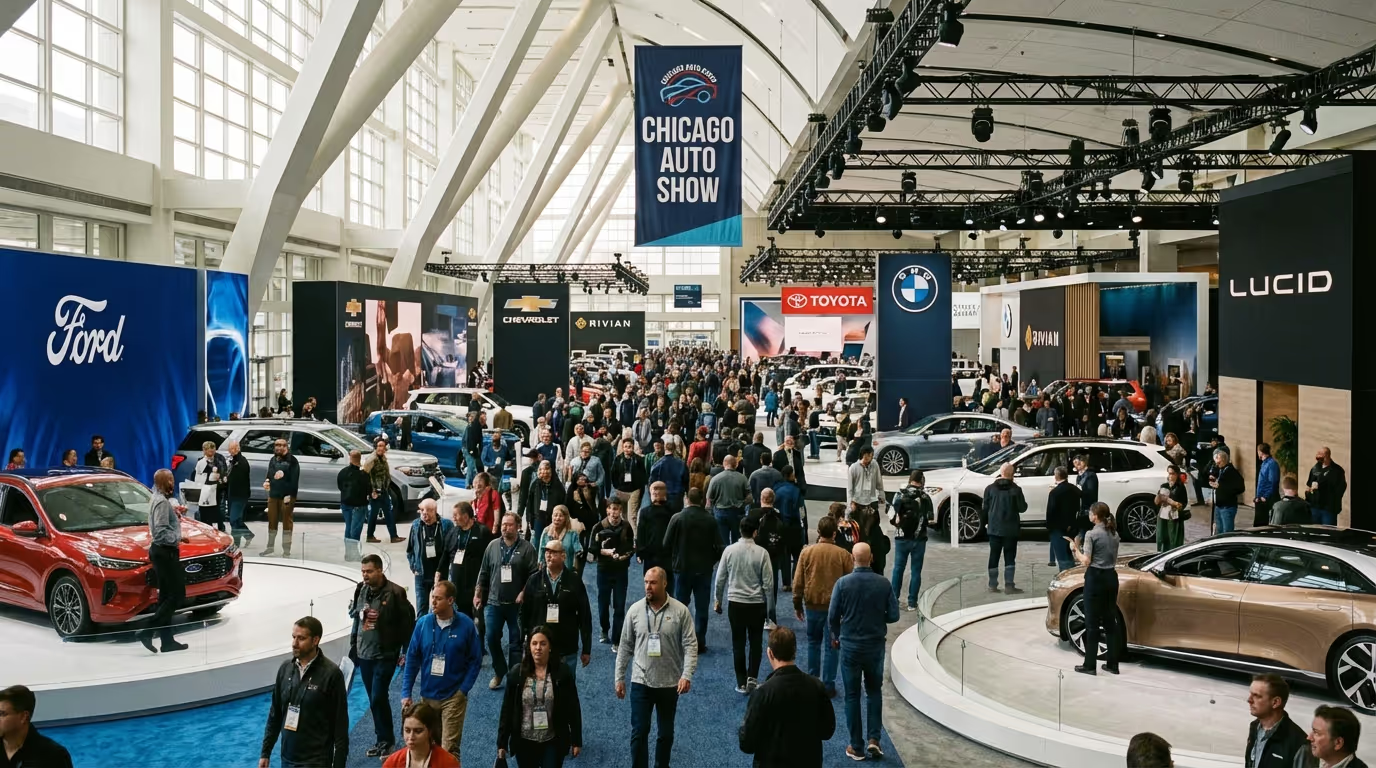
If you are picking one consumer auto show in the Midwest to show up strong, Chicago is hard to ignore. The Chicago Auto Show runs Feb 7 through Feb 16, 2026 at McCormick Place, and it is built for real product time with real people. Visitors come ready to compare, ask questions, sit in cars, and take photos. That is the kind of setting where a brand can win trust fast if the experience is clear, friendly, and easy to join.
This guide is for marketing leaders, event teams, and sponsors who want to get more out of Chicago than a nice booth and a pile of brochures. You will get the key show details, then a practical plan for staffing, lead capture, and what to measure so the CMO actually cares.
The public show runs Saturday, Feb 7 through Monday, Feb 16, 2026.
McCormick Place, 2301 S. King Dr, Chicago, Illinois 60616.
First Look for Charity is Friday, Feb 6, 7 p.m. to 11 p.m., and it is a black tie gala held the evening before the show opens to the public.
Most attendees come with a short list in mind and a longer list of questions. They want to compare models side by side, get a feel for interiors, and hear answers that do not sound scripted. They also want moments that feel fun and worth sharing, but they still hate friction. Long lines, confusing steps, and unclear value are deal-breakers.
So your job as an exhibitor is not to “impress.” Your job is to help someone do one of these three things in under two minutes:
When teams try to do five things, they end up doing none of them well. Pick one primary goal such as test drives booked, leads captured, dealer referrals, or qualified meetings. Then pick one secondary goal such as brand lift, content capture, or email signups for a launch list.
Write the goal in one sentence that anyone on staff can repeat. If the staff cannot repeat it, your booth will drift all day.
Your hero moment is the one thing that looks obvious from 20 feet away. It is also the one thing people can complete without a long explanation. Examples that fit a show floor:
Keep it simple. No one wants a 10 step flow at an auto show.
Lead capture fails when it feels like a trap. The fix is to trade value for data in a way that feels fair. A few options that work well:
If your flow needs more than name, email, and one qualifying question, you will lose people. Save the deeper questions for a follow-up link or a later call.
At a large public show, staffing is less about the booth size and more about your peak moments. You need coverage for four roles:
If one person is trying to do all of that, the line grows, the booth gets messy, and the energy drops. A clean booth with a calm team often beats a flashy booth with stressed staff.
One simple rule: plan for breaks like they are part of the program, not an emergency. Rotate roles every couple of hours. People sound sharper and more human when they are not burnt out.
Many post-show recaps fail because they are built like a scrapbook. A CMO wants a story, not a photo dump. If you want leadership buy-in for next year, report in three layers.
This is where most teams miss the real win. A strong follow-up plan is often worth more than an extra booth feature.
If you want to stand out at Chicago, build something that respects the visitor’s time and gives them a reason to talk about it. Here are ideas that map well to auto show behavior.
Visitors compare. Help them do it. A simple station can let people compare two models or two options with three questions, then give them a short “what to look for” list for their test sit or test drive.
Auto shows are a lot of walking. Offer a small relief moment that is still on brand, like a quick phone charge bar, a “warm up” lounge, or a kid friendly corner. Keep it clean and controlled. A calm moment can create a long conversation.
Do not force people into a big production. Offer a fast photo or short clip spot with clear framing and good light, then let them scan a QR to get it. The best content is the content that takes almost no effort.
Run short demos on a tight schedule, like every 20 minutes. Put the schedule where people can see it from far away. A predictable schedule keeps the booth feeling active, and it lets the staff pace themselves.
The Chicago Auto Show is packed with attention, but attention is not the same as impact. Build one clean experience, staff it with a calm plan, and report it like it is a business program, not a one-off event. That is how you earn budget for the next one.
If you want help planning a booth experience, staffing plan, or lead capture flow that feels easy for visitors, start with your goals and your timeline. Then build the simplest program that hits those goals and can be executed with confidence.

30 Years Experiential & Retail Activation Partner for CPG & Beverage Brands | Multi-Market Demos, Roadshows & Costco/Club Programs That Actually Sell