Robbie Thain
Founder, CEO

Learn what phygital means, why it works, and how to design retail, event, and tour experiences that connect QR, mobile, and real world results.
People research on their phone, buy in a store, share on social, then reorder online. They do not think in “channels.” They just want the next step to be easy and consistent.
That is the point of phygital. It blends physical and digital into one connected experience, so someone can move from a real world moment to a digital action without friction.
For experiential and engagement programs, phygital is a smart way to turn “that was fun” into “I tried it, I signed up, I bought it again.” It also helps you measure impact in a way leadership cares about.
Phygital combines physical touchpoints (stores, demos, events, pop ups, tours) with digital touchpoints (QR, NFC, SMS, email, apps, landing pages, social). The goal is one continuous journey, not a one off moment.
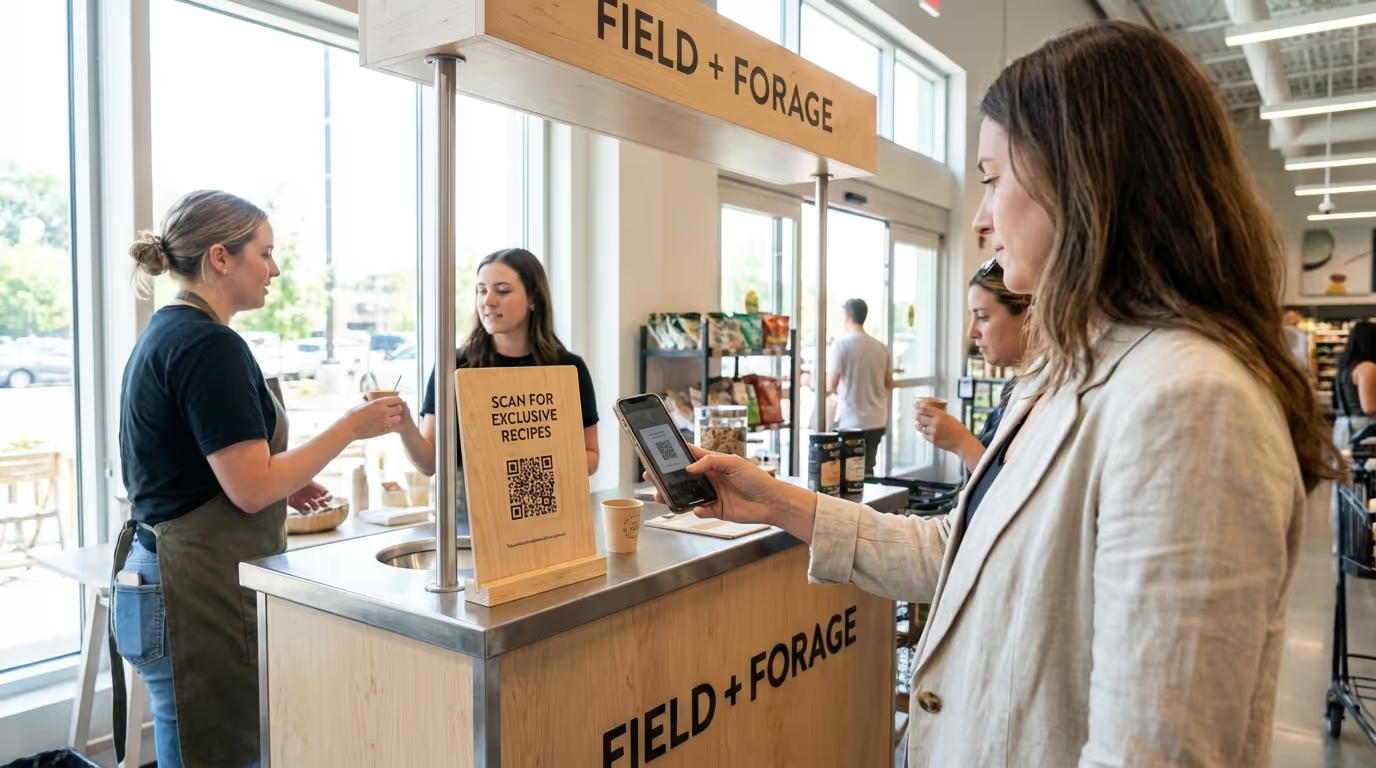
A simple example: a retail demo gives a shopper a taste. A QR code on the table sends them to a recipe page. The recipe page offers a coupon and a store locator. After checkout, they get a follow up email with another use case and a “buy again” link. The shopper feels supported, not spammed.
This is not “add tech to an event.” It is “design the whole journey so the physical moment has a next step.”
In crowded categories, shoppers can switch brands fast. Shelf presence helps, but it is not enough. A phygital approach gives you more control over the relationship.
Most strong phygital programs share three pillars. If you nail these, the tech feels natural and the results follow.
The physical experience should feel like a world, not a folding table. Digital should deepen the story, not distract from it. Think: interactive product education, guided tasting, mini challenges, or content moments people want to share.
When someone scans, taps, or texts, they should get value in seconds. No long forms. No confusing steps. A fast landing page, a clean offer, a clear next action.
Phygital works best when it is two way. Let people choose a path, vote, submit a preference, answer a quick question, or pick an offer. That gives you better data and makes the consumer feel seen.
You do not need a huge tech stack to start. These are proven building blocks that fit demos, roadshows, and events.
The best phygital programs start with the shopper journey, not the gadget list. Here is a practical planning flow you can use for retail demos, tours, and trade shows.
Do you want trial, email opt in, coupon redemption, retailer add to cart, or a meeting request? Pick one “north star” action per activation. Secondary actions are fine, but one action should win.
A scan that goes to a generic homepage is a wasted moment. Give a reward tied to the shopper’s intent. Examples:
Think mobile first. One clear headline, one short paragraph, one action button. If you need a form, keep it minimal. A long form at a demo table kills conversion.
This is where most programs fall short. They show activity, not impact. Your reporting should answer questions like:
If you want a deeper view on measurement, link your reading to your services like engagement marketing and retail demonstrations.
Phygital is not one service. It is a layer that can upgrade many types of work.
Add a scan to unlock recipes, product education, or a coupon. Use a one question survey to capture flavor preferences. Use that data to improve scripts and table flow week to week.
Roadshows have strong volume. A phygital layer helps you build repeat. Think variety pack builder content, a “save this recipe” flow, or a follow up message tied to the exact SKU sampled.
Related page: Costco roadshows.
Tours are perfect for phygital. Each stop can have its own landing page, its own offer, and its own market notes. You can also use digital to guide people to the next stop.
Related page: mobile sampling tours.
Phygital is how you get better leads, not just more badge scans. Use session based offers, role based landing pages, and a follow up that matches what they actually asked for.
Related page: trade show experiences.
Events are emotional. Phygital keeps the emotion alive after the event. Give attendees a digital souvenir, a playlist, a photo drop, or a limited offer they can redeem later.
Related pages: consumer events and brand activations.
Personalization is powerful, but trust matters more. A good rule: if you would not say it to someone’s face at the demo table, do not do it digitally.
If you want one ready to use structure for a retail demo or roadshow, this works in most CPG categories.
They are related. Omnichannel is the connected system. Phygital is how that system shows up in real experiences, where physical and digital feel like one flow.
No. Many strong programs use simple tools like QR, SMS, and a clean landing page. Start small, then scale what works.
Start with one primary action, then add supporting metrics: scans, opt ins, coupon saves, survey completion, and sales lift where you can track it.
Pick one market, one SKU set, one landing page, and one follow up message. Run it for two weekends, then refine the script, the offer, and the page.
Phygital is a design problem, a field problem, and a reporting problem, all at once. When it is planned early, it feels seamless for the shopper and simple for the team.
If you are planning demos, roadshows, or events, start with the service that fits your program, then map your phygital layer on top. You can browse all services, see examples on work, or start a conversation on request proposal.

30 Years Experiential & Retail Activation Partner for CPG & Beverage Brands | Multi-Market Demos, Roadshows & Costco/Club Programs That Actually Sell