Robbie Thain
Founder, CEO

CES 2026 runs Jan 6 to Jan 9 in Las Vegas. Here is a practical guide to booth activations that drive meetings, partnerships, and clean lead capture, not just buzz.
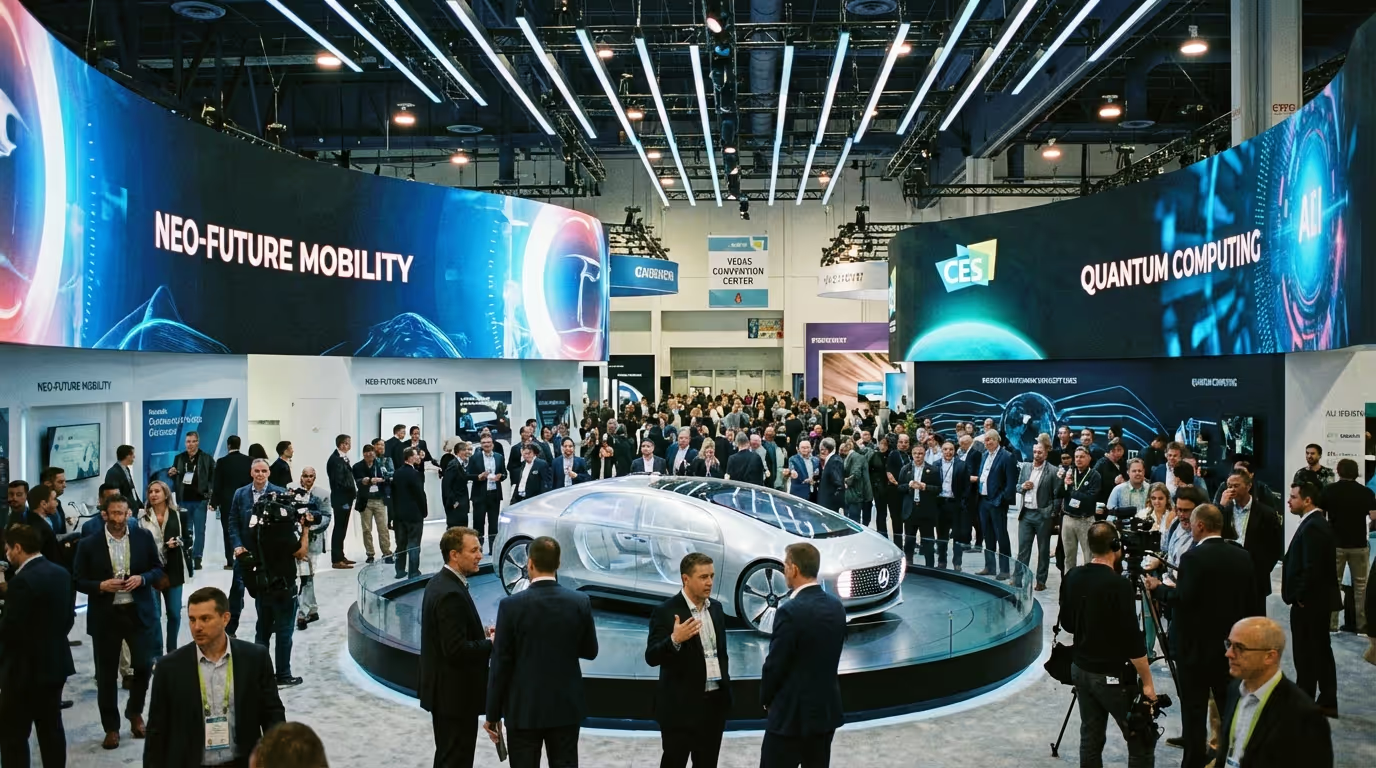
CES 2026 is a four day global consumer technology show running January 6 to January 9 in Las Vegas, and it is one of the biggest yearly moments for high tech brands to launch, meet partners, and get in front of buyers and media in the same week.
CES is not only about showing products. It is a compressed pipeline event. You can meet product leaders, retailer buyers, investors, and press within hours, not months. That makes the floor a high stakes place where your experience has to do real work.
If your activation does not help a visitor understand the value fast, or does not guide them to a clear next step, you will lose opportunities. Not because the product is weak, but because CES is loud and crowded and time is short.
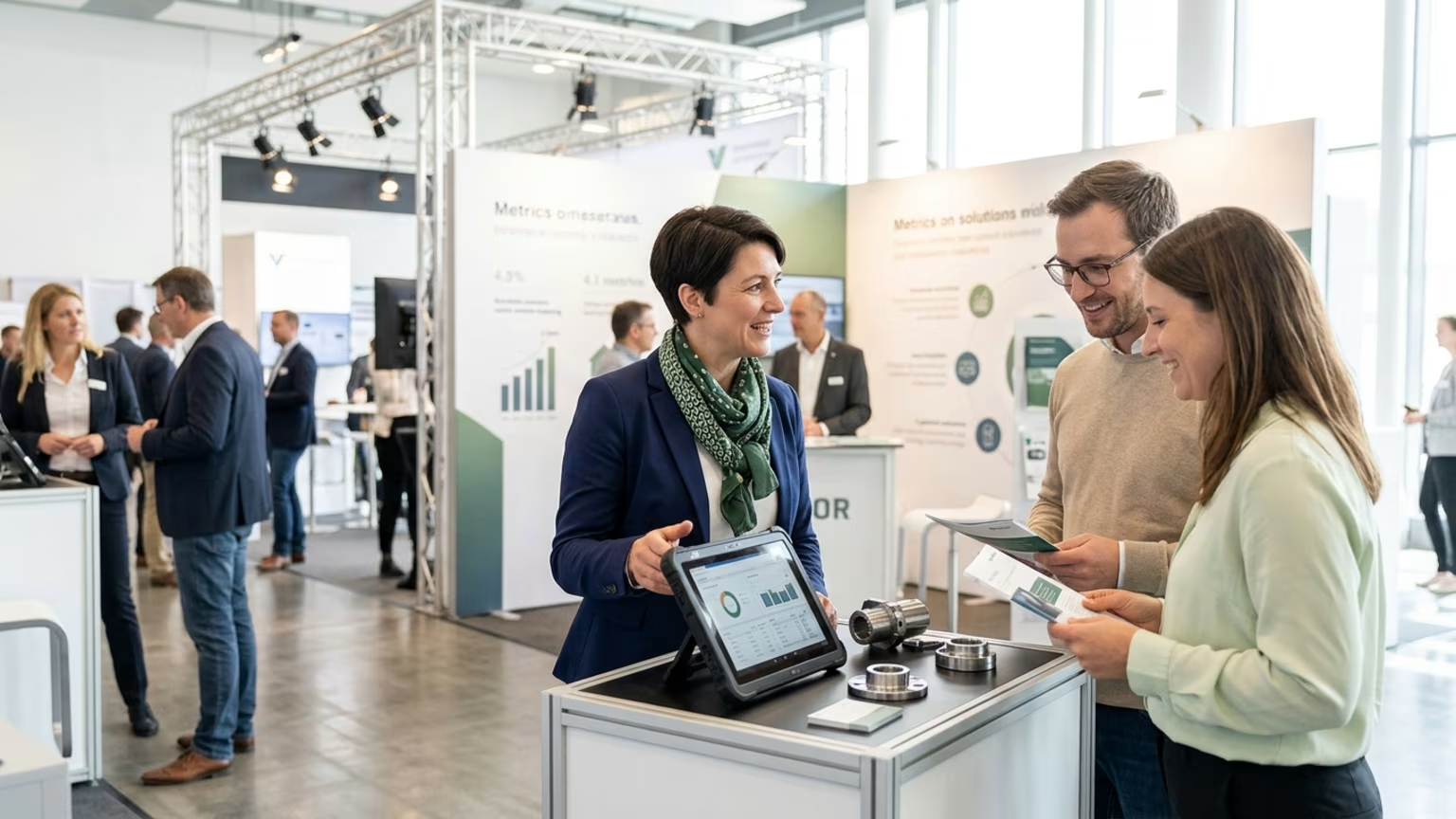
Most CES booth plans fail when they try to treat everyone the same. At CES, you usually have at least four audiences with different needs.
A good CES activation gives each group a lane, without making the space feel complicated.
CES keeps moving from gadgets to ecosystems. Your best chance to feel native in 2026 is to connect your booth story to what people came to CES to talk about.
You do not need to chase every theme. Pick one and build a booth experience that proves it.
Across categories, strong CES booths are blending spectacle with education and speed. The patterns repeat for a reason.
Think suspended vehicles, kinetic sculptures, oversized prototypes, or a dramatic light structure. The point is not decoration. It is navigation. People use landmarks to decide where to stop in a crowded hall.
This is where you explain the tech in a way that feels real. Many booths build scenario rooms or demo pods that show “a day in the life” and let visitors see the product under different conditions.
Not everyone will do a 10 minute demo. Give people a two minute win, then invite the right ones deeper. Touch stations, quick configuration tools, short challenges, or a short scan flow that unlocks something useful all work well.
CES is intense. Quiet meeting pods, lounges, or wellness style spaces are not fluff. They make it easier to have real conversations, and they signal that you are prepared for business, not only showmanship.
Photo ready moments are still powerful, but only when they fit the story. Small collectibles can help too, as long as they feel earned and tied to the experience, not random swag.
If you want one planning structure that keeps teams aligned, use this: one hook, two lanes, one follow up.
Your hook is what stops traffic. It is visual and obvious. It should communicate category and value without a long explanation.
Your follow up should not be a vague “we will email you.” It should be one clear next step. Book a meeting, request a deck, get a technical brief, or schedule a demo. The step can change by audience, but the mechanics should stay simple.
At CES, people are tired of long forms. If lead capture feels like a trap, you lose trust. A better approach is value first.
Keep the first capture short. Name, email, one qualifier question. Save the rest for a later step.
If you work in automotive or mobility, CES rewards layered storytelling built around one big visual anchor.
The point is not to show every feature. The point is to help people understand the system, then give them a clear path to the next conversation.
Many CES recaps fail because they are built like a scrapbook. Executives want a story that ties the booth to outcomes.
If you can connect booth activity to pipeline influence later, do it. If you cannot yet, at least structure the data so it can be connected later.
CES rewards teams that can deliver both experience and operations. If your booth needs staffing, visitor flow management, on site coordination, and clean daily reporting, it helps to work with a partner who builds programs that hold up under pressure.
When CES is done, the value is not only what happened on the floor. The value is the meetings, partnerships, and follow ups you earned, and the story you can prove with clean reporting.

30 Years Experiential & Retail Activation Partner for CPG & Beverage Brands | Multi-Market Demos, Roadshows & Costco/Club Programs That Actually Sell