Robbie Thain
Founder, CEO

Learn how CPG brands are upgrading field operations, tightening logistics, and linking pop-up street activations to retail sales for measurable ROI.
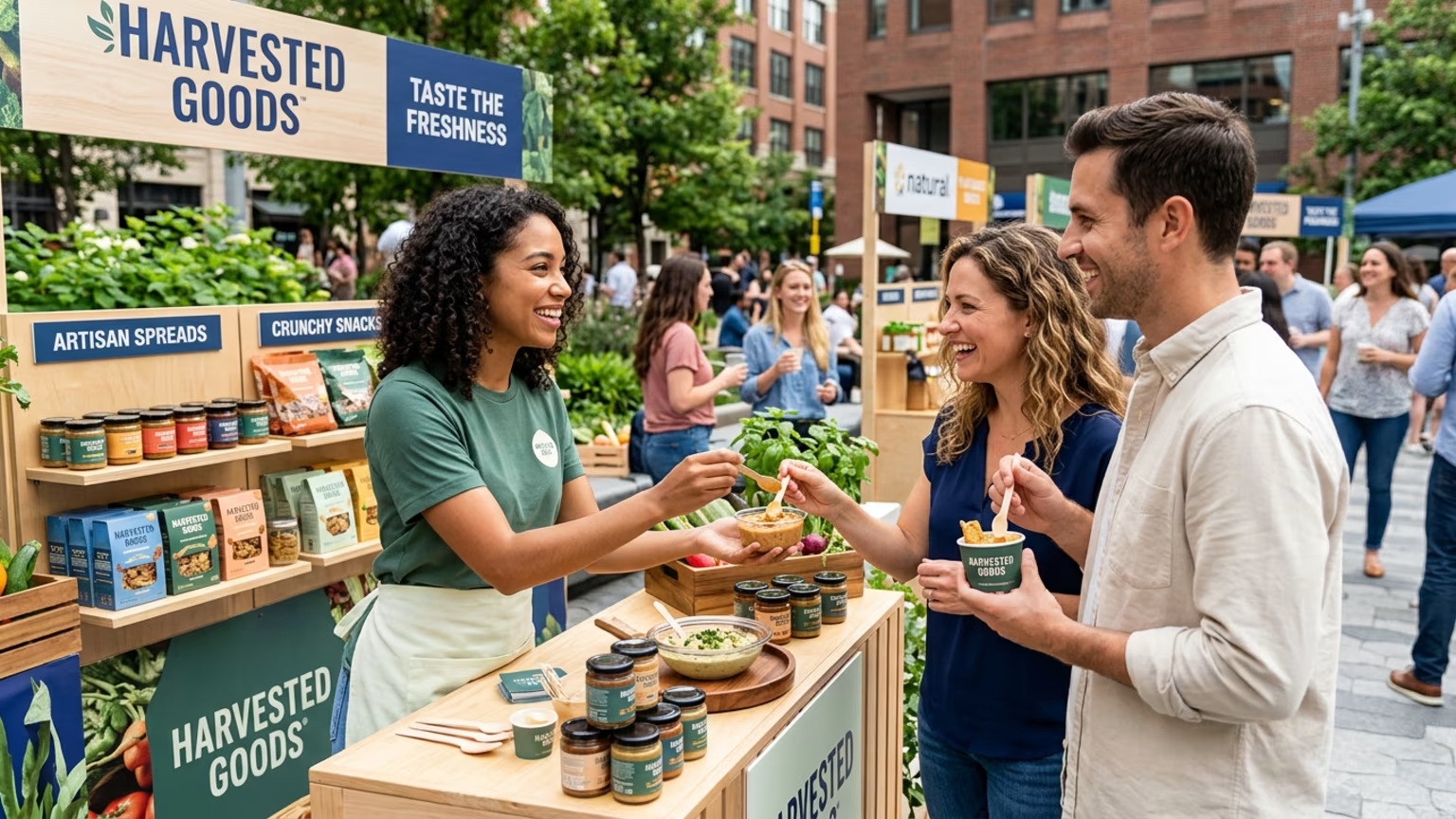
Consumers face near-unlimited choice and zero switching costs in the CPG category today. Because of this reality, retail brands are retooling their pop-up and street operations to link physical trial directly with measurable sales.
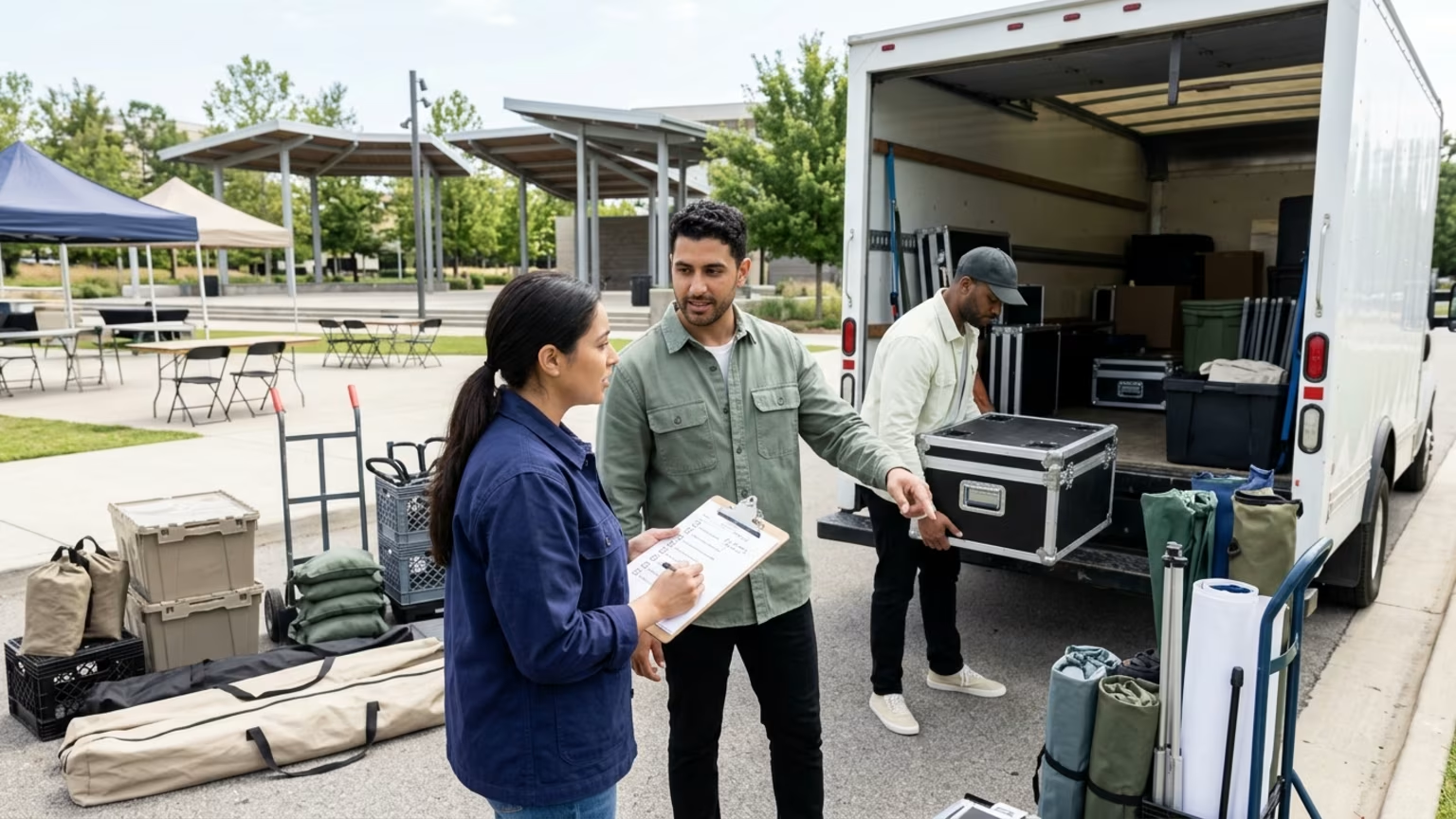
Operational failures like missing materials or locked back-room inventory can ruin the impact of sampling activations quickly. These blind spots waste prime weekend selling windows before the first sample is even poured. A field team might arrive at a pop-up site only to find their display missing entirely. This scenario happens often when companies try to expand too quickly without proper planning.
Promomash notes that more distribution does not automatically create more growth for a brand. Consumer demand is the actual driver of retail success in any market. Scaling weak fundamentals only amplifies operational and financial challenges across the board. Brands cannot rely on sheer volume to fix a broken field strategy.
Adweek reports that major retail and CPG brands are finally treating pop-ups and street activations like scalable operations. They are actively tightening crew scheduling, standardizing training, and securing local permitting processes early. This operational shift allows brands to support faster multi-city rollouts. They can hit trial and conversion targets at temporary retail sites without the usual chaos.
Brands that ignore these fundamentals often find themselves wasting their marketing budgets entirely. A bad activation does more than just fail to generate sales for the company. It can actively harm relationships with local retail partners who expected a boost in foot traffic. Retailers want to see organized campaigns that drive shoppers through their front doors.
In 2026, CPG brands increasingly favor structured experiential programs over isolated event activations. Gradient Experience lists sampling tours, in-store demos, and branded experiences as standard tools for driving trial. These tactics build brand affinity in highly competitive consumer categories. A documented strategy ensures that every physical touchpoint serves a broader business goal.
CDP.com defines CPG marketing as the activities and campaigns used to generate awareness and brand affinity. These offline tactics must complement digital media to capture consumer attention effectively. Experiential marketing provides a tactile way for buyers to test products before committing. This strategy is highly effective when paired with smart logistical planning.
Cliffedge Marketing notes that shopper marketing requires a deep understanding of shopper behavior. Brands must understand their target audience and the exact path they take to purchase. Without this understanding, field teams run activations that look busy but fail to generate revenue. A crowded booth does not always equal a successful retail event.
We have been connecting brands with people through live experiences, retail programs, and national activations since 1995. Over three decades, we have built a track record of creating meaningful brand moments across the country. Our team knows that successful activations require tight alignment with specific retailer goals. You cannot separate the field experience from the retail reality.
Moving from a single local event to a national tour requires strict discipline. Every team member must follow the same operational standards across all markets. You need a formalized playbook to manage crew scheduling and local compliance smoothly. Here is how modern brands execute these multi-city rollouts without losing control.
Experiential marketing requires concrete data to prove Return on Investment to senior stakeholders. Tastewise emphasizes that the biggest challenge in trade promotion marketing is measuring the actual results accurately. Brands need to track sales lift, retailer engagement, and customer retention during every short-term campaign. Giving away free product does not help if you cannot see the register impact.
Modern data stacks make this level of tracking highly accessible for marketers. Improvado explains that CPG analytics software is a specialized category of platforms designed for retail data. These systems are built to ingest and model retail-specific data sources accurately. They process POS feeds, syndicated market data, trade promotion systems, and distributor depletion data seamlessly.
Centralizing this information gives brands a unified view of their marketing performance. This software delivers pre-built metrics like promotional lift, share of shelf, out-of-stock rates, and trade spending ROI. Tracking these indicators prevents teams from relying on vanity metrics like foot traffic or social media tags. Hard data allows marketing directors to refine their staffing and inventory models continuously.
Marketing directors can monitor lead metrics like the number of samples distributed and immediate SMS signups. They can then cross-reference these figures with lag metrics like share of shelf and long-term customer retention. Tracking these specific indicators transforms a simple pop-up into a measurable revenue driver. Better data leads directly to more profitable field campaigns over time.
Expanding a successful regional pop-up into a multi-city tour exposes any hidden operational flaws. Every new market introduces different regulations, varying retail partner expectations, and unique shopper behaviors. Brands must adapt their local logistics while maintaining a consistent national brand message. This balancing act separates professional field teams from amateur operations.
We have learned that smart marketing leaders use targeted content and historical data to plan their next moves. Top brands rely on street level sampling and venue activations to drive measurable retail lift across key regions. They know that careful location scouting directly impacts their final conversion rates. A poorly placed booth will always struggle to generate consumer interactions.
Managing the human element is just as important as managing the product inventory. Establishing precise field staffing ratios for street activations ensures your team is never overwhelmed. Proper staffing keeps consumer conversations authentic and prevents burnout among brand ambassadors. This logistical burden is exactly why agencies build centralized permit and compliance teams to keep tours moving.
Gradient Experience notes that mobile marketing programs and cultural event integrations are highly effective. These formats allow companies to meet consumers where they already spend their free time. Integrating into an existing event removes the pressure of drawing an independent crowd. However, this approach still requires strict logistical oversight to ensure a positive brand interaction.
Returning to the reality of the modern retail shelf, consumer choice will only continue to expand. Brands that fail to tighten their operations will continue to waste prime selling windows. Those who professionalize their field marketing will turn physical interactions into a measurable sales pipeline. When you are ready to upgrade your logistics, book a strategy call with makai.

30 Years Experiential & Retail Activation Partner for CPG & Beverage Brands | Multi-Market Demos, Roadshows & Costco/Club Programs That Actually Sell