Robbie Thain
Founder, CEO

Learn how precision field execution and synchronized logistics turn in-store retail demos into measurable sales pipelines that win over major retail buyers.
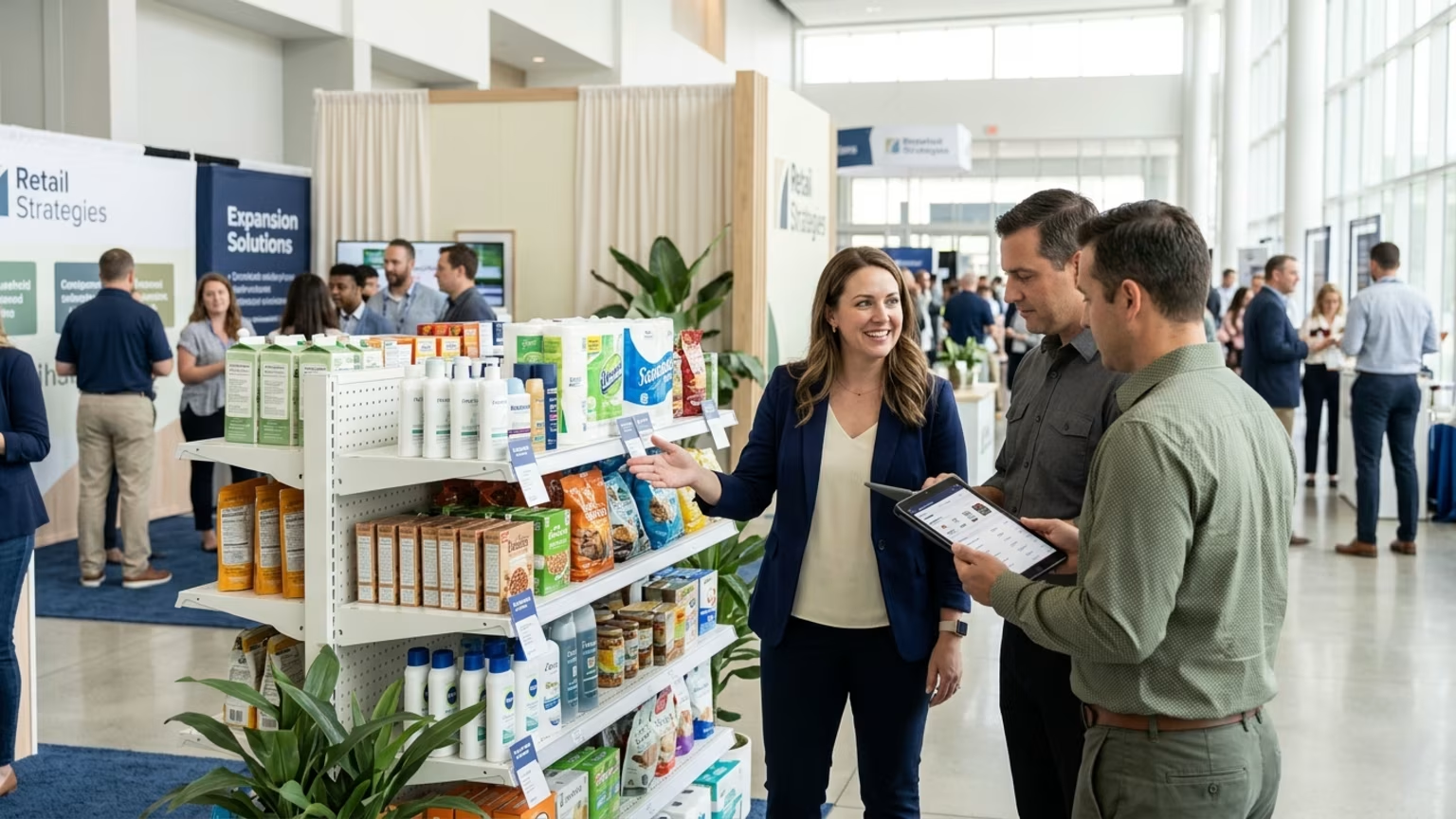
A field rep stands near an exit lane with a plastic tray of product. Shoppers grab a bite without breaking their stride toward the parking lot. The marketing manager later receives a report showing hundreds of distributed units but absolutely zero retail sell-through.
Here are the four harsh truths of scaling into major retail floors.
Securing an end-cap at a major retailer is only the beginning of the battle. The real work happens long before any brand ambassador steps onto the floor. Brands must execute unglamorous preparation work to ensure the campaign actually functions. This includes securing the right permits, setting up customer routing, and staging vehicles properly.
Inventory alignment is often the most critical hurdle during this phase. Field marketing teams must coordinate with supply chain managers well in advance. If a demo generates massive demand but the shelves are empty, the entire investment is wasted. We handle every step of activation execution with precision and purpose, from initial concept through final logistics.
Route planning for mobile units and demo materials dictates the efficiency of the entire campaign. Field managers must calculate travel times, unloading restrictions, and specific dock hours. A late arrival at a major big-box retailer often results in a canceled demo shift entirely. Proper scheduling ensures the team is ready to sell the moment the store opens.
Staffing also requires operator-grade discipline and rigorous training. A brand ambassador must know how to navigate the specific compliance rules of each retail environment. We build detailed pre-brief documents that cover everything from loading dock protocols to waste disposal. Every logistical variable is mapped out beforehand to prevent on-site chaos.
Pre-brief documents must also outline specific talking points based on local demographics. A demo team in a suburban market might emphasize family portion sizes. The same brand in an urban location might highlight convenience and speed. Providing exact scripts and answers to common objections keeps the team confident and engaged.
Technology must be tested and integrated into the workflow long before the event begins. Relying on paper clipboards for lead capture is a guaranteed way to lose valuable consumer data. Digital routing tools must be configured to sync instantly with a central reporting system. Brands that follow a strict retail demo and event checklist avoid these common operational pitfalls.
Executing a successful product demo requires specific tactical steps to control the environment.
These operational steps transform a basic sampling table into a highly effective conversion engine. Shoppers need a reason to stop and engage meaningfully with the product. A carefully engineered floor layout dictates how consumers flow through the space. Our comprehensive approach ensures that each program is designed to spark curiosity, drive action, and leave a lasting impression on consumers.
Brands must dictate the terms of the interaction from the very first second. The layout of the demo station should visually guide the shopper toward the product packaging first. We advise teams to stack retail boxes prominently to trigger brand recognition immediately. The physical sample should act as the closing argument for the sale.
We train field teams to act as sales consultants rather than just sample servers. The goal is to educate the consumer on product benefits while physically handing them the item. This method builds trust and directly influences their immediate purchasing decision. When executed correctly, the physical setup does half of the heavy lifting.
A disciplined approach also prevents staff burnout during high-volume retail shifts. Clear instructions reduce decision fatigue and keep ambassadors focused on their primary objectives. Repetition of these core steps ensures consistency across multiple store locations and regions. This consistency allows regional managers to trust the execution without micromanaging the floor.
Many brands struggle because they underestimate the complexity of live crowd flow. Amateurs frequently set up their stations near exit lanes to catch people leaving. Shoppers in these zones are already focused on their cars and will rarely turn back to buy. This misstep artificially inflates sample distribution numbers while utterly destroying actual conversion rates.
Another common failure point is losing leads through outdated tracking methods. Relying on manual headcounts or paper forms creates massive gaps in post-event reporting. When field teams lack digital tools, critical consumer feedback gets lost in the shuffle. A failure to capture data properly makes it impossible to prove retail demo ROI to leadership.
Poor inventory synchronization frequently ruins perfectly good marketing campaigns. Brands often launch aggressive field promotions without confirming sufficient stock levels with the retailer. When an inspired shopper walks to the aisle and finds an empty shelf, the brand loses the sale. The retailer also loses confidence in the brand's ability to manage its supply chain.
Inexperienced teams often fail to handle the hit-and-run crowd effectively. The free-lunch crowd represents a massive drain on promotional budgets. These individuals actively hunt for free items without any intention of purchasing the full-priced product. Without a strategy to slow down foot traffic, ambassadors become overwhelmed by people grabbing free food.
Amateurs try to serve everyone as quickly as possible to keep the line moving. Professionals use friction intentionally to filter out these non-buyers and focus on genuine prospects. Failing to conduct a proper post-event analysis is another massive mistake. Catching a logistical error early prevents the same mistake from happening across multiple store locations.
When brands apply operator-grade discipline to their field marketing, the financial outcomes are undeniable. The combination of strategic placement and trained staff creates a powerful purchasing incentive. Consumers respond highly to physical product interactions when guided by a knowledgeable ambassador. The data clearly supports the value of doing this right.
According to industry analysis reported by Supermarket News, successful in-store demos generate massive immediate returns. These focused events can drive one-day sales lifts ranging from 50% to as high as 500% for featured items. The 50% to 500% sales lift is not an accident. It requires perfect alignment between the field staff and the store management team.
When the end-cap is fully stocked, the visual impact amplifies the ambassador's sales pitch. This level of velocity proves that physical activations move volume when correctly executed. The conversion metrics for engaged shoppers are equally impressive. A study by the Point of Purchase Advertising International found that 60% of shoppers who trial a product during a demo end up making a purchase.
This statistic highlights the incredible power of placing a product directly into a consumer's hands. It bridges the gap between passive brand awareness and active retail acquisition. The overall impact on shopping behavior is highly measurable. Industry data consistently shows a two- to three-times higher conversion rate for shoppers who engage with a product sample.
Retailers pay close attention to these conversion metrics when deciding on long-term partnerships. A buyer at a major big-box chain looks for brands that can activate their own customer base. Proving that your field team can drive a 60% purchase rate makes your brand indispensable. By investing in precision execution, brands can secure their dream retailer placements and justify further expansion.
The next critical phase for any brand is proving these results to retail buyers. Stop relying on vague foot traffic estimates, and begin integrating direct Point of Sale data with your specific demo hours. Match these figures against control stores to isolate the true impact of your field team. Retailers will expand your footprint when you provide unquestionable evidence of volume movement.

30 Years Experiential & Retail Activation Partner for CPG & Beverage Brands | Multi-Market Demos, Roadshows & Costco/Club Programs That Actually Sell