Robbie Thain
Founder, CEO

Learn why emerging CPG brands prioritize retail execution, continuous measurement, and operational discipline over vanity metrics to secure retailer placement.

Retail demo programs get judged on cups poured instead of incremental pipeline. That mismatch is exactly why your expensive interactive booth is bleeding you dry. Brands pour millions into digital impressions while ignoring the physical shelf. The reality is that digital buzz means nothing if your product is out of stock.
Retail wins require disciplined execution and persistent in-store activity. Marketing leaders often obsess over packaging and influencer campaigns. They treat the actual retail store as an afterthought. Empty shelves kill brands faster than bad creative.
One founder's publicly shared story recently detailed a two-year push to secure placement in a dream retailer. That timeline reveals a hard truth for operators. Breaking through requires intense physical persistence. A strong physical presence proves your commitment to the market.
Industry benchmarks for CPG trade spend typically fall in the ten to twenty percent of revenue range. A trade spend resource from MorningAI notes that many companies invest up to twenty percent specifically on promotional activity. Trade spend typically covers tactics like price reductions and circulars. It also funds end-caps, slotting, co-op ads, and in-store sampling.
Merchandising and distributor incentives round out the list of common expenses. Marketing executives authorize massive budgets for these promotions. Yet they often get zero qualified pipeline in return. This failure happens in the gap between the headquarters plan and the actual retail aisle.
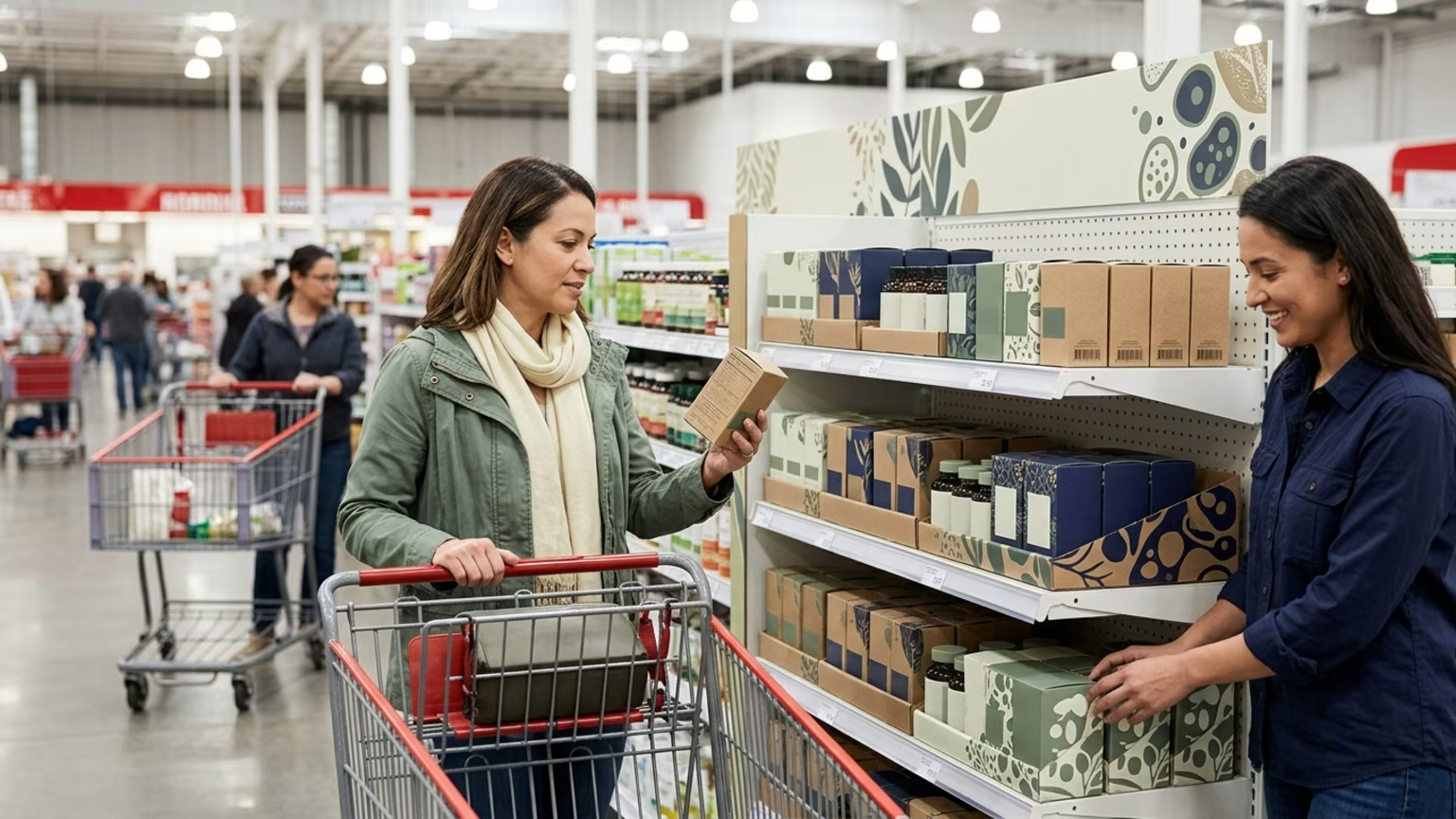
Retail execution is the work of making a brand's retail plans real inside each store. A plain-English guide from HAP Marketing notes this means getting the right products on the shelf in the right spots. It also requires pricing and displays built exactly as planned. Without this operational discipline, your activation is just a beautiful dumpster fire.
You spend six figures but leave the retailer completely unimpressed. Leaders often suffer from severe anxiety over these wasted budgets. They see field teams running scattered programs with weak reporting. Events look busy but produce fog instead of hard evidence.
The mainstream approach relies on vanity metrics rather than real conversion. This creates a disconnect that harms valuable retail partnerships. A retail metrics guide from SimplyDepo argues that critical KPIs are those field teams can directly influence. These include on-shelf availability, planogram compliance, promotion execution, and route coverage.
Brands must pair these leading metrics with sell-through, GMROI, and inventory turnover. Tracking total sales alone obscures the actual root of retail failure. The field team must take absolute ownership of the physical store environment. You must enforce strict standards across every retail location.
We approach retail execution with a specific worldview. Warm human authenticity must be paired with brutal operational discipline. This combination drives better product trials and solidifies retail partnerships. It turns fleeting consumer interactions into qualified leads.
Makai builds campaigns that demand strict accountability on the floor. A consumer intelligence playbook from Resonate recommends mapping purchase drivers by segment. Brands should tailor creative messaging to those specific motivations. They also suggest using basket analysis to identify which shopper segments drive the highest transaction value.
This data helps demonstrate where your category sits within that spend pattern. You can then use retailer shopper profiles to quantify white space and support shelf expansion pitches. Data tells the story but people sell the product. You have to translate those shopper profiles into real conversations.
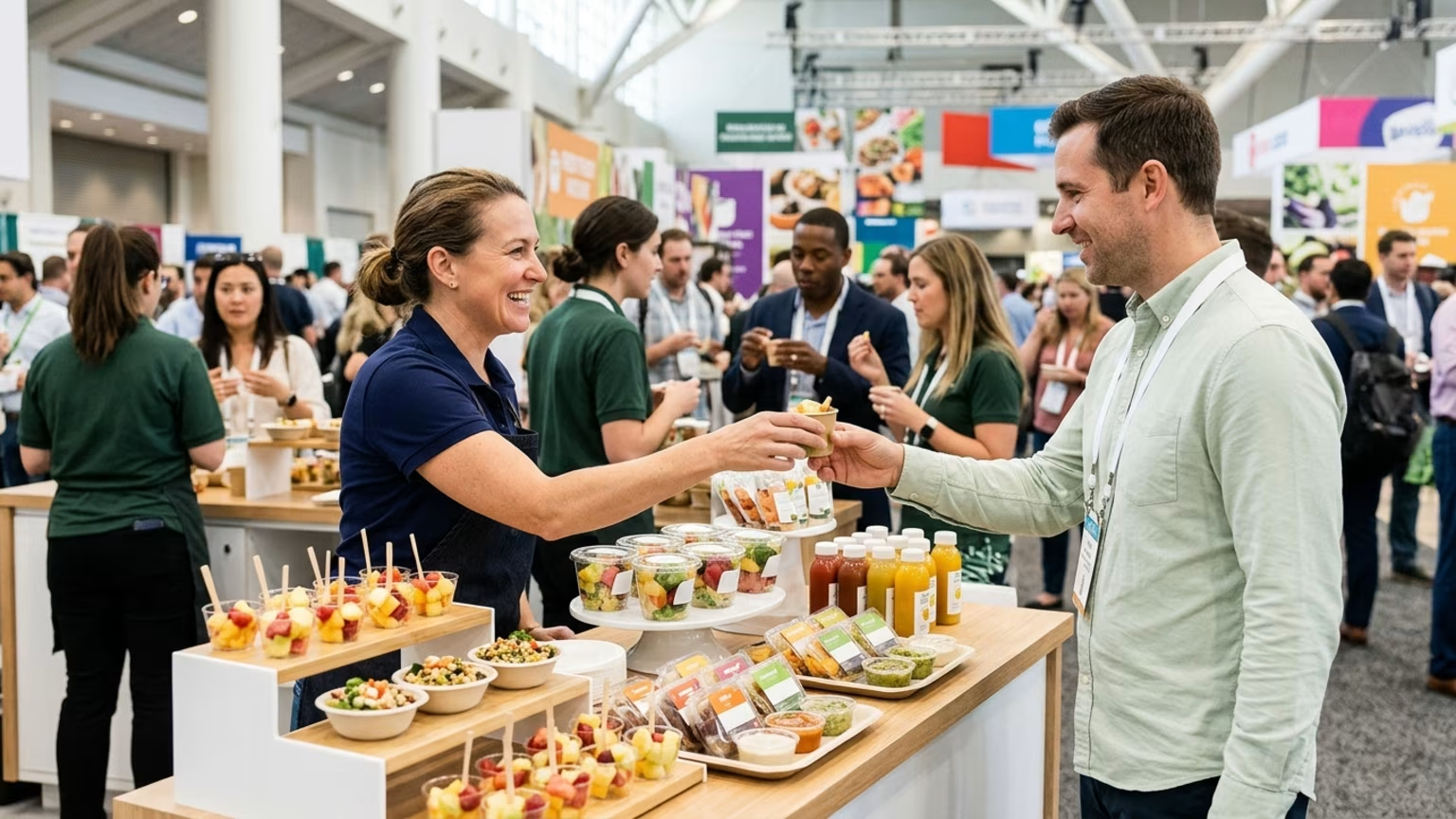
Field ambassadors must understand the buyer's motivations perfectly. They use this knowledge to drive physical product sampling. This bridges the gap between cold data and warm human connection. Friendly persistence always wins the long game.
A Director of Brand Strategy in the CPG snack division shared: "The Makai team turned our product launch into a sensory event that shoppers still talk about. From creative storytelling to flawless in-store execution, they made snack time unforgettable. We couldn't have asked for a stronger partner." Our team created an in-store experience that left a lasting impression on consumers and became a memorable brand moment.
We believe in improving in-store execution through continuous training. The field team operates as an extension of your own sales force. A market entry guide from MediaJel highlights the importance of equipping reps with strong sales materials. Pricing structures must also simplify the retail buyer's decision.
This preparation ensures that field activities directly support your regional sell-in efforts. Every representative must speak the language of the retail buyer. Retail partners respect brands that show up prepared and organized. Professionalism on the floor always translates into stronger orders.
You must shift your focus from tracking impressions to tracking tangible outcomes. Stop counting social media likes. Start counting the specific samples distributed to target buyers and retail meetings booked. Store-level measurement provides the only true picture of your campaign's health.
National sales data often hides severe localized execution problems. HAP Marketing recommends measuring performance store by store. They suggest using compliance, photo verification, and sell-through metrics. You should review speed metrics weekly rather than quarterly.
Measuring multi-stop brand roadshows this way guarantees tight control over your investments. It proves to retailers that you can deliver on your promises. Precision measurement protects your profit margins and Return on Investment. A retail execution firm called Fieldpie reports that brands achieving perfect store execution have seen up to twenty percent higher sales lift than competitors with poor shelf compliance.
In perfect store frameworks, every commercial standard is met at the point of purchase. Assortment, shelf position, pricing, and promotional compliance must be flawless. This standard leaves no room for sloppy execution. Retailers reward brands that execute without making excuses.
A merchandising best-practices guide from Botree recommends defining an ideal outlet format. Brands should run regular audits and prioritize high-value stores. Tracking share of shelf and product availability is non-negotiable. They also advise using mobile and image-recognition tools to support field execution.
One AI retail execution provider named LTM describes perfect store strategies as data-driven systems. These systems integrate point of sale and inventory data. They use predictive analytics to refine assortment, pricing, and promotions as conditions change. This agility prevents out-of-stock situations and keeps the retail buyer happy.
The line between digital advertising and physical execution is completely gone. A Walmart Connect playbook for emerging CPG brands from NineAM states that campaign success depends heavily on retail readiness. Quality listings, pricing, inventory, and reviews dictate outcomes. They recommend coordinating digital campaigns with in-store promotions when products are on shelves.
If your digital campaign drives a shopper to an empty shelf, you lose the customer. The marketing spend goes straight to waste. Physical retail readiness is a strict prerequisite for any media push. You have to secure the inventory before you fund the ads.
Refining in-store demo programs ensures that shoppers find the product exactly when they want it. Integrated planning separates amateur brands from true category leaders. This cross-channel coordination forces marketing and sales teams to work closely. The field marketer becomes a primary player in the media strategy.
Your sampling events must focus on driving immediate retail action. Aesthetics do not secure dream retailer placements. Actionable data and persistent execution win the shelf space. Field teams must operate with clear directives and strict reporting standards.
The operator mentality requires you to inspect what you expect from every single activation. Every dollar spent in the field must show a clear path to revenue. You should track the days from authorization to actual shelf placement. Monitor how many retail buyers accept a meeting after a local event.
These physical milestones outrank any digital engagement metric. They represent the actual progress of your business. Brands that demand operational excellence will always beat brands that prioritize flash. Retailers respect consistency and measurable consumer demand.
When you show up reliably, you earn their trust. This trust translates into better placements and long-term growth. True marketing leadership means owning the final mile of the consumer purchase. Core takeaway: Demand execution over aesthetics.
A beautiful brand means nothing if it fails at the point of purchase. Operator-grade discipline turns fleeting consumer interactions into concrete retail pipeline. You must treat the retail floor with the same rigor you apply to your balance sheet. The best product in the world requires an operator who knows how to put it in the buyer's hands.

30 Years Experiential & Retail Activation Partner for CPG & Beverage Brands | Multi-Market Demos, Roadshows & Costco/Club Programs That Actually Sell