Robbie Thain
Founder, CEO

Turn roadshow data into actionable insights. Learn the post-event analytics frameworks that prove ROI and secure retail expansion for CPG brands.
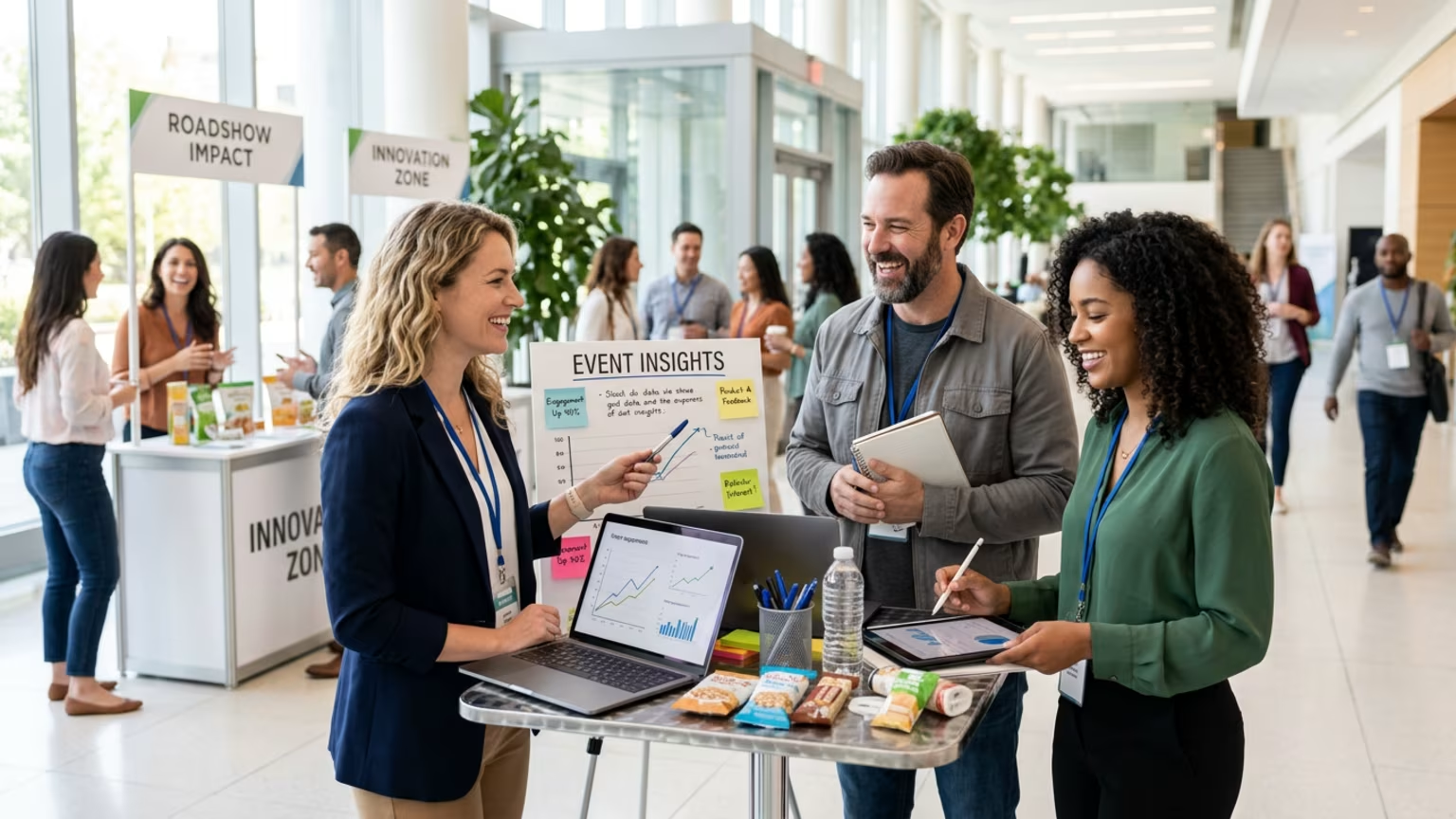
Field marketing programs must push past vanity metrics to deliver hard data that secures shelf space. By connecting roadshow interactions to retail sell-through rates, consumer packaged goods brands can turn live events into measurable growth engines.
The trade show booth is packed with eager attendees clamoring for product samples. Field staff are rushing to keep up with the steady flow of foot traffic. Pallets of inventory are emptying faster than expected. Everyone is smiling, high-fiving, and taking photos of the massive crowd.
By Tuesday morning, the field marketing director faces the executive team. They have nothing to share but a basic spreadsheet of sample counts. The Chief Financial Officer asks how those free bites translate into actual retail velocity. The room goes completely quiet. A photo of a long line will not win additional facings at major grocers.
Brands frequently rely on fuzzy data to measure success. They fail to track the exact correlation between event interactions and long term retail performance. The gap between a visually appealing event and documented business value creates deep anxiety. Retail buyers want concrete proof that an in-store program will move cases.
The disconnect between field enthusiasm and board room expectations is a common trap. Experiential marketing campaigns frequently report an average Return on Investment between three to one and five to one. The problem is that most brand managers cannot prove those numbers with their own data. They lack the localized tracking needed to show a direct sales lift.
Every field activation needs a clear connection between the live moment and the cash register. We design mobile activations and roadshows that accelerate consumer trial, build trust, and boost retail velocity during 90-day product launch windows. Our structured approach transforms initial product trial into sustained consumer confidence and retail performance.
You must cross two distinct bridges to achieve analytics mastery. The first bridge connects the live event directly to immediate shopper behavior. You need to track exactly what people do in the weeks following the activation. Do they use a digital coupon, look up a store location, or share a referral link?
The second bridge connects that post-event shopper behavior to internal retail decisions. This exact data justifies budget requests, supports pricing strategies, and drives retail expansion. If you fail to map these bridges beforehand, your reporting will default to meaningless vanity numbers.
The industry research shows that connecting these elements is highly profitable. According to EventTrack research, eighty five percent of consumers are more likely to purchase after participating in live experiences. They report more positive feelings about the brands afterward. Brands that integrate this event data with point of sale tracking are far more likely to report superior marketing effectiveness.
Retailers today want more than pretty concepts and branded tents. They expect hard proof that your program will increase basket size and bring incremental traffic to their stores. If you cannot provide that evidence, you will lose shelf space to competitors who can. Integrating field data with scanner data makes your brand highly attractive to category managers.
You need a systematic way to turn fleeting interactions into documented insights. A defined process helps your team capture the right numbers without slowing down operations. Your field staff frequently hate complex data entry. You must make the reporting process completely painless to get accurate results.
If you want to build this infrastructure for your next product launch, book a strategy call with our team. We know how to map maximizing post-trade show ROI directly to measurable commercial outcomes.
Brands need a four-level hierarchy to measure true Return on Investment. This layered approach proves tangible value at every stage of the sales funnel. It moves the conversation away from basic crowd size to actual pipeline creation.
Start with the raw physical output of your team. Track the number of active hours, kit compliance, and samples distributed per staff member. These leading indicators prove your team executed the logistical plan properly. A high sample count means nothing if your team arrived late or ran out of stock.
Measure the exact quality of the interaction itself. Track unique engagements, product trial rates, and simple intent to purchase scores. Staff to consumer ratios and dwell time are highly predictive of downstream sales. According to industry meta-analysis, fifty eight percent of shoppers who try a sample say they will definitely buy the product.
Look for immediate actions taken by the consumer right after the event. Track store-specific quick response code scans, email opt-ins, and retailer locator clicks. Monitor how many consumers join your loyalty program after a live interaction. You can then measure five metrics to prove mobile roadshows drive sales lift by tracking digital coupon redemptions.
This is the ultimate lagging indicator for any field marketing campaign. Track incremental units per store per week and the total dollar sales lift. Measure the percentage of repeat purchasers if you have access to retailer loyalty data. Research shows that sampled products can see a four hundred seventy five percent sales lift on demo day. The momentum often continues with a fifty eight percent lift over the following four weeks.
Different types of activations require slightly different analytical approaches. A national rebrand launch has different goals than a localized retail push. Your measurement strategy must reflect the exact commercial purpose of the event.
For product rebrands, you must track same-store velocities before and after the activation. You need to prove that the new packaging maintains or improves current sell-through rates. Track shopper perception metrics to confirm the new value proposition resonates clearly. The data must show that the rebrand expanded your pricing power without relying on continuous discounts.
Trade shows demand a ruthless focus on pipeline creation rather than pure volume. Track the exact number of qualified contacts and scheduled follow-up meetings. Tag every lead by their exact retail category and region for easier routing. Monitor the conversion rate of those conversations into actual category reviews over the next six months.
Look at the aggressive retail expansion planned by GEN Korean BBQ. The company recently shared their strategy to reach two thousand supermarket locations by the end of 2026. They are using brand experiences to support this massive shift from restaurant tables to retail shelves. Their success depends on proving to buyers that their brand can move units.
Converting restaurant fans into loyal grocery buyers requires rigorous, trackable field marketing. They must run localized, data-driven programs to convince category managers that their products deserve premium shelf space. Every single sample must be tracked to justify the ongoing investment in their new packaged goods division. Anecdotes about happy customers will not secure national distribution.
We see a similar analytical discipline in global industrial companies like Daicel. Their sales strategies rely heavily on measurable performance across regional markets rather than basic brand reach. Consumer brands are now adopting this exact corporate mindset to optimize their own field activations. Strategy is shaped by clear performance data rather than top of funnel estimations.
The smartest marketing operators know that Costco roadshows that turn sampling into sales require intense operational discipline. Do not let your next activation become a beautiful blur of unmeasured activity. Take full control of your post-event data to prove your true commercial impact. You can turn live consumer moments into a permanent, highly profitable retail advantage.

30 Years Experiential & Retail Activation Partner for CPG & Beverage Brands | Multi-Market Demos, Roadshows & Costco/Club Programs That Actually Sell