Robbie Thain
Founder, CEO

See how Hoka's NYC Marathon run-up campaign links digital runner data to physical activations, and why synchronized field marketing operations matter.
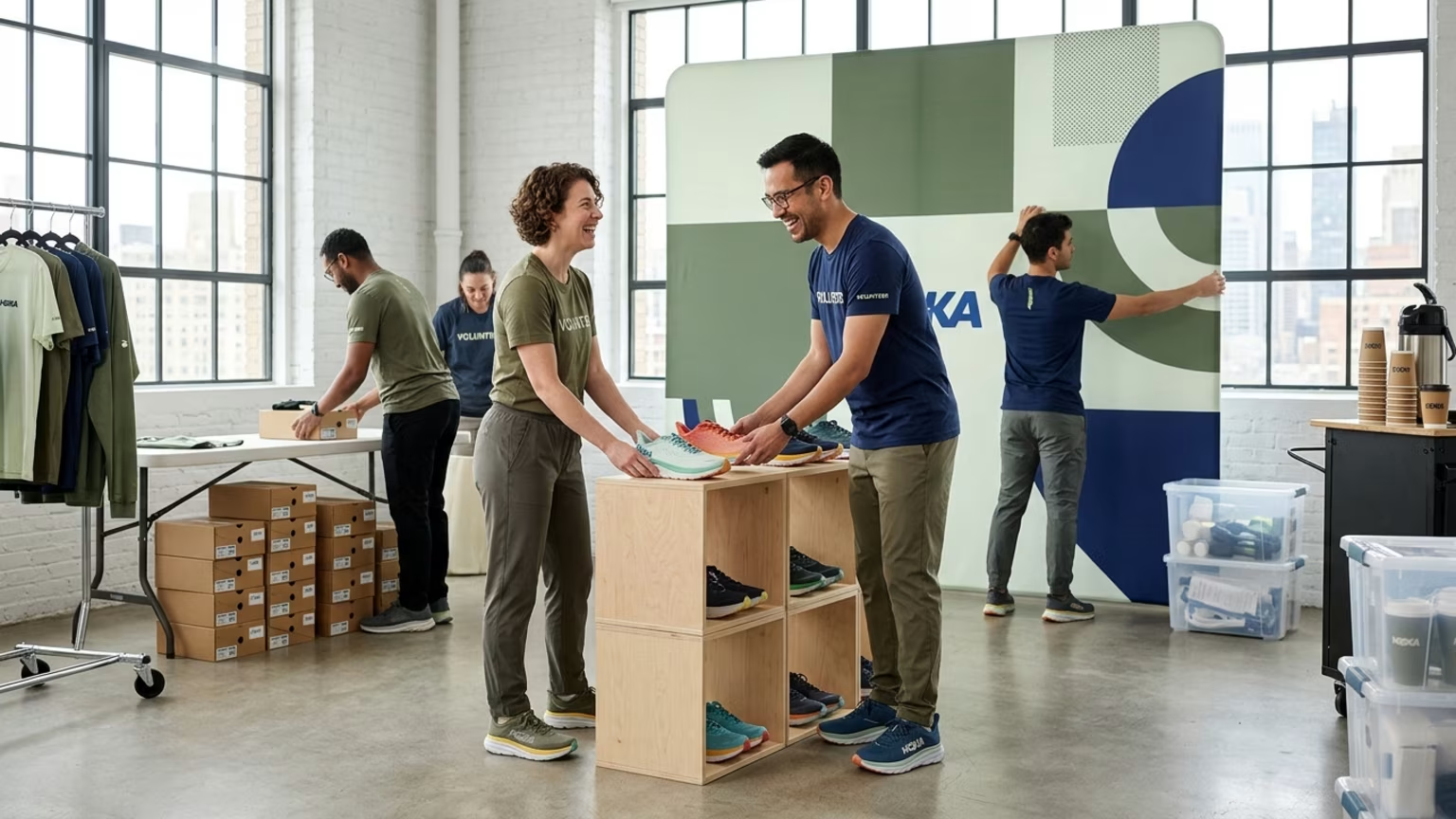
On September 29, 2026, news surfaced regarding how Hoka (a brand of Deckers Outdoor Group) is managing its activation period ahead of the November 2, 2026, New York City Marathon. Rather than focusing entirely on race day, Hoka is executing a multi-touch campaign designed to engage runners during their training months. According to Modern Retail, the campaign connects digital running data with public physical displays. This sequence builds toward a Hoka-hosted New York City block party scheduled for October 3, 2026.
The logistical core of this strategy revolves around a synchronized sequence. Modern Retail reports that Hoka is using a "triangular media mix" to reach consumers. This approach combines paid social placements across Meta and TikTok with six distinct creator partnerships. To ground the campaign in the physical world, the brand secured digital out-of-home (DOOH) placements throughout New York City. The sequence connects digital actions with real-world visibility.
Managing three distinct channels simultaneously requires strict timeline adherence. Field marketing directors know that disjointed timing ruins campaign impact. If the social media ads launch before the physical billboards go live, the consumer journey breaks. Operators must lock their media flights and physical installations to the exact same calendar.
The operational hook relies on active consumer participation. Hoka sponsored a Strava challenge to track the training progress of local runners. The resulting data feeds directly into the physical DOOH network to create visible borough scorecards. Linking private mobile activity to massive public displays requires seamless data integration.
The physical displays are not static background imagery. By linking real-time runner data to specific neighborhoods, the campaign creates localized engagement. This hyper-local approach demands technical reliability across the entire DOOH network. If the digital pipelines fail, the physical scoreboards lose their relevance immediately. Keeping these systems aligned requires active monitoring from field marketing teams and digital coordinators alike.
Financial data adds context to this expansive field strategy. Digiday reports that Hoka posted a first-quarter global revenue of $704 million, an 8% increase. Concurrently, Deckers Outdoor Group saw its sales and administrative expenses rise 13% year over year to reach $420 million. CFO Steven J. Fasching primarily attributed this spending increase to higher marketing expenses.
The previous year's New York City Marathon saw more than 59,000 finishers cross the line. Reaching an audience of that size clearly demands significant capital and logistical coordination. Premium consumer packaged goods and beverage brands face similar financial decisions when entering new retail markets. Launching a complex activation requires upfront investment in both digital infrastructure and street-level staffing.
For consumer packaged goods and apparel operators, this shift is critical. Treating a massive cultural moment as a single day of field marketing often leaves money on the table. Hoka marketing leader Allie Tsavdarides noted that while the big day is exciting, a massive amount of work goes into the training period. She stated that the campaign intends to celebrate the running community and their progress.
The objective is to prioritize community connection rather than broadcast a conventional Hoka advertisement. We view this connected approach as a necessary operational standard for modern experiential marketing. We blend physical and digital experiences by integrating QR codes, mobile technology, and real-world activations into a cohesive layer across retail, event, and tour experiences. This capability is an upgrade we apply to many types of experiential work to drive better results.
Connecting a digital Strava challenge to physical borough scoreboards proves the value of layered consumer interactions. When brands rely on isolated trade show booths or single-day tents, they generate disjointed metrics. A coordinated run-up sequence builds a measurable pipeline over several weeks. It requires meticulous alignment between the people buying the digital ads and the teams building the physical spaces.
A Brand Manager in the CPG space shared: "Makai transformed our test-drive activation into an emotional brand journey. They connected technology, lifestyle, and experience seamlessly, and turned casual visitors into loyal fans." We successfully integrated multiple experience layers to convert casual participants into committed brand advocates. Connecting digital momentum with physical reality generates actual Return on Investment.
Executing a citywide narrative creates intense pressure on field teams. Connecting a mobile app to public billboards requires robust data infrastructure. Furthermore, driving traffic from TikTok toward an October 3 block party mandates rigorous physical preparation. The field staff must understand the digital messaging completely and prepare for unpredictable crowd flows.
The planned October 3 block party serves as the physical anchor for this digital activity. Hosting a public gathering in a high-traffic metropolitan area requires months of logistical planning. Field teams must secure municipal permits, coordinate safety protocols, and manage physical product sampling. They must also brief brand ambassadors on how to guide conversations toward the broader marathon narrative.
Permitting and regional compliance become significant hurdles for this type of sequence. Securing public space for a block party in New York City involves strict municipal oversight. If the digital media flight performs better than expected, the physical footprint must adapt instantly. We run experiential and engagement programs coast to coast with local crews, smart logistics, and permit expertise that let us launch fast and maintain quality consistency in every region, from major metros to smaller markets.
Our nationwide infrastructure allows us to activate brands wherever their audiences are located. This consistency separates successful multi-touch campaigns from logistical failures. If a consumer engages with a brand's paid social content, their subsequent physical interaction must match that quality. The digital out-of-home placements build awareness while local crews deliver the actual brand experience.
A breakdown in staffing or asset delivery severs that carefully constructed consumer journey. Before committing to a citywide footprint, operators must evaluate current field execution costs to ensure the media mix aligns with reality. Managing sudden shifts in crowd size often requires a strong framework for post-event operational debriefs. Furthermore, the campaign does not end when the block party concludes.
The reporting notes that the event will become part of the brand's messaging in the following weeks. This post-event extension requires immediate content capture and fast asset routing. The field team must document the real-world interactions efficiently so the digital team can deploy them. Inefficient post-event follow-up destroys the value of a live activation.
The industry professionals building this sequence prioritize visible feedback loops. Michael Walsh Kirwan, vice president and creative director at Jellyfish, discussed the citywide activation. He stated that participants would see "literal change reflected back to them." This reflection is a core operational goal for linking digital apps to physical environments.
Small World co-founder Dan Salkey also broke down the channel logic. Salkey characterized the strategy as building trust and social proof through creators. This trust is amplified by paid media while DOOH placements add a broader brand effect. Furthermore, eMarketer analyst Sky Canaves noted that running is experiencing a "huge boom" recently.
She added that socially oriented, open-to-all run clubs have grown in prominence. Capturing the attention of these run clubs requires authentic physical touchpoints. Brands must treat live environments as high-stakes conversion zones, much like how top performers structure their trade show spaces that convert visitors.
Brands can no longer afford a disconnect between their media buys and their field execution. When paid social campaigns drive audiences to real-world locations, the physical operation must be flawless. From securing the right permits to deploying trained brand ambassadors, every logistical detail dictates the campaign's success. Mismatched timelines between the digital flight and the street team will fracture the consumer experience.
Are your upcoming field marketing operations tightly synchronized with your digital media schedule?
Operational precision turns fleeting street-level attention into measurable business outcomes.
After marketing teams coordinate creator partnerships and paid media with an upcoming citywide event, executing the physical touchpoints reliably becomes the immediate operational focus. When marketing leaders struggle with navigating complex event logistics, permits, and staffing, Makai designs environments that capture documented shopper data. Through our Promotional Campaigns capability, our campaigns connect digital and real world touchpoints to boost visibility and spark brand conversations.

30 Years Experiential & Retail Activation Partner for CPG & Beverage Brands | Multi-Market Demos, Roadshows & Costco/Club Programs That Actually Sell