Robbie Thain
Founder, CEO

Learn how to turn trade show booths into high-conversion physical spaces using the structural design secrets of the ATD 2026 award-winning exhibits.

The Association for Talent Development recognized exactly four exhibits out of hundreds for mastering the science of live engagement. This level of extreme selectivity proves that aesthetic appeal alone fails to generate real pipeline on a crowded trade show floor. Marketing operators must stop treating booth space as a canvas and start treating it as a conversion engine.
ATD recently announced its 2026 conference booth award winners to highlight the direct link between architectural layout and tangible business outcomes. Brands can adapt these structural lessons to turn random expo traffic into qualified sales conversations.
The average trade show floor feels like a chaotic marketplace of competing noise. Attendees wander past rows of expensive structures with their eyes glazed over. Vendors hand out branded pens to people who will never buy their product. Marketing teams spend six figures on floor space only to realize their staff cannot tell the difference between a qualified buyer and a passing tourist.
Brands often construct massive physical monuments to their own egos. Buyers attend expos to solve immediate problems. An intimidating wall of text stops a potential customer in their tracks. The opportunity cost of a confusing layout compounds by the hour.
Vendors frequently underestimate the sheer physical exhaustion of a three day trade show. The average attendee walks several miles a day across concrete floors. Their attention span shrinks drastically with every passing hour. A complicated booth layout asks an exhausted person to do extra mental work.
Without a physical system to capture and qualify attention, the space becomes a trap. Brands fall into the habit of measuring success by the sheer volume of badge scans. This produces a false sense of security for field marketing directors. The sales team inherits a massive spreadsheet of dead leads right after the event ends.
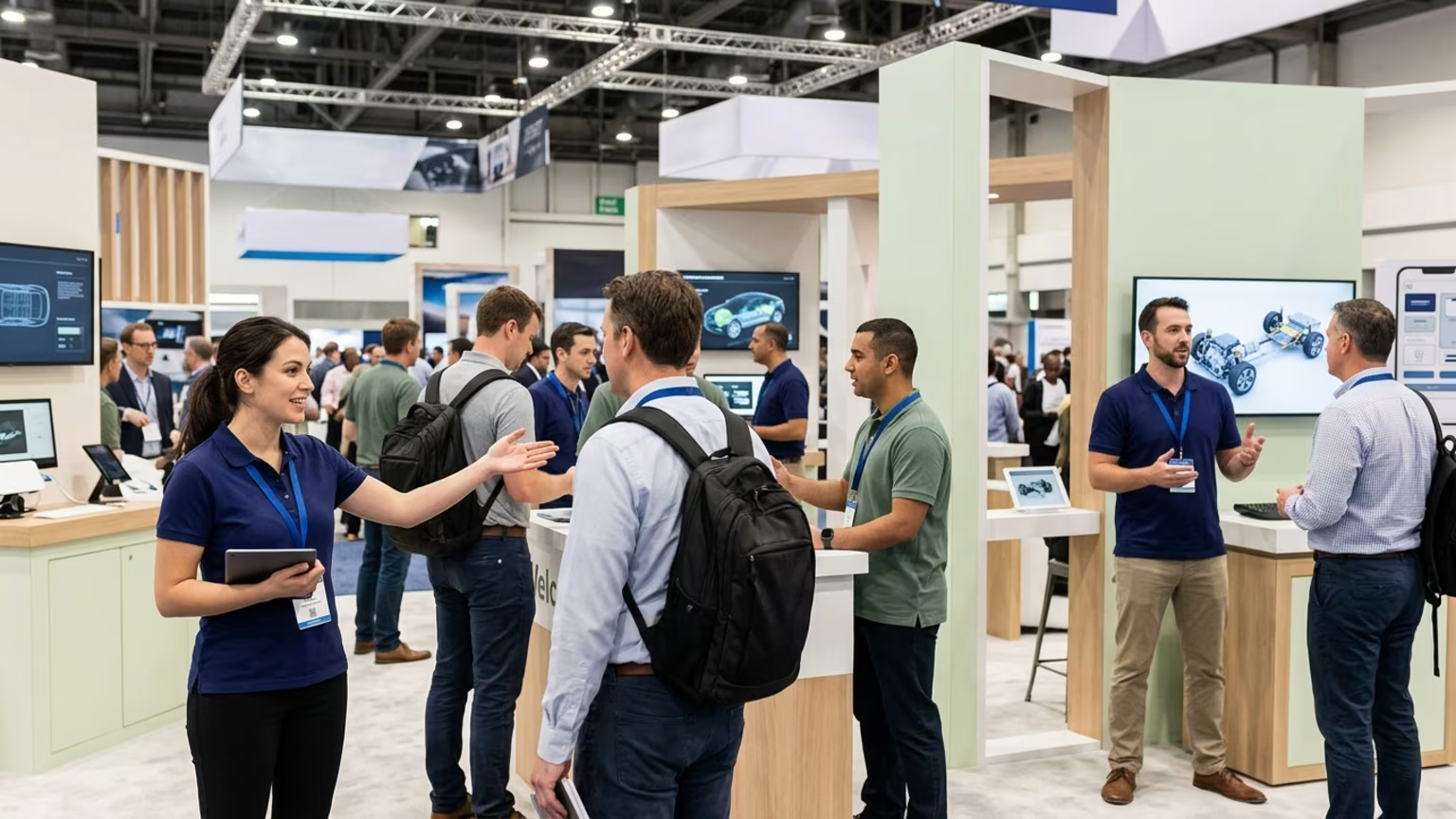
A high performing physical footprint requires a deliberate strategic approach to spatial design. The Association for Talent Development named Traliant, Hemsley Fraser, Clueso, and iSpring as the winners of its 2026 booth awards. Industry coverage stated these brands won by prioritizing open layouts and clear traffic flow. They relied heavily on live demos and intentional attendee interaction to force a conversation.
They treated their floor space as a functional tool for proving value rather than just a billboard. This approach works across all categories and floor plans. The ATD 2026 awards included distinct recognitions for Best of Show, Best Island Booth, and Best Linear Booth. This framework shows how international companies standardize their event presence to maximize floor engagement.
Industry commentary around the event noted a heavy presence of artificial intelligence vendors. Exhibitors had to simplify complex technical claims into understandable human concepts quickly. Artificial intelligence dominated the conversations at recent industry conferences. Exhibitors saturated the environment with complex terminology and identical promises.
Attendees faced massive cognitive overload by the middle of the first day. The booths that won awards cut through this noise by showing rather than telling. Traliant took home the Best of Show award by mastering this exact principle. Hemsley Fraser won Best Island Booth by creating a welcoming physical environment.
Clueso secured Best Linear Booth by maximizing limited square footage. iSpring captured Best Newcomer Booth by immediately proving its relevance to passing traffic. These companies understood that a physical footprint acts as a behavioral filter. An open layout invites a prospect to step across the invisible threshold.
A live demo immediately rewards them for taking that step. The attendee interaction then qualifies their intent before they can leave.
Translating award winning concepts into your own live event strategy requires strict operational discipline. You must build an environment that forces a desired action from the right people. Here is the exact playbook to build a high conversion physical space.
A deliberate structural plan removes the guesswork from live event execution. You need a system that functions smoothly under the stress of high attendee volume. Operators must control every physical variable before the doors open. Consistency always beats intensity when managing a national event calendar.
If you need help turning these physical design principles into a repeatable asset, you can book a strategy call with our operations team.
Award coverage often focuses on the visual appeal of a space. Marketing leaders must grade their investments strictly on Return on Investment and pipeline velocity. Vanity numbers like total badge scans only hide the truth of an underperforming campaign.
To prove actual business value, operators need to track specific lead and lag metrics. Lead metrics indicate the health of the live execution on the floor. Lag metrics confirm the financial result weeks or months after the event ends. Financial leaders only respect data that connects directly to revenue generation.
The transition from lead generation to closed revenue requires patience and strict data hygiene. A field marketing director must protect the integrity of the data collected on the floor. Sales representatives will ignore follow up tasks if they receive a list full of unqualified names. You must filter the raw badge scans through your ideal customer profile before sending them to the sales team.
The data collection process must happen naturally within the flow of the footprint. Ambassadors should not aggressively block exits with tablet devices. They should record the dwell time and engagement depth organically. This qualitative data provides context for the hard numbers on your final campaign report.
The ATD 2026 winners operate in the learning technology space. Consumer packaged goods brands can apply the exact same logic to physical product sampling. A national beverage brand recently stopped hiding its core product behind massive branded counters at regional food expos. The brand shifted to an open island layout to reduce friction.
They placed active pouring stations right on the aisle corners to act as the live demo. This structural change immediately increased the volume of direct trial. Once attendees tasted the product, trained ambassadors guided them inward toward comfortable seating areas. Retail buyers could sit down and review distribution terms away from the chaotic aisles.
This structured approach to in-store retail sampling turned fleeting sips into massive purchase orders. The activation generated measurable pipeline instead of just empty cups. This is exactly how smart food companies structure their footprints for serious buyer meetings at industry expos. The brand captures a highly qualified retail lead without deploying a single aggressive sales tactic.
A perfectly engineered floor space operates like a quiet trap for genuine interest. When the architecture itself sifts the curious from the committed, the brand stops shouting and simply waits for the right person to step inside.

30 Years Experiential & Retail Activation Partner for CPG & Beverage Brands | Multi-Market Demos, Roadshows & Costco/Club Programs That Actually Sell