Robbie Thain
Founder, CEO

Learn how unified attendee data and platforms like RainFocus turn chaotic trade show booth engagement into qualified, measurable sales pipeline.
Event platforms like RainFocus have rewritten the rules of live engagement by connecting booth traffic directly to revenue. Exhibitors that unify session attendance with in-person behavioral data can finally move past vanity metrics and prioritize high-value pipeline opportunities.
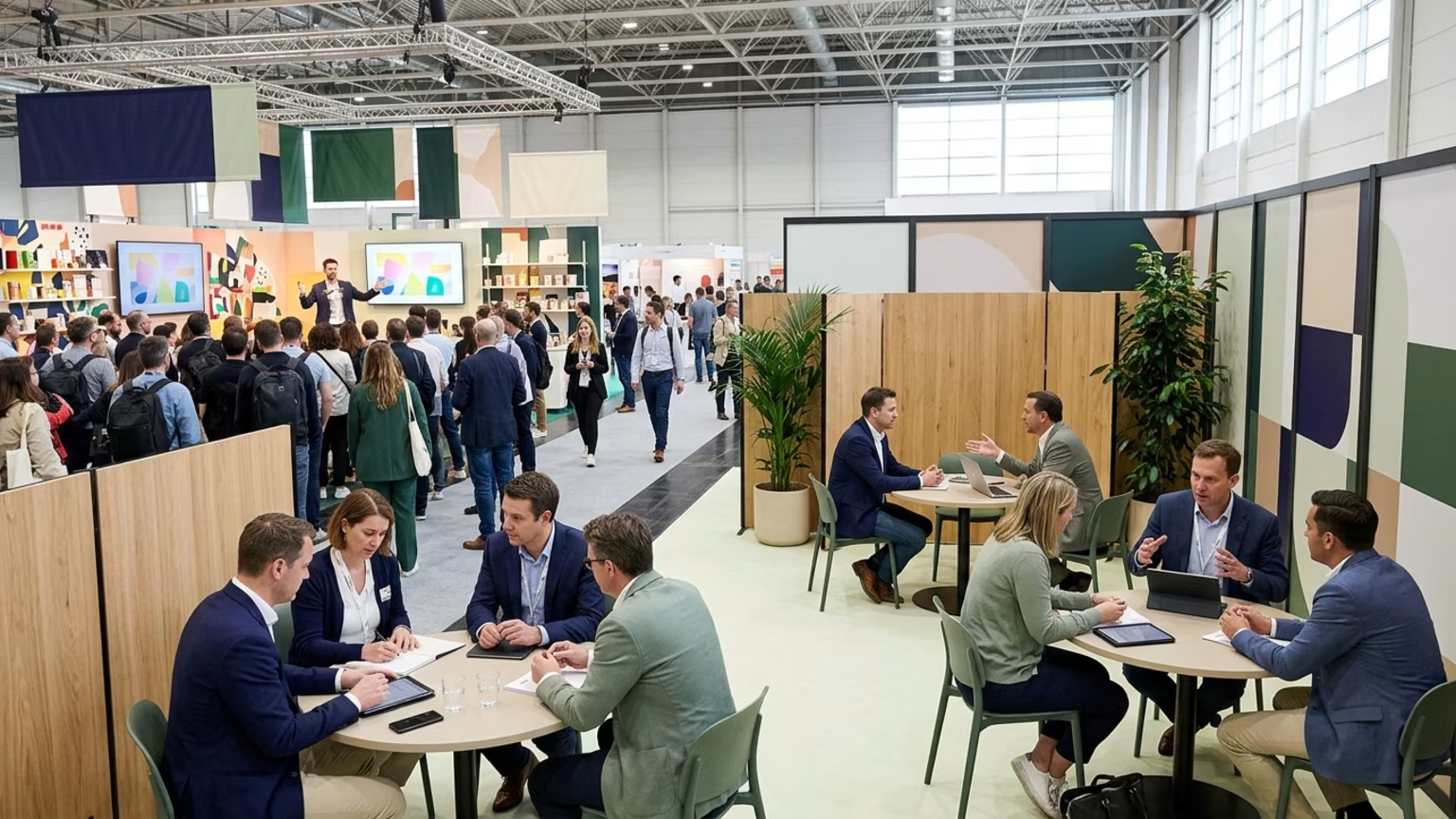
Most trade show floors operate in a state of beautiful chaos. Brand ambassadors hand out premium samples while attendees swarm the booth for free merchandise. Sales teams often scan every badge in sight without noting any context. This creates a massive spreadsheet of dead contacts that marketing struggles to interpret.
When the event ends, teams are left trying to decipher who actually wants to buy. A massive list of raw scans does not equal a healthy pipeline. Field marketers end up overwhelmed by logistics and frustrated by the lack of clear Return on Investment. Without proper context, following up with these contacts feels like a guessing game.
For brands in the food, beverage, and consumer packaged goods sectors, this challenge is especially painful. You invest heavily in booth builds, shipping pallets of product, and staffing brand ambassadors. You need these real-world consumer engagements to result in retailer confidence and retail sell-through. When field marketing managers return from a national expo with nothing but a list of names, leadership questions the budget.
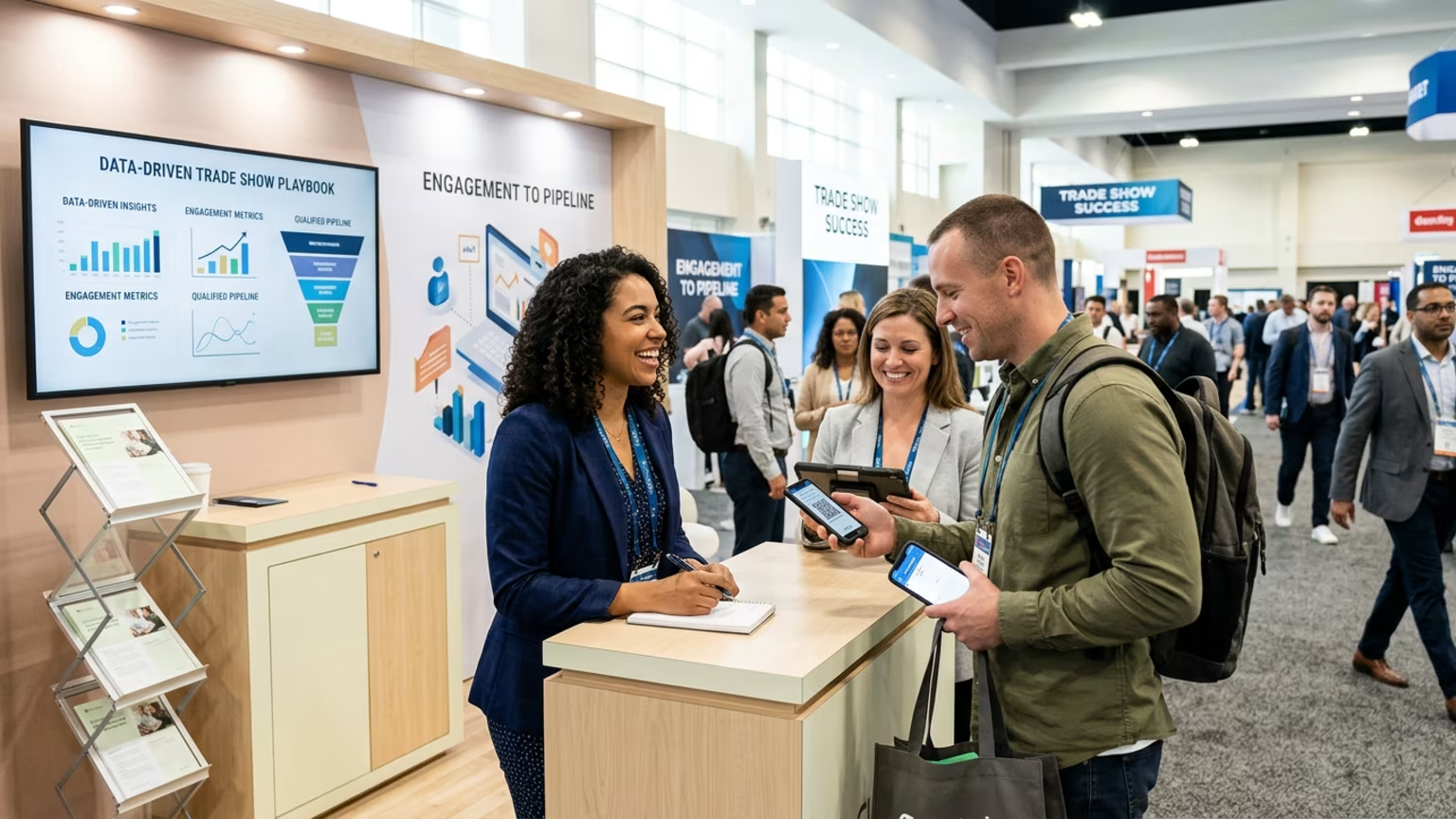
According to one trade show technology guide by Lensmor, organizer-provided badge scanners typically capture only registration data. This basic information includes names, companies, and titles. It completely misses the nuances of a real conversation. Relying on these simple scans limits your ability to generate measurable pipeline.
Mid-market brands face immense pressure to prove that their live activations work. When budgets are tight, every booth visitor must be evaluated carefully. Brands that implement crm-integrated lead capture build a clearer picture of their audience. They stop guessing and start measuring actual intent.
The solution requires treating live events as structured data collection centers. RainFocus describes itself as a leading enterprise platform for event marketing and management. It is designed to run in-person, virtual, and hybrid events from a single system with the data and personalization needed to drive measurable business results. Unifying this data is a major priority for modern marketing teams.
Many companies still operate with disconnected systems that hurt their follow-up efforts. RainFocus cites Forrester research suggesting that roughly 80% of enterprises struggle to integrate event technology with their broader marketing stacks. To solve this integration gap, RainFocus introduced enhancements like its Base Webinar product. This product is described as connecting webinar engagement to a single Global Attendee Profile.
The goal of this centralized profile is eliminating data silos and helping enterprises turn digital engagement into measurable pipeline growth. This unified approach means that every booth interaction feeds into one central record. By centralizing this data, brands can see exactly who is engaging and how deeply they care about the product.
The fragmented execution of the past simply does not work for mid-market operators anymore. Relying on manual spreadsheets and delayed data entry creates a massive gap in your intelligence. When a buyer visits your booth, they expect you to remember their specific pain points. Unified profiles prevent this disconnect by making sure marketing and sales share the exact same view of the customer.
RainFocus has also introduced MCP Profiles to support this strategy. The company says this capability delivers live event intelligence to strategists in real time. It uses native Model Context Protocol support to connect unified event data with AI tools. Accessing this data in the moment allows teams to adjust their tactics immediately.
Industry articles on RainFocus’ MCP implementation describe how an MCP server lets AI agents query physical and virtual attendee behaviors against CRM records. These behaviors include workshops, sessions, and booth interactions. This connectivity helps speed up personalization, lead scoring, and intent modeling. Using this trade show engagement data into pipeline directly improves follow-up quality.
Transitioning from simple badge scans to a pipeline-generating machine requires operational discipline. We recommend specific steps to implement a unified data strategy on the show floor. These actions ensure that your team captures the right signals during every conversation.
Putting these steps into practice requires a highly trained field team. Brand ambassadors must understand how to ask open-ended questions that reveal buying intent. They must also know how to log these answers into the lead retrieval app immediately. Delaying data entry usually results in lost context and forgotten details.
Train your staff to recognize behavioral signals in the moment. If an attendee asks specific questions about minimum order quantities or distribution networks, that is a strong buying signal. Your ambassadors must log that information before moving to the next visitor. We also suggest setting up a micro-action protocol for your booth staff to ask three mandatory questions to every single person they scan.
You must also prepare your post-show content long before the event starts. Having approved emails ready means you can contact high-intent visitors immediately after they leave the booth. This speed is what turns trade show sampling into retail pipeline velocity for premium food and beverage brands. A delayed follow-up often means losing the deal entirely.
Tracking the right data ensures your experiential marketing efforts translate into real revenue. Start by monitoring lead metrics during the event to gauge immediate performance. These early indicators help you adjust your staffing and conversation strategies on the fly. Waiting until the show ends is a missed opportunity.
Monitor your qualified conversation ratio closely throughout the day. Track the percentage of total scans that include custom notes and buying timelines. A high volume of empty scans means your team is prioritizing speed over quality. You should also measure booth dwell time to see how long attendees stay to try samples.
Track your real-time segment distribution to understand your audience makeup. Monitor how many visitors fall into high-intent segments versus casual traffic. If you are only attracting casual visitors, you might need to adjust your messaging. These lead metrics give you the power to pivot while the event is still happening.
After the event, shift your focus to lag metrics to prove your campaign success. Measure your sales pipeline velocity to see how quickly trade show contacts move to a closed deal. Integrate those records into your CRM with event tags to support revenue attribution. This proves exactly which activations generated actual dollars.
Finally, track your follow-up engagement rate across all segmented lists. Monitor how many contacts open emails and click on approved post-show content. These indicators prove that your live activations are working properly. According to the Q2 2026 Forrester Wave report on virtual event management platforms, RainFocus was positioned as a Leader in this space. RainFocus also states that Gartner’s 2026 Magic Quadrant for Event Marketing and Management Platforms recognized the company as a Leader.
Without accurate metrics, you are operating in the dark. It becomes impossible to justify your event spend to the executive team. You also miss the opportunity to replicate your successes at future shows. Solid data collection turns experiential marketing from an art form into a science.
At makai, we apply this rigorous data mindset to consumer activations every day. We build festival zones, premieres, and pop-ups that turn viewers into fans and fans into advocates. We design moments people want to share, using music tie-ins, screenings, and live stunts to bring stories to life while our crews manage execution and track reach and response metrics.
By treating these physical spaces as active data environments, we ensure that every memorable interaction is logged. Our team trains brand ambassadors to ask the right questions and record the answers immediately. We connect those field interactions to broader campaigns to create street activation revenue drivers. The result is a clear path from physical engagement to digital conversion.
If you want to turn your next live appearance into a measurable success, it is time to upgrade your approach. Stop settling for massive lists of raw badge data. Build a strategy that values deep conversations and unified data profiles. Book a strategy call with our team to start planning your data-driven activation today.

30 Years Experiential & Retail Activation Partner for CPG & Beverage Brands | Multi-Market Demos, Roadshows & Costco/Club Programs That Actually Sell