Robbie Thain
Founder, CEO

Discover how modern event sponsorship ROI frameworks shift focus from generic exposure to pre-aligned metrics, qualified lead capture, and pipeline tracking.
Sponsorship success is no longer judged by raw badge scans and generic booth traffic. The new standard demands predefined qualification criteria and strict tracking of pipeline progression at thirty, sixty, and ninety days.
Most event sponsorships are just expensive real estate deals disguised as marketing strategy. Sponsors pay premium prices for physical floor space. They hope that random foot traffic somehow converts into sales. The reality is usually far less profitable.
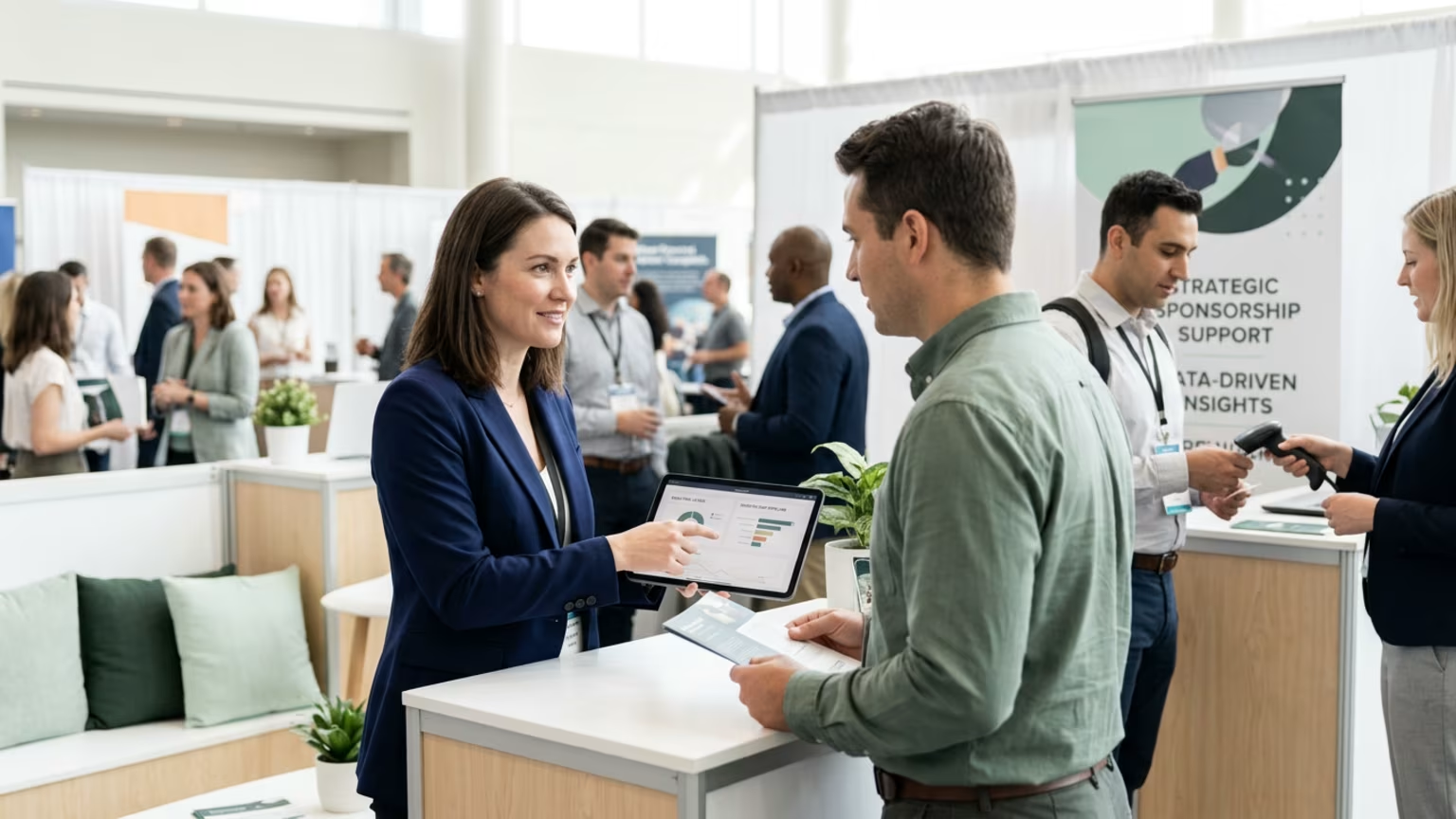
The typical trade show floor is a masterclass in operational chaos. Field teams scan every badge that walks past a booth in a desperate attempt to show volume. These massive attendance dumps are then blindly handed over to the sales team. Sales representatives quickly realize that most of these contacts have absolutely zero buying intent.
This practice creates a massive disconnect between field execution and commercial outcomes. Organizers send generic PDF recaps showing total impressions and total foot traffic. Sponsors look at these inflated numbers and struggle to justify the expense to their finance departments. Without concrete evidence of actual pipeline creation, budgets for live events face heavy scrutiny.
Marketing leaders are under immense pressure to prove that activations lead to real sales lift. They worry about fragmented execution and weak reporting. Events that look busy often produce fog instead of hard evidence. This is why a new approach to measuring performance is taking over the experiential marketing industry.
Expopass recommends that organizers define sponsor-specific KPIs and qualified-lead criteria before the event. Their framework streamlines in-booth lead capture and reports back on hard metrics like cost per qualified lead. It also requires tracking audience match and 30/60/90-day pipeline progression. This guidance actively shifts the focus away from generic exposure.
The definition of a qualified lead must be highly customized. It should be based on the specific ideal customer profile and buying cycle of each unique sponsor. A generic badge scan is no longer sufficient. Both parties should confirm exactly how leads will be captured and what specific workflows will be used on the floor.
Bizzabo argues that sponsorship Return on Investment measurement hinges on agreeing on success metrics in advance. Organizers must capture the right engagement data during the event and report back on the outcomes that matter to each sponsor. Bizzabo highlights qualified leads, engagement with sponsor activations, and post-event follow-up conversion as key metrics.
Clarity Media Partners contends that the strongest sponsorship KPI sets combine two distinct areas. They use fulfillment metrics such as lead volume and sentiment alongside member experience metrics like satisfaction and net promoter score segmented by exposure. Clarity Media Partners advises venue operators to score sponsorship assets by audience quality, visibility, engagement, and measurability. This accurately reflects sponsor-facing value rather than internal delivery cost.
According to Clarity Media Partners, sponsorship portfolios that standardize their metric architecture across events achieve about 12 percent higher ROI than more fragmented portfolios. This discipline requires a dedicated operational approach. Teams must know exactly how B2B exhibitors shift trade show booth design toward demo-centric experiences to gather meaningful data on the floor.
Transitioning from passive brand exposure to a measurable sales pipeline requires a rigid playbook. Experiential marketing teams must build their activations around the specific data they intend to extract. This takes highly disciplined field management. Here is how to execute this strategy in a live event setting.
AnyRoad asserts that accurate sponsorship ROI measurement depends on collecting first-party attendee data at several touchpoints. It also requires tracking post-event purchase conversion and producing structured reports. You cannot build this data infrastructure as an afterthought. It must be baked into the event planning process.
Clarity Media Partners reports that sponsored content and networking sessions tend to outperform passive logo placements on both sponsor outcomes and member experience. Active participation generates measurable signals. If you need help building a system that turns these interactions into qualified leads, you can book a strategy call with our team.
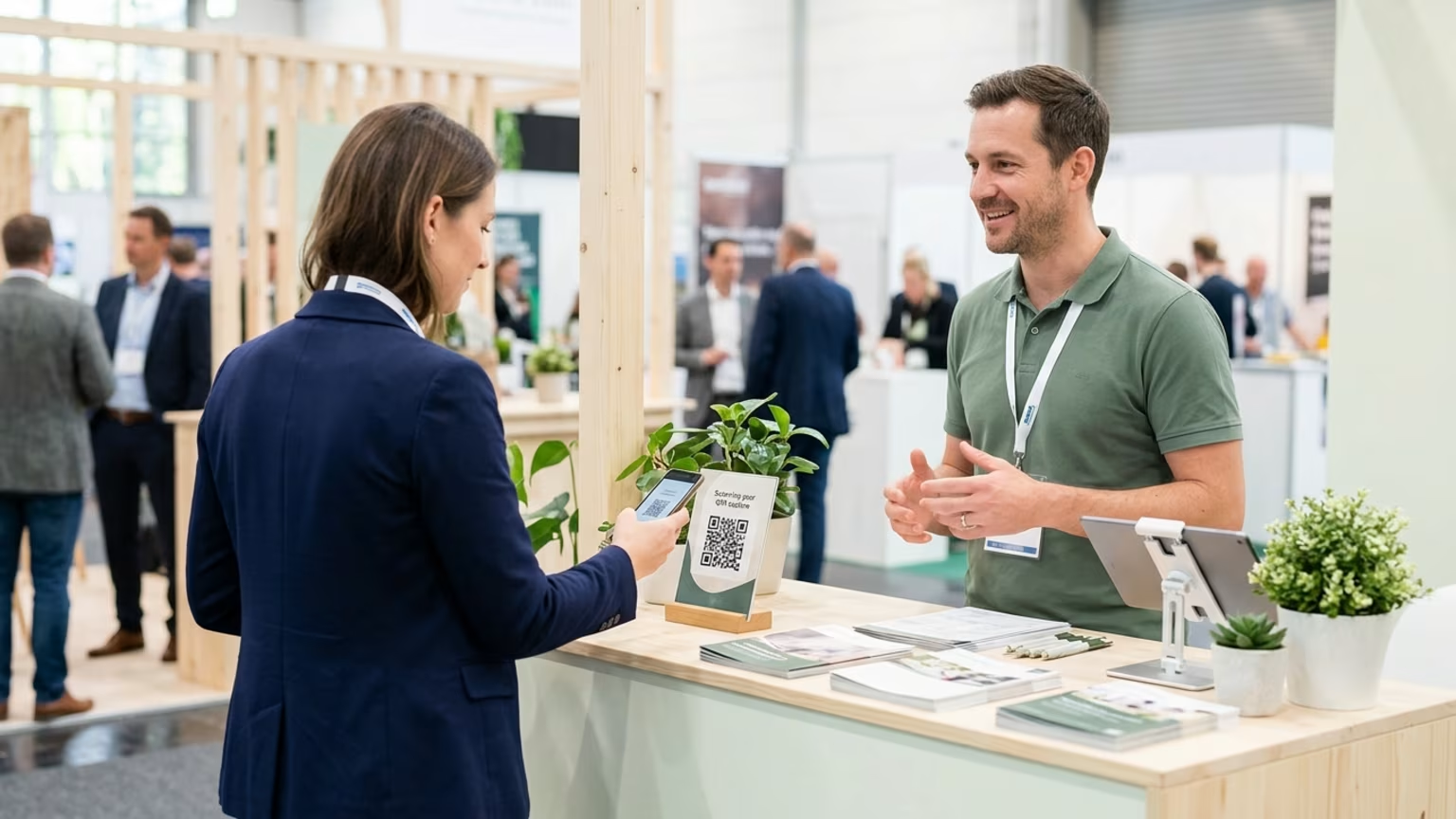
Technology must make in-booth capture simple and consistent for all staff members. Sponsors need clean data rather than scattered notes and half-completed paper forms. The capture process must be frictionless enough that ambassadors actually use it to its full potential.
Post event reporting must center on hard financial and conversion data rather than subjective feelings. Umbrex notes that average ROI commonly falls between 200 percent and 500 percent across the events it analyzes. This implies two to five dollars in revenue per one dollar spent. Getting there requires tracking the exact cost per qualified lead.
CrowdComms describes a standard exhibitor ROI formula as value generated minus sponsorship cost. You then divide that resulting number by the sponsorship cost and multiply by one hundred. A B2B event ROI guide describes the payback period formula as net investment divided by incremental margin attributed to the event per unit of time. These mathematical calculations are impossible without accurate data tracking.
Tracking how leads progress over time is the ultimate proof of value. A lead that enters the system on day one must be monitored closely. Knowing the exact pipeline status at thirty, sixty, and ninety days separates a successful campaign from a costly failure. This level of tracking demonstrates undeniable long-term business value.
Tailoring these data stories to the specific sponsor is a highly profitable exercise. Clarity Media Partners emphasizes that brand-awareness sponsors and lead-generation sponsors require distinct data stories. Reporting should be carefully tailored to what each internal stakeholder needs to justify renewal.
The financial impact of this reporting discipline is highly significant for organizers. Clarity Media Partners reports that events with clear ROI reporting have seen 40 to 60 percent higher sponsor renewal rates. Planners who connect trade show chaos to sales pipeline retain their sponsors much longer than those who rely on simple PDF summaries.
In our experience at makai, we see the immediate difference between vanity plays and structured programs. We create hands on brand moments that connect emotionally and turn customers into ambassadors. But emotion alone does not satisfy a chief marketing officer. That is why we provide clear reporting on reach, trials, leads, and sales to guide next steps in campaign optimization.
Our measurement approach tracks awareness, engagement, and conversion. This methodology turns brand moments into actionable data that demonstrates real business impact. Whether we are managing an end to end Costco roadshow or a targeted expo presence, our focus remains on measurable outcomes. Our campaigns connect digital and real world touchpoints to boost visibility and spark brand conversations.
Sponsors want full funnel attribution stories that include booth visits, content engagement, and actual revenue impact. A field team that knows how to qualify a prospect at the point of interaction sets up the entire sales organization for success. When exhibitors tie trade show activations to pipeline with integrated lead capture, the entire event dynamic changes for the better.
The most valuable asset on an expo floor is not the square footage or the branding overhead. It is the clarity of the conversation happening between a trained ambassador and a qualified buyer. When the dust settles and the booths are packed away, only the data remains to tell the truth about what actually happened.

30 Years Experiential & Retail Activation Partner for CPG & Beverage Brands | Multi-Market Demos, Roadshows & Costco/Club Programs That Actually Sell