Robbie Thain
Founder, CEO

Exhibiting at U.S. trade shows in 2026 requires precision. Learn how global brands master logistics, capture qualified leads, and prove Return on Investment.

Exhibitors must often budget an extra 20 to 30 percent just to cover hidden drayage and union labor fees in stateside venues. Global brands entering the U.S. market in 2026 must master these complex logistics and deploy structured lead capture to turn expensive trade show footprints into measurable pipeline.
A massive crate of premium product samples sits on the loading dock at LeadsCon in Las Vegas. The booth opens in exactly four hours. An international marketing director finds out their paperwork lacks the specific commercial invoice required for stateside customs clearance. The product is stranded just a few hundred yards from the show floor.
Meanwhile, the team realizes they cannot simply plug in their own monitors. Strict venue rules mandate union electricians for all technical setups in major hubs. The brand is bleeding money before the first conversation even happens. One missed deadline can easily unravel an entire trade show investment.
A late shipment, a weak staffing plan, or an unclear message can turn a high potential event into an expensive setback. This scenario plays out constantly for global teams who treat U.S. events like local shows. Assumptions of uniformity lead to massive errors. Rules differ heavily by venue and city.
An unprepared team will spend their time fighting fires instead of capturing buyer interest. High registration fees mean failure is incredibly costly. For example, passes for premium events like Adobe Summit run upwards of two thousand dollars. If you waste time on logistics, you lose your entire return on that investment.
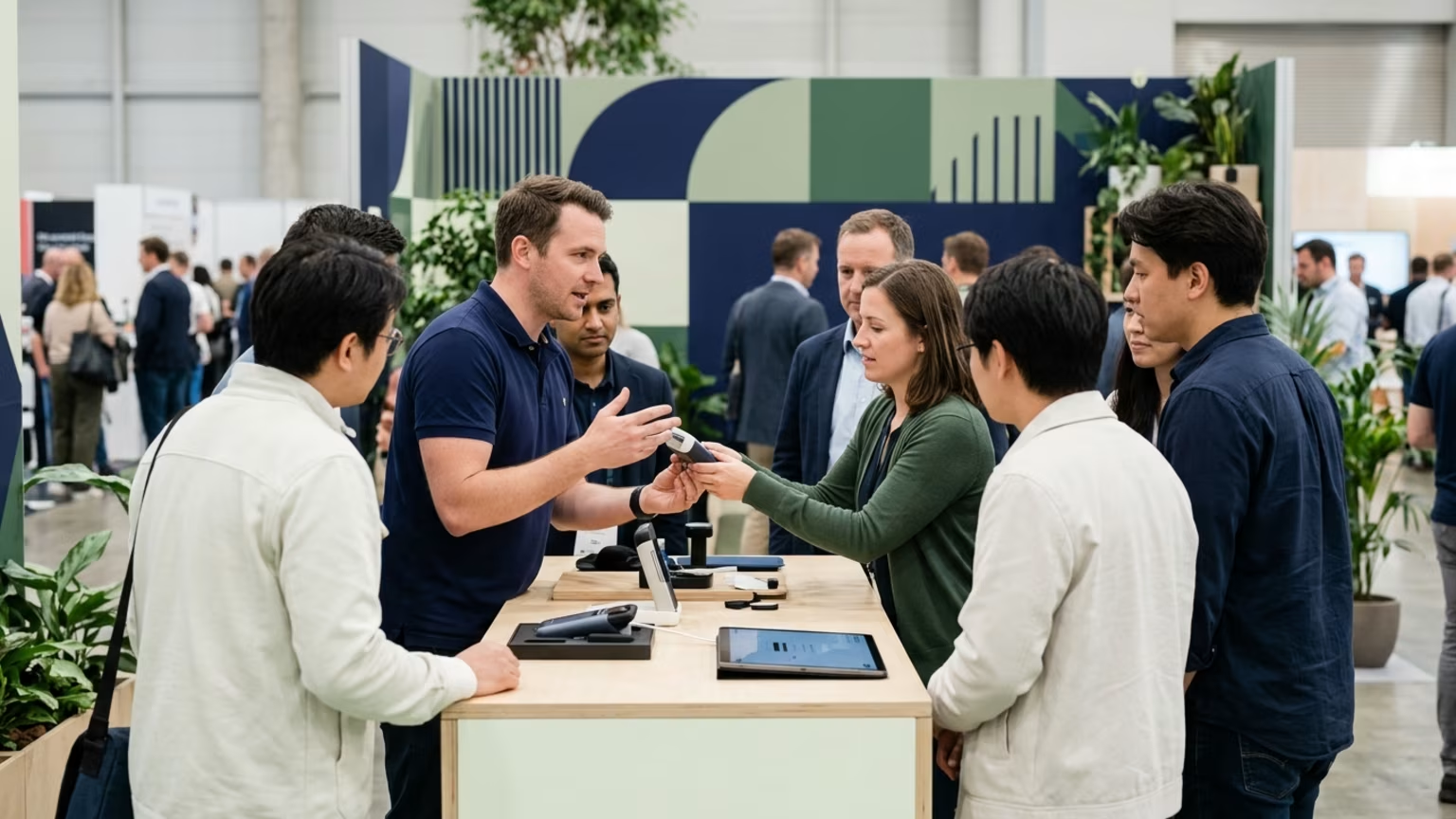
Global brands exhibiting in the USA in 2026 need to put their attention on much more than booth graphics and travel plans. Industry analysts note that strong results are generated from early logistics planning, careful budgeting, and audience-focused strategy. U.S. buyers respond well to live demos, useful conversations, and clear value. A successful presence requires direct messaging and layouts that are easy to enter and walk through.
Teams must shift their focus toward interactive and conversion-focused experiences. Buyers now expect engaging brand moments via product discovery and guided conversations. Marketing leaders at events like the Chief Marketing Officer Summit heavily prioritize these measurable engagement strategies. Planners must match this operational focus to succeed.
This approach requires aligning physical execution with robust digital capture methods. Digital-heavy conferences often emphasize online access, but physical events require specialized real world execution. For experiential sectors like beverages or automotive, the demand to try and buy requires flawlessly executed live demonstrations. A highly structured execution framework stops the chaos and aligns every field action with business outcomes.
Some teams use AI-powered digital experiences to score visitor interactions instantly. Connecting these modern systems is how brands turn fleeting interactions into solid data. Every element must point toward generating real demand. If you want to connect offline attention to sales pipeline, your strategy must be completely uncompromising.
Executing a high performing event requires strict operational discipline. Marketing teams must follow a precise sequence to maximize their stateside footprint.
Brands must prove Return on Investment beyond just counting the people who walked by. Leaders need clear visibility into the exact cost per lead generated at every event. Leading indicators include total qualified scans, immediate meetings booked, and total product samples distributed. Proper tracking completely separates profitable field operations from expensive distractions.
Lagging metrics are equally critical for proving long term success. Teams must track event-tied revenue and the eventual conversion rates of those initial booth conversations. You must clearly define these figures to justify high registration fees for premium marketing summits. If you spend resources on physical activation, you must verify the financial outcome.
A strong experiential marketing dashboard is what your executive team actually wants to see. Digital tools make this financial tracking highly accurate. Software can instantly sort prospects by their purchasing timeline and budget capacity. You can integrate this data directly into your CRM before the event even concludes.
Marketing operations that lack this tracking often fall back on vanity numbers. They report on total event attendance instead of actual buyer interactions. This weak reporting damages the credibility of the entire marketing department. Real field generals demand hard data to prove their value.
Consider a fast growing international snack brand launching at a major American expo. Instead of a standard tasting table, they implemented a structured lead capture framework. Every brand ambassador used digital tools to score visitor interest instantly. They planned their budget perfectly by accounting for union labor and drayage fees six months out.
The team captured exact buyer details and logged specific product preferences right on the floor. U.S. buyers appreciated the clear value and the highly interactive product demonstration. This precision allowed the sales team to send targeted follow ups within twenty four hours. The brand turned a single expo into a predictable revenue stream.
This success did not happen by accident. The brand reviewed local regulations early and secured all necessary permits well ahead of time. They trained their field staff to guide every conversation toward a clear next step. This is how branded CPG products beat private label competition in physical retail environments.
By focusing heavily on logistics, they avoided the common pitfalls of international expansion. Their products cleared customs without delay. Their booth operated perfectly from the moment the doors opened.
That massive crate on the loading dock does not have to be a source of panic. When teams master the operational details and local regulations, those crates become the foundation for real pipeline growth. Proper planning turns strict venue rules from a barrier into a structured advantage. You can step onto any U.S. trade show floor with absolute confidence.
Your next live activation should generate clear financial returns. Book a strategy call with our team to align your field operations with real pipeline growth.

30 Years Experiential & Retail Activation Partner for CPG & Beverage Brands | Multi-Market Demos, Roadshows & Costco/Club Programs That Actually Sell