Robbie Thain
Founder, CEO

Learn how mid-market brands can align sales and marketing to turn trade show booth traffic into measurable pipeline and provable ROI.

The International Association of Exhibitions and Events recently released a best-practices guide that shifts trade show focus from raw attendance to disciplined lead conversion. This playbook gives mid-market brands a clear operational framework to align sales and marketing for provable pipeline growth.
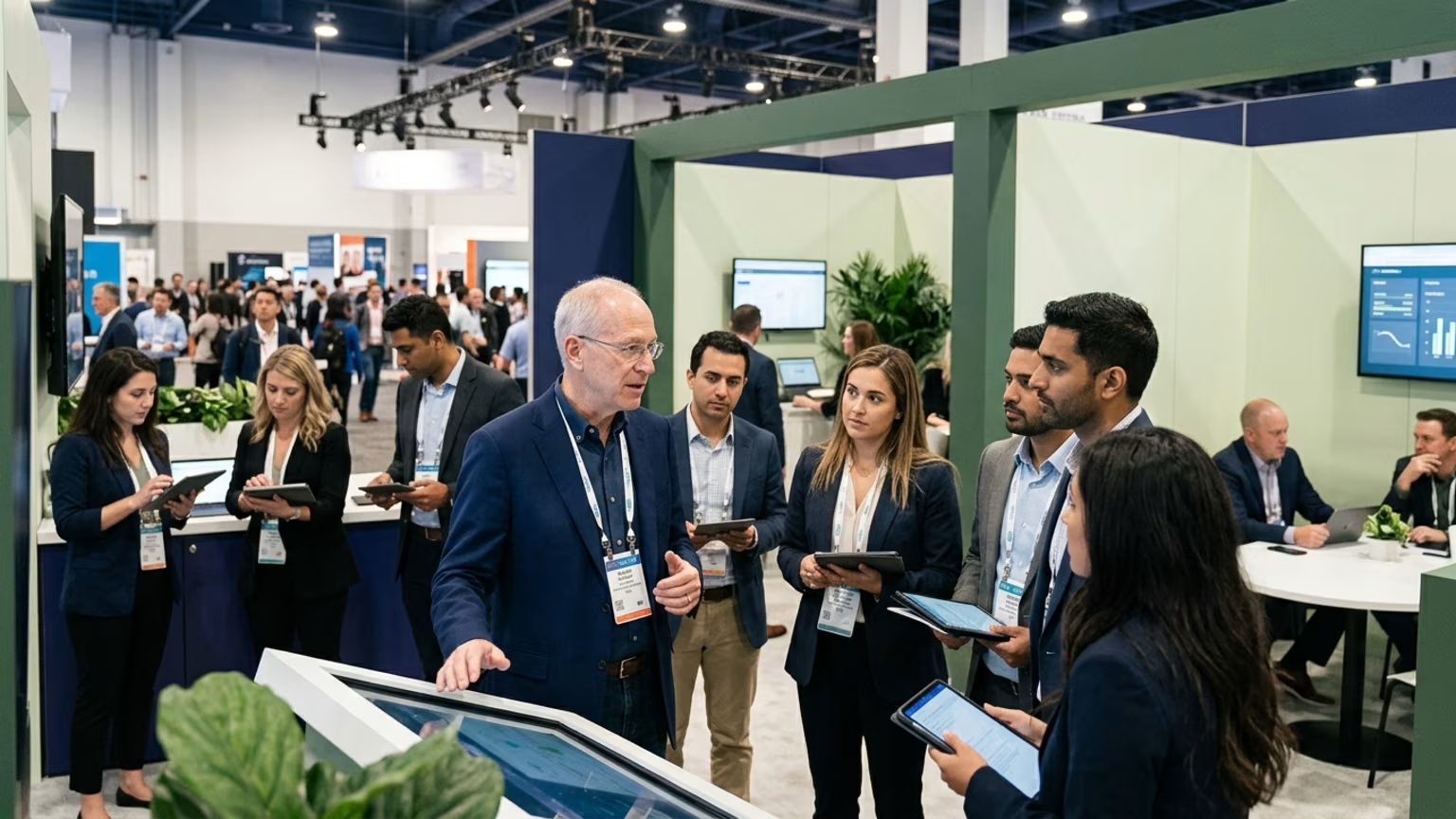
Fluorescent lights reflect off hundreds of polished concrete aisles. Brand ambassadors scan badges at a frantic pace, attendees grab free samples, and prospects walk away. Three weeks later, sales reps stare at a spreadsheet of generic names and wonder who is actually ready to buy.
In-person events are surging back as a primary growth channel across the industry. Research from Improvado indicates 49 percent of B2B organizations plan to increase their in-person event budgets in 2026, and 37 percent plan to expand virtual events in parallel. Exhibiting remains one of the largest single line items in B2B marketing budgets today. These shows often consume up to 40 percent of annual spend for trade-heavy verticals.
Independent industry studies consistently report that events and trade shows remain a top channel for driving high-intent leads. These environments provide a dense concentration of qualified buyers with specific purchase goals. Face-to-face meetings shorten sales cycles and build trust faster than digital interactions. This physical connection is mandatory for brands in consumer packaged goods, automotive, and health categories where product experience drives sell-through.
Many mid-market brands equate a busy footprint with success. Post-show audits routinely expose a severe lack of conversion from scanned badges to genuine sales opportunities. Badges get scanned without context, qualification questions are skipped, and the critical follow-up email is just a generic blast. Sales teams complain that the leads are unusable, and marketing teams complain that sales simply ignores their hard work.
Treating a trade show footprint like a stage production is a costly mistake. The International Association of Exhibitions and Events stresses that a booth must operate as a disciplined conversion system. This requires total alignment between sales and marketing long before the freight trucks leave the warehouse. A unified go-to-market approach forces both teams to agree on exact definitions of a qualified lead.
Across B2B marketing, there is a clear convergence of brand building and demand generation. Mid-market operators are expected to build brand awareness and drive pipeline simultaneously. They cannot justify beautiful activations that lack hard data. Highspot research shows that aligning marketing and customer-facing teams around shared goals improves overall conversion rates.
Your strategy should start by defining one primary business key performance indicator. This could be securing qualified meetings with your top fifty target retail accounts or generating a specific dollar amount in pipeline. Every pre-show email and in-booth interaction must serve that single goal. Enterprise frameworks stress that a successful plan integrates buyer personas and channel tactics seamlessly across departments.
The layout of your space must support this strategic focus. Recent industry analysis from Pure Exhibits notes that successful 2026 booth designs will focus on immersive experiences alongside clear messaging. Mid-market brands that commit to a high-conversion trade show strategy know that intentional design drives revenue. This means creating defined engagement zones for sampling, product demonstrations, and private buyer consultations.
Modern measurement practices require a portfolio approach that tracks both immediate response and long term brand lift. The smartest event operators continuously run testing loops on their messaging and qualification scripts. You should treat every show as an opportunity to A/B test your promotional offers against different buyer segments. This rigorous testing mindset guarantees your field strategy improves with every single activation.
Turning floor traffic into qualified pipeline requires strict operational discipline. We have executed over 1000 campaigns across all 50 states, bringing brands to life in every major U.S. market. In our experience, the difference between a total loss and a highly profitable show comes down to simple execution mechanics.
Here is a step-by-step guide to running your next event like a true sales funnel.
Measuring Return on Investment requires shifting focus from raw footfall to actual business outcomes. The Trade Desk published a measurement guide stressing that high quality measurement depends on high quality data signals. A simple badge scan is a low quality signal. A badge scan combined with budget notes and a scheduled field meeting is a high quality signal.
Brands are starting to demand closed-loop reporting that ties event interactions back to customer relationship management data. Every scanned lead and contact must receive an event-specific tag in your system. This allows operators to track opportunity win rates and compare sales cycle lengths against non-event leads. A rigorous attribution model proves to your leadership team that the event was a financial success.
Lead metrics tell you if your live activation is generating immediate traction on the floor. Track the total number of qualified conversations, the volume of meetings held with target retail accounts, and the acceptance rate of your show-only offers. You should measure the ratio of high-fit opportunities against the total number of scans to grade your staff qualification skills. End of day huddles allow your team to review these metrics and adjust scripts for the next morning.
Lag metrics reveal the actual financial impact weeks or months after the exhibit hall closes. Track the total pipeline created, the number of new retail listings secured, and the win rate of event-influenced opportunities. Brands with access to retail data should compare post-show sell-through rates in regions where they held buyer meetings against matched control regions. Tracking these post-event roadshow metrics provides undeniable proof that your live activations generate real revenue.
Running a simple incrementality check is another powerful way to prove your impact. Compare the overall sales performance in regions where you held buyer meetings against matched control regions that had no event contact. Even a crude pre and post analysis provides better evidence than anecdotes. This data gives your marketing team a factual story to share with senior leadership and key retail partners.
We see the direct impact of disciplined qualification every time we deploy a brand ambassador team for a major food or beverage client. From retail demos in Seattle to roadshows in Miami and events in Honolulu, our teams activate brands wherever our clients' audiences are located. Success always stems from structured engagement rather than loud gimmicks.
A recent mid-market consumer packaged goods client wanted to expand their national retail footprint. They initially planned to spend their budget on expensive interactive screens to attract attention. We helped them pivot to a highly structured sampling program tied directly to regional buyer meetings.
The team pre-booked twenty meetings with targeted category managers before the doors even opened. Floor staff used a simple three-question script to filter out unqualified browsers within seconds. By tagging every interaction properly in their customer relationship management system, the client tracked a massive spike in regional retail commitments over the next quarter. If you are ready to stop guessing and start converting, book a strategy call with our team today.
The client ran a joint marketing and sales debrief two weeks after the event to systematize their learnings. They identified exactly which promotional offers converted and where their post-show follow-up stalled. They turned these raw insights into a reusable operational playbook for all future local expo appearances. That level of discipline separates the top performers from the brands that just show up to hand out swag.
Trade shows are won by operators who prioritize measurable pipeline over fleeting attention. Execute with precision, measure what matters, and turn the floor into a predictable revenue engine.

30 Years Experiential & Retail Activation Partner for CPG & Beverage Brands | Multi-Market Demos, Roadshows & Costco/Club Programs That Actually Sell