Robbie Thain
Founder, CEO

Learn how to orchestrate a sixteen-week retail sampling playbook for your next CPG product launch. Turn in-store demos and roadshows into measurable sales.
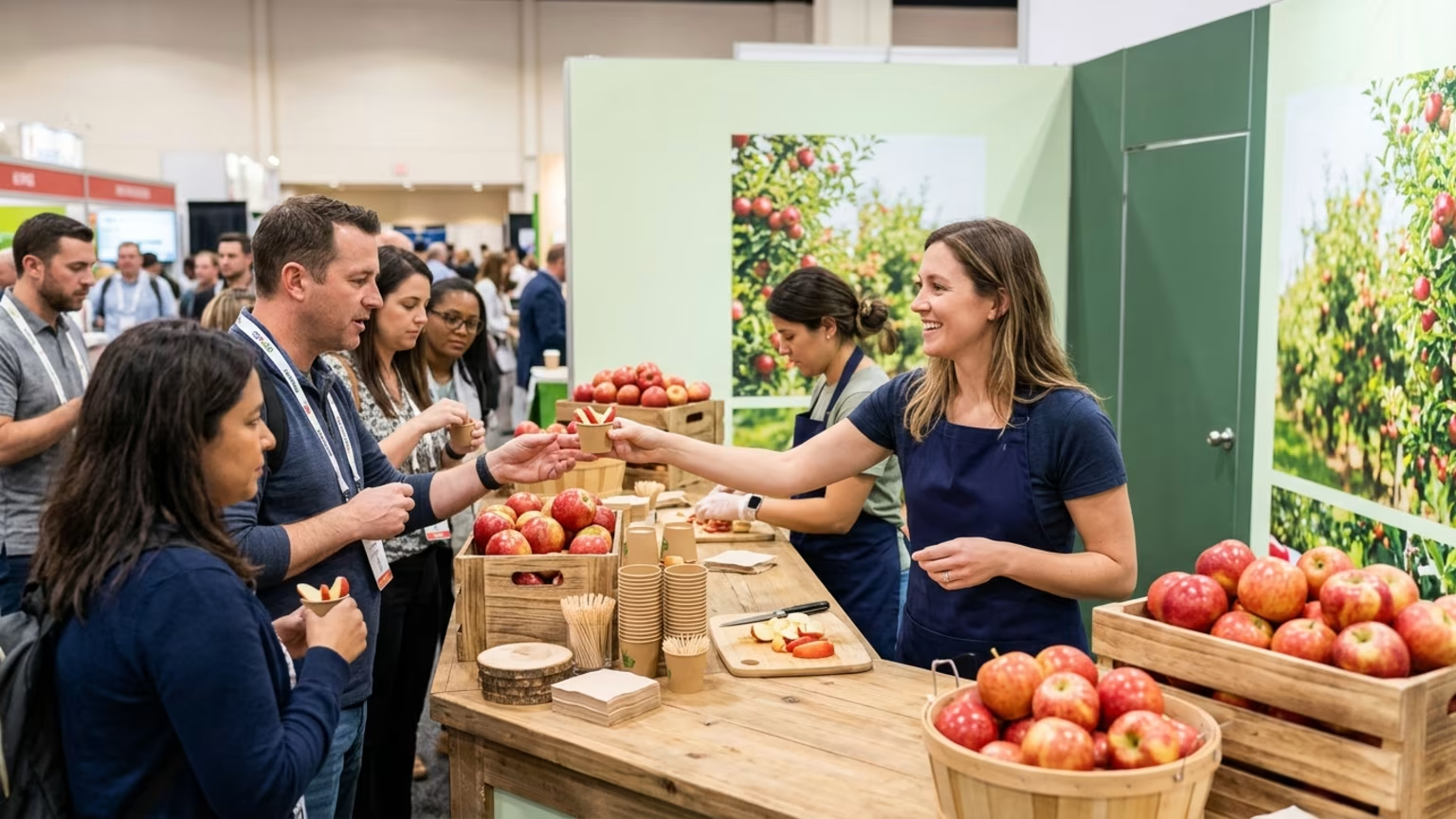
This guide details a sixteen-week playbook for surrounding new product launches with in-store sampling, roadshows, and street activations. By synchronizing retail demos with trade marketing and social media, operators can turn passive taste tests into measurable retail velocity.
A pallet of new product sits shrink-wrapped in the grocery backroom. The marketing team for a brand like Popchips (KP Snacks) spent millions on a digital campaign. Down the aisle, a lone ambassador stands behind a folding table with zero foot traffic. The launch is officially live, but the retail floor is entirely asleep.
This scenario plagues consumer packaged goods rollouts every day. Brands often treat live sampling as a secondary thought instead of a foundational strategy. They ship product to stores, hire disconnected field teams, and hope shoppers naturally care. The outcome is a fragmented activation that yields zero measurable lift at the register.
Fragmented staffing and weak training turn good concepts into operational disasters. Marketing directors worry about events that look busy but produce fog instead of hard evidence. When field staff do not understand the brand tone, the consumer interaction falls flat.
Retail buyers lose patience quickly when new SKUs collect dust. A failed launch burns through marketing budget and damages long-term retail relationships. Future distribution pitches become significantly harder to win when your track record shows weak sell-through. Operators need a system that forces product trial and immediate conversion.
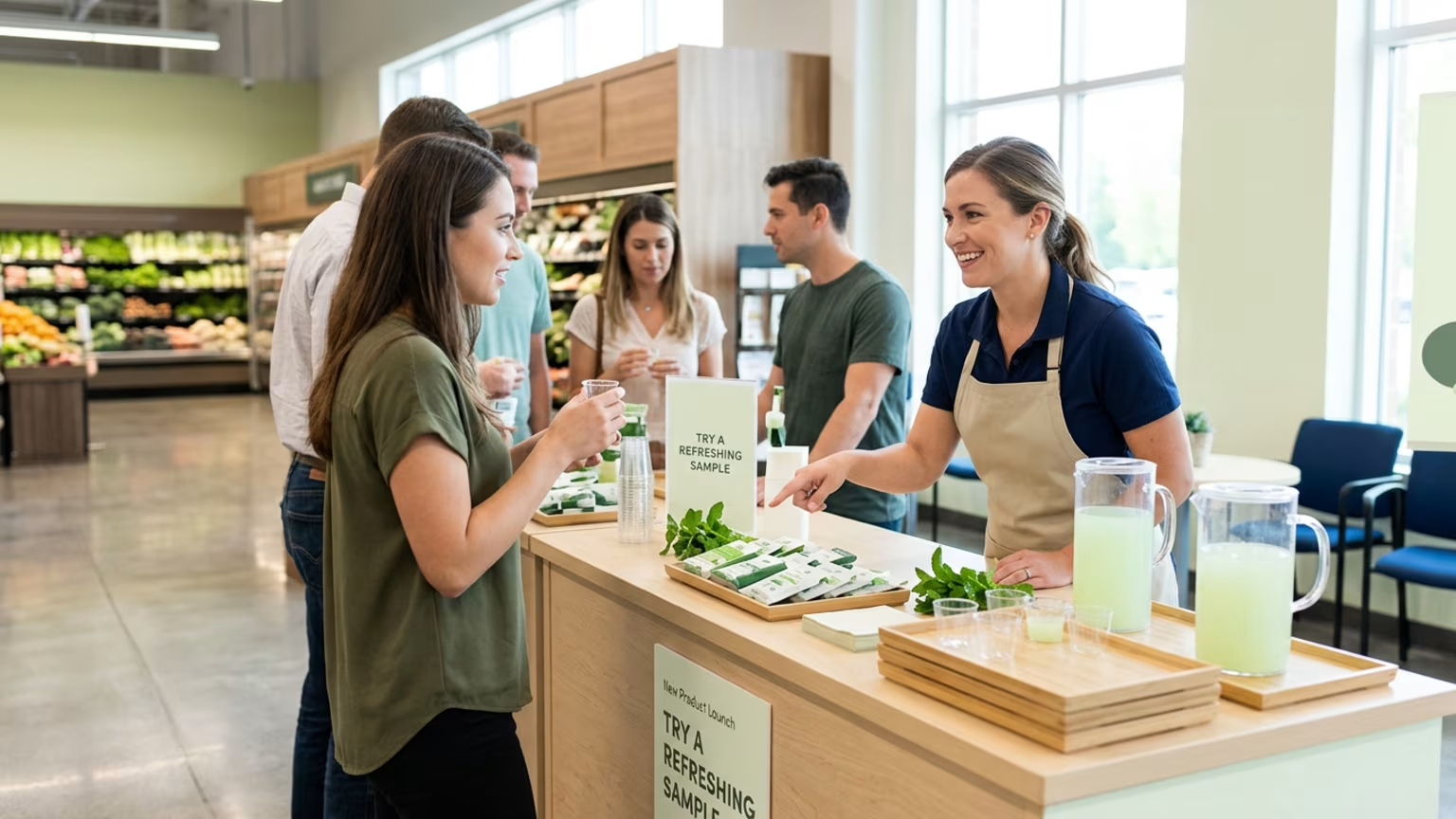
We specialize in creating retail demos, product sampling programs, and roadshows that bring brands face to face with their audiences. Each program is designed to drive trial, build consumer relationships, and accelerate retail velocity across multiple locations. You cannot rely on hope to move inventory. Moving inventory requires a synchronized operational attack.
A successful market entry demands a structured framework where physical activations integrate directly with trade marketing. Experiential marketing replaces static advertising with direct, multi-sensory participation. This direct participation consistently increases purchase intent for new items. According to research from Guac Digital, experiential formats like pop-up retail installations grew by roughly 28 percent year over year.
Brands deploy these physical formats to test markets and build immediate purchasing urgency. You must design a sequence that moves a shopper from initial curiosity to product trial to basket inclusion. Multi-sensory activations can boost brand recall by up to 67 percent when scent, sound, and touch are intentionally orchestrated, according to Wonu Studio. Your activation should center on one exact consumer behavior change rather than generating generic brand awareness.
If you want a new wellness beverage to succeed, you must prompt the shopper to taste it and immediately put a multipack in their cart. The most effective launches sync in-store retail demos and roadshows with retail media flights. When your physical footprint matches your digital targeting, you close the loop between the tasting experience and the final purchase. This alignment builds retailer confidence and secures premium shelf placement.
Leading experiential agencies start with rigorous working sessions to clarify business goals, target audiences, and success metrics before booking any space. According to FGPG, brands that set clear objectives and measure against defined benchmarks consistently outperform those treating launches as isolated stunts. The goal is to build a conversion system around a launch milestone.
Trade marketing defines store-level support, including feature ads, off-shelf displays, and point-of-sale materials. When you align trade marketing schedules with your sampling calendar, sell-through lifts become much easier to prove. According to All In Pro Solutions, the physical experience should be designed from the outset to generate content. This extends your reach far beyond the single room or store.
Experiential teams must step out of their silos. They need to coordinate with the digital media buyers and trade marketing managers daily. A unified front prevents conflicting promotional messages on the retail floor. This cross-functional alignment protects your marketing spend and maximizes total return.
The period from eight weeks before launch to eight weeks after determines the commercial success of your product. Every single week requires specific operational tasks to keep the campaign on track. Use this timeline to orchestrate your next major retail push.
The biggest failure in activation planning is waiting until the event ends to ask about Return on Investment. You need concrete data to prove your launch moved the commercial needle. According to CupShup, setting up measurement infrastructure before the event is the only way to track reach, engagement, and revenue accurately. Without tracking codes and sales baselines, proving retail impact is impossible.
Leading brands track exact lag metrics to prove long term commercial impact. You should monitor sales lift in activation geographies compared to control stores. Tracking repeat purchases through loyalty programs provides clear evidence of ongoing customer retention. These metrics give you the exact data needed to negotiate better retail placements in the future.
Lead metrics tell you if the activation is working in real time on the floor. Track daily lead captures, offer redemption rates, and time spent in key activation zones. Using pixel-tracked landing pages feeds retargeting data to your digital media campaigns for thirty days post-event. Tracking these core metrics turns a fleeting physical interaction into a permanent customer relationship.
You should deploy surveys seven days post-sampling to measure the trial-to-repeat purchase rate. This data provides an accurate picture of consumer loyalty following a physical activation. Industry research from Newbridge Marketing Group stresses that brand activation strategies must focus on genuine participation. Brands must step away from broad noise and focus on direct behavior changes.
You must avoid the trap of prioritizing novelty technology over actual outcomes. Augmented reality mirrors and flashy applications work only if they serve the core engagement goal. Technology should support direct conversion rather than distracting from the physical product trial.
Retail buyers demand hard data before expanding distribution. Clean reporting decks showing side-by-side sales lift build undeniable commercial cases. When you combine foot traffic data with register receipts, your pitch transforms from a hopeful plea into a factual business review. This disciplined approach guarantees your brand a permanent spot on the shelf.
Consider a regional snack company expanding into national grocery distribution. They bypassed massive, noisy festival sponsorships in favor of targeted mobile sampling tours. The brand parked branded trucks directly outside key retail partners during peak weekend hours. This hyper-local approach captured shoppers right before they made their weekly purchasing decisions.
Brand ambassadors handed out full-size samples alongside a digital coupon redeemable only inside the adjacent store. The activation generated immediate, trackable foot traffic. The brand could track exact conversion rates from the street to the register by measuring the digital coupon redemptions. This process delivered clear proof of concept to their retail buyers.
You cannot afford to treat your next product rollout as a guessing game. Every physical touchpoint must be engineered to drive trial and measure sales impact. To map out your next high-volume campaign, book a strategy call with our team.
Makai Inc. turns live brand experiences into measurable retail pipeline.

30 Years Experiential & Retail Activation Partner for CPG & Beverage Brands | Multi-Market Demos, Roadshows & Costco/Club Programs That Actually Sell