Robbie Thain
Founder, CEO

Learn how to connect retail demos, roadshows, and street activations into a unified 180-day funnel that drives product trial and boosts in-store sales.

Industry analysts consistently report that most consumers are highly likely to purchase a product after a positive live interaction. This single data point should dictate how every physical marketing dollar is spent. Yet most marketing teams treat physical sampling events as isolated expenses rather than connected revenue drivers. Connecting retail demonstrations, regional roadshows, and street activations into a unified 180-day funnel changes everything. This intentional staging compounds brand visibility, drives trial velocity, and builds deep retailer confidence.
You launch a massive regional grocery expansion and deploy teams to hand out samples on street corners. Meanwhile, a completely separate vendor runs in-store demos with different messaging. Your field marketing team is simultaneously scrambling to track inventory for an upcoming retail push. The result is a fragmented operational mess where brand ambassadors are reading from outdated scripts.
Consumers take a free sample on the street but cannot find the product on the shelf. Retail buyers walk the floor and see an empty activation booth. They completely miss the hype your brand tried to build locally. We have been connecting brands with people through live experiences, retail programs, and national activations since 1995. Over three decades, we have built a track record of creating meaningful brand moments across the country.
We see this disconnect constantly in the field. Marketing teams exhaust their budgets on scattered tactics without a cohesive plan. They hope at least one of these random activations will stick with the consumer. They lack a unified approach that guides a shopper from initial curiosity straight to the checkout lane.
This leads to wasted product, frustrated retail partners, and invisible Return on Investment. The pressure to prove that activations lead to sales lift is immense for modern operators. CPG brands cannot afford to run events that look busy but produce zero measurable pipeline. Retailers demand evidence that your brand will drive foot traffic and increase basket sizes. Without a connected strategy, your live events are just expensive theater.
Treating physical activations like a digital marketing funnel brings clarity to your field operations. You need top-of-funnel awareness, mid-funnel consideration, and bottom-of-funnel conversion. Street activations act as your high-volume awareness engine to intercept consumers in busy areas. They introduce the brand quickly and build initial hype before a major retail push.
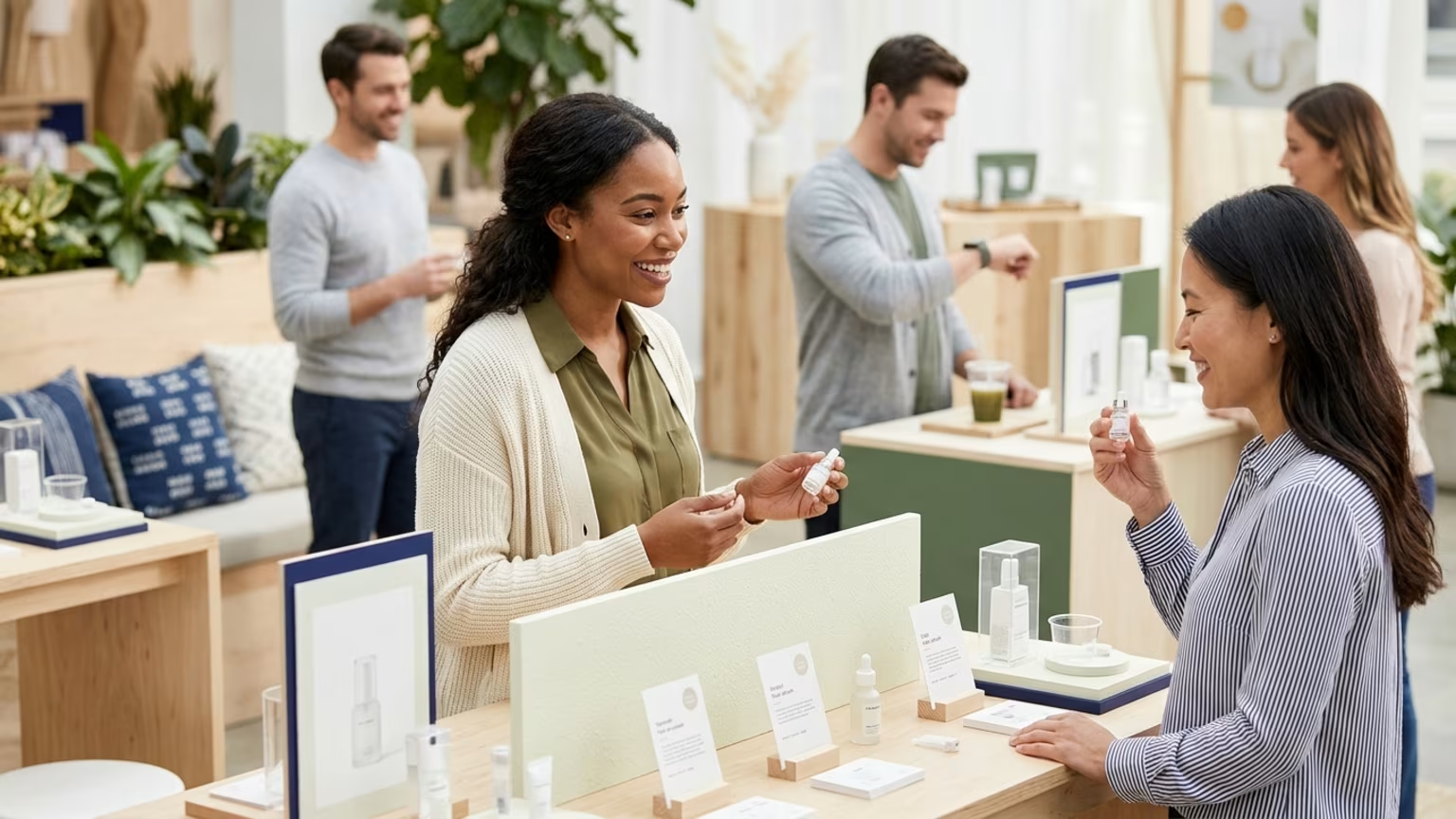
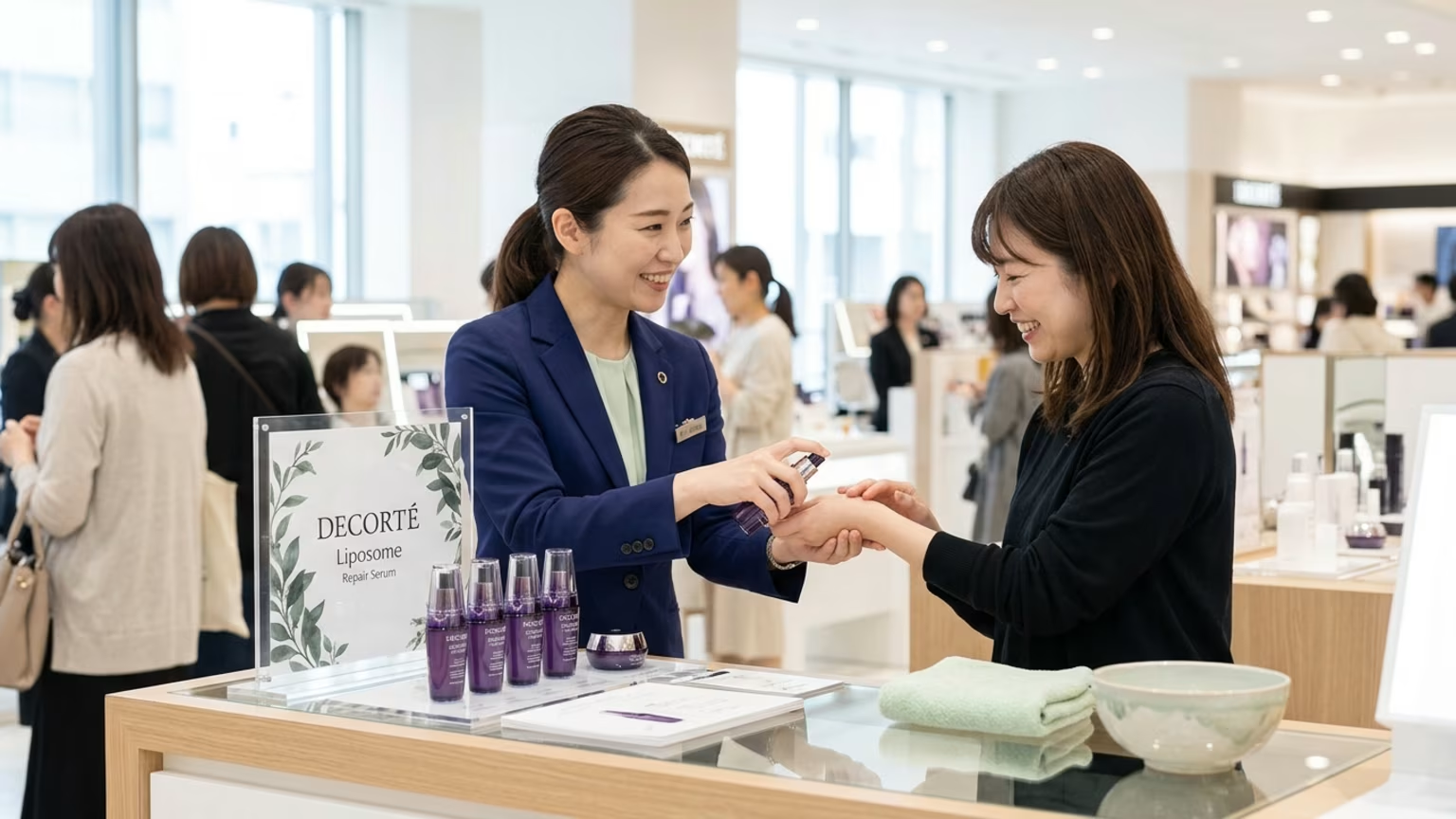
Regional roadshows serve as the highly interactive mid-funnel bridge. They target specific communities with deeper product education and much larger footprints. Finally, retail demonstrations secure the bottom of the funnel when intent is highest. They capture the shopper when they are already holding a basket and ready to buy. When you sequence these stages, every marketing dollar works significantly harder.
Staging these activations over a 90 to 180-day period guarantees each phase amplifies the next. The street activation builds local search volume and brand familiarity early in the campaign. This early awareness makes the subsequent roadshow more crowded, energetic, and highly effective. The roadshow then drives highly qualified foot traffic directly into your key retail partners.
This sequential staging maximizes your Return on Investment by proving no effort acts in isolation. Managing choosing between retail demos, roadshows, and tours requires strict operational discipline from your entire team. You must align your supply chain, staffing models, and retail partnerships perfectly. A unified funnel removes the guesswork and creates a predictable path to retail purchase.
Executing a connected physical funnel requires operator-grade discipline and exact timing. You must manage complex event logistics, permits, and localized staffing seamlessly. Here is a step-by-step guide to staging a coordinated sampling wave.
Phase One: Market Seeding and Awareness
Phase Two: The Regional Roadshow
Phase Three: In-Store Retail Conversion
Running this exact sequence guarantees that your emerging CPG mobile tours actually generate retail pipeline. Every street-level interaction points directly to an upcoming retail event. Your brand stays top of mind from the sidewalk all the way to the checkout register.
Connecting multiple event types across a six-month timeline creates immense logistical complexity. You cannot execute a seamless consumer journey if your supply chain falls apart behind the scenes. Managing inventory across street teams, mobile tours, and retail demos requires centralized tracking. Your field managers must know exactly where every pallet of product is located at all times.
Permitting issues often derail street activations before they even begin. Securing the right locations for a mobile truck requires local knowledge and months of advance planning. If your street team gets shut down by city officials, your top-of-funnel awareness vanishes instantly. You must partner with execution experts who handle municipal permits and venue negotiations flawlessly.
Staffing consistency is another major hurdle when scaling a national physical funnel. Using different local agencies for each market results in wildly inconsistent brand messaging. Your ambassadors need rigorous training on both brand narrative and direct sales techniques. They must operate as an extension of your own sales force to drive actual retail velocity.
You cannot scale a physical marketing funnel if you do not measure it accurately. Moving beyond basic vanity metrics like total samples distributed is critical for proving success. Leading indicators tell you if your strategy is gaining early traction in the new market. Tracking daily sample distribution rates against expected foot traffic gauges initial consumer interest.
Monitor email capture volume during roadshows to measure mid-funnel consideration accurately. Watch the redemption rates of digital coupons handed out during street-level activations. Lagging indicators prove the final financial impact of your physical funnel to internal stakeholders. You must measure the exact sales lift during your in-store retail demonstrations.
Compare the baseline unit velocity before the campaign to the sustained velocity thirty days post-activation. Calculate your total customer acquisition cost by dividing the entire campaign budget by the confirmed retail units sold. Evaluating metrics to prove retail sampling ROI helps you build an undeniable case for buyer meetings. When you align these numbers, you can show a major buyer exactly why they should expand your shelf space.
Retailers want brands that bring their own weather to the store. Demonstrating a clear correlation between outside roadshows and inside sales lift builds immense trust. Accurate reporting turns a simple marketing expense into a documented retail growth strategy. This data-driven approach separates amateur activations from professional brand building.
Consider a premium snack brand launching in a major regional grocery chain. They faced heavy competition and needed to prove their velocity to secure prime endcap placement. They started with thirty days of street-level intercepts outside gyms and busy office parks. Their field teams handed out sample packs alongside targeted digital flyers pointing to a local roadshow.
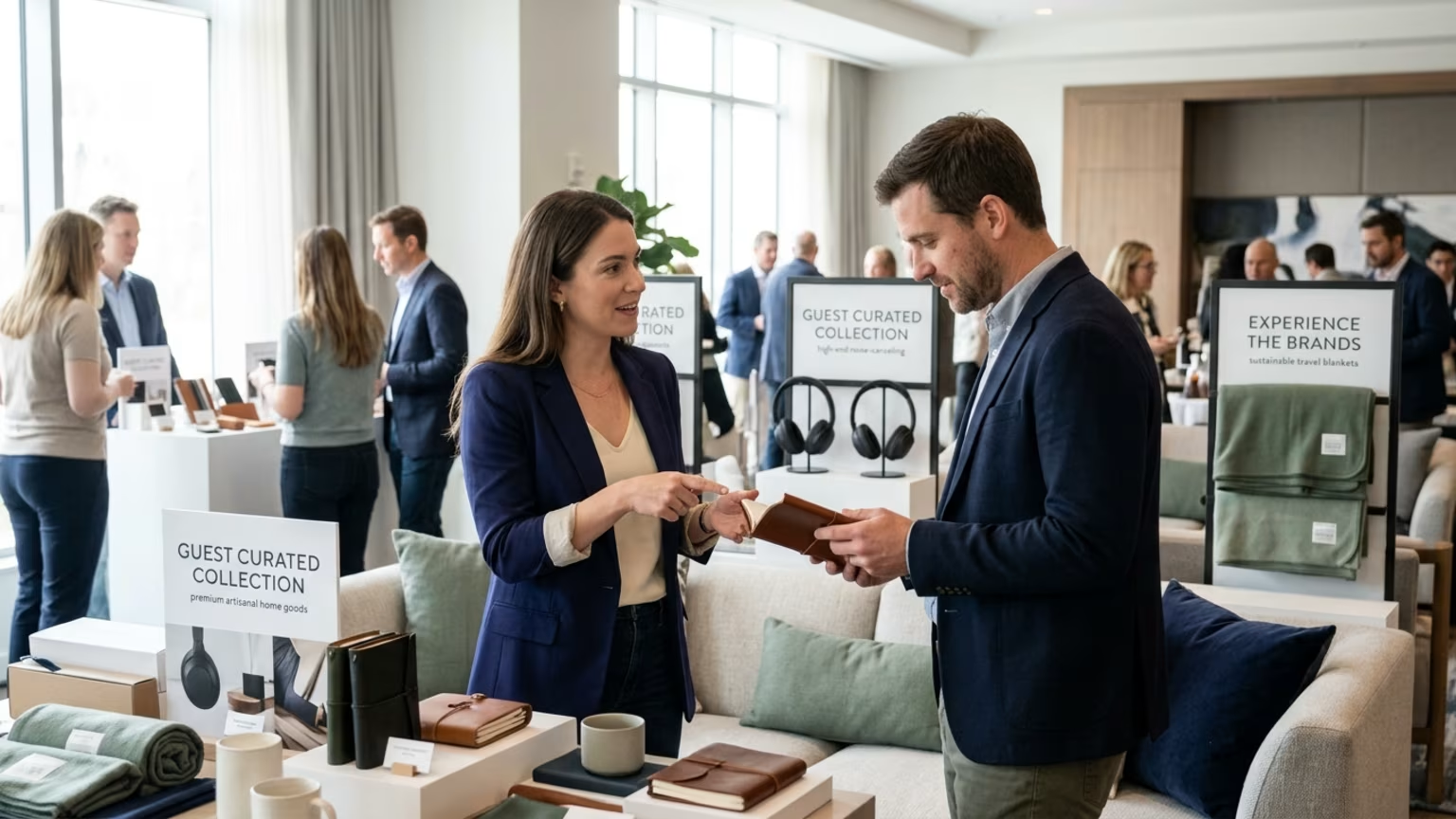
The subsequent weekend roadshow featured an interactive tasting lounge parked right in the grocery store parking lot. This built a massive crowd and drove immediate foot traffic indoors. Inside the store, trained retail ambassadors captured those curious shoppers for the final purchase. The transition from outdoor engagement to indoor purchasing was seamless, tracked, and highly controlled.
Another prime scenario involves a national brand executing a massive Costco roadshow push. Success in a club environment requires huge volume, perfect staging, and relentless floor engagement. To build momentum, the brand ran targeted street intercepts near the club locations two weeks prior. They handed out samples and informed local shoppers about the upcoming exclusive club event.
When the Costco roadshow finally launched, the local consumer base was already primed and anticipating the product. The in-store ambassadors experienced higher engagement rates after the initial off-site brand introduction. This sequential strategy turned cold club shoppers into warm leads before they even entered the warehouse. The resulting sales volume easily justified the cost of the entire six-month campaign.
A positive live interaction remains the most powerful catalyst for a new purchase decision. You just have to guide that consumer from the street corner to the checkout line with intention. Stop funding isolated marketing events that produce fog instead of concrete evidence. A connected sampling strategy gives you total control over the consumer journey.
You can turn disjointed tactics into a measurable revenue engine with the right planning framework. Unifying your field marketing efforts guarantees that every sample distributed works toward a specific financial goal. Book a strategy call with our team to map out your next major retail expansion. We can build a physical funnel that converts curiosity into long-term loyalty.

30 Years Experiential & Retail Activation Partner for CPG & Beverage Brands | Multi-Market Demos, Roadshows & Costco/Club Programs That Actually Sell