Robbie Thain
Founder, CEO

Learn how to transform invisible trade show booths into high-conversion sales machines with bold signage, proactive staff, and exact ROI measurement strategies.

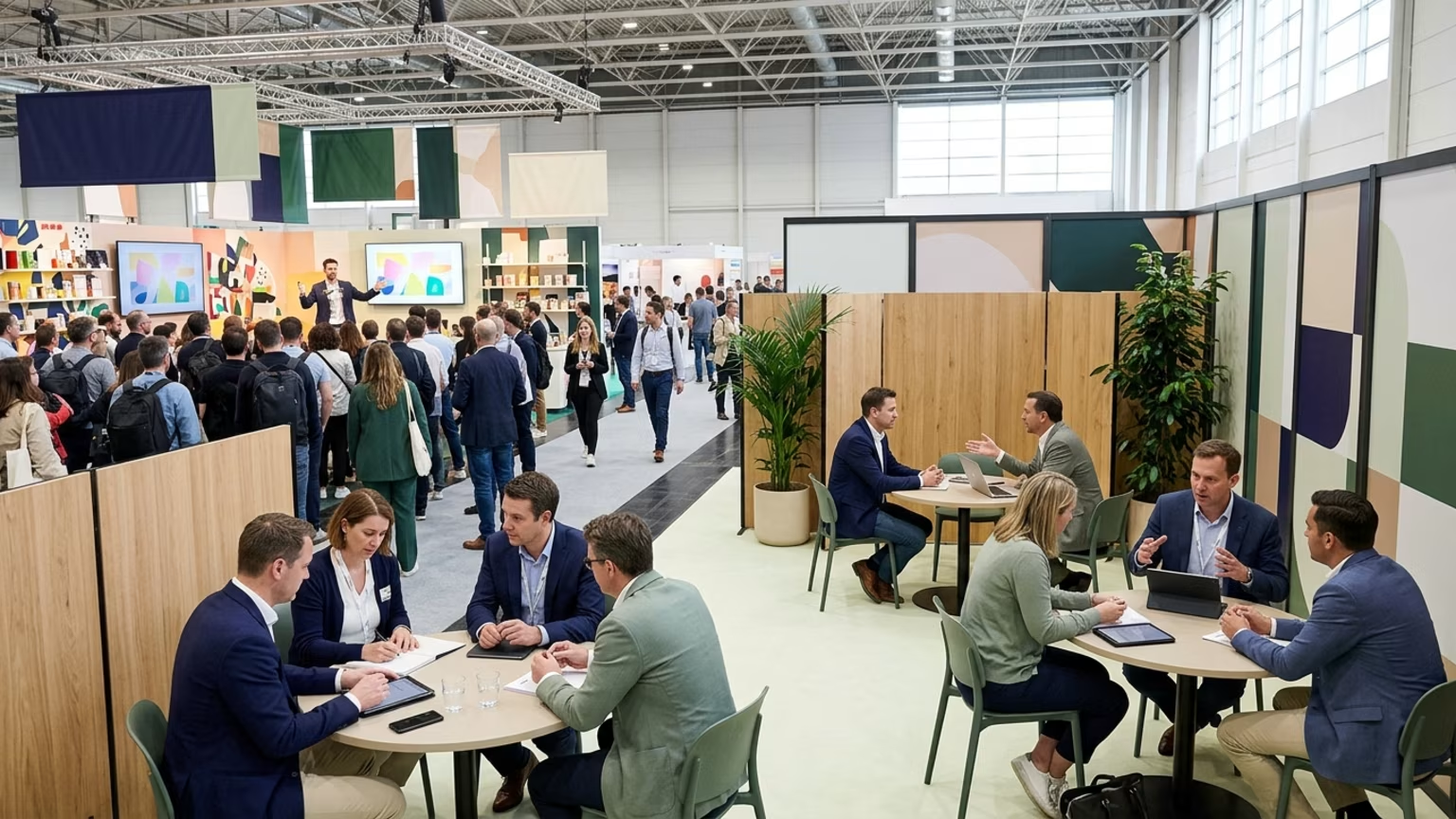
The convention center doors slide open to reveal endless rows of neon signage and aggressive carpet. A hundred different vendors stand behind six-foot tables with branded pens and hopeful smiles. Passersby stare at their phones to avoid eye contact with the uninspired booth staff.
Trade show floors heavily punish passive exhibitors who wait for traffic instead of aggressively creating it. A high-conversion activation demands bold vertical visibility, tiered incentives, and proactive staff to turn passing glances into qualified sales pipeline.
Many field marketing leaders invest massive budgets into renting space only to fail at the last three feet of execution. They build flat displays, fill glass candy bowls, and wait for magic to happen on the floor. This passive approach creates a massive gap between the show expense and the actual pipeline generated. Trade shows routinely charge thousands of dollars just for a basic ten-by-ten footprint.
Industry analysts report that 81% of trade show attendees hold buying authority. Yet, the average exhibitor captures a tiny fraction of that incredible revenue potential. Motion and visual hierarchy are completely ignored in favor of blending safely into the background. Staff members stand trapped behind tables instead of working the active aisles. This lack of engagement directly kills any chance of measurable business growth.
Traffic alone does not guarantee a positive financial outcome for your marketing team. High footfall from flashy motion elements can sometimes attract low-intent browsers who just want free items. This leads to events that look incredibly busy but produce fog instead of hard evidence of sales lift. Field teams often struggle to separate the serious buyers from the casual tourists without a clear qualification framework.
Mismatched event strategies fail when brands confuse professional networking events with retail pop-up environments. Pop-up shops optimally run six to nine days to drive fast consumer sales. Space fees range from lower costs for local markets to thousands a month for premium retail kiosks. Trade shows demand a completely different focus on high-value business lead generation and deliberate relationship building.
The core strategy rests on treating your booth as a three-day sales machine rather than a museum exhibit. You must give attendees something to do rather than just something passive to look at. A confident presenter drawing a crowd signals deep credibility to casual passersby. This builds instant social proof and drives organic curiosity across the entire exhibition hall.
This is exactly where science-backed giveaways come into play for experiential marketing teams. Giveaways pull targeted people off the aisle and into your carefully branded physical environment. You must ration these incentives across the event days to sustain steady foot traffic. Recent studies show that 52% of attendees stop at booths offering these types of physical giveaways.
We must deploy physical motion to break the visual monotony of the crowded floor. Motion is processed by the human brain much faster than any static image. Using feather flags, rotating product displays, and bold vertical signage above eye level pulls traffic from twenty feet away. Instead of hoping people stop, your trained staff must initiate real conversations to actively qualify leads.
Preparation starts long before the massive venue doors ever open to the public. Brands should announce their physical booths two to three months early on social channels. Teasing exclusive product offers builds massive buzz and helps secure pre-booked product demos. A well executed pre-event campaign sets the strong foundation for a highly profitable live activation.
Implementing this exact strategy requires strict operational discipline on the busy event floor. You cannot rely on hope as a primary tactic when real money is on the line. Follow this step by step playbook to maximize your physical brand footprint.
Foot traffic is a dangerous vanity metric that creates the illusion of success without paying the bills. You must define true success pre-event in badge scans, demo completions, and actual meetings booked. The ultimate benchmark is targeting 7x the booth fee in generated revenue to prove true Return on Investment. This math holds true whether you spend eighty dollars at a market or thousands at a national expo.
When evaluating trade show activations at Expo West, focus entirely on lead qualification depth. Track the exact percentage of visitors who provide their name, company, specific pain points, and a clear next step. If you run a direct retail pop-up shop, monitor the direct email capture rate constantly. Studies reveal that 46% of pop-up visitors sign up for email lists when directly asked at checkout.
You must track the organic social amplification rate of your physical installation. Integrating smart photo walls or digital filters can extend your physical event reach three to five times online. This turns standard attendee posts into powerful reach multipliers for your internal marketing department. Every shared photo acts as a digital endorsement of your live brand experience.
Finally, monitor the speed and effectiveness of your post-event sample shipments. Skipping physical sample shipments within ten days misses a huge desktop reinforcement opportunity during vendor evaluations. Track exactly how many physical sample boxes turn into scheduled follow-up sales calls. Those exact calls are what actually build massive pipeline and keep national retailers confident in your product.
We apply this exact rigorous methodology to consumer packaged goods clients who need high-volume product sampling. These premium brands require flawless execution to drive actual retail sell-through and gain regional market share. A Director of Brand Strategy in the CPG snack division shared: "The Makai team turned our product launch into a sensory event that shoppers still talk about. From creative storytelling to flawless in-store execution, they made snack time unforgettable. We couldn't have asked for a stronger partner." Our team created an in-store experience that left a lasting impression on consumers and became a memorable brand moment.
This execution succeeds by treating every sampling station like a highly optimized miniature trade show booth. The staff actively initiates contact, the branding creates vertical visibility, and the active engagement is tracked rigorously. We see similar massive success when planning sampling at scale for Costco roadshows across the country. Modularity is key here, as tighter budgets succeed with roaming activations over fixed high-cost displays.
If your executive team is tired of blending into the event background and wasting marketing budget, book a strategy call with our experiential operators today. We can help you build a reliable system that works every single time. Real world marketing demands operator-grade expertise rather than just more digital noise.
The physical world deeply rewards brands that show up with clear intention, strict discipline, and a plan to win the floor. Stop waiting for traffic to magically find you, and start building the interactive experiences that make your brand absolutely impossible to ignore.

30 Years Experiential & Retail Activation Partner for CPG & Beverage Brands | Multi-Market Demos, Roadshows & Costco/Club Programs That Actually Sell