Robbie Thain
Founder, CEO

Learn why the 2026 World Cup proved that physical retail execution and flexible field marketing outmaneuver passive digital sponsorships.
Global sponsorships rarely sell products on their own. The real money is made in grocery store aisles and on crowded city streets. On July 19, 2026, the World Cup concluded, exposing a harsh reality for marketers. The post-tournament data revealed a massive shift in how brands actually generated revenue from global events.
The tournament proved that passive sponsorships are losing their effectiveness. Brands can no longer rely on broadcast television spots alone to move inventory. The most successful consumer packaged goods companies linked their high-level creative directly to the physical point of purchase. This required flawless execution across grocery and convenience store channels.
Adweek noted that successful campaigns moved past simple broadcast peaks. Leading brands built a strategy that integrated retail and digital apps from the start. This approach ensured that consumer engagement persisted long after the final whistle. Marketing teams had to start their drip campaigns months before the actual matches began.
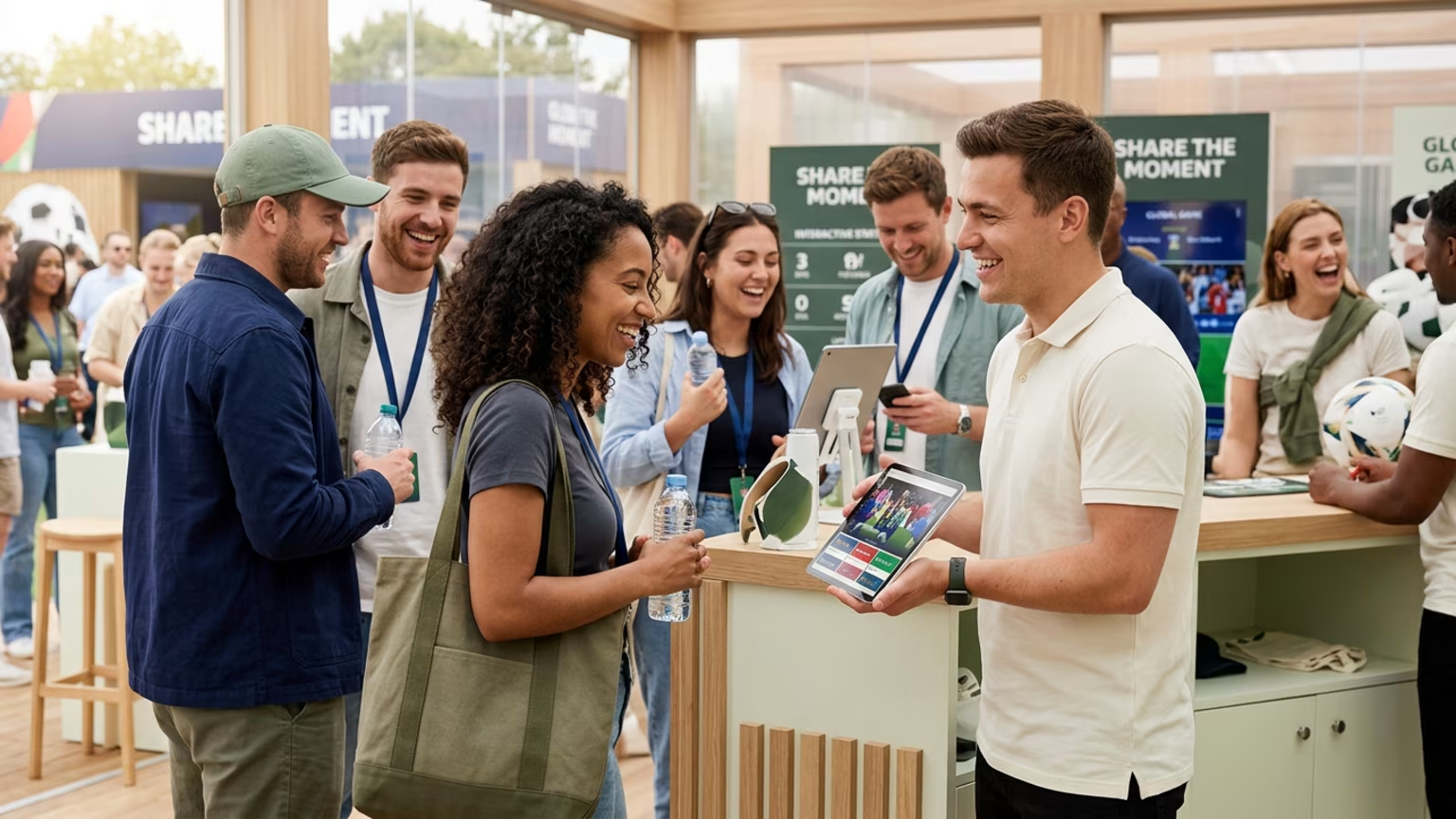
Coca-Cola Europacific Partners demonstrated how to dominate the physical space. They launched one of their biggest tournament activations to date. The brand rolled out more than 5,000 football-themed in-store displays and 16,000 point-of-sale materials. This massive logistical effort connected the global event directly to daily shopper habits.
Managing this volume of physical marketing assets is incredibly complex. It requires precise inventory tracking, localized permitting, and coordinated distribution networks. Brands must secure prime retail real estate months in advance to ensure the displays arrive on time. The physical rollout is just as important as the television commercial.
Brands that utilized digital tools saw higher retention rates at physical touchpoints. Adweek reported that leading marketers integrated mobile applications into their retail displays. This integration allowed shoppers to scan codes in the grocery aisle to access exclusive tournament content. Digital extensions create a measurable link between an anonymous store visit and a tracked customer profile.
Many brands underestimate the manual labor required to set up 5,000 retail displays. Teams must manage warehouse logistics to ship materials to thousands of different stores. Brand ambassadors often need to physically build the displays on site. Flawless field operations are required to make the national advertising strategy actually work.
The team at makai knows that live marketing requires operator-grade discipline and absolute flexibility. Consumer attention is fleeting, and rigid campaigns often miss the cultural moment completely. Pre-planned creative cannot adapt to unscripted human moments. Field teams must have the freedom to react to real-time events.
Nike provided a clear example of operational rigidity during the tournament. According to Adweek, their expansive "Rip the Script" platform was widely criticized. The brand opted for a pre-planned creative approach that felt disconnected from the live conversation. They failed to celebrate real-time tournament narratives, such as compelling underdog stories.
Conversely, non-official sponsors found massive success by leaning into unexpected moments. FIFA enforced strict stadium censorship by covering up non-sponsor logos. Levi's and Gillette turned this restriction into a viral sensation. Gillette covered its own logo with material made to look like shaving foam.
Levi's leaned into the joke with remarkable agility. Meltwater data cited by CNBC reported that Levi's mentions rose 44 percent once the tournament began. Engagement nearly quadrupled once consumers caught onto the joke. Meltwater also found that non-sponsor Lego generated 82 percent of the engagement among the top 50 posts from non-official sponsors.
This proves that active retail engagement strategies beat passive logo placement. Brands need operators who can bridge the gap between field logistics and experiential engagement at a moment's notice. You cannot pause a live event to rewrite your marketing playbook. You must build adaptability into the foundation of your operations.
When marketing teams fail to adapt, they waste massive amounts of capital. Elite talent like celebrity athletes cannot save a campaign that ignores the reality of the street. Brands often sign expensive sponsorship deals but refuse to fund the necessary local event managers. The result is a highly visible digital campaign with zero real-world execution.
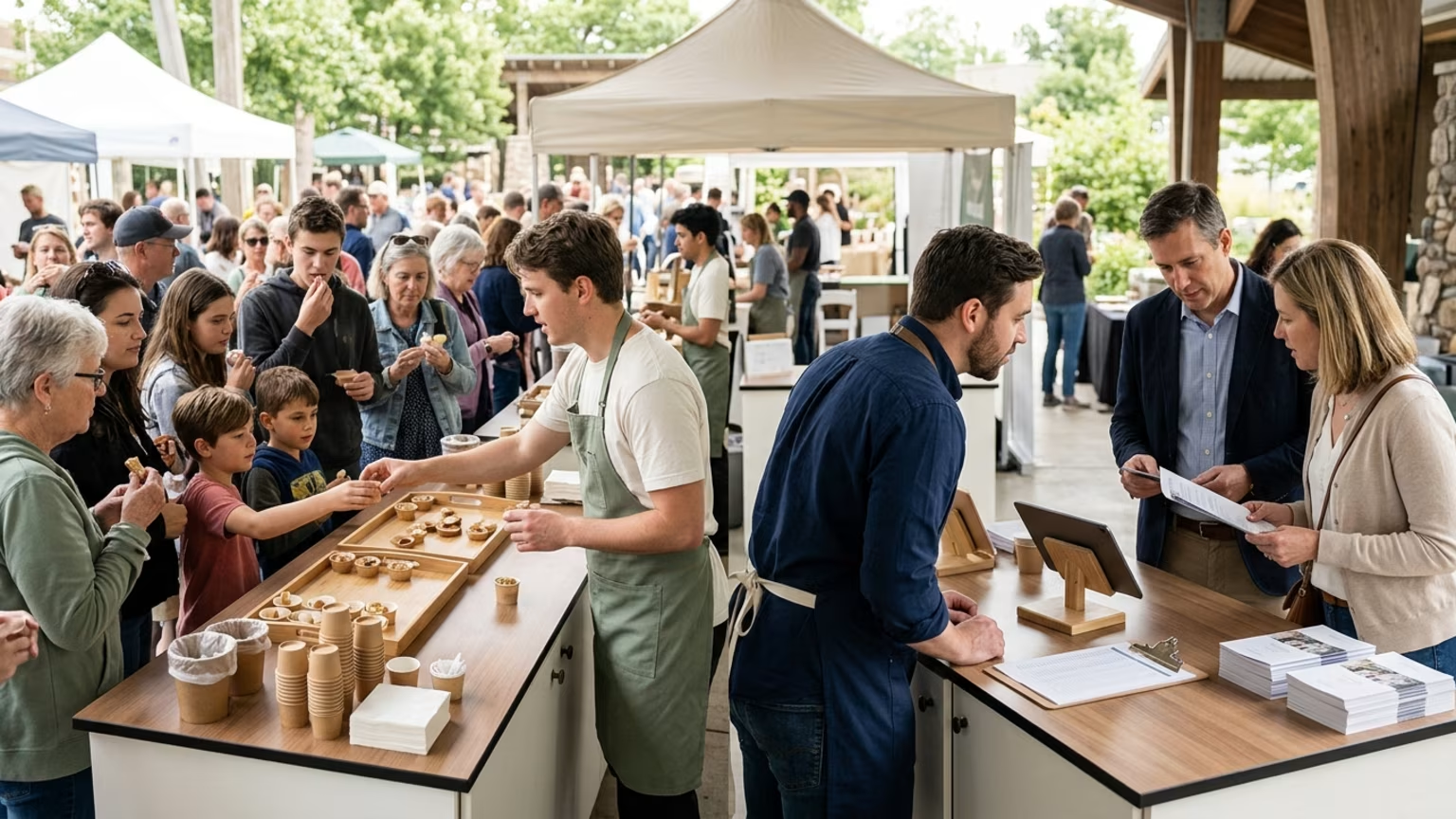
Experiential marketing thrives on participation rather than interruption. Consumers want to interact with a brand, not just stare at a static billboard. When field teams operate with flexibility, they can turn a standard product sampling into a memorable conversation. This human element is the strongest competitive advantage a physical brand can possess.
When brand positioning is vague, the downstream effects on field operations are severe. Poorly defined campaigns confuse brand ambassadors and frustrate consumers. You cannot train a promotional street team if the core product message is unclear. Shoppers will simply walk past a trade show footprint if they do not immediately understand the value proposition.
Anthropic experienced this disconnect during the tournament. Following a successful Super Bowl debut for its Claude product, its World Cup spot was described as a huge miss. Analysts at Marketing Against the Grain noted that the striking visuals failed to connect clearly to the product or its benefits. Beautiful creative cannot save a campaign that lacks a clear call to action.
Kalshi faced a similar issue with its high-profile celebrity placement. The brand ran a spot featuring Timothée Chalamet that prioritized star power over clear messaging. Analysts cited the ad for building brand awareness without context. This approach is completely useless for driving actual consumer action in physical retail environments.
These digital failures mirror common mistakes made in physical brand activations. If your mobile sampling tour lacks a clear conversion mechanism, you are just handing out free snacks. Field marketing directors must prioritize measurable consumer response over flashy aesthetics. Every physical touchpoint must smoothly guide the consumer toward a purchase decision.
Consider the logistics of a nationwide promotional tour. If the messaging is ambiguous, the brand will waste thousands of dollars on ineffective booth interactions. Field managers will spend their entire day answering basic questions instead of qualifying leads. A sharp message allows the operations team to focus on processing volume and driving sales.
Trade show operations suffer from the exact same ambiguity. When a brand rents a massive expo footprint, the visual design often overshadows the product utility. Visitors walk away remembering the bright lights but forgetting the actual brand name. A disciplined field marketing strategy ensures that every visual element directly supports the product demonstration.
The main goal of any major campaign is to build lasting trust with the consumer. This requires trained brand ambassadors who can facilitate genuine interactions. We have seen firsthand how physical presence can overcome outdated brand perceptions. High-energy activations turn passive observers into active participants.
Our team understands the pressure to connect promotional efforts to actual retail conversions. A VP of Marketing reflected on our partnership: 'Robbie, it was a pleasure working with you and your team. You turned our launch into an experience that connected with shoppers and built lasting excitement for our brand. We're already looking forward to the next project together.'
Our team created a launch experience that resonated with retail shoppers and generated momentum for future collaborations. Real conversations on the retail floor will always outperform passive advertising. Brands that invest in these personal connections see higher retention and better retail sell-through.
Major sporting events expose the cracks in poorly planned marketing operations. Consumer packaged goods leaders must align their high impact experiential marketing campaigns with strict retail conversion goals. Flashy television spots will never compensate for empty store shelves or uninspired trade show booths. Operations will always dictate the final Return on Investment.
Are your upcoming tentpole activations actually engineered to capture retail sales, or are they simply funding expensive brand theater?
The most profitable campaigns are rarely the loudest ones in the room. They are simply the ones that quietly deliver results when the crowds finally go home.

30 Years Experiential & Retail Activation Partner for CPG & Beverage Brands | Multi-Market Demos, Roadshows & Costco/Club Programs That Actually Sell