Robbie Thain
Founder, CEO

Discover how strict field operations and structured student ambassador programs drive measurable Return on Investment for experiential marketing campaigns.

Pallets of sample product arrive at the wrong campus loading dock. Field representatives scramble to find missing event permits hours before the activation starts. Meanwhile, student hires distribute warm beverages without capturing a single piece of contact data. Red Bull (also known as Red Bull GmbH) avoids this fate by running one of the most operationally strict ambassador networks in the world.
This guide breaks down how highly structured student ambassador networks replace scattered campus events with precise, measurable field marketing campaigns. Marketing operators will learn how to design, staff, and measure live experiences that generate verifiable Return on Investment.
A massive trade show floor or a sprawling university campus creates an immediate operational stress test for any brand. Field managers often face a chaotic reality where inconsistent staffing, missing event gear, and poor crowd flow destroy the consumer experience. Marketing teams rely on temporary workers who lack the training to handle complex setups or secure proper event permits. Equipment gets stuck in transit, promotional items run out before noon, and brand messaging becomes diluted by exhausted booth staff.
When things go wrong in real time, brand directors receive fragmented reports that look busy but provide zero evidence of actual sales pipeline. Instead of driving trial and building retailer confidence, these chaotic events drain budgets and damage brand perception. Trade show spaces often become crowded, noisy environments where high-value prospects simply walk past unengaging displays. Brands lose thousands of dollars on footprint space because their field operators fail to capture attention or direct traffic effectively.
The consequences of poor field execution echo through the entire sales funnel. When a promotional campaign falls apart logistics-wise, the brand loses credibility in front of highly critical retail partners and distributors. Shopper marketing leads rely on physical events to drive foot traffic into local stores. If the event team fails to show up on time, the anticipated retail lift disappears completely.
We have executed over 1000 campaigns across all 50 states, bringing brands to life in every major U.S. market. From retail demos in Seattle to roadshows in Miami and events in Honolulu, our teams activate brands wherever our clients' audiences are located. In our experience, lack of operational discipline is the single biggest point of failure in field marketing. Without strict logistical protocols, even the most creative campaign concepts fall apart upon contact with the real world.
To turn fleeting interactions into predictable outcomes, field operations must rely on rigid structural playbooks. A successful ambassador network acts as a direct extension of the core marketing team rather than a loose collection of temporary staff. For instance, Red Bull structures its campus marketing and sales strategies to position its product alongside top athletes, students, and people in demanding professions. According to an analysis from Aarhus University, the brand utilizes a highly structured mix of guerrilla and stealth marketing to target ambitious, high-performing students.
This approach requires ambassadors to execute tailored campus marketing plans that integrate live product trials with specific social occasions. A structured framework ensures that every field representative understands their role in driving product understanding, reaching new consumers, and increasing sales. Teams must combine hands-on outreach with detailed logistics planning to maintain omnipresence at key social events. They map out the physical terrain of a campus or a trade show, identifying high-traffic pinch points and optimal sampling zones.
By standardizing these operational models, experiential leaders can scale their programs nationally while keeping tight control over local execution. Local managers apply a uniform set of rules for inventory management, asset deployment, and daily reporting. This uniformity allows corporate marketing teams to analyze performance data across different regions and adjust tactics in real time. Those who integrate physical activations with targeted digital operations often build a student ambassador program that drives sales with incredible efficiency.
Marketing operators must view their field teams as data collection engines. Every product sampled must represent a recorded data point that informs future strategic decisions. This level of precision requires intense front-end planning, strict permitting protocols, and continuous field staff training. Brands that invest in comprehensive brand activation services avoid these logistical pitfalls and maintain high conversion rates.
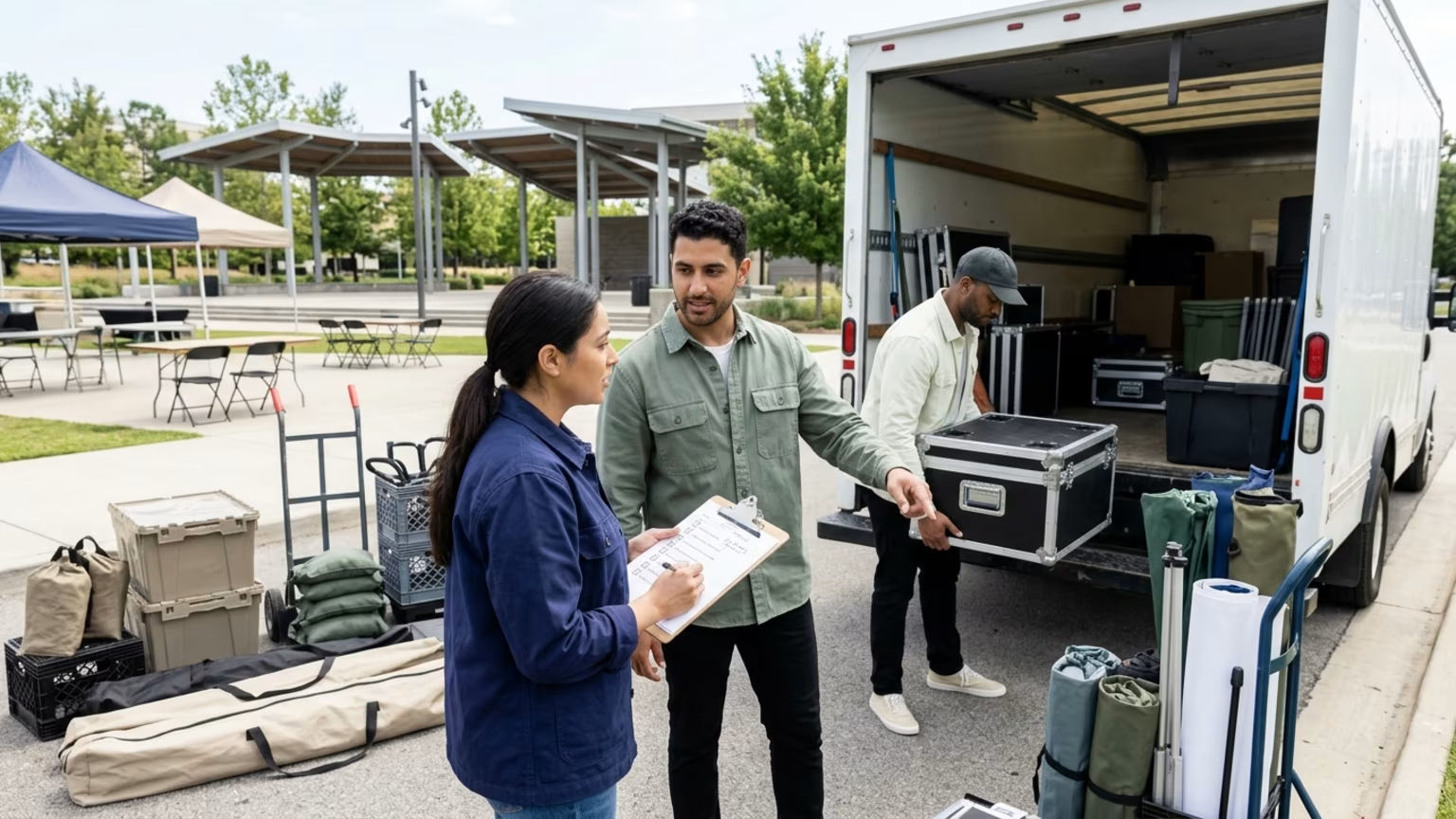
Executing a flawless live event or campus activation requires a military-grade approach to logistics and staffing. Marketing operators should follow this precise sequence to guarantee operational success in the field:
Field marketing programs must be judged by hard data rather than vague impressions or social media likes. To prove experiential Return on Investment, leaders must track specific lead indicators during the event itself. These include the total number of qualified interactions, volume of samples distributed to verified targets, and real-time data capture rates. When field staff log these metrics consistently, marketing directors gain immediate visibility into activation health. Teams can immediately spot if a specific trade show booth is underperforming or if a mobile sampling tour needs routing adjustments.
Lag metrics determine the long-term financial impact of the live experience. Teams must measure regional sales velocity, retail lift in the surrounding market, and post-event customer acquisition costs. A rigorous reporting structure connects the dots between a single product trial and a long-term consumer purchase. By matching event schedules with retail scanner data, operators can prove that an activation directly caused a spike in local product demand.
Without this mathematical approach to experiential marketing, brands operate blindly and waste massive portions of their budget. High-performing agencies build custom data dashboards that synthesize these metrics into clear, actionable executive summaries. If your current events fail to produce these tangible numbers, you should book a strategy call with our operations team.
Top-tier brands build deep loyalty by treating their field teams as highly trained performance units rather than casual promoters. A practitioner overview from BrandChamp points out that the Red Bull ambassador program is highly effective at directly reaching its demographic through disciplined, hands-on tactics. Ambassadors act as a direct extension of the marketing team, representing the brand at extreme sports and social events. They undergo rigorous training to ensure that every consumer interaction reflects the core values of the company.
Instead of waiting for consumers to approach a static booth, these teams proactively distribute free cans from branded Mini Coopers. The ambassadors simultaneously create social content with specific hashtags to amplify the physical activation across digital channels. This dual approach ensures that a single localized event generates a much larger ripple effect online. Field operators maintain strict schedules to maximize product visibility during high-traffic periods.
Aarhus University research notes that this strategy successfully links the brand to society's elite at institutions of higher education. This combination of guerrilla sampling and strict operational control creates massive consumer response. By targeting performance-oriented micro-cultures, the brand secures a permanent foothold in the daily routines of ambitious young adults.
Live brand experiences only generate pipeline when they are powered by ruthless logistical discipline. Precision execution in the field separates high performance marketing assets from expensive distractions.

30 Years Experiential & Retail Activation Partner for CPG & Beverage Brands | Multi-Market Demos, Roadshows & Costco/Club Programs That Actually Sell