Robbie Thain
Founder, CEO

Private label keeps growing, but live sampling still helps branded CPG products win trust, trial, and shelf pull in 2026. Here is the practical playbook.
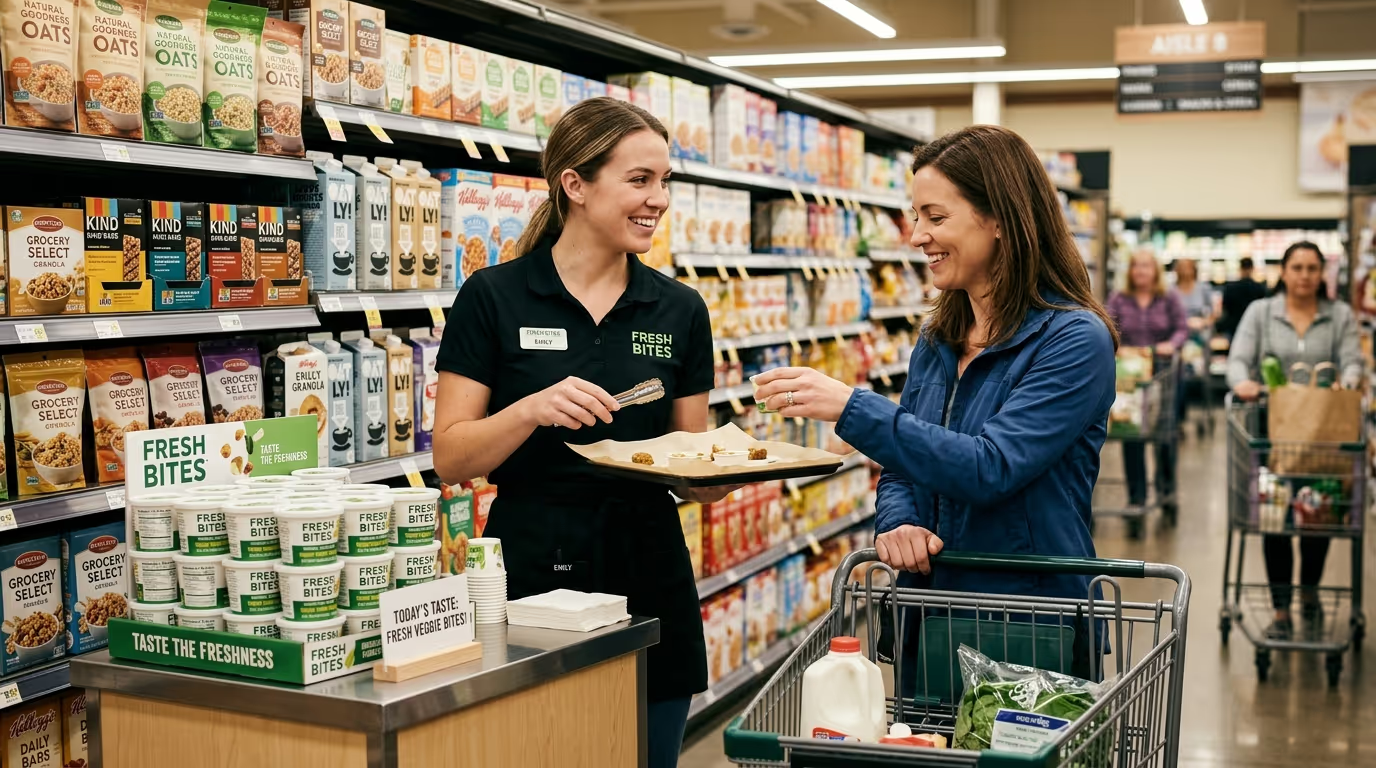
Private label is not a side story anymore. Private label now holds a major share of the total CPG market, and in food and beverage that pressure is especially strong. Club channels have also become a major driver of private brand growth.
The pressure is wider than shelf share alone. More shoppers no longer see brands as a major purchase factor, and many retailers believe only a small number of mass brands will keep strong shelf presence over time. At the same time, value pressure remains high, which makes store brands even harder to ignore.
That changes the job for branded CPG teams. You cannot rely on name recognition, packaging, or media alone. If the shopper is already open to store brands, your product has to prove itself faster and more clearly. That is where live sampling still matters. It gives the brand something private label often cannot match as easily, a human moment, a taste or proof point, and a reason to trust the product right now.
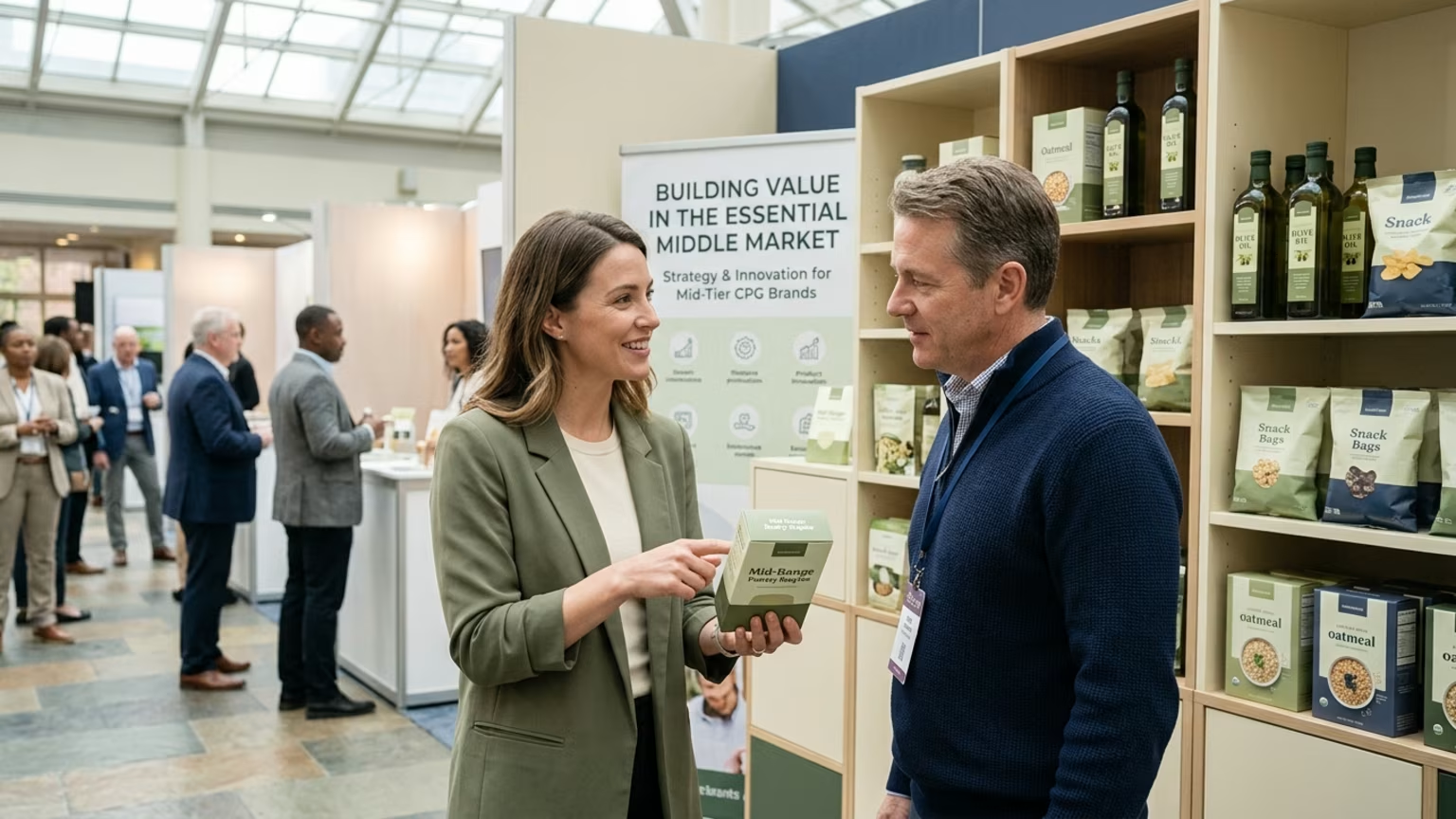
This is where Makai fits well for brands in CPG and FMCG, food, and beverage. A good retail demonstration or Costco roadshow does more than move units for a day. It gives the brand a way to defend the shelf with real trial, real conversations, and clean reporting.
Because they are no longer seen as cheap backups only. Private label is growing in both value and trust, which shows how much the quality gap has narrowed in shoppers’ minds.
Yes. Branded products can still win when they make the difference obvious. If the branded product is sold at a premium, it has to prove why it deserves that price. Live sampling helps do that fast.
Because a sample can collapse the path from curiosity to confidence. It helps the shopper understand taste, quality, convenience, ritual, or value faster than packaging alone.
Because shoppers move between in-store and online channels, but in-store is still where many final decisions happen. Brands need both digital and physical strength, not one or the other.
That depends on the goal. Retail demos work well for everyday grocery trial. Costco roadshows work well when the product needs a stronger value story or higher-volume proof. Mobile tours and pop-ins can help when the brand wants to build buzz near key retailers before a wider rollout.
Do not stop at sample count. Track trial-to-purchase signals, top objections, top shopper questions, repeat engagement, coupon or QR response, and where possible, unit movement by hour or shift.
Private label has changed. It is not just about low price anymore. Retailers are pushing private label through premiumization, innovation, wellness, and sustainable sourcing. Younger shoppers are helping drive that momentum.
That means branded teams face a more complex shelf fight. The shopper may trust the retailer. The shopper may like the price. The shopper may no longer assume the national brand is automatically better. In simple terms, brands need to earn the basket again.
This is the core problem with a passive shelf strategy. When private label is good enough on quality and stronger on price, the branded product has to create a different kind of proof. It has to make the shopper feel the difference, not just read it.
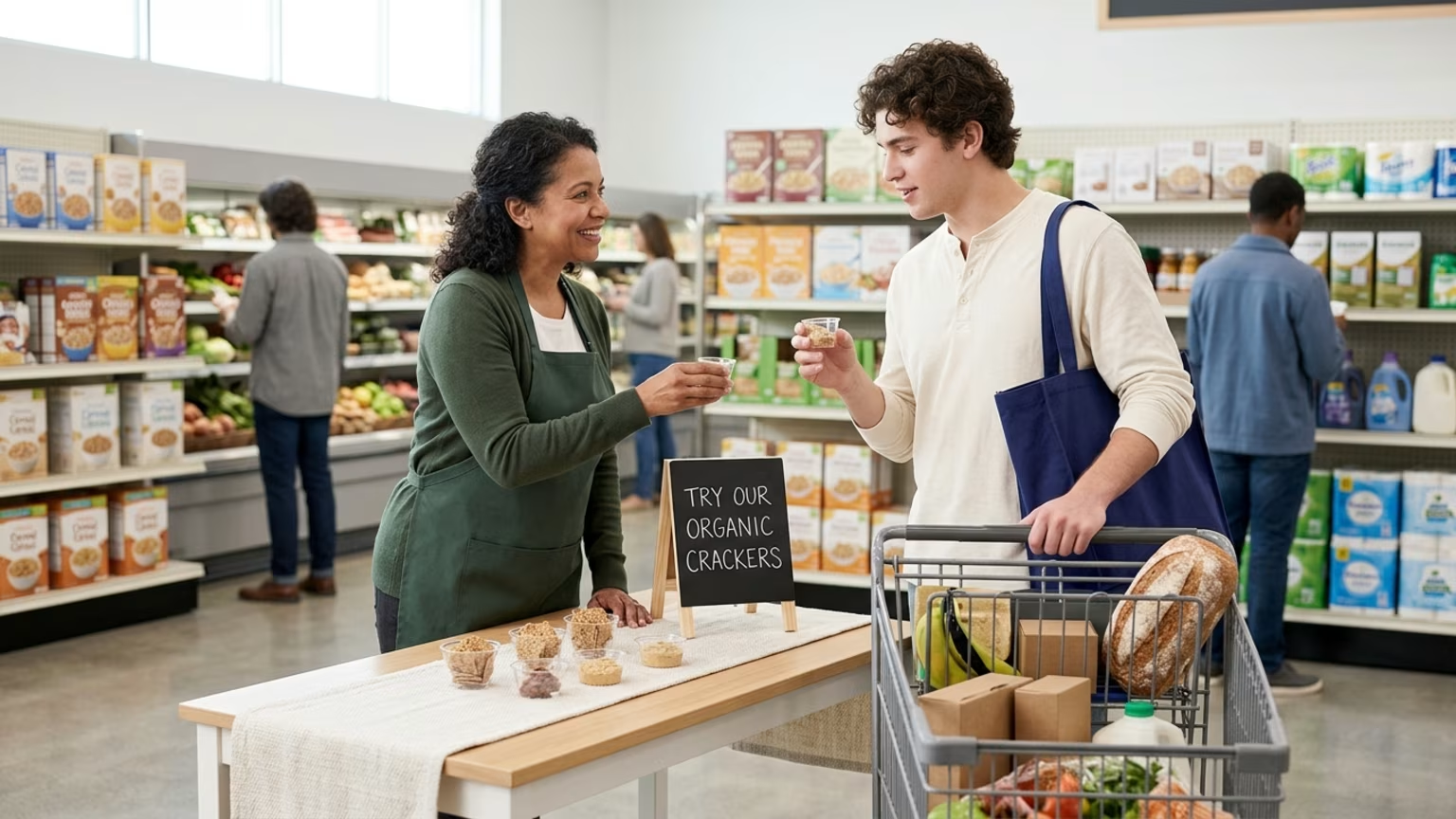
Live sampling works because it solves the exact problem that private label creates. It moves the decision out of theory and into experience. Instead of asking the shopper to trust the front of pack, it lets them taste, see, compare, and ask questions in real time.
That matters even more in a market where grocery shopping blends digital and physical touchpoints. The store is still where many final decisions happen. That makes the shelf moment more valuable, not less.
A good sample can do four things very fast. It can stop the shopper, prove the product, explain the value, and create a next step. Private label often wins the value assumption. Branded products can win the sensory moment, the trust moment, and the usage story. That is why no static shelf tag can fully replace a strong human-led demo.
Makai’s own retail demo work is built around that logic. The job is not only to hand out product. The job is to turn curiosity into confidence, and confidence into purchase through real conversation and real trial.
One of the biggest reasons live sampling still matters is that it teaches the brand something the shelf never will. You hear the first question. You hear the objection. You see whether the shopper reacts to taste, ingredients, texture, convenience, bundle value, or everyday use.
That kind of learning is useful far beyond the demo itself. The best product language often comes from the floor. The best bundle idea often comes from what shoppers ask for in person. The strongest creative often comes from seeing what made people stop and what made them walk away.
This is why live sampling should be treated as both a sales tool and a learning system. It helps the brand defend shelf space now, and it gives the team better messaging for packaging, retailer conversations, landing pages, and future campaigns.
This is the clearest advantage for many food and beverage brands. If the product wins on flavor, texture, aroma, or refreshment, a sample lets the product do the talking. This is often where a premium price starts to make sense.
Some products win when the shopper understands when and how to use them. A demo can make that easy. The shelf cannot always show the moment of use as clearly as a live rep can.
Private label can now look good, sound good, and claim good ingredients. A live brand experience helps the branded product feel more human and more trustworthy. That matters when the shopper is deciding whether the extra spend is justified.
Not every branded product should fight private label on unit price alone. Sometimes the better move is to reframe value around servings, use count, quality, or everyday convenience. Live demos make that easier to explain in plain language.
If the product is already in grocery or specialty retail, standard in-store demos are the cleanest place to start. They are useful when the goal is trial, message testing, and store-level lift. Makai already has a strong internal match for this at Retail demonstrations. How to turn tasting into sales lift.
Club is one of the strongest private label growth channels right now, so roadshows are especially useful for branded products that need to prove they can earn attention and move fast in a value-led environment.
Makai’s Costco content already frames roadshows the right way. They are short, high-intent, and built to show whether the item can win at scale. That is exactly the kind of real-world proof a branded CPG team needs when private label is strong.
If the goal is to build demand around a retailer push, a mobile sampling tour or local pop-in can help warm the market before the shopper reaches the shelf. This is useful when the brand wants buzz, opt-ins, and retailer support in the same market.
If the live program is meant to help the brand beat private label, the scorecard has to go beyond traffic.
This is where clean reporting matters. Makai already has a strong internal article for that at Experiential marketing reporting. How to measure ROI with clean data.
If you are a brand lead, CMO, sales lead, or field lead, ask these questions before you approve the next shelf-defense program.
If those answers are clear, live sampling becomes more than a marketing extra. It becomes a real shelf-growth tool.
If your brand needs to defend shelf space against stronger private label in 2026, Makai can help design and run live programs that prove the difference fast. That can mean retail demos, Costco roadshows, or route-based sampling tied to key retail markets. Start with Request a proposal, or review services and where we work to build the right test plan.

30 Years Experiential & Retail Activation Partner for CPG & Beverage Brands | Multi-Market Demos, Roadshows & Costco/Club Programs That Actually Sell